Tonic Drinks & Waters
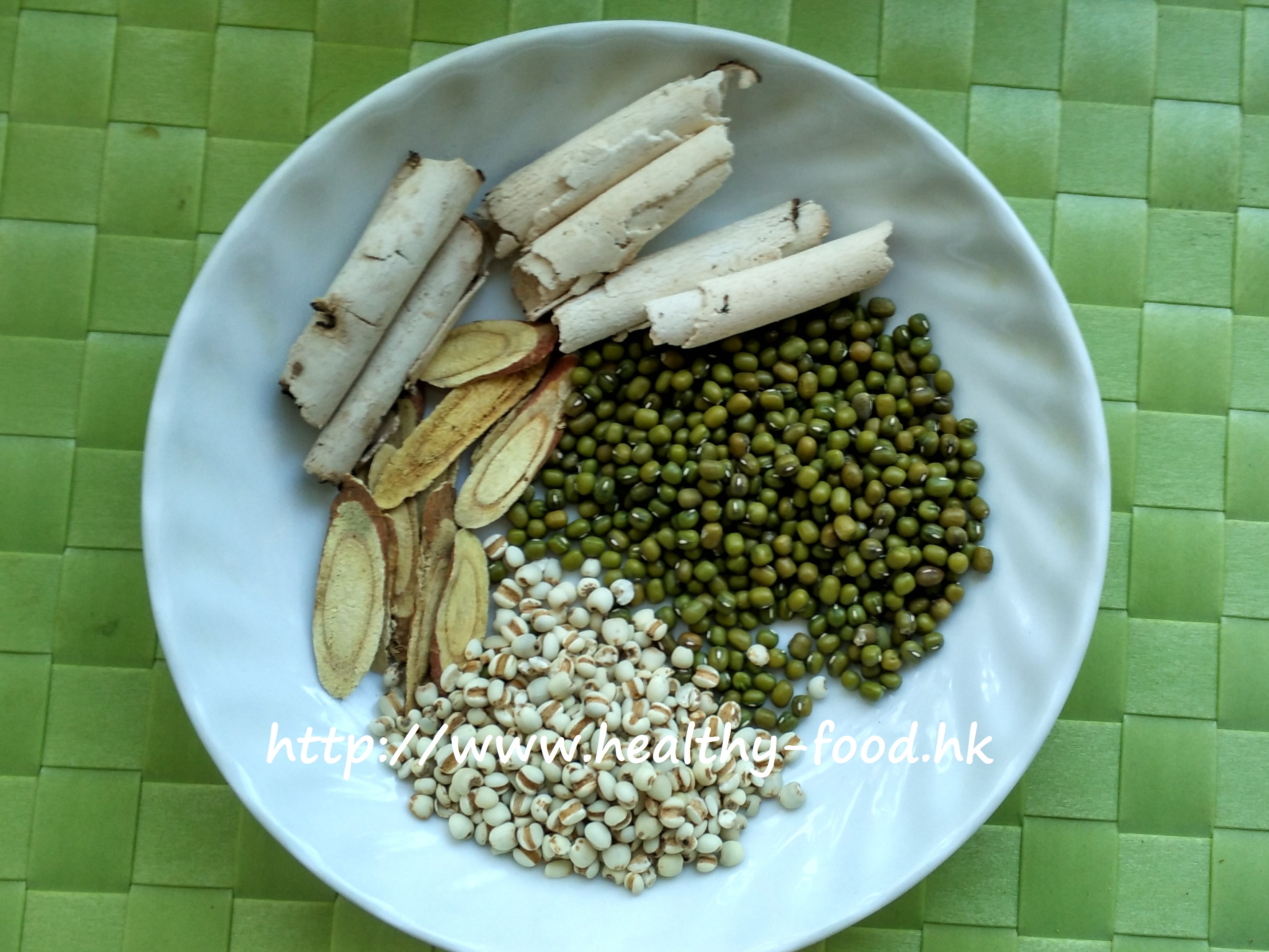
Mung Bean, Barley, Poria and Licorice Detox Water
traditionally associated with clearing heat, supporting liver and kidney function, and easing the burden on the body during periods of toxic load
Why people make this drink
Bro Niu developed this recipe for a family friend living abroad who was going through chemotherapy and struggling with the side effects: nausea, mouth sores, swollen gums, hair loss, fatigue, and changes to the fingernails. From a traditional Chinese food-therapy perspective, chemotherapy introduces significant toxic burden on the body — particularly on the liver and kidneys, which must process and eliminate the drugs. Signs of toxin accumulation in the liver can appear in the fingernails (black lines along the nail edge), and fatigue may reflect the kidney’s energy being depleted by processing toxins.
This four-ingredient drink is not intended to interfere with any medical treatment — it is meant to gently support the body’s own elimination channels, reduce discomfort, and help the organs that are working overtime to cope. Each ingredient has a specific traditional role, and together they form a time-tested combination.
Who it suits / who should be cautious
- Suitable for those undergoing chemotherapy or any treatment that places heavy load on liver and kidney function (always discuss with your oncologist first)
- Suitable as a general heat-clearing and detox-supporting drink for the whole family in summer
- Suitable for nursing mothers
- This drink is slightly cooling in nature; those who are sensitive to cold or have very weak digestion can add 1 piece of tangerine peel (chen pi) and 1 liang of red beans to moderate the cooling effect
- Do not take licorice in large amounts long-term (stick to the 2 qian amount shown here)
Why these ingredients (the food-therapy logic)
- Mung beans (lu dou): One of the best-known detoxifying foods in Chinese medicine. The therapeutic properties are mainly in the bean’s skin (lu dou yi). Traditionally associated with clearing heat and fire toxins, supporting the liver, and helping the body eliminate heavy metal toxins. Sprouted mung beans also contain compounds that some traditional sources associate with anti-cancer properties.
- Fresh barley / Job’s tears (sheng yi mi): A well-studied grain in both traditional and contemporary research contexts; traditionally used to drain dampness, reduce swelling, support immune function, and clear inflammation. Contains selenium, which is associated with antioxidant and potential anti-cancer activity.
- Poria mushroom (fu ling): A medicinal fungus widely used in Chinese herbal medicine; traditionally associated with calming the mind, strengthening the spleen, draining dampness, and supporting those who feel weak, exhausted, and mentally foggy — all common complaints during and after chemotherapy.
- Licorice root (gan cao): One of the most important harmonising herbs in Chinese medicine; traditionally described as entering all twelve meridians. Specifically valued for its ability to moderate and neutralise drug toxicity, tonify the spleen, and relieve tension — classically described as “resolving toxins.”
Ingredients (2 bowls)
| Ingredient | Amount | Notes |
|---|---|---|
| Mung beans (lu dou) | ~75 g (2 liang) | Rinse and soak briefly |
| Fresh barley / Job’s tears (sheng yi mi) | ~37 g (1 liang) | Rinse |
| Poria mushroom (fu ling) | ~15 g (4 qian) | Rinse |
| Licorice root (gan cao) | ~8 g (2 qian) | Rinse |
Method
- Rinse all ingredients briefly; soak the mung beans for 15–20 minutes if time allows.
- Combine all ingredients in a pot with 6 bowls of water.
- Bring to a boil, then reduce heat and simmer for 1 hour until reduced to about 2 bowls.
- Drink the liquid; eating some of the cooked beans and barley is encouraged for greater benefit.
Bro Niu’s tips
The main therapeutic action of mung beans lies in their skin — the green outer coat — so do not substitute with pre-shelled or split mung beans. Mung bean sprouts are also worth incorporating into regular meals, as sprouted mung beans develop additional beneficial compounds. Those who find this drink too cooling can add 1–2 pieces of tangerine peel and 1 liang of red beans to warm things up. If bloating is a concern, tangerine peel and red beans will also help address that. For those receiving Western chemotherapy: consuming this during treatment may be fine, but always let your oncologist know what you are taking, as even food-grade herbs can occasionally interact with specific drug protocols.
Community questions answered (selected)
-
Q (D): My father has a colostomy bag. Can he eat the beans in this soup, or will they cause gas? Should he just drink the liquid? Bro Niu: If your father is worried about gas from the beans, just drink the liquid — that is fine. You can also add 2 pieces of tangerine peel when cooking to help reduce any bloating tendency.
-
Q (Susanna): I am worried this recipe is too cooling for me. Can I add red beans and tangerine peel to modify it? Can I also add red dates or goji berries? Bro Niu: Adding red beans and tangerine peel is exactly the right approach and should balance the cooling nature well. If you want to go a step further, adding dried hyacinth beans (bian dou) would round it out nicely. Red dates and goji berries are not a great match for this particular combination.
-
Q (JA): I am currently undergoing chemotherapy. I have been drinking the four-red soup and luo han guo tea three times a week. My fingers and toes have turned dark and purple-black, and my hands and feet feel numb. Should I eat the solid ingredients in this drink or just the liquid? Bro Niu: Try doing the hand-swinging exercise (shuai shou gong) — a simple, gentle qi-gong-inspired movement where you swing both arms back and forth for 15–20 minutes each day. It helps support micro-circulation in the extremities. For this soup, it is better to eat some of the cooked ingredients as well as the liquid for full benefit. Consistency is important — keep at it.
Published January 21, 2018 · Adapted and translated for Nourilo from a traditional home-kitchen recipe. Approx. 4 min read.