Soups
Burdock, Goji Berry, Fig, and Carrot Pork Rib Soup
Traditionally associated with nourishing the liver and kidneys, supporting immunity, and promoting elimination
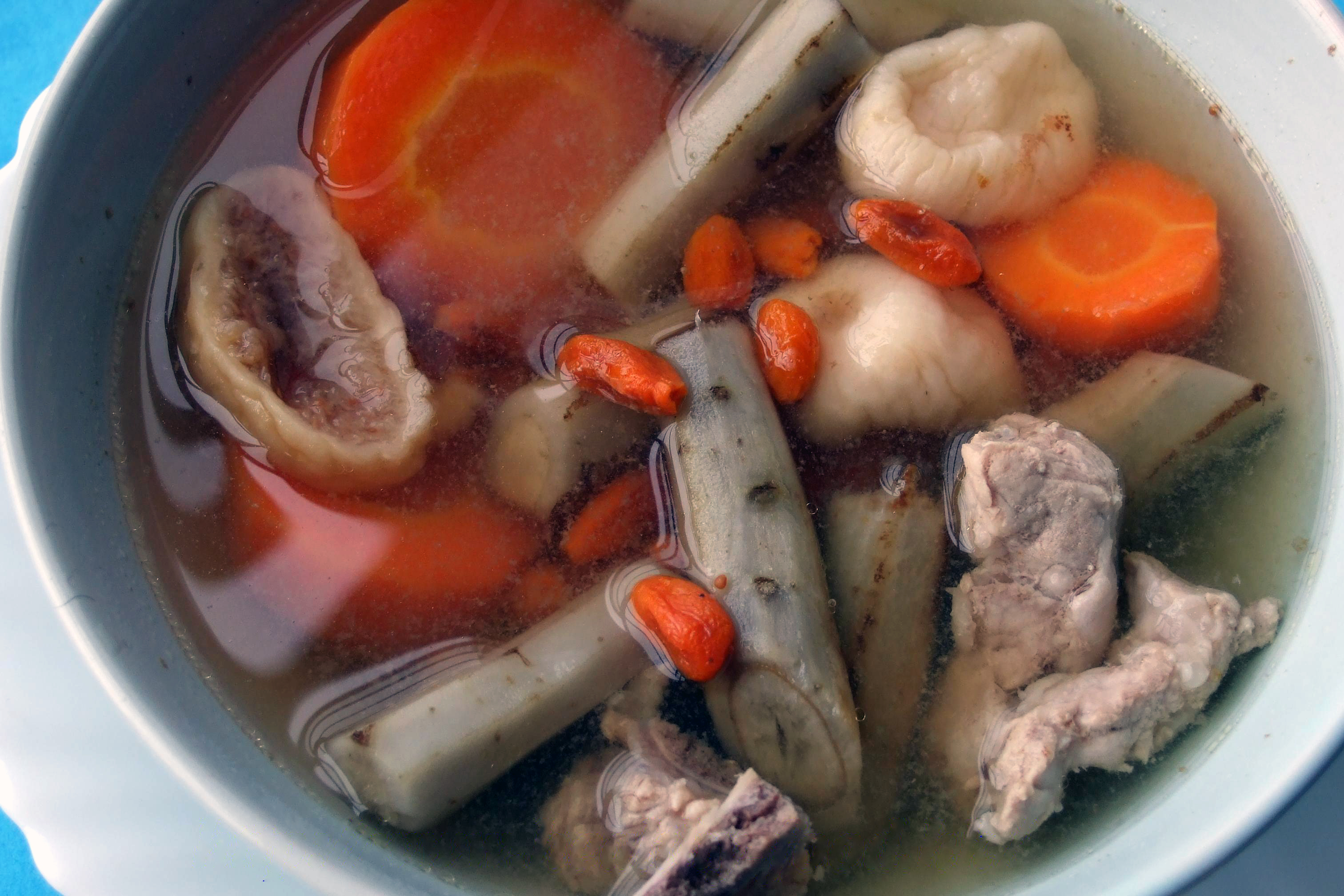
Why people make this soup
Burdock root became a staple in many Hong Kong and Cantonese households in recent decades, and Bro Niu is a fan. This long, earthy root is rich in dietary fibre, vitamins, and minerals, and it contains inulin — a prebiotic fibre that traditionally has been associated with hormonal support, strengthening tendons and bones, and clearing waste from the intestines. In traditional food therapy, burdock is also regarded as helpful for supporting stroke prevention and maintaining stomach and uterine health.
Paired with goji berries (which nourish the liver and brighten the eyes), dried figs (another traditionally anti-inflammatory food), and sweet carrot, this is a soup that the whole family can enjoy together as a nourishing, clean-tasting everyday bowl. It is particularly valued for its gentle detoxifying quality — helping the body move waste rather than accumulating it.
Who it suits / who should be cautious
- Suitable as an everyday family soup; the whole household can drink it
- Particularly beneficial for people recovering from stroke or with cardiovascular concerns
- People with a cold-type constitution (spleen cold, loose stools, frequent cold hands and feet): add 3–4 slices of fresh ginger or a small amount of astragalus (bei qi) to moderate the cool nature of burdock
- Burdock is cooling in nature — those with diarrhoea or qi deficiency should use it in moderation
Why these ingredients (the food-therapy logic)
- Fresh burdock root (xian niu bang / Arctium lappa): Rich in inulin (a prebiotic), dietary fibre, and micronutrients. Traditionally associated with clearing heat, detoxifying, stimulating intestinal movement to eliminate toxins, supporting stroke prevention, and nourishing the stomach. The young, thin roots harvested in early summer are considered most fragrant and potent.
- Goji berries (gou qi zi / Lycium barbarum): One of the most well-known tonic herbs. Traditionally used to nourish the liver and kidneys, brighten the eyes, and supplement yin and blood. Rich in antioxidant compounds.
- Dried figs (wu hua guo): Sweet, neutral, and easy to use. Traditionally regarded as having anti-inflammatory and immunity-supporting properties, and considered helpful for the lungs, throat, and digestion.
- Carrot (hong luo bo): Nutritious root vegetable. Traditionally associated with strengthening the spleen and stomach, and supporting eye health. Rich in beta-carotene.
- Pork ribs: Provide body to the soup and support calcium intake. Can be substituted with pork loin, fresh fish, or plant-based proteins like yellow soybeans or cashews.
Ingredients (4 bowls)
| Ingredient | Amount | Notes |
|---|---|---|
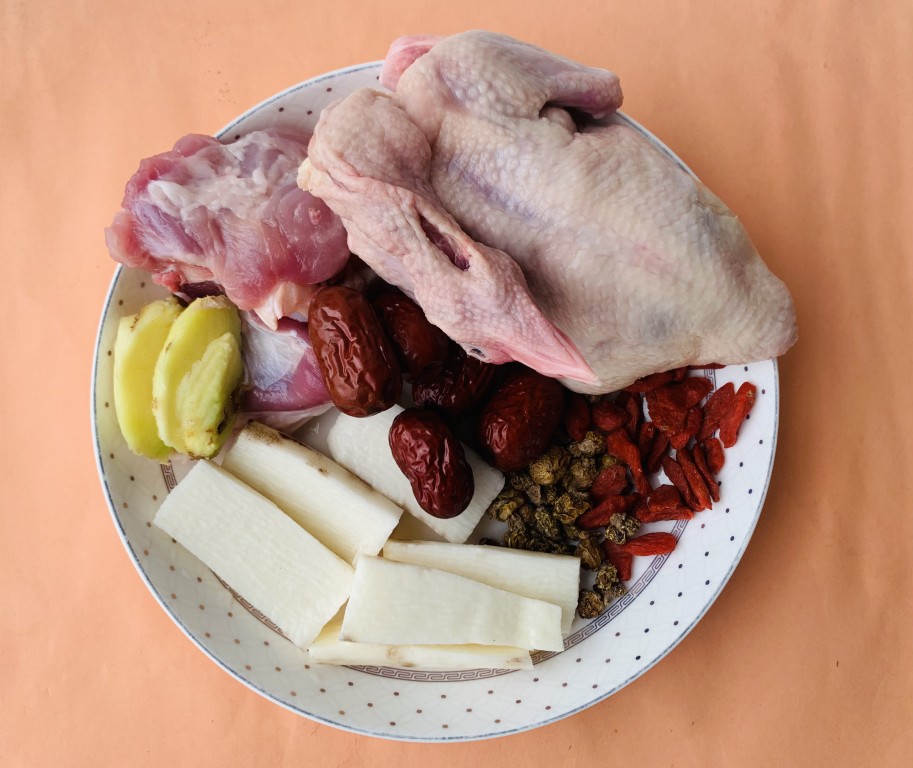
| Fresh burdock root | ~150 g | Peel and cut into sections |
| Goji berries | ~18 g | Rinse and soak briefly |
| Dried figs | 4–5 pieces | Cut in half to release flavour |
| Carrot | 1 medium | Peel and cut into thick rounds |
| Pork ribs | ~300 g | Blanch first to remove impurities |
| Water | 8 bowls (~2 L) |
Method
- Blanch the pork ribs in boiling water for 2–3 minutes; drain and rinse.
- Peel the burdock root and cut into sections. Peel and slice the carrot into thick rounds.
- Briefly rinse the goji berries. Cut the figs in half.
- Place all ingredients into a pot with 8 bowls of water.
- Bring to a boil, then reduce to a gentle simmer. Cook for about 1 hour until the liquid reduces to approximately 4 bowls.
- Serve — drink the soup and eat the ingredients together.
Bro Niu’s tips
Fresh burdock root is at its finest in early summer — young, slender roots carry the best fragrance. This soup suits the whole family and is particularly beneficial for those with a history of stroke or cardiovascular issues. Pork ribs can be swapped for lean pork, fresh fish, or plant-based proteins like yellow soybeans or cashews. If cooking a vegetarian version, soybeans or cashews make an excellent base. Astragalus (bei qi) can be added for those with a cold constitution to balance the soup’s cooler nature.
Community questions answered (selected)
-
Q (reader): If I leave out the pork ribs, what can I use instead? Bro Niu: If making a vegetarian version, yellow soybeans or cashews work well. For a non-vegetarian option, fresh fish is also excellent — easy to digest and absorb.
-
Q (reader): Is burdock root cooling? Who should not eat it? Bro Niu: Yes, burdock is cool in nature. People with spleen-stomach cold (loose stools, cold extremities), or those with diarrhoea or qi deficiency, should use it in moderation or add warming ingredients like ginger.
-
Q (reader): Can this soup include fresh figs, broccoli, and chestnuts? Bro Niu: Fresh figs are an excellent addition — highly beneficial. Chestnuts are also good. For broccoli, I prefer regular cabbage as I am cautious about genetically modified varieties; regular cabbage is a safer choice.
Published March 16, 2010 · Adapted and translated for Nourilo from a traditional home-kitchen recipe. Approx. 4 min read.