Soups
Morinda, Eucommia, Black Bean and Pork Bone Soup
traditionally used to strengthen kidney yang, nourish the lower back, and warm cold, aching limbs
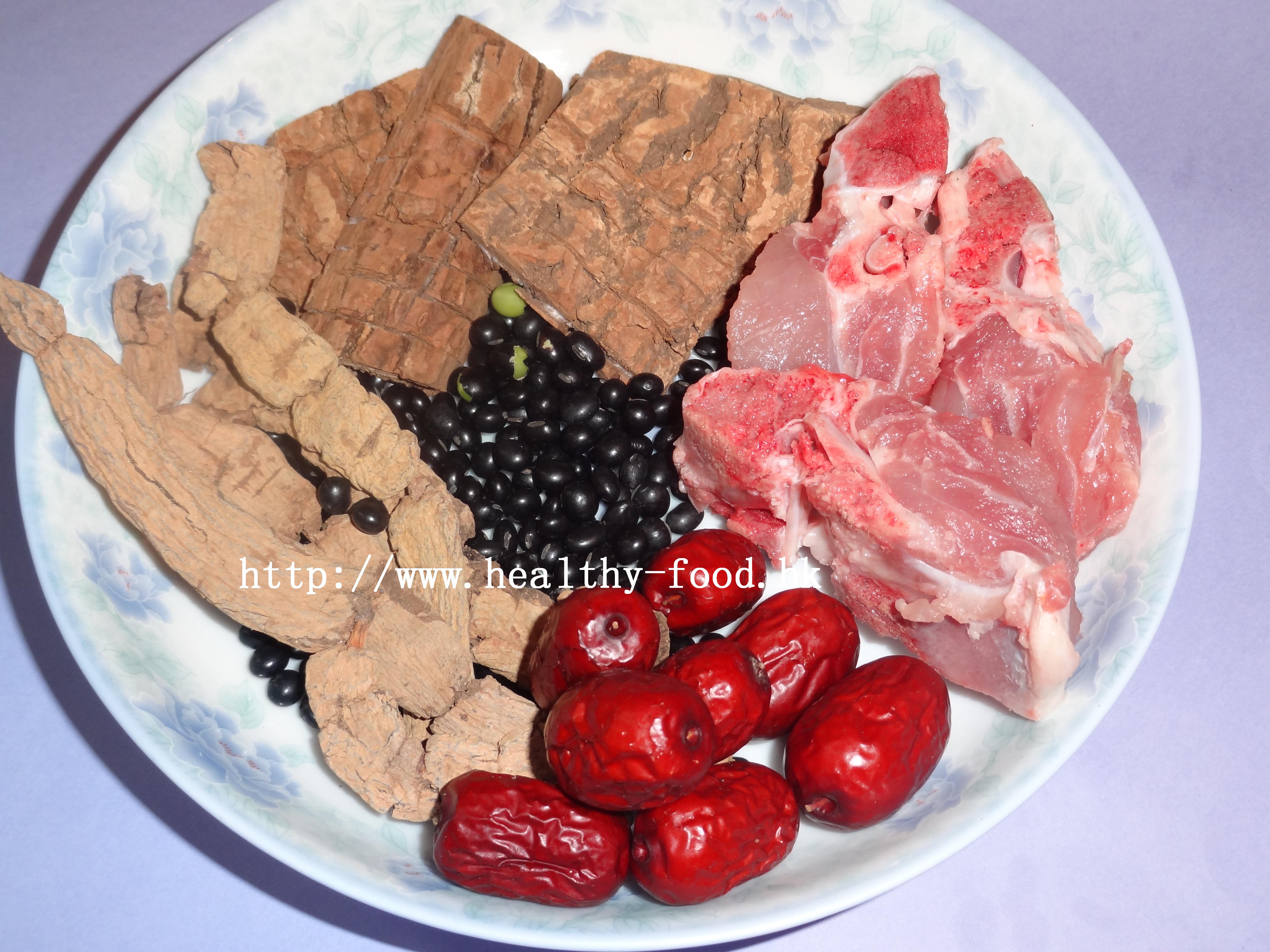
Why people make this soup
On cold, foggy days and during humid spells, many middle-aged and older people notice their lower back and knees becoming noticeably more troublesome — stiff in the morning, aching when the weather turns, and weak when climbing stairs. Chinese food-therapy attributes this pattern to the gradual decline of kidney qi and liver yin that comes with age: the kidney governs bone, and the liver governs tendon, so when both are insufficiently nourished, the sinews and bones lose their resilience. This hearty soup combines two of the most respected kidney-yang-tonifying herbs in Cantonese tradition — morinda root and eucommia bark — with black soybeans for additional kidney support, and pork tail bone, which is rich in collagen and marrow, for a deeply nourishing broth. It is warming, strengthening, and genuinely delicious.
Who it suits / who should be cautious
- Middle-aged and older adults with chronic lower-back ache, weak knees, or a constitution that tends cold and damp
- Postpartum women experiencing lower back pain or cold-type deficiency; breastfeeding mothers can also drink it
- The whole family can share this soup; suitable for children aged 5 and above (a small bowl is sufficient)
- Those with a hot constitution, active fever, or current cold/flu should not take this soup — it is warming and would be counterproductive
- Not suitable in pregnancy
- Those who feel slight dryness or upper heat symptoms after drinking can add polygonatum (yu zhu) or ophiopogon (mai dong), 5 qian each, to moderate the warming nature
Why these ingredients (the food-therapy logic)
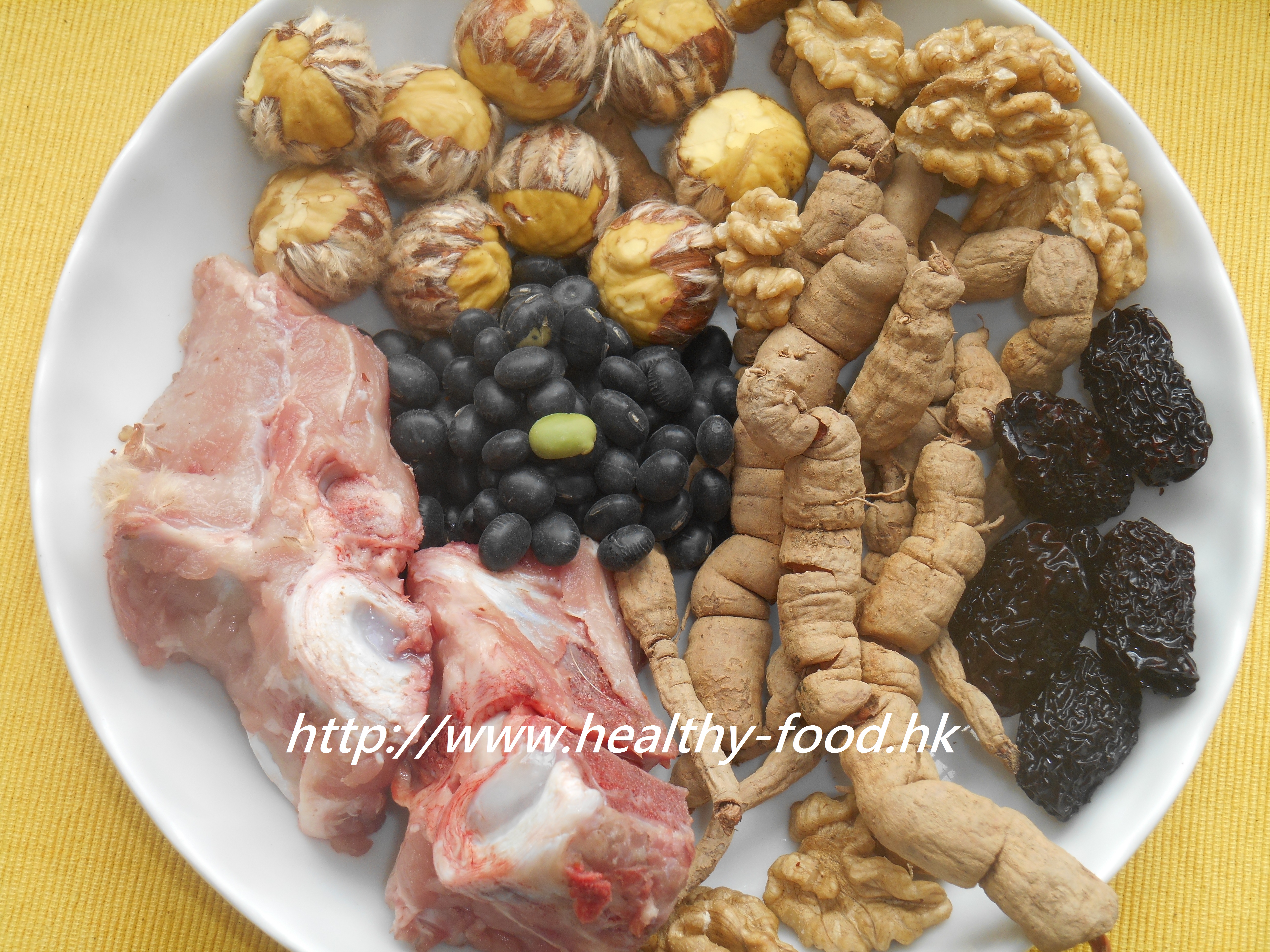
- Morinda root (ba ji tian): A warm, sweet-tasting herb strongly associated in Chinese medicine with tonifying kidney yang, strengthening the sinews and bones, and dispelling wind-cold-dampness; one of the most commonly used kidney-warming herbs in Cantonese soups
- Eucommia bark (du zhong): Considered one of the premier herbs for the lower back; associated with tonifying liver and kidney, strengthening bones and sinews, and lowering blood pressure; a fundamental herb in formulas for lower-back weakness
- Black soybeans, green-fleshed (qing ren hei dou): Dry-fried before cooking to add warmth; associated with kidney nourishment and strengthening bones in Chinese food-therapy tradition
- Red dates (hong zao): Gentle qi and blood tonic; adds natural sweetness and supports digestion of the heavier tonic herbs
- Pork tail bone (zhu wei gu): Rich in collagen, gelatin, and marrow; a deeply nourishing base that adds body and flavour to the broth
Ingredients (4 bowls)
| Ingredient | Amount | Notes |
|---|---|---|
| Morinda root (ba ji tian) | ~18 g (5 qian) | Rinse and soak briefly |
| Eucommia bark (du zhong) | ~18 g (5 qian) | Rinse and soak briefly |
| Black soybeans, green-fleshed | ~38 g (1 liang) | Dry-fry in a pan without oil until fragrant |
| Red dates | 6 pieces | Rinse |
| Pork tail bone | ~450 g (12 liang) | Blanch in boiling water first to remove impurities |
| Water | 8 bowls (~1.9 L) | Reduce to 4 bowls |
Method
- Dry-fry the black soybeans in a dry pan (no oil) over medium heat until the skins begin to split and they smell fragrant. Set aside.
- Blanch the pork tail bone in boiling water for 2–3 minutes; drain and rinse off any grey foam.
- Soak and rinse the morinda root, eucommia bark, and red dates.
- Combine all ingredients in a large pot with 8 bowls of water.
- Bring to a boil, then reduce to a low simmer and cook for 3 hours until about 4 bowls remain.
- Serve warm; eat some of the pork and black soybeans along with the broth for the full effect.
Bro Niu’s tips
This soup is suitable for the whole family, and it is also well suited to women before or after childbirth who experience lower back pain or cold-type blood deficiency. On cold, foggy days it is particularly comforting. If you cannot find morinda root (ba ji tian), you can substitute chestnuts (6–7 pieces) for a milder version that the whole family can enjoy without concern about the warming nature. If you feel slightly upper-heat symptoms (sore throat, dry mouth) after drinking, adding some polygonatum or ophiopogon next time will moderate the soup. Avoid drinking strong tea for an hour or two around the time you drink this soup, as tannins can reduce the absorption of the tonic herbs.
Community questions answered (selected)
-
Q (Joanne Wong): My mother had a stroke and is on aspirin. She has knee pain and weakness. Is this soup suitable? Bro Niu: Morinda and eucommia soup has the additional benefit of supporting liver-kidney function and may help with blood pressure. Your mother can drink it.
-
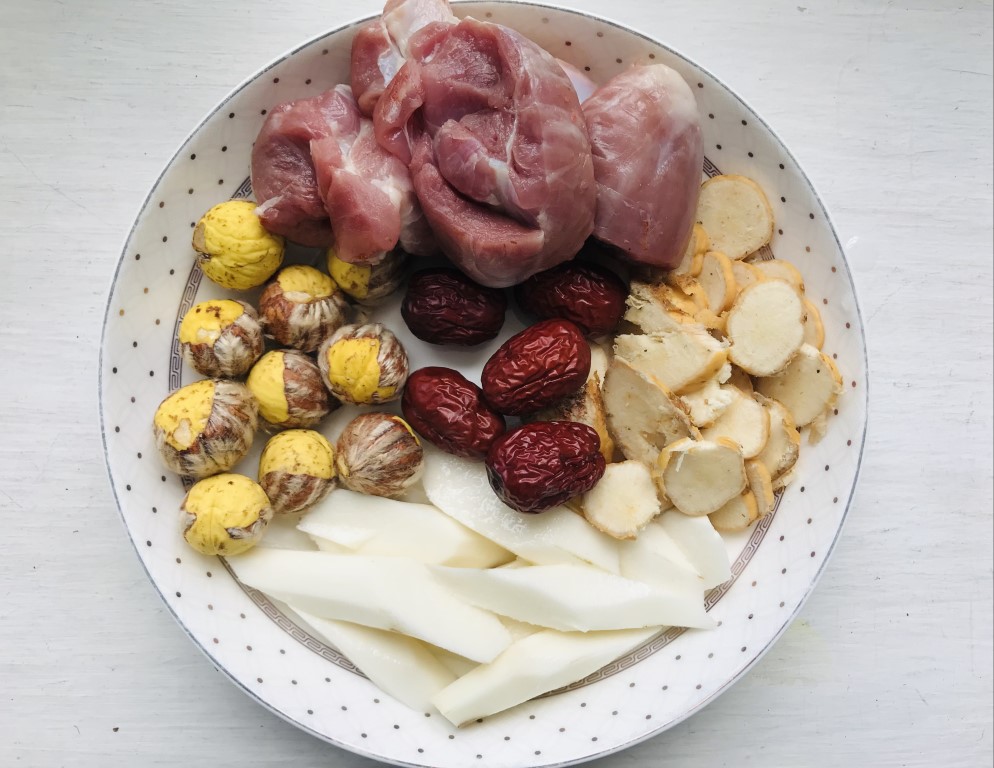
Q (Peggy): I live abroad and cannot find morinda root (ba ji tian). What can I substitute? Bro Niu: If you cannot find morinda root, adding 6–7 chestnuts is a good alternative — chestnuts also have a nourishing and strengthening quality.
-
Q (Connie Chan): I hurt my lower back but my 12-year-old is constitutionally warm — can you suggest a soup the whole family can have? Bro Niu: Try a soup with mulberry mistletoe (sang ji sheng, 1 liang), green-fleshed black soybeans (1 liang), south dates (5 pieces), and figs (4 pieces) simmered with lean pork shank. Mulberry mistletoe is a more neutral herb — it strengthens sinews and bones, clears wind-dampness, nourishes the complexion, and tonifies liver and kidney without being too warming for a younger constitution.
Published March 19, 2012 · Adapted and translated for Nourilo from a traditional home-kitchen recipe. Approx. 4 min read.