Soups
Goji Berry and Wolfberry Root (Di Gu Pi) Chicken Soup
traditionally used to clear deficiency heat, ease menopausal hot flushes, and restore energy by nourishing the liver and kidneys
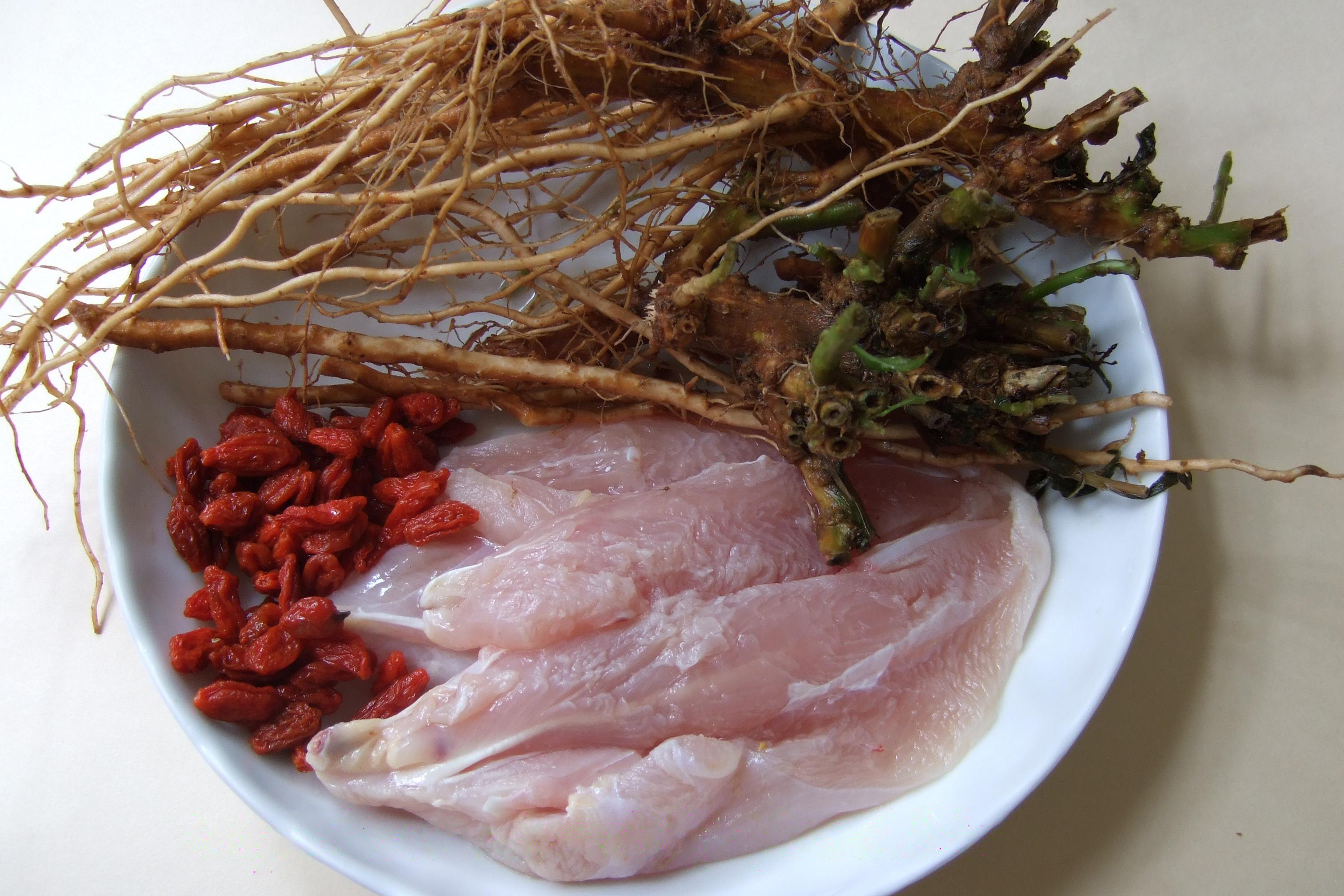
Why people make this soup
Wolfberry root bark (di gu pi) is the root of the same plant that produces goji berries, but its properties are quite different — where goji berries are warming and nourishing, the root bark is cooling and clearing. It is traditionally used to address what Chinese medicine calls “yin deficiency with heat” — a pattern common in menopausal women where deficient cooling leads to hot flushes, night sweats, mental agitation, and persistent tiredness. Paired with goji berries, which tonify the liver and kidneys and support vision, and simmered with chicken breast for mild protein nourishment, this is a gentle everyday soup with a pleasant, slightly sweet and mellow bitter taste.
Who it suits / who should be cautious
- Menopausal women experiencing hot flushes, night sweats, restlessness, or chronic fatigue
- People with high blood pressure or diabetes who want a supportive gentle tonic
- Suitable for the whole family as a general liver-kidney tonic
- Children with favism (G6PD deficiency) can drink this soup — simply add 2 honey dates for a more palatable flavour
- People who are currently experiencing a cold, fever, or severe digestive weakness should wait before using
Why these ingredients (the food-therapy logic)
- Wolfberry root bark (di gu pi / fresh gou qi gen): The root of the wolfberry plant, bark peeled away. Traditionally considered cooling and lung-clearing, and used to reduce “empty heat” — the kind of heat that arises from yin deficiency rather than true infection. Modern research has investigated its betaine and polysaccharide content.
- Goji berries (gou qi zi): One of the best-known tonic berries in Chinese food therapy. Associated with nourishing the liver and kidneys, brightening the eyes, and supporting the blood. Rich in carotenoids and polysaccharides.
- Chicken breast: A mild, lean protein that forms the base of the broth without overwhelming the herbs.
Ingredients (about 3 bowls)
| Ingredient | Amount | Notes |
|---|---|---|
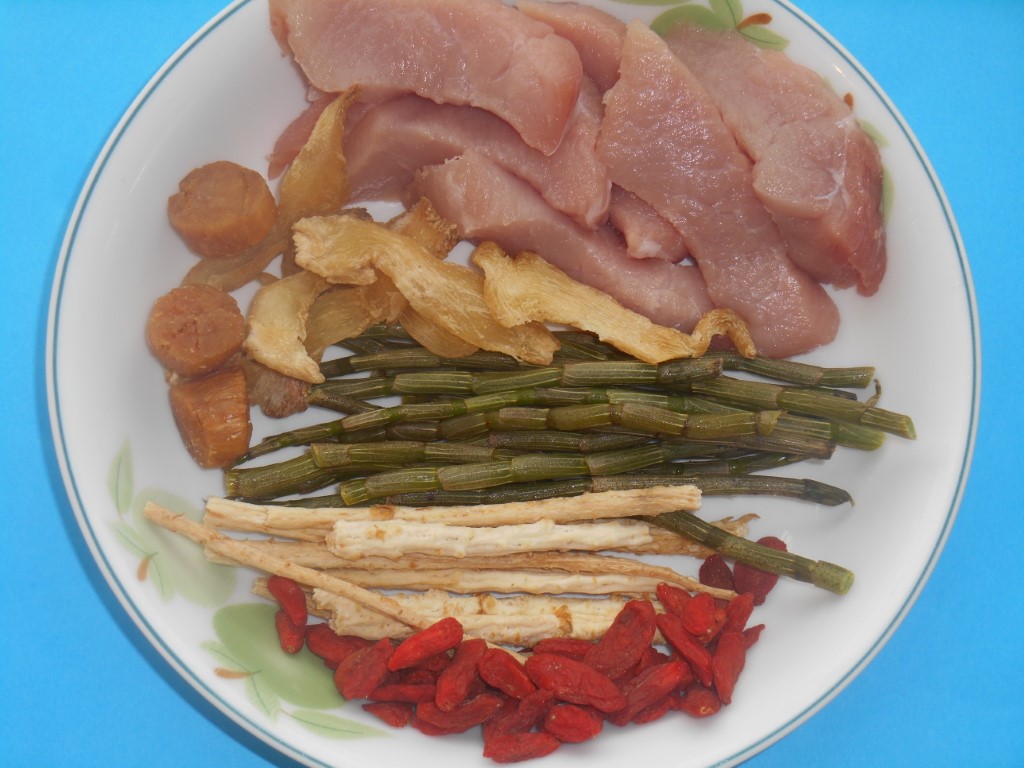
| Fresh wolfberry root (di gu pi) | ~150 g | Rinse well |
| Goji berries (gou qi zi) | ~15 g | Rinse and soak briefly |
| Chicken breast (free-range preferred) | 1 piece | Blanched, then rinse |
| Water | 6 bowls (about 1.2 L) |
Method
- Rinse the fresh wolfberry root thoroughly under running water.
- Rinse goji berries and soak briefly.
- Blanch chicken breast in boiling water for 2 minutes; drain and rinse.
- Place all ingredients in a pot with 6 bowls of water.
- Bring to a boil, then reduce to a gentle simmer.
- Cook for about 1 hour until reduced to approximately 3 bowls.
- Serve warm. The soup has a pleasant mellow sweetness with a mild bitter undertone.
Bro Niu’s tips
This soup has a lightly sweet, mildly bitter and aromatic flavour — pleasant to most palates. It is suitable for the whole family and is particularly supportive for people with high blood pressure or diabetes. If you cannot find fresh wolfberry root, use dried root bark (di gu pi, available at Chinese herbal pharmacies) — about 40 g (1 liang) is sufficient. Children with G6PD deficiency (favism) can safely drink this soup; simply add two honey dates to soften the bitterness.
Community questions answered (selected)
-
Q (CANDY): I am 47 and have not had a period for two months. I often feel very hot, have water retention, occasional palpitations, and sweat even with the air conditioning on. Am I entering menopause? Bro Niu: It sounds like you may be. Best to get your hormone levels checked to confirm. You can try zhi bai di huang wan (a Chinese patent formula for yin-deficiency heat) — take one bottle and see if symptoms improve. For water retention, try a soup with poria, atractylodes, hyacinth-bean coat, and coix barley with winter melon and pork ribs, two to three times a week.
-
Q (BoBo): Can fresh wolfberry leaves (gou qi tou) be cooked with pork tail bones? What else can be added? Bro Niu: Yes, fresh wolfberry tips can be cooked with pork tail bones, along with ophiopogon (mai dong) and goji berries — 3 qian each. This is supportive for diabetes and yin-deficiency internal heat. Simmer for about one hour.
Published June 5, 2010 · Adapted and translated for Nourilo from a traditional home-kitchen recipe. Approx. 3 min read.