Herbal & Flower Teas
Chinese Monthly Rose and Rose Petal Tea
traditionally used to support circulation, ease menstrual irregularity, and brighten complexion
Why people make this tea
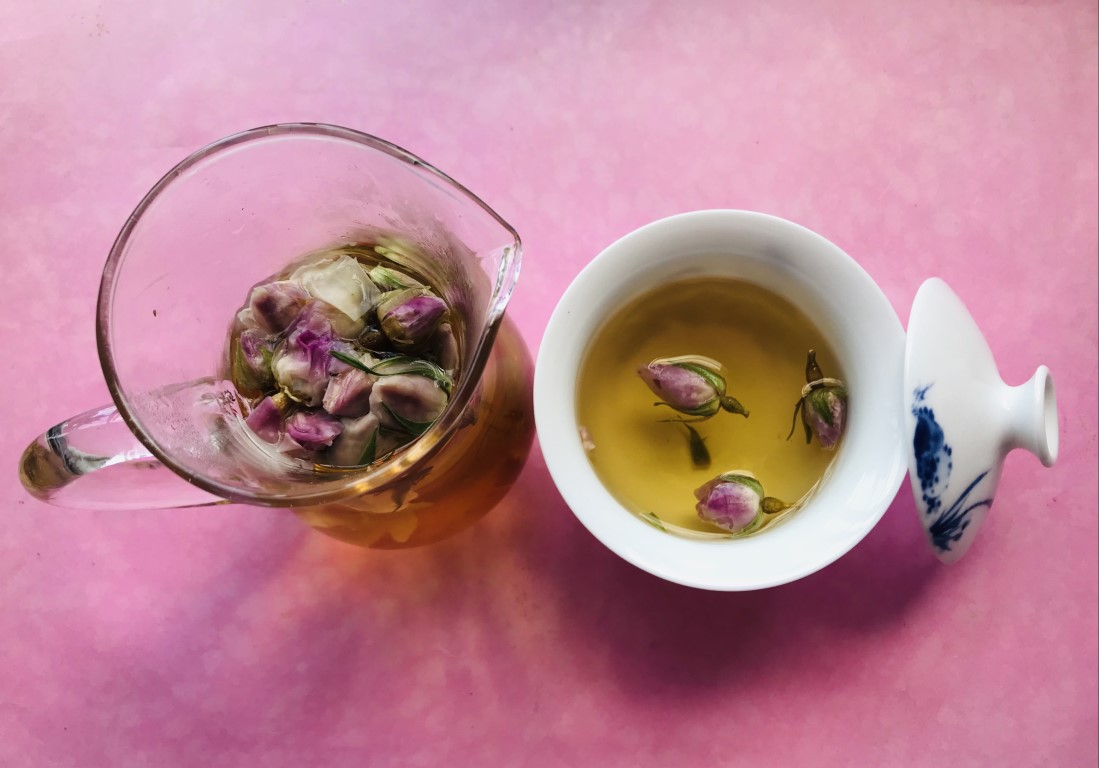
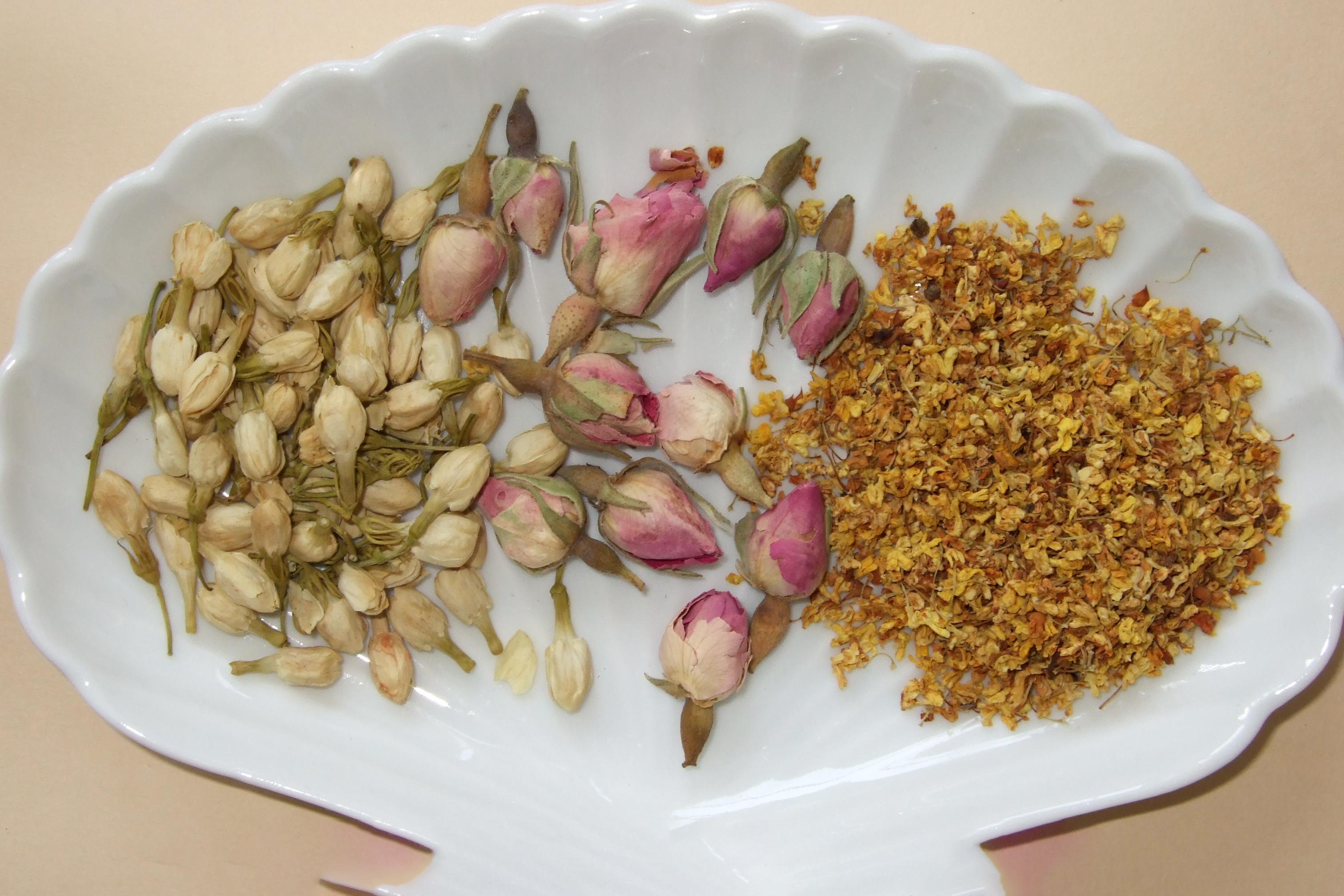
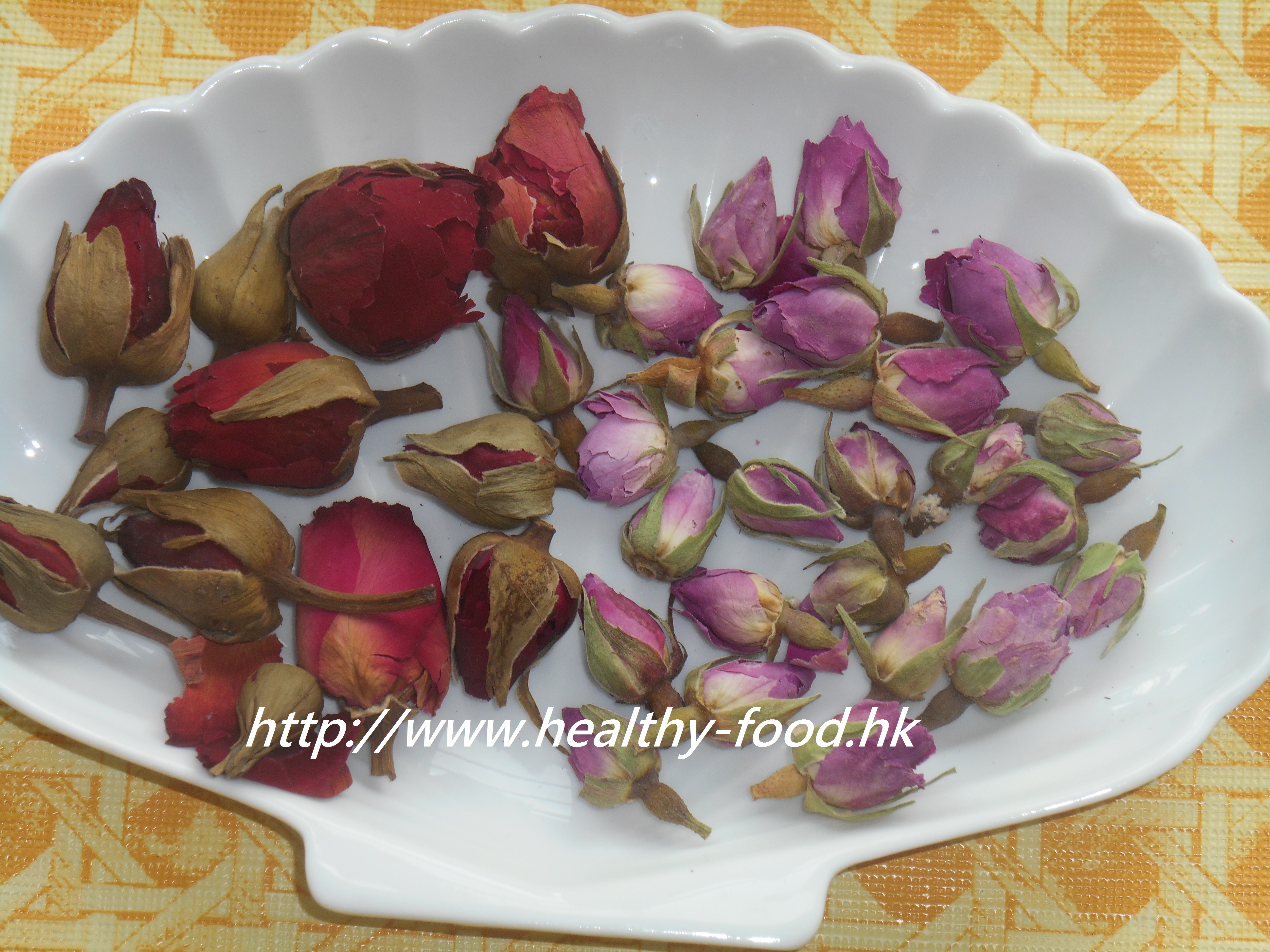
Sometimes the best food-therapy is also the most enjoyable. Wandering into a small shop selling dried flowers, Bro Niu discovered fresh stocks of Chinese monthly rose (yue ji hua) and several varieties of rose (mei gui hua) — the large French rose, the deep red Shandong rose, the purple-red Zhejiang variety, and the delicate golden-edged rose. Brewed together, these two flowers produce a tea that is genuinely fragrant and pleasant to drink, with a warmth that seems to settle and lift the spirit. In Chinese food-therapy, this combination is traditionally said to gently move the liver qi, support blood circulation, ease emotional tension, and benefit skin complexion. It is also particularly valued for women with irregular periods or menstrual discomfort.
Who it suits / who should be cautious
- Suitable for both men and women as a general mood-lifting and circulation-supporting tea
- Particularly associated in Chinese tradition with supporting women who have menstrual irregularity, dark or scanty periods, or mild period pain
- Also traditionally used for lung weakness with mild cough, muscle and joint soreness, and bruising from injury
- CAUTION: Not to be used during pregnancy — both flowers are associated with stimulating uterine contractions; please see a doctor
- Those with a hot constitution or who are prone to flushing should use in moderation
- Best drunk before and after menstruation rather than during the period itself
Why these ingredients (the food-therapy logic)
- Chinese monthly rose (yue ji hua, Rosa chinensis): Named for blooming nearly every month, this flower is considered in Chinese food-therapy to be a potent blood-mover and qi-regulator. It is particularly associated with smoothing liver qi stagnation, reducing stasis, and supporting menstrual regularity. It also has a calming, mood-lifting quality
- Rose petals (mei gui hua): One of the most beloved floral remedies in Chinese tradition — fragrant, warm, and associated with the liver and spleen. Valued for its ability to ease emotional tension, gently move qi and blood, and support a radiant complexion. The different regional varieties (French, Shandong, Zhejiang) all share similar properties but vary slightly in fragrance and depth
Ingredients (1 pot, 2–3 cups)
| Ingredient | Amount | Notes |
|---|---|---|
| Chinese monthly rose petals (yue ji hua, dried) | 1 tablespoon | Available at Chinese herb shops or specialty tea stores |
| Rose petals (mei gui hua, dried) | 1 tablespoon | Any variety works; Shandong or Zhejiang red roses are common |
Method
- Place the dried flowers into a teapot or heat-proof cup.
- First, pour a small amount of hot (just-boiled) water over the petals and immediately discard it — this is a brief rinse to remove dust.
- Pour in fresh hot water and cover.
- Steep for 5 minutes.
- Pour and enjoy. The petals can be re-steeped until the flavour fades.
Bro Niu’s tips
This tea is pleasantly versatile. If a woman experiences period pain (dysmenorrhea), Bro Niu suggests adding a small amount of brown sugar (hong tang) to the cup — the warmth of brown sugar is traditionally thought to help ease cramping. For those with a weak constitution or blood deficiency who find plain rose tea a little light, try adding 10 pieces of longan flesh (long yan rou / yuan rou) to the pot for a richer, more nourishing cup. If you have uterine fibroids, this tea can be used for its gentle circulation-supporting properties — about three to four times per week is appropriate.
Drink this tea before and after your menstrual cycle rather than during the period itself, as the blood-moving properties are most relevant at those times. For women whose periods are infrequent or very dark and scanty, drinking regularly in between periods may gradually help support regularity.
Remember: this tea is completely off-limits during pregnancy.
Community questions answered (selected)
-
Q (Kathy): I have uterine fibroids — can I drink this rose and monthly-rose tea? How often? Bro Niu: Yes, uterine fibroids can benefit from this tea. About three to four times a week is appropriate.
-
Q (KIKO): Who should not drink rose tea? And when is the best time for women to drink it? Bro Niu: Pregnant women must not drink it, as rose causes the uterus to contract. For women with weak qi and blood, add ten pieces of longan flesh to the pot. The best time to drink is before and after the period, not during.
-
Q (Nicole): My periods often come late, are small in volume, and dark in colour. Can I drink rose tea as a daily water substitute during my period? Can I also add hawthorn and chrysanthemum? Bro Niu: You can drink rose flower tea and hawthorn-chrysanthemum tea. Improving your daily habits and lifestyle is equally important for regulating the menstrual cycle.
Published May 7, 2016 · Adapted and translated for Nourilo from a traditional home-kitchen recipe. Approx. 4 min read.