Herbal & Flower Teas
Three-Flower Tea (San Hua Cha)
traditionally associated with improving circulation, brightening skin tone, reducing pigmentation spots, and clearing breath
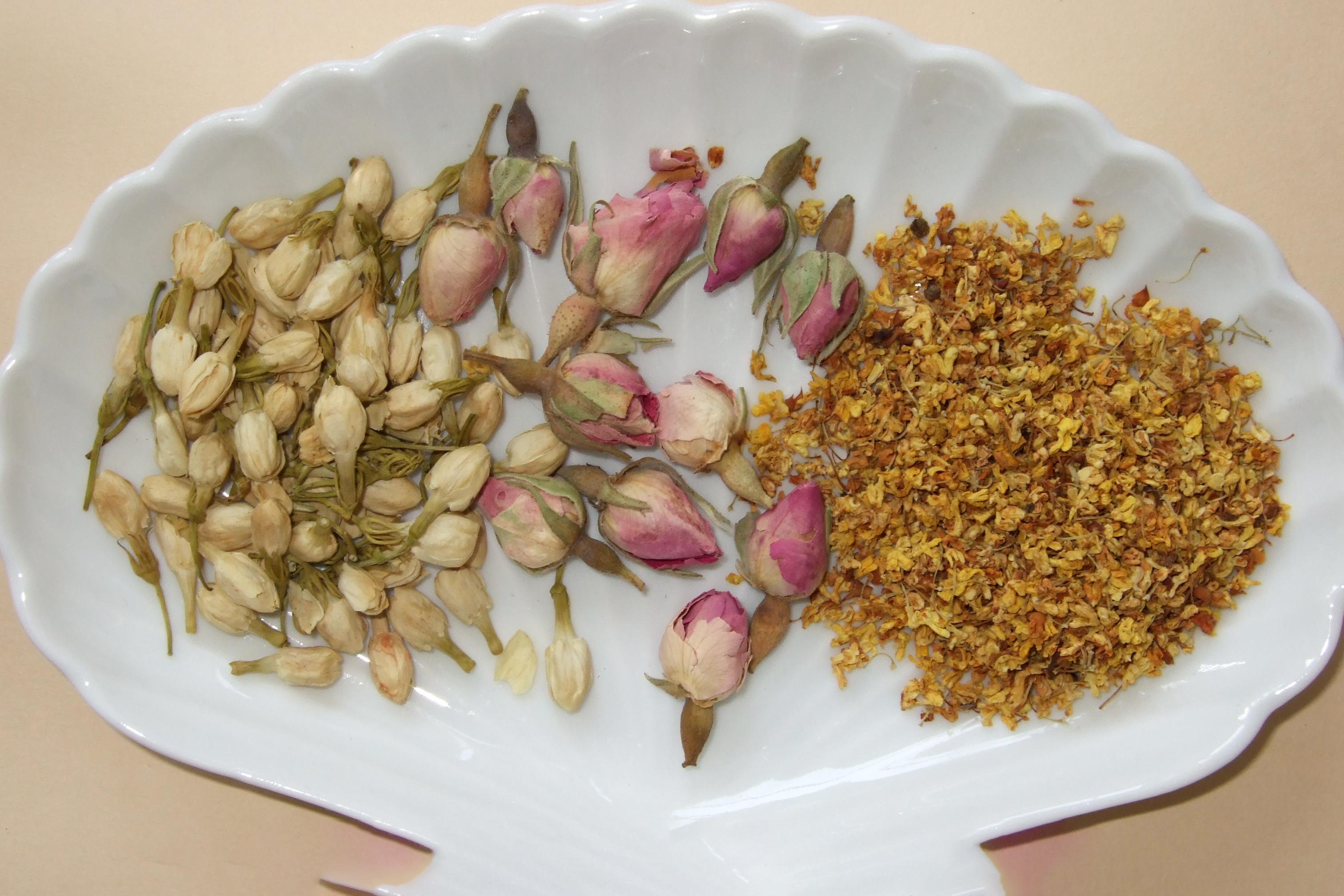
Why people make this tea
The desire for a clear, even complexion is nearly universal — and in Chinese beauty tradition, the approach is inside-out. Rather than relying solely on topical creams, the focus is on improving the quality of the blood and qi that nourish the skin cells from within. Rose buds are one of the most widely used beauty flowers in Chinese herbalism: they move qi and blood, ease the kind of emotional tension that can dull the complexion, and are fragrant enough to make daily consumption genuinely enjoyable. When paired with osmanthus — which has its own mild astringent and complexion-brightening properties — and jasmine, which supports healthy qi flow and adds another layer of fragrance, the result is a tea that is both pleasant and purposeful. Bro Niu has recommended this combination for daily use by women, and notes that men can equally benefit.
Who it suits / who should be cautious
- Suitable for both men and women as a daily beauty and wellness tea
- Particularly helpful for those with dull, yellowish complexion; dark spots; melasma; or oily skin
- Safe for regular long-term use
- Not suitable for pregnant women — all three flowers have some qi-moving properties that are traditionally avoided during pregnancy
- Can be taken during menstruation
Why these ingredients (the food-therapy logic)
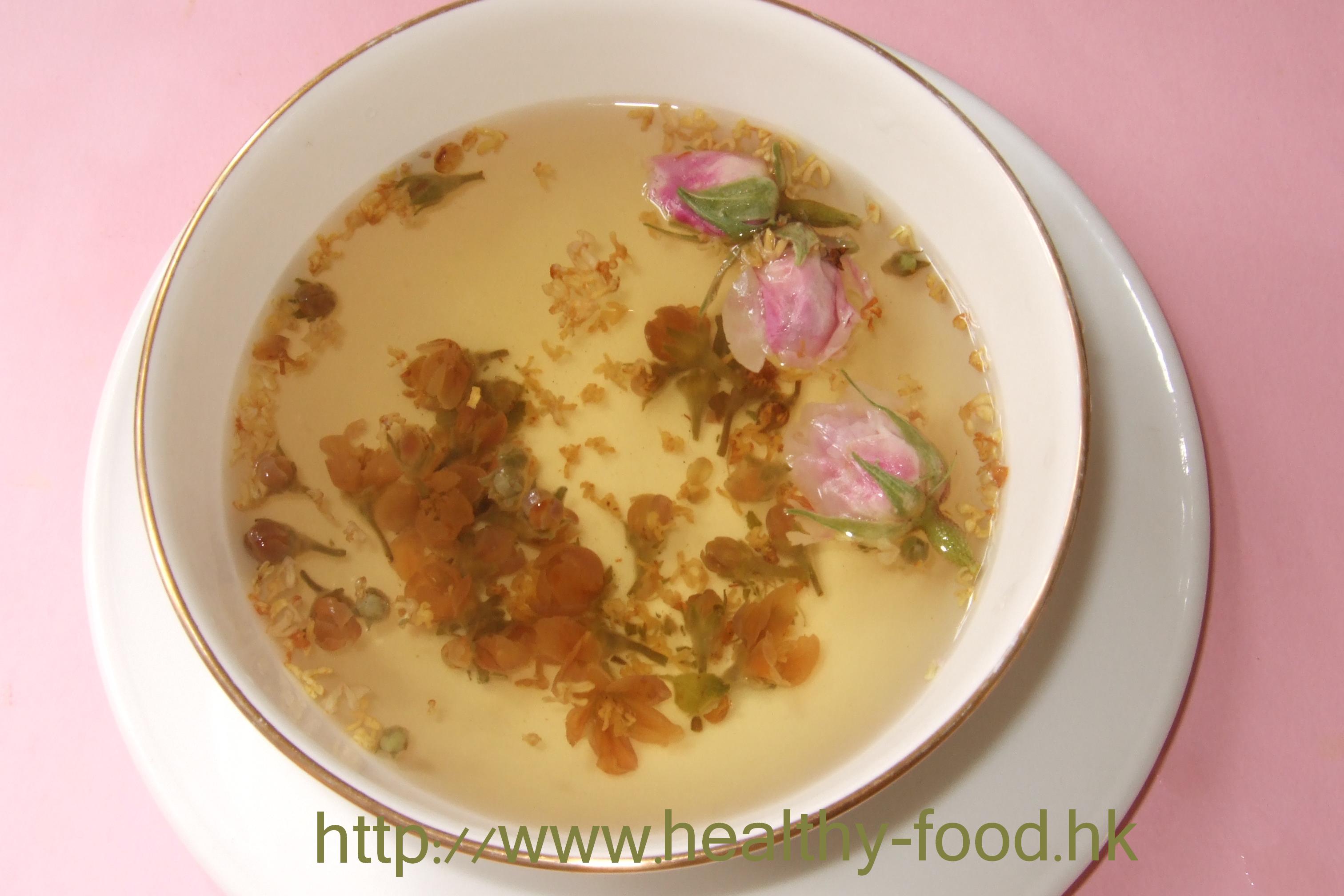
- Rose buds (mei gui hua): The cornerstone of Chinese floral beauty teas; moving qi and blood helps the skin receive better nourishment from within; also traditionally associated with reducing facial oil secretion by regulating the digestive system
- Golden osmanthus (jin gui hua): Fragrant and mildly astringent; associated with calming the stomach, freshening breath, and supporting the skin; adds a warm, honeyed fragrance
- Jasmine (mo li hua): Lightly aromatic; associated with supporting qi flow, lifting mood, and supporting a clear complexion; pairs well with both rose and osmanthus
Ingredients (1–2 cups)
| Ingredient | Amount | Notes |
|---|---|---|
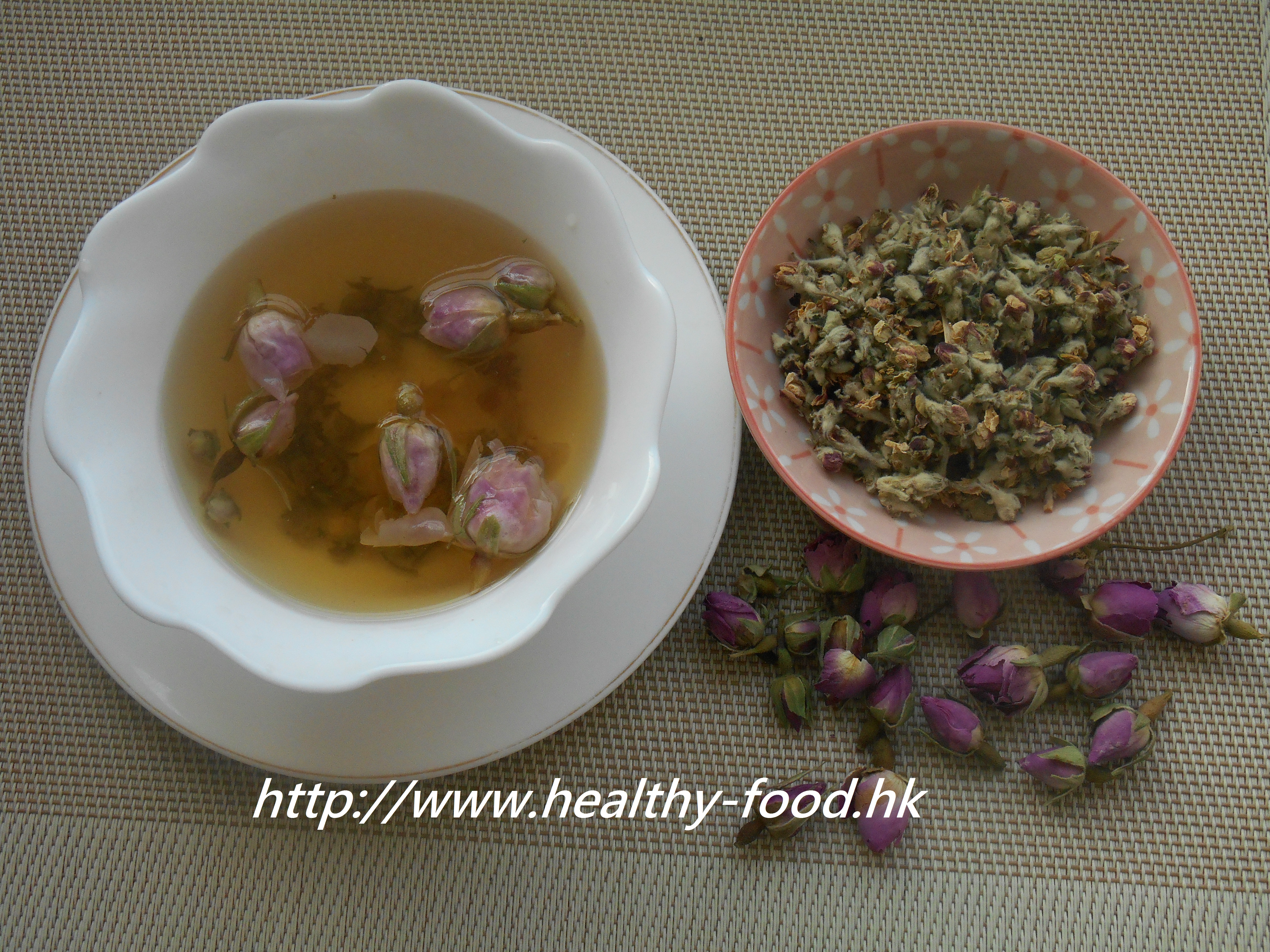
| Pink rose buds | 3 g | Red or purple varieties also work well |
| Golden osmanthus | 3 g | Dried; available from specialty tea and herb shops |
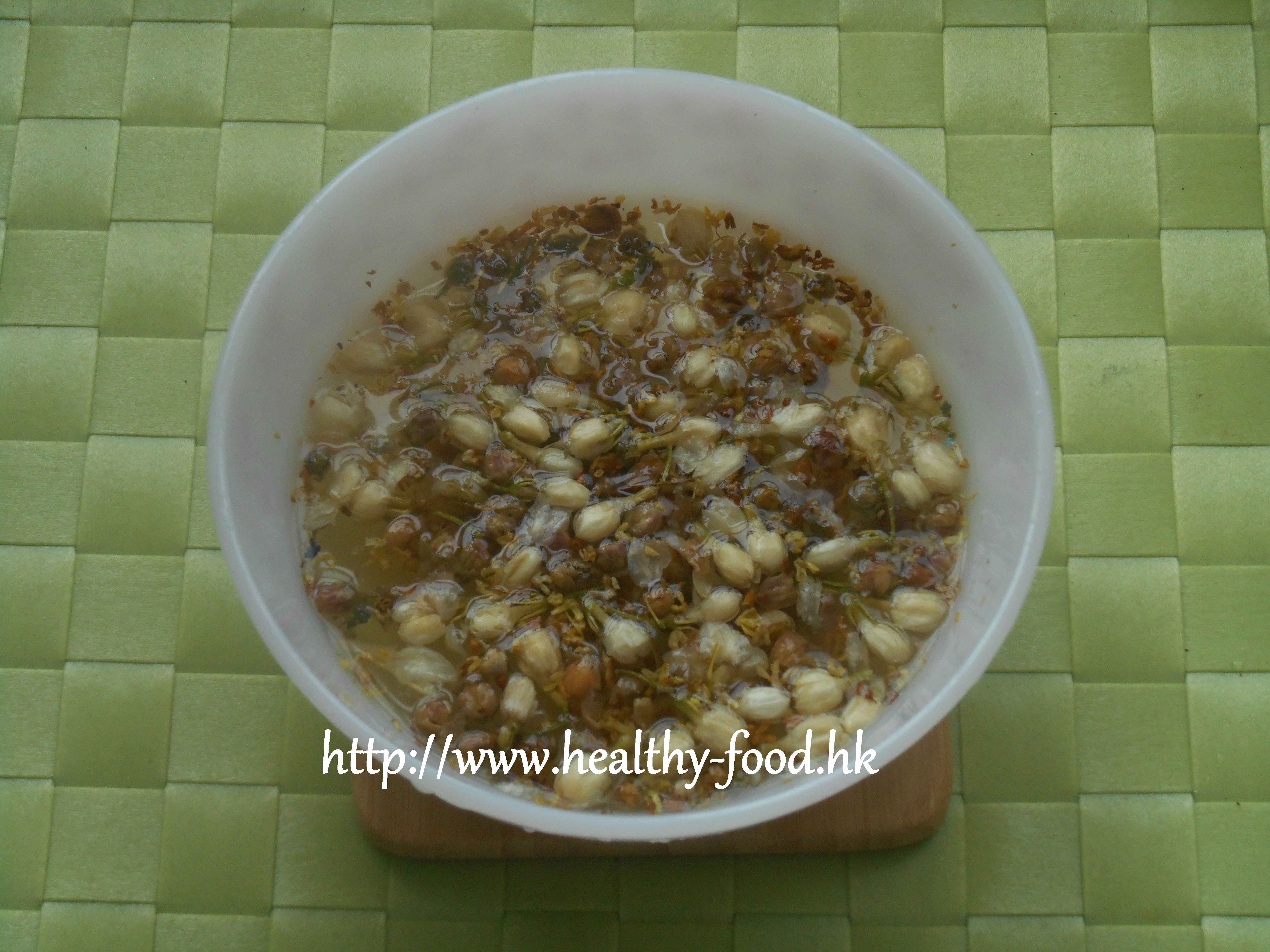
| Jasmine flowers | 3 g | Dried jasmine flowers |
| Raw honey | To taste | Add after pouring; do not boil honey |
Method
- Place all three flowers in a teapot.
- Pour a little boiling water over them, swirl gently, and discard — this rinse removes any dust.
- Pour in fresh boiling water to fill the pot. Cover and steep for about 5 minutes.
- Pour into a cup, allow to cool slightly, then stir in honey to taste.
- Drink warm. Can be re-steeped once.
Bro Niu’s tips
This tea is also effective for freshening breath — a pleasant bonus. If jasmine flowers are hard to find, try golden marigold (jin zhan ju / calendula) as a substitute, which has its own mild skin-brightening reputation. If you find the honey too much sugar and want sweetness without it, look for stevia leaves (tian ju ye) in specialty tea shops — two leaves will add natural sweetness and have no glycaemic impact. For melasma (butterfly-shaped pigmentation spots common in middle-aged women), this tea works best as part of an internal approach; Bro Niu also recommends mixing almond powder with egg white and applying it as a mask to the affected area for 30 minutes before washing off — do this daily for a month to help fade spots. Persistent or changing pigmentation warrants a check with a dermatologist.
Community questions answered (selected)
-
Q (SAM): Is this tea cooling? Can I drink it every day like water? I also easily get mouth sores. Bro Niu: This tea is not cold in nature — it is fine to drink daily. For recurrent mouth sores, try simmering glehnia root (sha shen, 40 g), ophiopogon root (mai dong, 15 g), and scrophularia (xuan shen, 9 g) in 5 bowls of water down to 2 bowls — this has a good track record for this complaint.
-
Q (yue): Over the past two years my facial spots have been getting worse — they look butterfly-shaped and my friend says it may be hormonal. Should I see a doctor? Bro Niu: What you describe sounds like melasma (huang he ban / butterfly spots), which is indeed often hormone-related and very common in middle-aged women. I would suggest seeing a Chinese medicine practitioner for internal adjustment. Alongside this tea, try mixing almond powder with raw egg white into a paste and applying it to the affected areas as a mask — leave it for 30 minutes, then rinse off. Do this daily for a month; it can help fade the spots.
-
Q (reader, on frequency): How many times a week can this tea be drunk? Bro Niu: Three to four times per week is a good pace, though daily is fine if you enjoy it.
Published May 1, 2010 · Adapted and translated for Nourilo from a traditional home-kitchen recipe. Approx. 4 min read.