Congee & Porridge
Yam, Peanut, Red Date and Purple Glutinous Rice Congee
traditionally used to nourish qi and blood after birth, and to support breast milk production
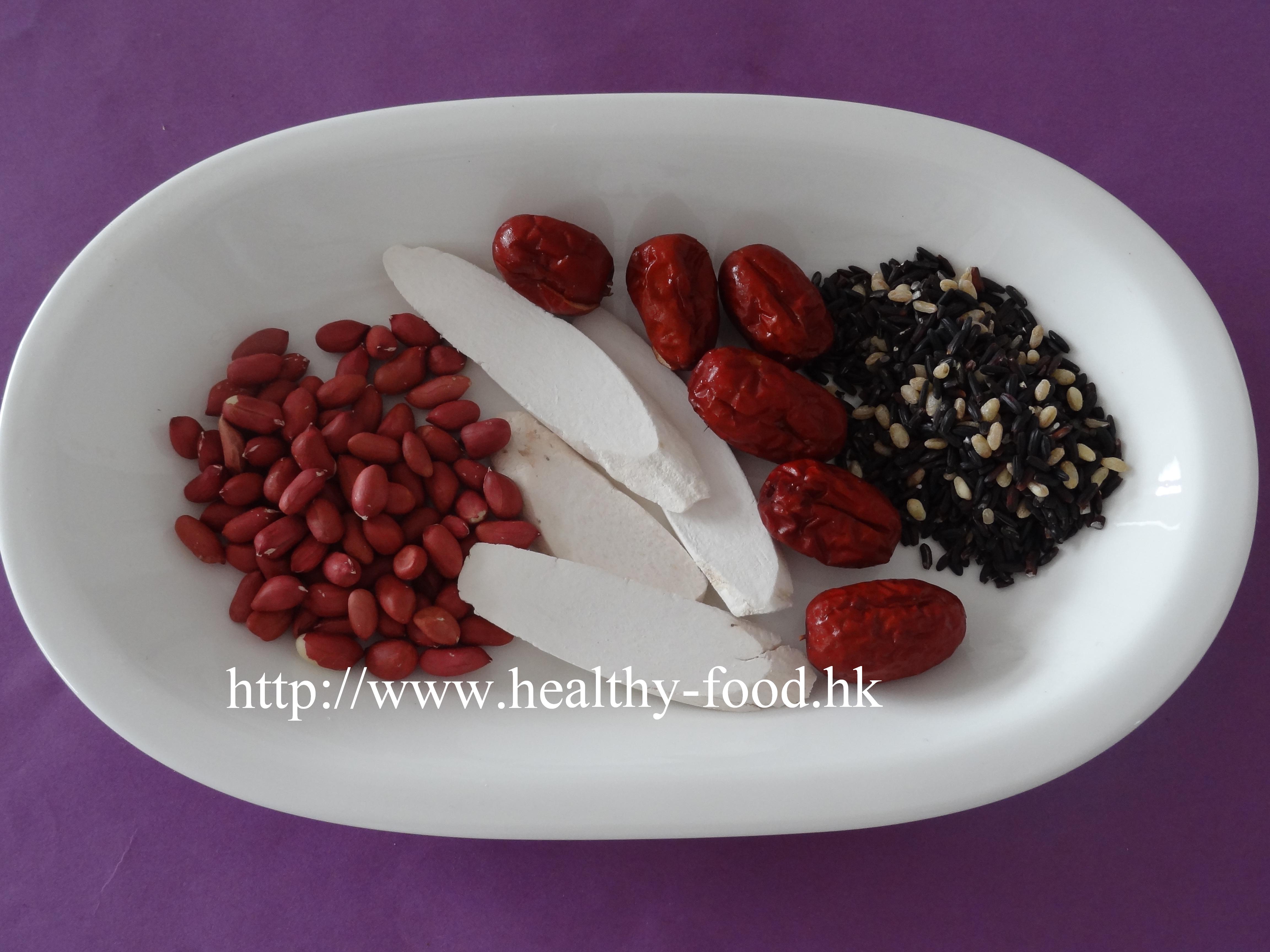
Why people make this congee
After giving birth, some new mothers find that their milk supply is slow to come in — sometimes due to blood and energy depletion during labour, and sometimes simply because of tension and anxiety. Traditional Chinese food therapy has long held that nurturing the spleen and stomach, replenishing qi and blood, and keeping the mind calm are the most important things a new mother can do to encourage milk flow. This purple-hued congee, with its gentle sweetness from red dates and peanuts, is one of Bro Niu’s recommendations for exactly that purpose. It is also genuinely delicious — hearty and comforting, not medicinal-tasting at all.
Who it suits / who should be cautious
- New mothers from around the time of hospital discharge onwards, as a breakfast or light meal
- Also suitable for anyone experiencing mild anaemia, dry or dull skin, or brittle hair — the combination of red dates, peanuts and purple rice is traditionally valued for blood nourishment
- Generally warming and well tolerated; those with active external illness (cold or flu) should wait until recovered before eating nourishing foods like this
Why these ingredients (the food-therapy logic)
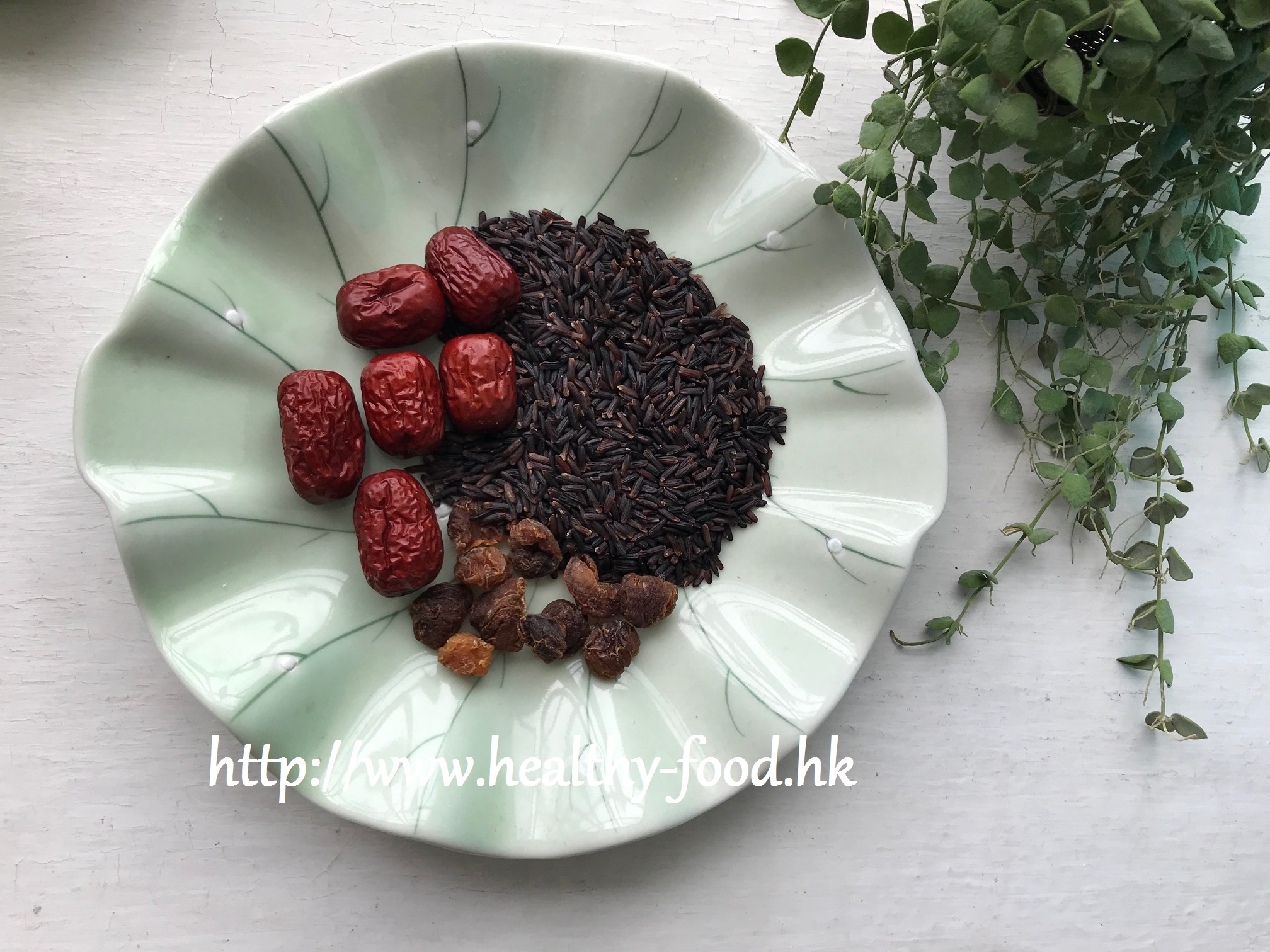
- Chinese yam (huai shan): A gentle tonic for the spleen, stomach and kidneys; supports digestive absorption, which is essential for milk production
- Peanuts (hua sheng ren): In traditional food therapy, the red skin of the peanut is associated with blood nourishment; peanuts are also commonly used to encourage milk flow in postnatal care
- Red dates (hong zao): Warming and sweet; classically used in Chinese food therapy to replenish blood and calm the spirit
- Purple glutinous rice (zi nuo mi): Richer in anthocyanins than white rice; warming, associated with blood nourishment and kidney support
- Brown rice (xuan mi): Adds fibre and a nutty depth; complements the glutinous rice
- Brown sugar (hong tang): Warming in nature; traditionally preferred over white sugar for women’s postpartum recipes
Ingredients (4 bowls)
| Ingredient | Amount | Notes |
|---|---|---|
| Chinese yam, dried (huai shan) | ~37 g (1 liang) | Rinse and soak 20 minutes |
| Raw peanuts, skin on (hua sheng ren) | ~75 g (2 liang) | Rinse and soak 20 minutes |
| Red dates (hong zao) | 6–8 pieces | Remove stones |
| Purple glutinous rice (zi nuo mi) | ~75 g (2 liang) | Rinse |
| Brown rice (xuan mi) | ~37 g (1 liang) | Rinse |
| Brown sugar (hong tang) | To taste | Add at the end |
| Water | 8 bowls (~1.6 L) | Reduce to about 4 bowls |
Method
- Rinse the Chinese yam and peanuts; soak separately in cold water for about 20 minutes.
- Remove the stones from the red dates.
- Rinse the purple glutinous rice and brown rice.
- Place all ingredients (except brown sugar) in a pot with 8 bowls of water.
- Bring to a boil, then reduce to a low simmer and cook for about 1.5 hours, stirring occasionally, until the congee is thick and the ingredients are soft.
- Stir in brown sugar to taste, allow to dissolve, and serve warm. Eat the congee and all the solids.
Bro Niu’s tips
- The purple glutinous rice will turn the whole congee a deep purple-black colour — this is completely normal and does not affect the flavour or benefit. If you want to keep the yam a lighter colour, you can add fresh yam (cut into small cubes) during the last 10 minutes of cooking rather than simmering it the whole time.
- The red-skinned variety of peanut (hong yi hua sheng) is particularly good here — the red skin is the part traditionally associated with blood nourishment. Bro Niu found some particularly fragrant small-sized ones at a market in the Shanghai countryside.
- For milk production, relaxation matters as much as food. Gentle breast massage with a warm towel before feeding, and letting the baby feed frequently, will help considerably alongside this congee.
- This congee is also good for non-postnatal use: anyone with anaemia, pale complexion or dry, brittle hair can benefit from regular servings.
Community questions answered (selected)
-
Q (annie / reader): What is the difference between hua sheng ren (peanut kernel) and regular peanuts? Can I use regular peanuts? Bro Niu: Hua sheng ren simply means peanut — they are the same thing. Regular peanuts are fine.
-
Q (Ivy): Can this congee be eaten as breakfast right after giving birth? Bro Niu: Yes — from the time you leave the hospital after birth, this congee can be eaten as a breakfast dish.
-
Q (Sue): My daughter gave birth in July but still has a little lochia (post-birth discharge) even now. What should she cook to help clear it? Bro Niu: Try hawthorn (shan zha) 1 liang, motherwort (yi mu cao) 1 liang, red dates 6 pieces and brown sugar, simmered in 5 bowls of water down to 2 bowls, for 3 consecutive days.
Published August 8, 2012 · Adapted and translated for Nourilo from a traditional home-kitchen recipe. Approx. 4 min read.