Soups
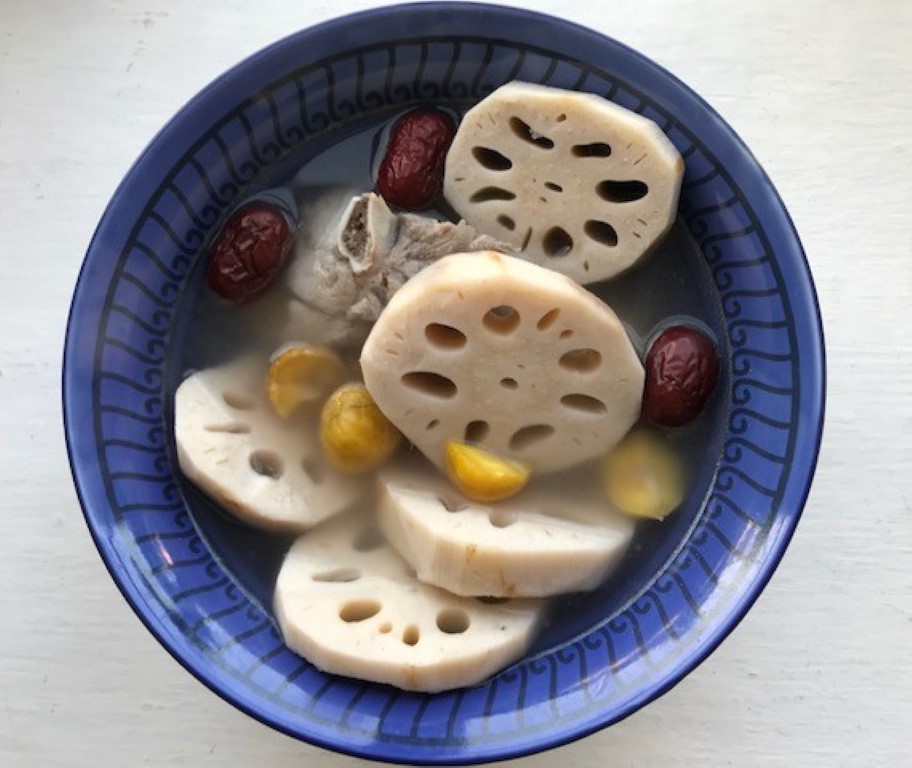
Lotus Root, Black-Eyed Pea, Peanut and Pork Shin Soup
traditionally used to nourish qi and blood, ease fatigue, reduce puffiness, and support lactation
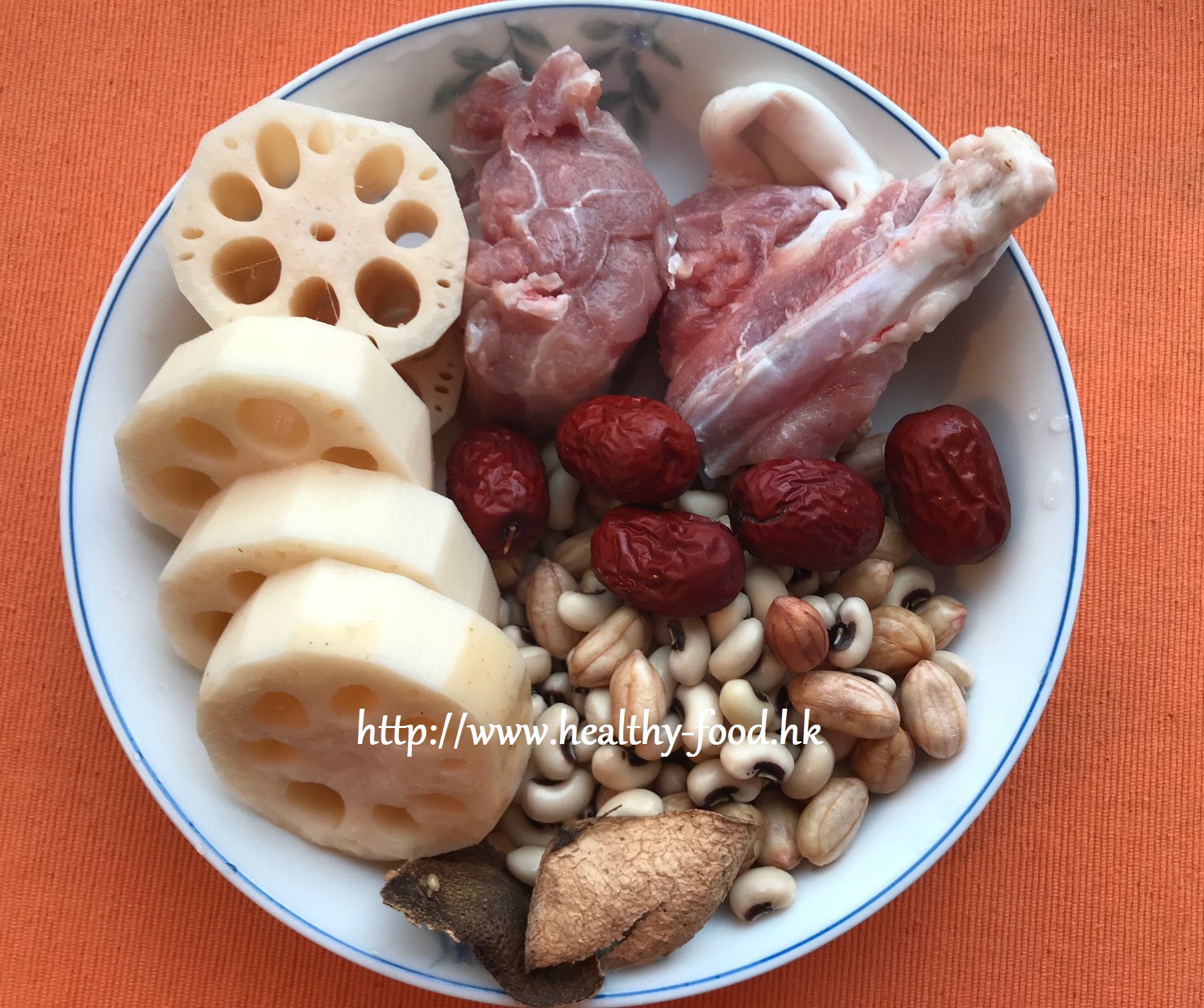
Why people make this soup
Lotus root is a year-round staple in Cantonese kitchens, and it is one of the most nourishing vegetables in the Chinese culinary tradition. Rich in vitamin B and iron, it is considered especially beneficial for women — supporting blood production, helping with circulation, and strengthening the digestive system. When you pair lotus root with black-eyed peas and red-skinned peanuts, you get a combination that has traditionally been used across generations in Cantonese homes to address tiredness, anaemia, and postpartum recovery. The whole pot comes out golden and sweet, and it works equally well as an everyday family soup.
Who it suits / who should be cautious
- Suitable for most ages; the whole family can share it.
- Particularly beneficial for women who are anaemic, frequently fatigued, postpartum, or breastfeeding.
- Safe to drink during menstruation.
- Best cooked in a ceramic (earthenware) or glass pot — lotus root reacts with iron cookware and the soup may turn grey-coloured, though this does not affect flavour or nutrition.
Why these ingredients (the food-therapy logic)
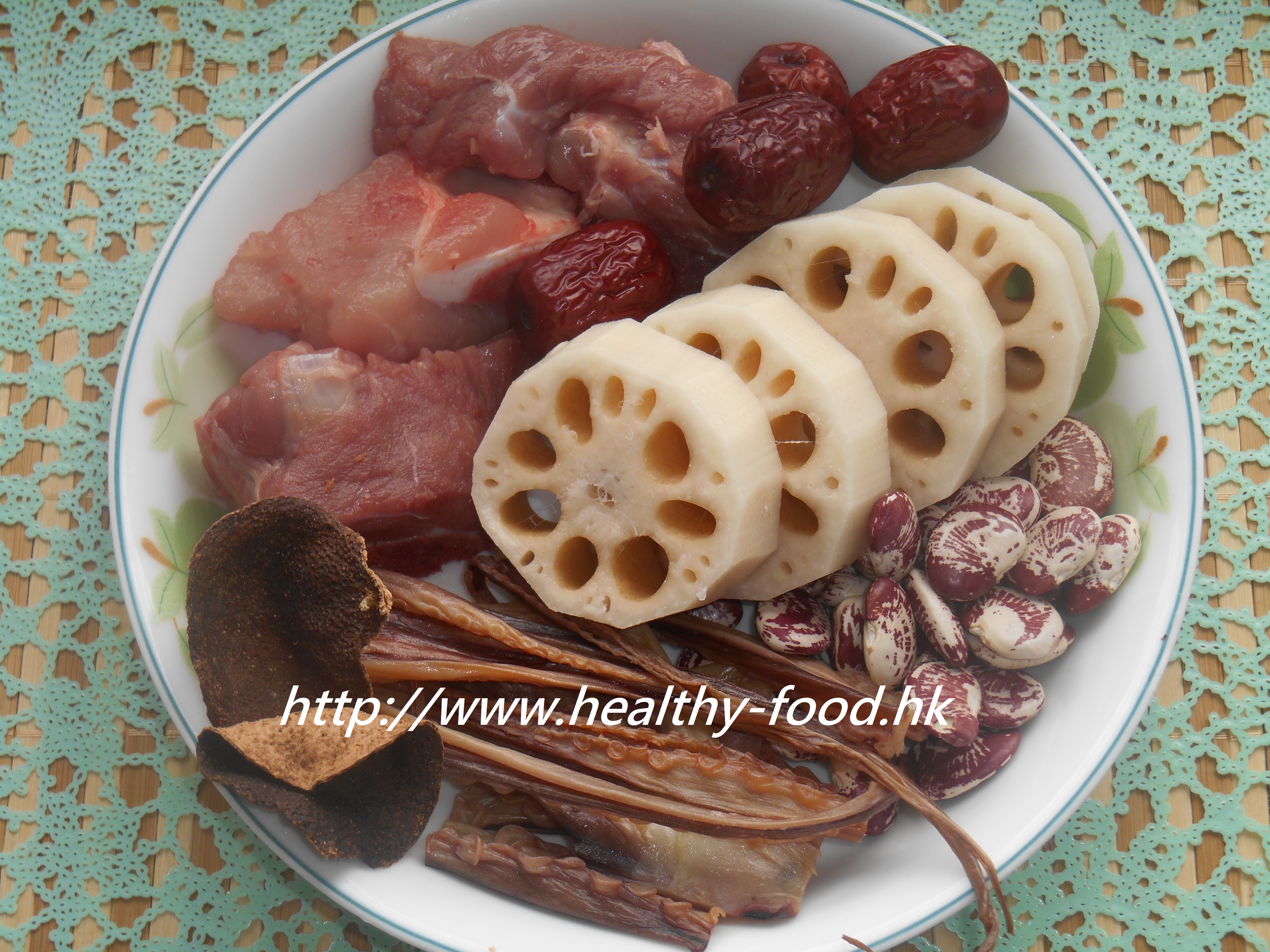
- Lotus root (lian ou): Rich in vitamin B and iron; traditionally used to promote fluid production, stop bleeding and disperse stasis, strengthen the spleen, and stimulate appetite. Particularly beneficial for women.
- Black-eyed peas (mei dou): Traditionally used to strengthen the spleen, reduce puffiness, and support kidney function. A gentle, warming legume.
- Red-skinned peanuts (hua sheng with skin): The red skin is the most nutritionally active part — traditionally used to nourish blood and stop bleeding. Keeps the skin on for full benefit.
- Red dates (hong zao): Warm and nourishing; support blood and spleen qi.
- Dried tangerine peel (chen pi): Aids digestion and prevents the soup from feeling heavy or bloating.
- Pork shin (zhu zhan): A lean, collagen-rich cut that cooks slowly without going mushy; provides protein and keeps the broth clear.
Ingredients (4 bowls)
| Ingredient | Amount | Notes |
|---|---|---|
| Lotus root | ~600 g (1 jin) | Peeled and sliced |
| Black-eyed peas (mei dou) | ~38 g (1 liang) | Soak and rinse |
| Raw peanuts, skin on | ~75 g (2 liang) | Soak and rinse |
| Red dates (hong zao) | 5 pieces | Pitted |
| Dried tangerine peel (chen pi) | 1 piece | Soaked and rinsed |
| Pork shin (zhu zhan) | 1 whole (~400–500 g) | Blanched first |
| Water | 8 bowls (~2 litres) | Reduces to 4 bowls |
Method
- Peel the lotus root, rinse, and cut into thick slices.
- Soak and rinse the black-eyed peas, peanuts, and tangerine peel separately.
- Pit the red dates.
- Blanch the pork shin in boiling water for 2–3 minutes; drain and rinse.
- Combine all ingredients in a pot (preferably ceramic or glass) with 8 bowls of water.
- Bring to a boil, then reduce to a low simmer for 2 hours until the liquid reduces to about 4 bowls.
- Serve and eat both the soup and the cooked ingredients.
Bro Niu’s tips
A small but important note: avoid cooking lotus root in a metal pot — it can turn the soup an unappealing grey colour through oxidation. A clay or glass pot is the ideal choice. This soup is genuinely delicious and suitable for the whole family. Lotus root processed into lotus root starch (ou fen) is also wonderful cooked as a porridge with millet and red dates, especially for people recovering from surgery, illness, or childbirth.
Community questions answered (selected)
-
Q (Ella): Can this lotus root soup be drunk during menstruation? Bro Niu: Yes, this soup is fine to drink during menstruation.
-
Q (JSM): I am 6 months pregnant. Is peach gum (tao jiao) dessert safe for me? Bro Niu: Pregnancy is generally not the right time for peach gum. Try substituting snow fungus (xue er) or yellow fungus (huang er) instead — both work beautifully in sweet soups and are safe for pregnancy.
-
Q (Angela): What soup or drink is good for irregular periods? Bro Niu: Irregular periods have many possible causes. Motherwort (yi mu cao, 5 qian) is a classic herb for regulating menstruation — you can simmer it into a strong liquid and use that to cook a red date and millet porridge. As a daily tea, rose buds (mei gui hua) and Chinese rose (yue ji hua) are also beneficial when drunk regularly.
Published March 16, 2021 · Adapted and translated for Nourilo from a traditional home-kitchen recipe. Approx. 3 min read.