Soups
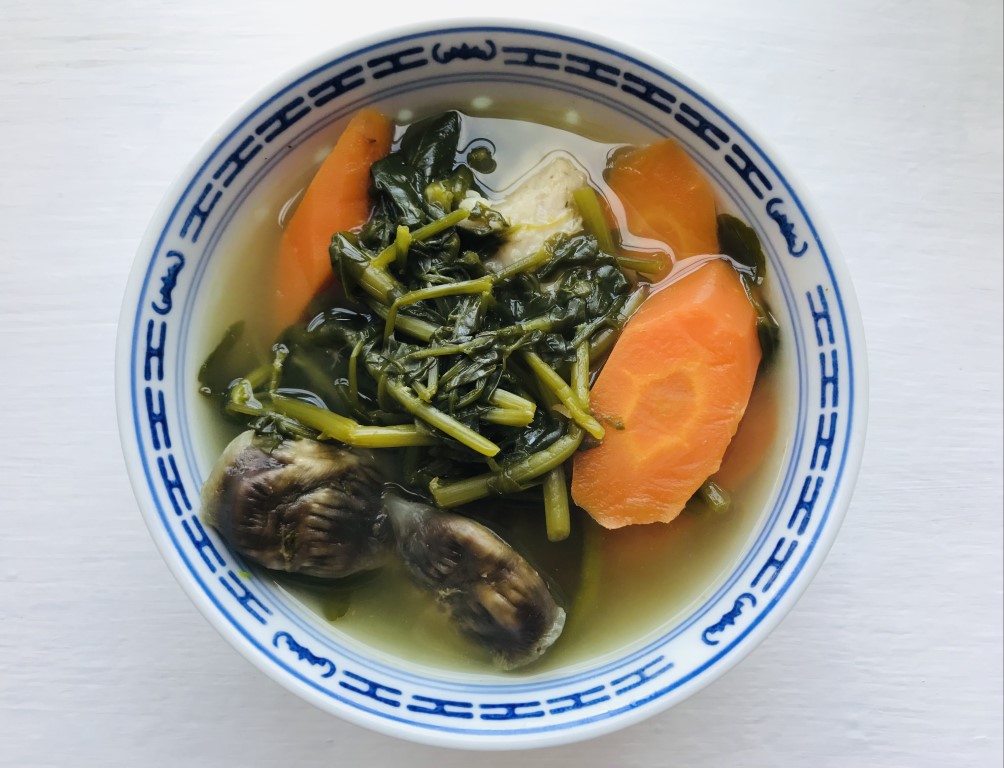
Wild Watercress, Carrot & Crucian Carp Soup
Traditionally used to clear internal heat, ease joint aches, and relieve sore throats

Why people make this soup
Most people have experienced that particular exhausted aching — every joint feels heavy, the neck is stiff, and even mild activity feels like too much. In Cantonese food culture this is often described as “bone fire” (gu huo), and it can come on after long hours of work, a string of late nights, or in the early stages of a cold. Rather than reaching for painkillers, many Cantonese families turn to a pot of wild watercress soup. The watercress — known locally as tang ge cai — has a reputation for clearing this internal heat, while the crucian carp adds a richness that makes the broth genuinely satisfying.
Who it suits / who should be cautious
- Suits people with generalised body aches and stiffness from overwork or early-stage colds, sore throats, cough with phlegm, lethargy, and those who tend toward damp-heat patterns
- Suitable for the whole family; lean pork can substitute for the fish
- No specific contraindications noted; mild in nature when simmered for the full time
Why these ingredients (the food-therapy logic)
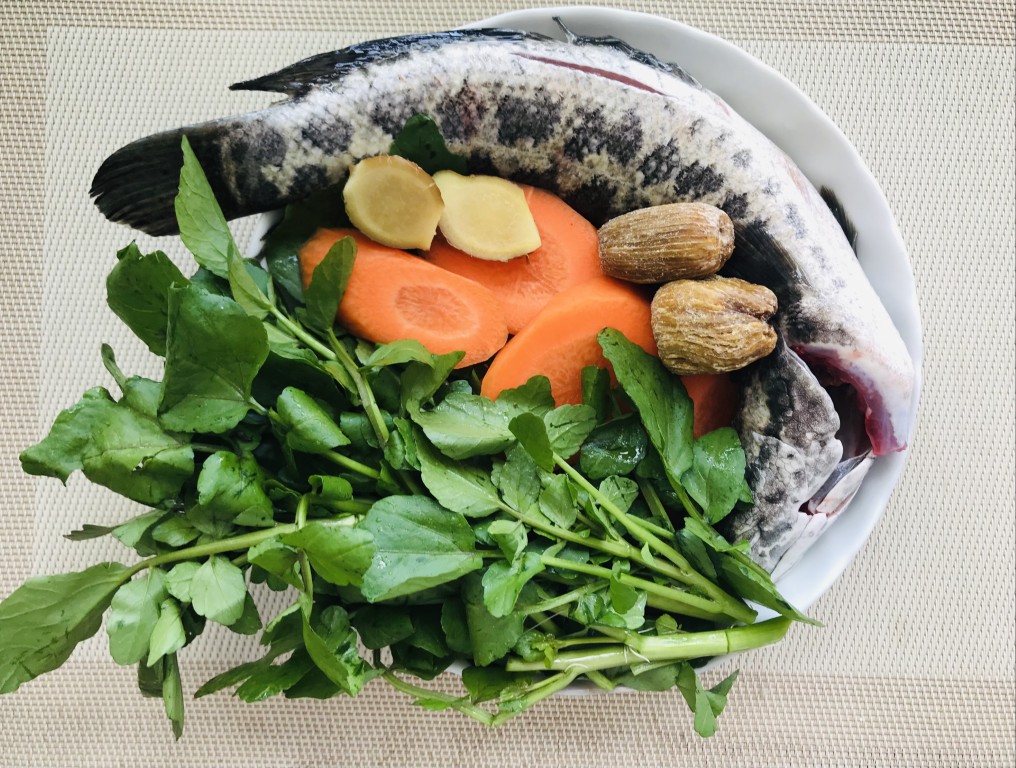
- Wild watercress (ye ge cai): Also called tang ge cai in Cantonese. Traditionally associated with relieving surface heat, resolving phlegm, draining dampness, and easing throat inflammation. Both leaves and root are used.
- Carrot (hong luo bo): Supports the spleen and stomach, has a mild anti-inflammatory reputation, and adds natural sweetness to the broth.
- Honey dates (mi zao): Gently nourish and add a mellow sweetness that balances the slightly bitter watercress.
- Dried tangerine peel (chen pi): Regulates qi and eases digestion; prevents the soup from sitting heavily in the stomach.
- Crucian carp (ji yu): Lightly pan-frying the fish before adding it to the pot creates a richer, less “fishy” broth. The fish adds protein and is considered to support circulation.
Ingredients (3–4 bowls)
| Ingredient | Amount | Notes |
|---|---|---|
| Wild watercress | 300 g | Rinse including the roots |
| Carrot | 1 medium | Peel and cut into chunks |
| Honey dates | 2 pieces | Rinse |
| Dried tangerine peel | 1 piece | Soak briefly and rinse |
| Crucian carp | 1 whole | Clean and gut; pan-fry in a little oil until lightly golden |
Method
- Rinse the watercress thoroughly, including the roots; cut into sections.
- Peel and chunk the carrot. Soak the dried tangerine peel.
- Clean and gut the crucian carp. Heat a small amount of oil in a pan and fry the fish on both sides until lightly golden and fragrant.
- Bring 8 cups (about 1.9 litres) of water to a boil in a large pot.
- Add all ingredients — watercress, carrot, honey dates, tangerine peel, and the pan-fried fish.
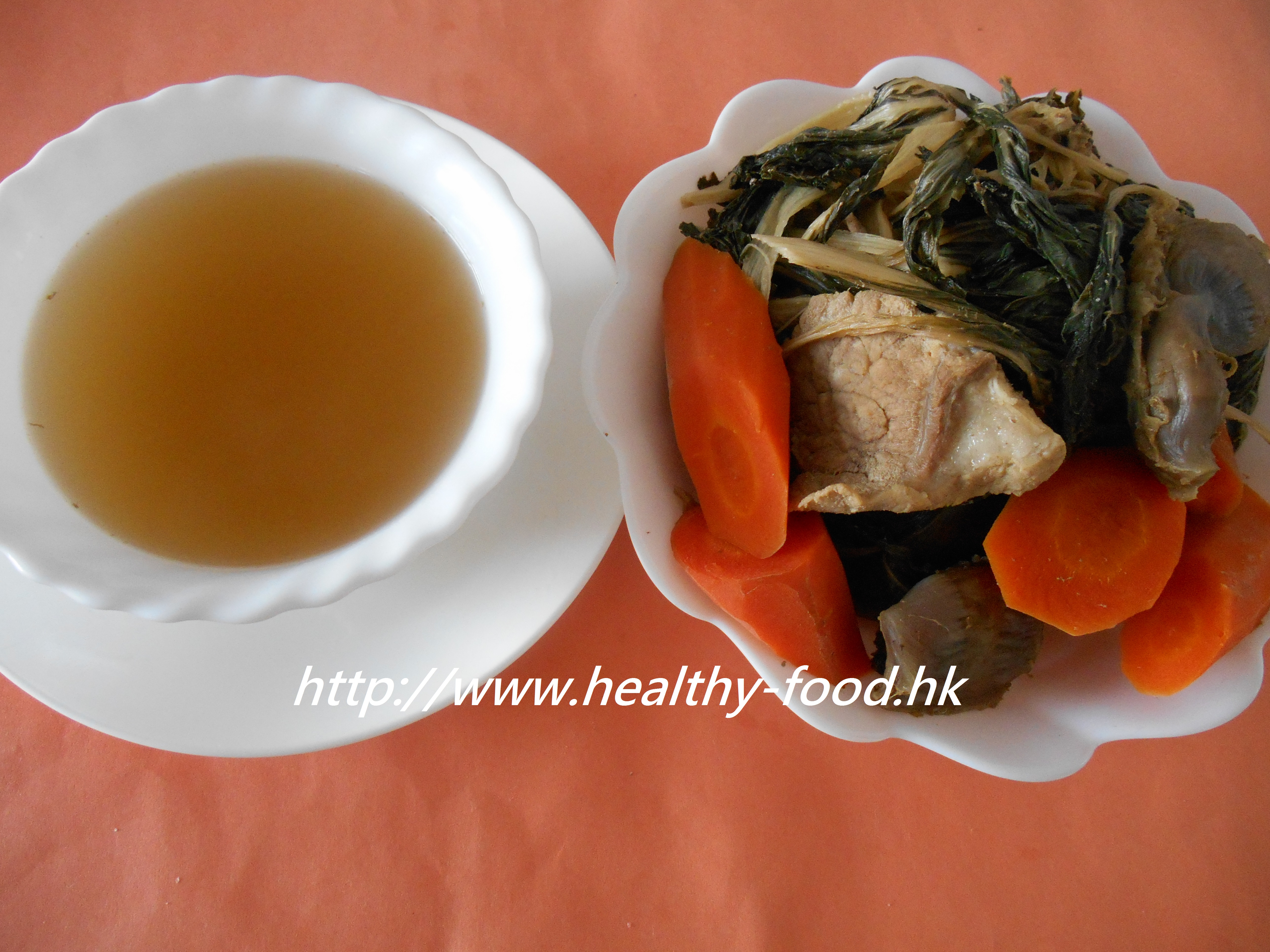
- Simmer for 2 hours. Serve the soup (and the fish if desired).
Bro Niu’s tips
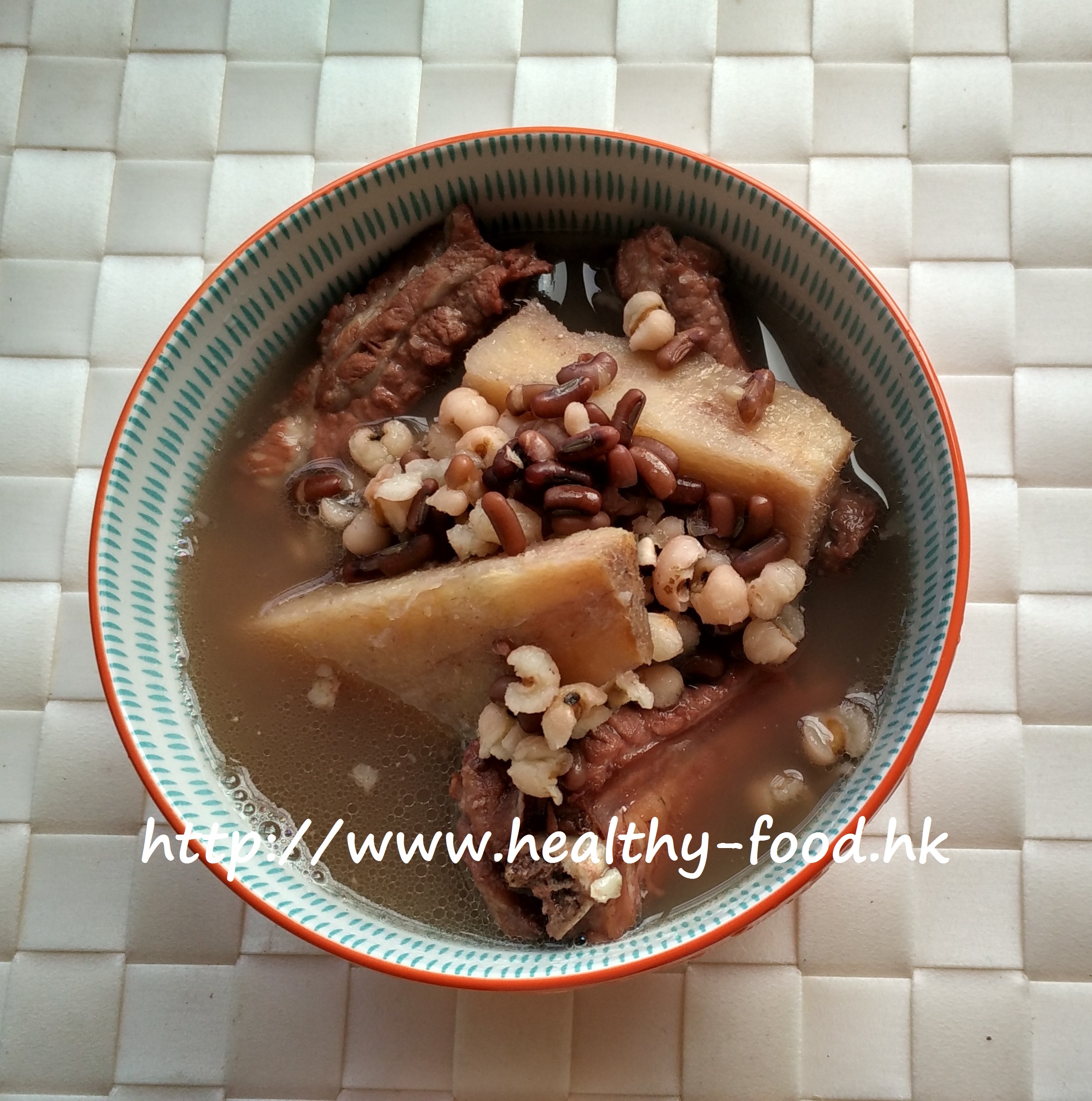
Pan-frying the fish first is worth the extra step — it reduces the fishy smell and gives the broth a much better flavour. This soup also doubles as a remedy for cold-related cough and sore throat. Lean pork (about 225 g) works fine as a substitute if crucian carp is unavailable. If you are vegetarian and avoiding meat entirely, simply omit the fish and add extra red adzuki beans and flat-leaf beans (chi xiao dou and bian dou) for a plant-based version with a similar clearing effect.
Community questions answered (selected)
-
Q (Man): Can I use dried watercress? What amount would I need? Bro Niu: Dried wild watercress is not commonly found. If you do find it, use about 2 liang (75 g) of the dried version.
-
Q (Anonymous): Can powdered kudzu root (fen ge) be used instead of wild watercress? Bro Niu: Yes, kudzu root can also clear heat and reduce internal fire. It is fine to use.
-
Q (Kennis): My daughter recovered from influenza, pneumonia, and enterovirus and is now quite weak with headaches. How should I support her recovery? Bro Niu: You can use kudzu root (fen ge, about 500 g), red adzuki beans, flat-leaf beans, and coix seeds (1 liang each), one piece of dried tangerine peel, and 2 honey dates to cook a lean pork soup. Simmer 8–9 cups of water for 2 hours. The whole family can drink it. This is helpful for lingering cold symptoms and headaches.
Published September 29, 2017 · Adapted and translated for Nourilo from a traditional home-kitchen recipe. Approx. 3 min read.