Soups
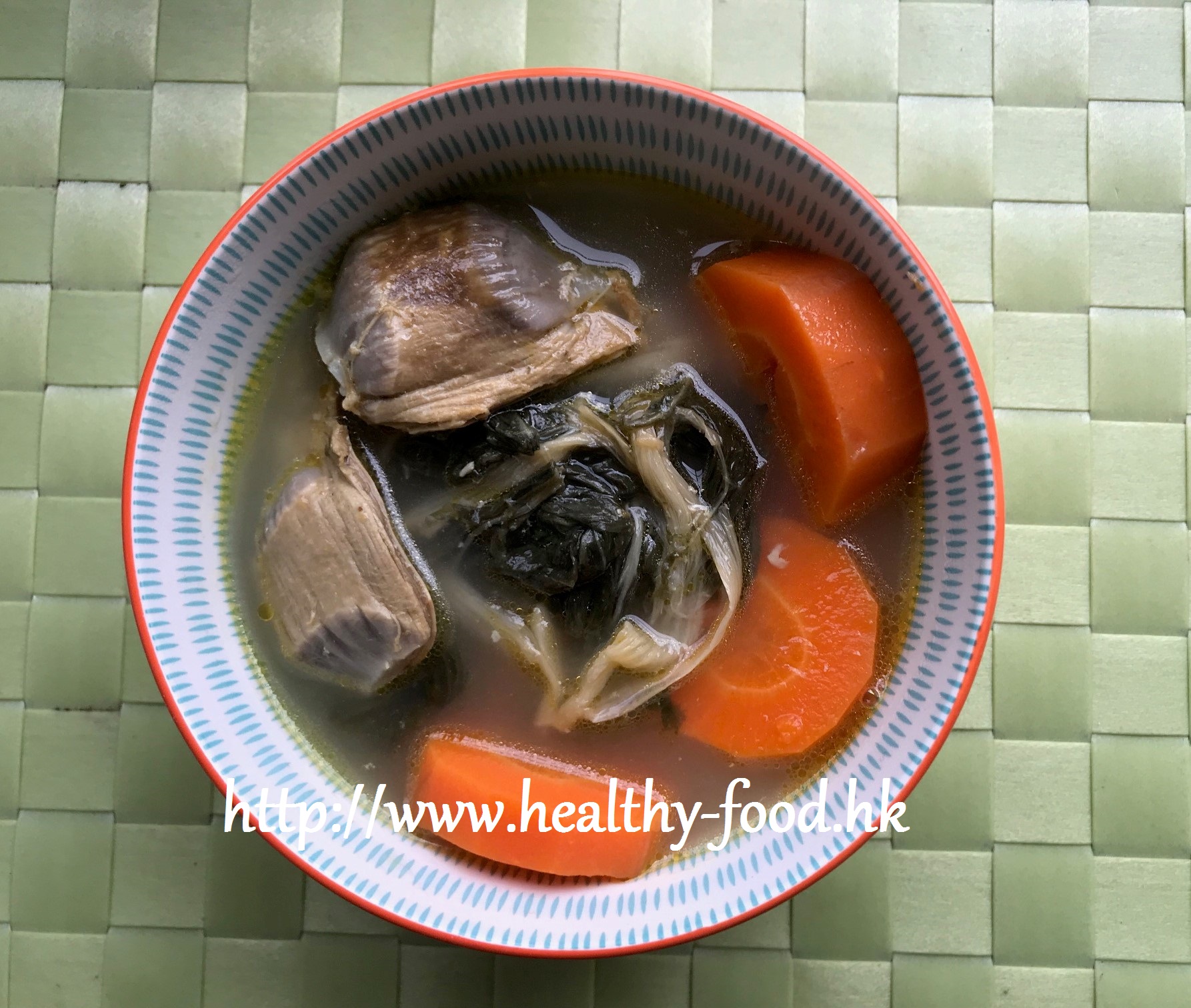
Watercress, Carrot, Dried Duck Kidney, and Pork Rib Soup
traditionally used to clear excess heat from the lungs and stomach in children, relieve bad breath, dry cough, and sore throat
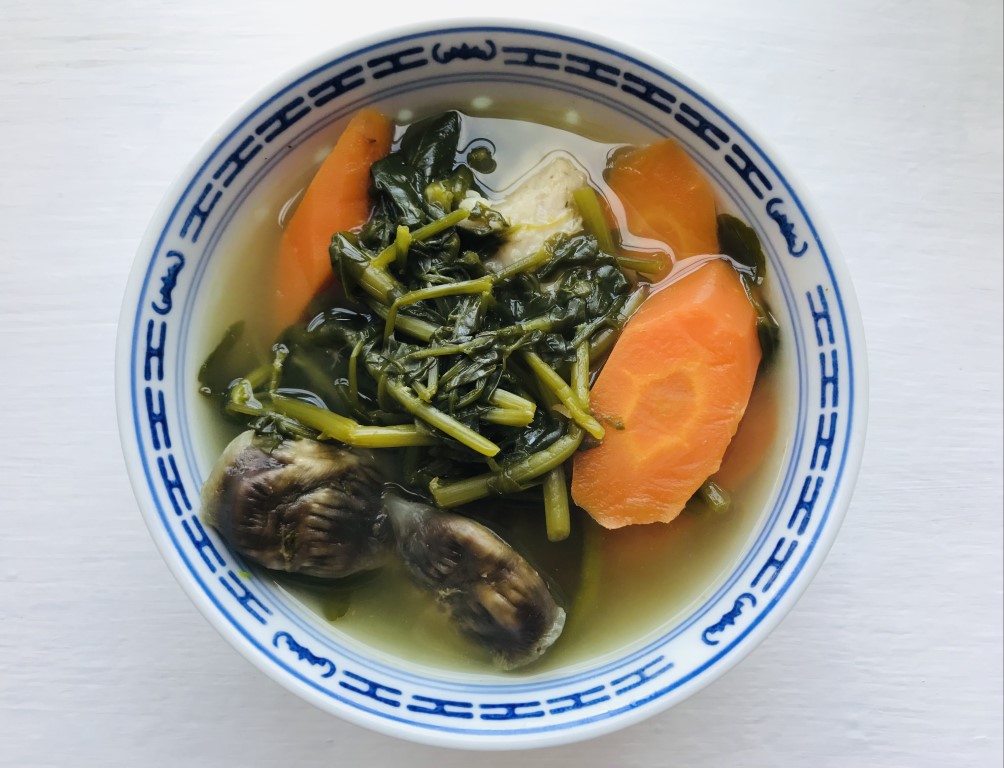
Why people make this soup
Most parents know the pattern: a child who loves fried chicken, chips, and meat, eats very little in the way of vegetables — and then starts showing signs of what Cantonese grandmothers would call “too much fire” (热气): bad breath, a dry or slightly hoarse cough, a red throat, yellow urine, or constipation. Western medicine would probably call some of this a minor dietary imbalance; traditional Cantonese food therapy calls it “lung-stomach accumulated heat.”
Watercress is one of the best-known cooling vegetables in Cantonese cooking. Paired with carrot and dried salted duck kidney — a distinctively Cantonese ingredient with a savoury, slightly gamey character — this soup is both genuinely flavourful and traditionally used to clear heat from the respiratory and digestive systems. The long simmer (two hours) ensures the soup is not too cold in nature despite using cooling ingredients.
Who it suits / who should be cautious
- Suitable for all ages, including children and the elderly.
- Especially helpful for children who eat a lot of fried or meaty food and show signs of excess heat: bad breath, dry cough, sore or red throat, tonsil inflammation, dark urine, or constipation.
- Not suitable during an active fever. Address the fever first, then use this soup as a follow-up.
Why these ingredients (the food-therapy logic)
- Watercress (xi yang cai): One of the most widely used vegetables in Cantonese cooling soups; traditionally associated with clearing heat from the lungs and stomach, and cooling blood-heat conditions.
- Carrot (hong luo bo): Clears heat from the stomach; provides sweetness and balance to the soup.
- Dried salted duck kidney (chen shen): A preserved duck kidney with a concentrated savoury flavour; traditionally associated with clearing lung and kidney heat, and adding distinctive depth to the broth.
- Dried tangerine peel (chen pi): Moves qi, reduces phlegm, improves digestion, and prevents the cooling ingredients from being too harsh on the stomach.
- Pork ribs (pai gu): Provide a rich, clean broth base and protein.
Ingredients (4–5 bowls)
| Ingredient | Amount | Notes |
|---|---|---|
| Watercress (xi yang cai) | ~300 g (half jin) | Rinse thoroughly |
| Carrot | 1–2 medium | Peeled and cut into chunks |
| Dried salted duck kidney (chen shen) | 3 pieces | Available at Chinese herb shops and dried goods stores |
| Dried tangerine peel (chen pi) | 1 piece | Soak and rinse |
| Pork ribs (pai gu) | ~300 g (half jin) | Blanch together with duck kidney in boiling water; drain and rinse |
| Water | 8–9 bowls (~2–2.25 L) | — |
Method
- Wash the watercress thoroughly.
- Peel and cut the carrot into chunks.
- Soak and rinse the dried tangerine peel.
- Blanch pork ribs and dried duck kidney together in boiling water for 2 minutes; drain and rinse.
- Add carrot, dried tangerine peel, dried duck kidney, and pork ribs to a pot with 8–9 bowls of cold water.
- Bring to a full boil, then add the watercress. Once the pot returns to a boil, reduce the heat to medium-low and simmer for 2 hours until reduced to about 4–5 bowls.
- Serve together with the soup ingredients.
Bro Niu’s tips
The key technique here: always add watercress to already-boiling water, never to cold water. Adding it to cold water gives the soup a bitter, astringent edge. Added to rolling boiling liquid, it releases a clean, fresh fragrance that makes the broth genuinely delicious. Once cooked for two hours, this soup is not overly cooling — the long simmering time and tangerine peel both moderate its cold nature — so even the elderly and those with sensitive stomachs can enjoy it.
Published January 6, 2023 · Adapted and translated for Nourilo from a traditional home-kitchen recipe. Approx. 3 min read.