Home-Style Dishes
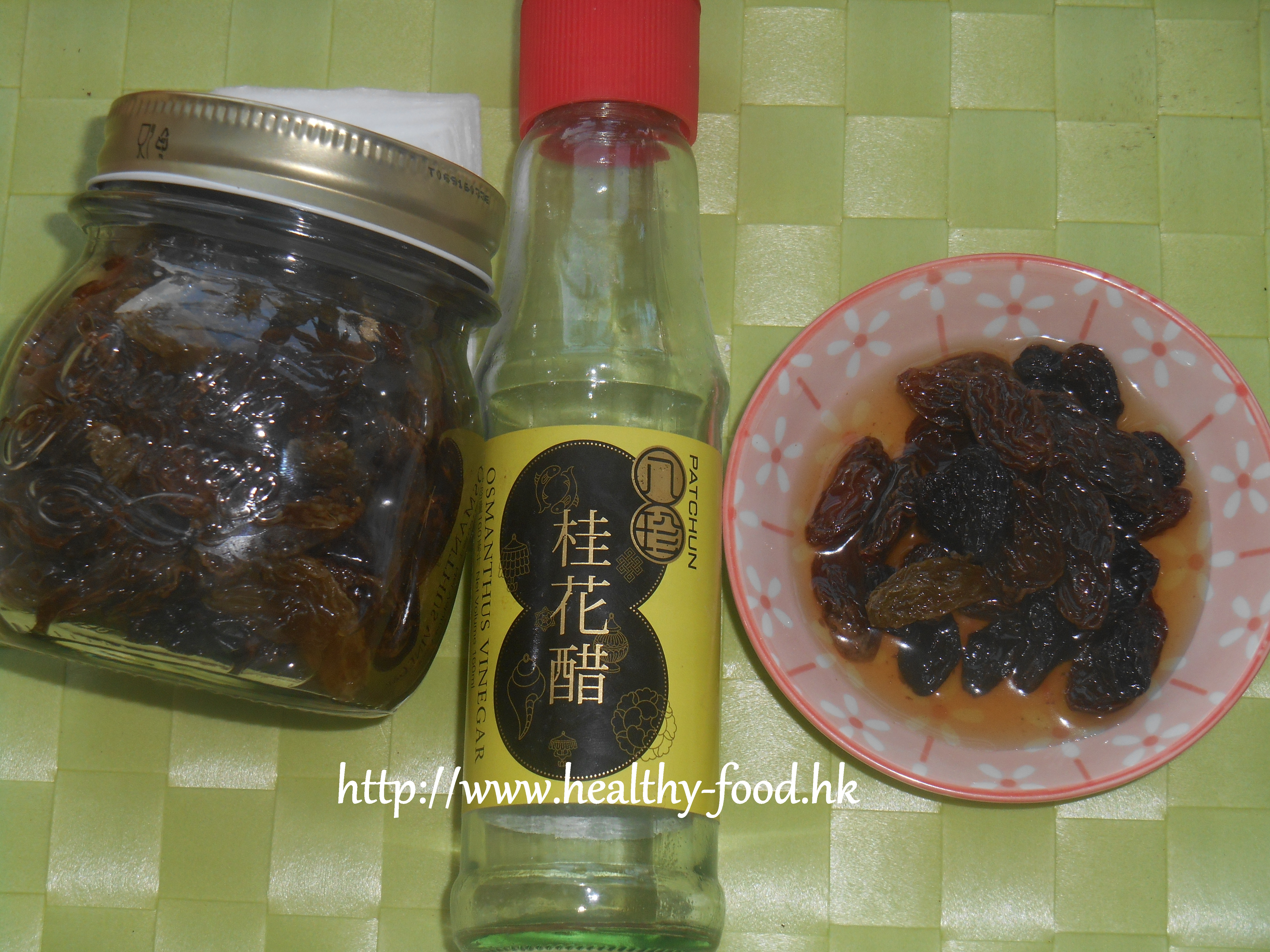
Vinegar-Soaked Dark Raisins
Traditionally associated with nourishing the liver, supporting detoxification, and protecting brain cells from ageing
Why people make this
Bro Niu came across a report suggesting that what is often labelled as age-related cognitive decline may in some cases originate from poor liver function rather than directly from the brain. When the liver’s detoxification capacity is reduced, toxins gradually accumulate in the bloodstream and can affect the nervous system — contributing to mental fogginess, memory lapses, and slow reactions. This led Bro Niu to consider what simple daily food could support liver health, and the answer was this humble preparation: dark raisins soaked in rice vinegar.
The science behind it is straightforward: dark grapes and their dried counterparts are rich in polyphenols, particularly anthocyanins (the blue-purple pigments), which are potent antioxidants. These compounds have been extensively studied for their ability to protect liver cells, support circulation, and penetrate the blood-brain barrier to protect neurons. Meanwhile, in Chinese food medicine, vinegar is considered to “enter the liver” (suan ru gan) and is used to improve the liver’s detoxification efficiency and stimulate healthy metabolism.
Who it suits / who should be cautious
- Suitable for most adults, particularly those over 40 who are interested in supporting liver health and protecting cognitive function as they age
- People with excess stomach acid should take this preparation after meals rather than on an empty stomach
- One tablespoon per day is the correct amount — there is no benefit to eating more
Why these ingredients (the food-therapy logic)
- Dark raisins (deep purple-black variety): Rich in grape polyphenols and anthocyanins; traditionally considered to tonify blood, strengthen the sinews, nourish the liver, and move stagnant blood. The anthocyanins in dark grape varieties can cross the blood-brain barrier and directly support brain cell nutrition.
- Rice vinegar (mi cu) or osmanthus rice vinegar (gui hua cu): Sour in nature, and in Chinese food medicine sourness “enters the liver” — vinegar is traditionally associated with enhancing liver detoxification, improving metabolism, aiding digestion, and strengthening the immune system. The osmanthus version adds a pleasant fragrance and mild sweetness.
Ingredients (multiple servings)
| Ingredient | Amount | Notes |
|---|---|---|
| Dark purple-black raisins | ~150 g (4 taels) | Use the deep-coloured variety (not green raisins) |
| Osmanthus rice vinegar or pure rice vinegar | 1 bottle (~250 ml) | Available at Chinese speciality stores or supermarkets |
Method
- Place the dark raisins into a clean glass jar.
- Pour in enough rice vinegar to cover the raisins completely.
- Leave to soak overnight (approximately 8 hours).
- The next day, the raisins will have absorbed most of the vinegar and plumped up.
- Take 1 tablespoon per day. The preparation keeps in the glass jar — do not over-soak for too many days, as the raisins may become overly large and very sour.
Bro Niu’s tips
Osmanthus-infused rice vinegar is Bro Niu’s preferred choice because it adds a pleasant floral fragrance and a touch of natural sweetness — but any pure rice vinegar works just as well. After soaking, the raisins will have absorbed most of the vinegar, so eating the raisins means consuming the vinegar too. One tablespoon a day is sufficient. For those with excess stomach acid, eat after meals. Avoid soaking for too many days at a time, as prolonged soaking makes the raisins very sour and can cause them to over-expand.
Community questions answered (selected)
-
Q (reader): Can I soak a larger batch to have in reserve? Bro Niu: You can soak a little more at a time, but from my own experience, leaving them too long makes the raisins expand excessively and become very sour.
-
Q (reader): Where can I find osmanthus vinegar? And do I also need to drink the vinegar itself? Bro Niu: Osmanthus vinegar is available at Ba Zhen specialty stores. As for the vinegar — after soaking, the raisins absorb most of it, so eating the raisins means you are also consuming the vinegar.
-
Q (Joey): Do the raisins have to be the deep purple-black variety? The raisins I normally see at the supermarket are from green grapes and look black after drying — do they have the same effect? Bro Niu: Green grapes remain green-coloured when dried — they do not turn black. The black or dark purple raisins you see are made from red or black grape varieties. Supermarkets do sell the darker variety; they are easy to find.
Published November 19, 2019 · Adapted and translated for Nourilo from a traditional home-kitchen recipe. Approx. 3 min read.