Herbal & Flower Teas
Rose and Jasmine Flower Tea
Supports digestive ease and stress relief
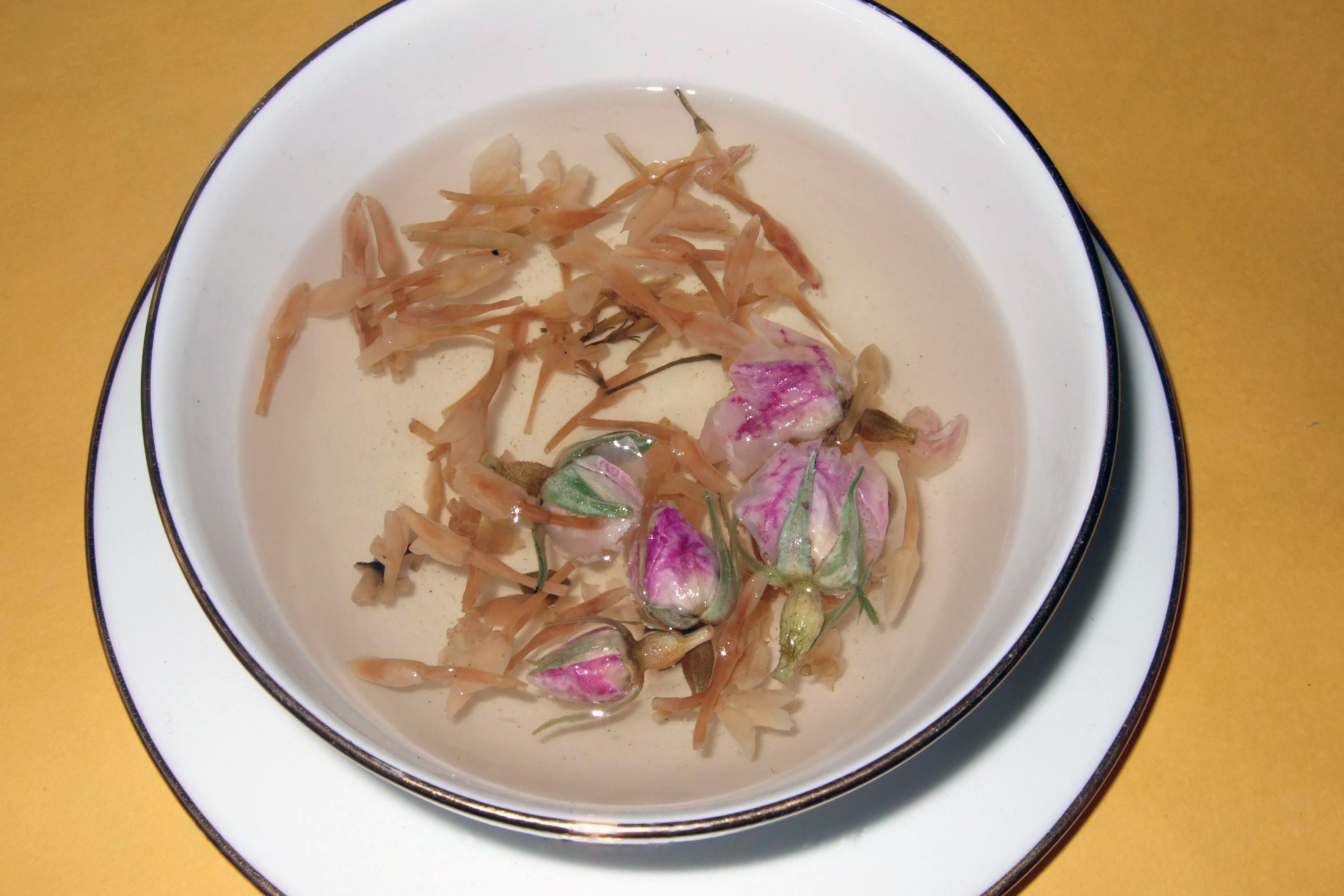
Why people make this tea
Some people find that the moment pressure builds at work or worry creeps in, their gut responds almost instantly — cramping, bloating, or a sudden dash to the bathroom. Western medicine tends to call this irritable bowel syndrome; Chinese medicine describes it as the liver qi (associated with stress regulation) overacting on the spleen and digestive system. This simple two-flower tea has long been used in that context: both rose and jasmine are gentle aromatic herbs traditionally valued for smoothing the flow of liver qi and calming the digestive system that gets caught in the crossfire.
The tea is easy to prepare, pleasant to drink, and can be made at a desk or office kitchen — which matters when stress is the very trigger you are trying to address.
Who it suits / who should be cautious
- Well suited to people whose stomach or bowel symptoms flare up noticeably during periods of stress, worry, or emotional tension.
- Also traditionally used to support irregular menstruation and mild gastric discomfort or bloating.
- Rose petals are warm in nature, not cold, so those who tend toward cold constitutions can drink this without concern.
- Pregnant women should avoid regular herbal flower teas; please check with a healthcare provider before use during pregnancy.
Why these ingredients (the food-therapy logic)
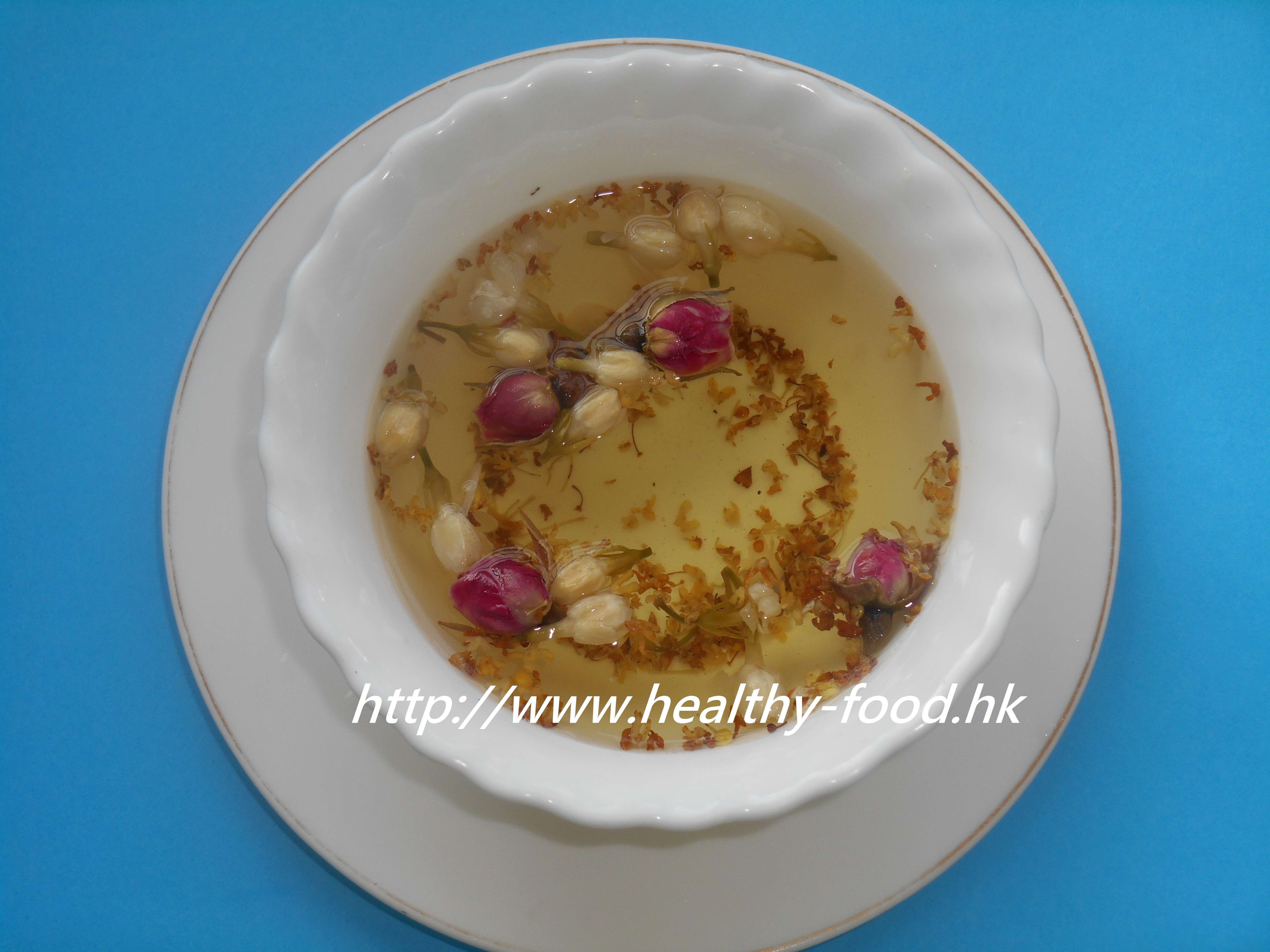
- Rose petals (mei gui hua, Rosa rugosa): Warm in nature; traditionally associated with moving liver qi, easing emotional stagnation, gently supporting blood circulation, and calming gastric discomfort. Not cold — suitable for those who are sensitive to cooling foods.
- Jasmine buds (su xin hua, Jasminum officinale): Neutral in nature; traditionally regarded as one of the key herbs for smoothing liver qi and lifting low mood. Has a light floral fragrance and a mildly bitter edge. If unavailable, jasmine tea flowers (mo li hua) make a close substitute; osmanthus (gui hua) is another option if neither can be found.
Ingredients (1 pot / 1–2 cups)
| Ingredient | Amount | Notes |
|---|---|---|
| Dried rose petals | 6 g (2 qian) | French pink roses are fragrant; 5–6 buds are enough |
| Jasmine buds (su xin hua) | 6 g (2 qian) | Substitute: jasmine tea flowers (mo li hua) or osmanthus |
Method
- Place the rose petals and jasmine buds in a teapot or a heatproof cup.
- Pour boiling water over them and immediately drain — this first rinse removes dust and any residue.
- Pour in fresh boiling water, cover, and steep for about 5 minutes.
- Pour into cups and drink while warm. A small amount of honey can be added if the slight bitterness of the jasmine is too pronounced.
Bro Niu’s tips
Flower teas bought from herbal medicine shops can sometimes carry a faint medicinal smell from nearby dried herbs; buying from a dedicated flower tea shop tends to give a cleaner, more fragrant result. This tea can also offer some comfort for stomach inflammation, mild gastric pain, and bloating. It is best enjoyed fresh — not left overnight. Drink it when you make it.
Community questions answered (selected)
-
Q (May): I cannot find jasmine buds (su xin hua) — is there anything I can use instead? Bro Niu: Jasmine tea flowers (mo li hua) can substitute for jasmine buds with no problem.
-
Q (chanwengi): Can osmanthus and jasmine buds be mixed together? Would it make the tea too warming? Bro Niu: Osmanthus and jasmine buds work well together. Jasmine is neutral and soothes the liver; osmanthus is gently warming and benefits the spleen and stomach, and also helps ease pain and move qi. Together they are not too warming at all — a nice combination.
-
Q (IT): There is no jasmine buds available where I am — what can I substitute? Bro Niu: Can you find osmanthus flowers (gui hua)? Osmanthus is good for the spleen and stomach. If you can find magnolia flower buds (he huan hua / sour jujube buds) those are another option for easing liver stagnation. Osmanthus would be the easier choice if available.
Published March 13, 2010 · Adapted and translated for Nourilo from a traditional home-kitchen recipe. Approx. 3 min read.