Herbal & Flower Teas
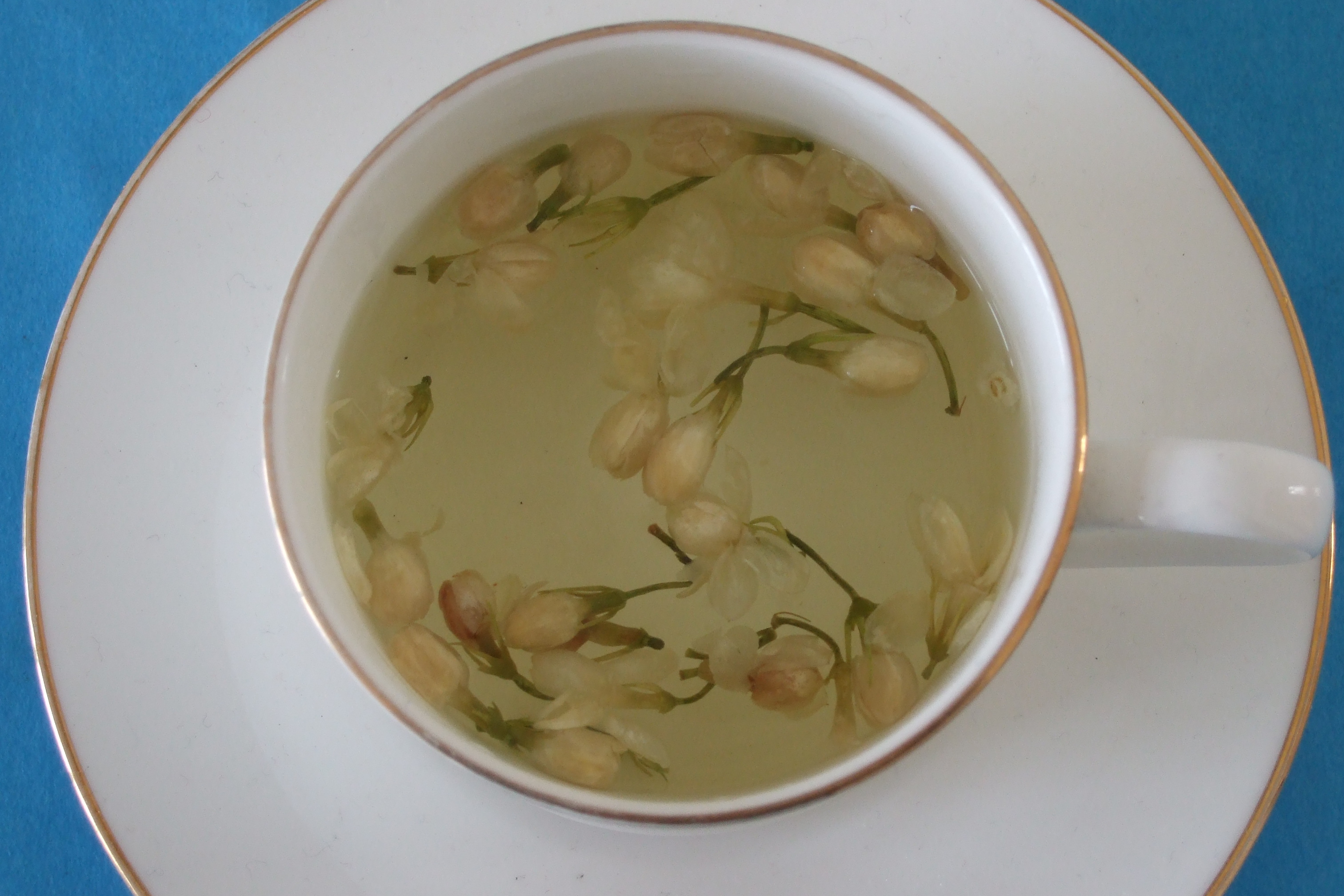
Rose, Jasmine and Osmanthus Flower Tea
Traditionally used to soothe stomach discomfort, ease bloating, calm the mood, and support skin radiance
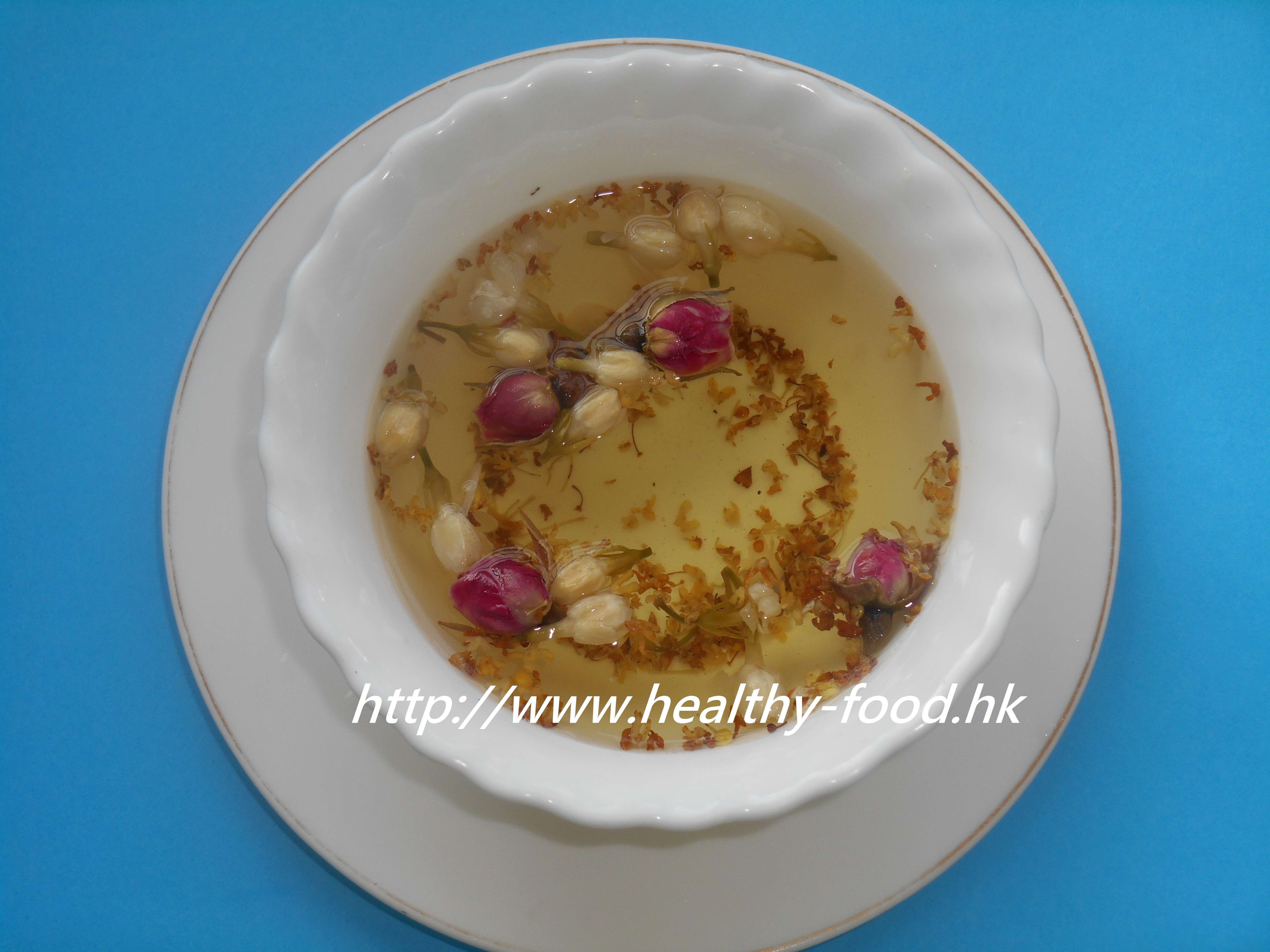
Why people make this tea
There is something deeply satisfying about a tea that smells as good as it tastes and also happens to be good for you. Osmanthus, with its warm golden colour and sweet honey-like fragrance, is actually one of the most underrated flowers in Chinese food therapy. On its own it is wonderful for a dry, uncomfortable stomach or a bloated, gassy feeling after eating. Paired with jasmine — which helps the liver qi flow smoothly and lifts a low or anxious mood — and rose, which the Chinese tradition associates with moving stagnant energy and beautifying the skin, you get a tea that works on the body and the emotions at once. It is a particularly good afternoon choice when stress has tangled up both your mood and your digestion.
Who it suits / who should be cautious
- Suitable for adults experiencing stomach discomfort, bloating, gastric irritation, or a low, stressful mood
- Traditionally considered helpful for those with gastric ulcer or chronic mild stomach pain linked to emotional stress
- Good for those seeking a naturally skin-supportive daily tea
- Pregnant women should NOT drink this tea — all three flowers have varying degrees of qi-moving activity that is not recommended in pregnancy
- Buy flower teas in small quantities and use them promptly; the fragrance fades quickly once opened
Why these ingredients (the food-therapy logic)
- Rose petals (mei gui hua): In Chinese food therapy, rose is associated with regulating qi flow, relieving mild liver stagnation, and gently supporting skin health and complexion; it also has a mild action on the blood
- Jasmine flowers (mo li hua): Traditionally used to calm the mind, ease emotional restlessness and mild anxiety, relieve headache from tension, and support digestive flow
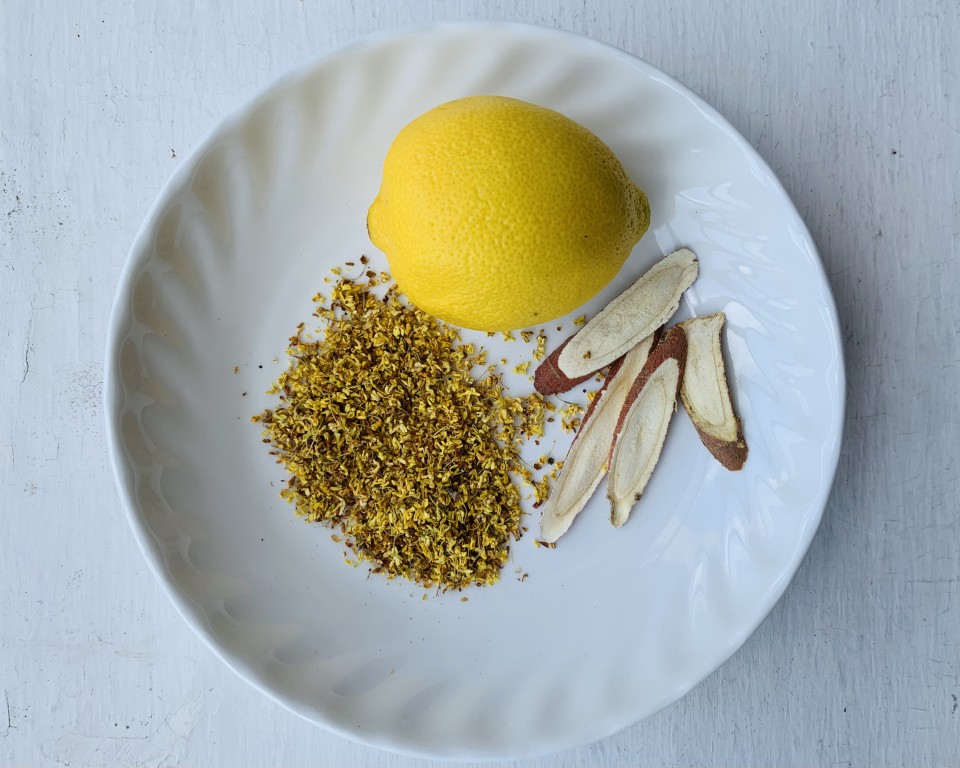
- Osmanthus flowers (gui hua): Traditionally used to relieve dry mouth and throat, ease stomach bloating and gas, stop mild cough, and support lung yin and skin moisture; the sweet fragrance alone is considered uplifting to the spirit
Ingredients (1 pot / 2–3 cups)
| Ingredient | Amount | Notes |
|---|---|---|
| Dried rose petals (mei gui hua) | 1 tablespoon (~3 g) | Buy from specialty flower-tea shops or quality grocery counters |
| Dried jasmine flowers (mo li hua) | 1 tablespoon (~3 g) | Same as above |
| Dried osmanthus flowers (gui hua) | 1 tablespoon (~3 g) | Same as above |
Method
- Place all three flower types into a teapot or large heatproof cup.
- Pour a small amount of freshly boiled water over the flowers, swirl gently, and drain — this first rinse removes any dust.
- Pour in fresh boiling water to fill the pot, cover, and steep for 5 minutes.
- Pour and enjoy. The same flowers can usually be re-steeped once.
Bro Niu’s tips
The fragrance of flower teas fades faster than most people realise, so buy small quantities and brew them soon after purchasing. Look for these flowers at the floral-tea counters in major department stores or at specialty flower-tea shops — the quality there tends to be more consistent. This tea is best enjoyed fresh and is not suitable for storing overnight. The osmanthus on its own is also lovely steeped as a single-ingredient tea for dry mouth, stomach discomfort, or a dry cough.
Community questions answered (selected)
-
Q (步印): Where can I buy good quality rose, jasmine and osmanthus flowers? Bro Niu: The floral-tea counters in larger department stores tend to stock good quality versions. You can also find them at specialist flower-tea shops — worth seeking out rather than buying from general grocery stalls.
-
Q (珍): I tend to catch colds easily and my stomach feels slightly uncomfortable and hard to digest sometimes — is there a food-therapy option for this? Can I substitute fo shou (Buddha’s hand) for ji nei jin (chicken gizzard membrane) in a digestive soup you mentioned? Bro Niu: Yes, fo shou (Buddha’s hand) works well as a substitute — use 3 to 4 qian.
Published July 11, 2016 · Adapted and translated for Nourilo from a traditional home-kitchen recipe. Approx. 3 min read.