Soups
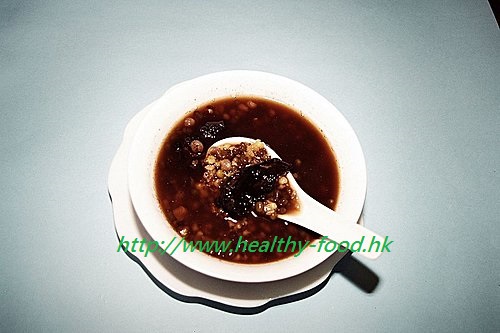
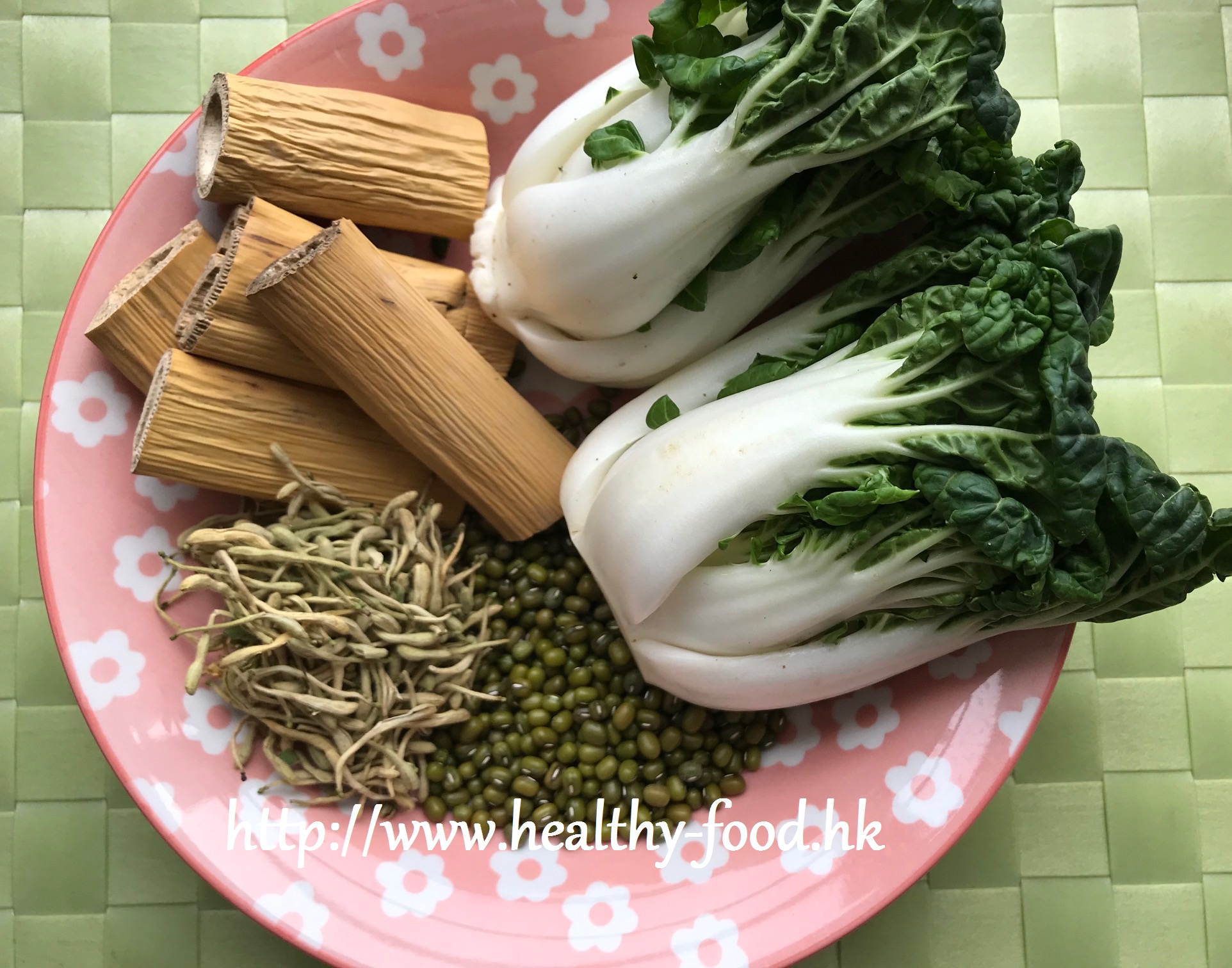
Reed Root, Honeysuckle, Mung Bean and Cabbage Soup
traditionally associated with clearing heat, relieving restlessness, and supporting the body's natural resolution of infant roseola rash
Why people make this soup
Roseola (also called “sixth disease” or roseola infantum) is one of the most common viral illnesses in babies between six and twelve months old. The classic pattern is a fever — sometimes reaching 39 to 40 degrees Celsius — followed by a spread of small rosy spots across the trunk once the fever breaks. The rash itself is painless and does not itch, and most children bounce back remarkably quickly once the fever lifts. That said, a high fever in a baby is always unsettling, and seeing a doctor to confirm the diagnosis is the right first step, because the early stage looks similar to other conditions.
Once the diagnosis is confirmed, this gentle soup offers families a traditional way to support the child’s comfort and recovery. Bro Niu describes it as “mild and easy to accept” — the mung beans and napa cabbage are familiar foods that even young children will tolerate, and the overall nature of the soup is cooling without being harsh. During the feverish period, keep the baby cool but not cold, maintain fresh air indoors, keep skin clean, and avoid thick blankets even with air conditioning running.
Who it suits / who should be cautious
- Suited to infants and toddlers experiencing roseola, heat rash, or mild skin irritation from blood heat
- The soup is mildly cooling in nature but considered safe for young children at these quantities
- Children with G6PD deficiency (favism) should not use honeysuckle flowers (jin yin hua); substitute fresh coix seeds (sheng yi mi), about 20 g, instead
- Serve in small amounts throughout the day rather than one large portion
- Always see a doctor for any infant fever, particularly if the child seems unusually unwell, refuses to feed, or the rash does not match the expected roseola pattern
Why these ingredients (the food-therapy logic)
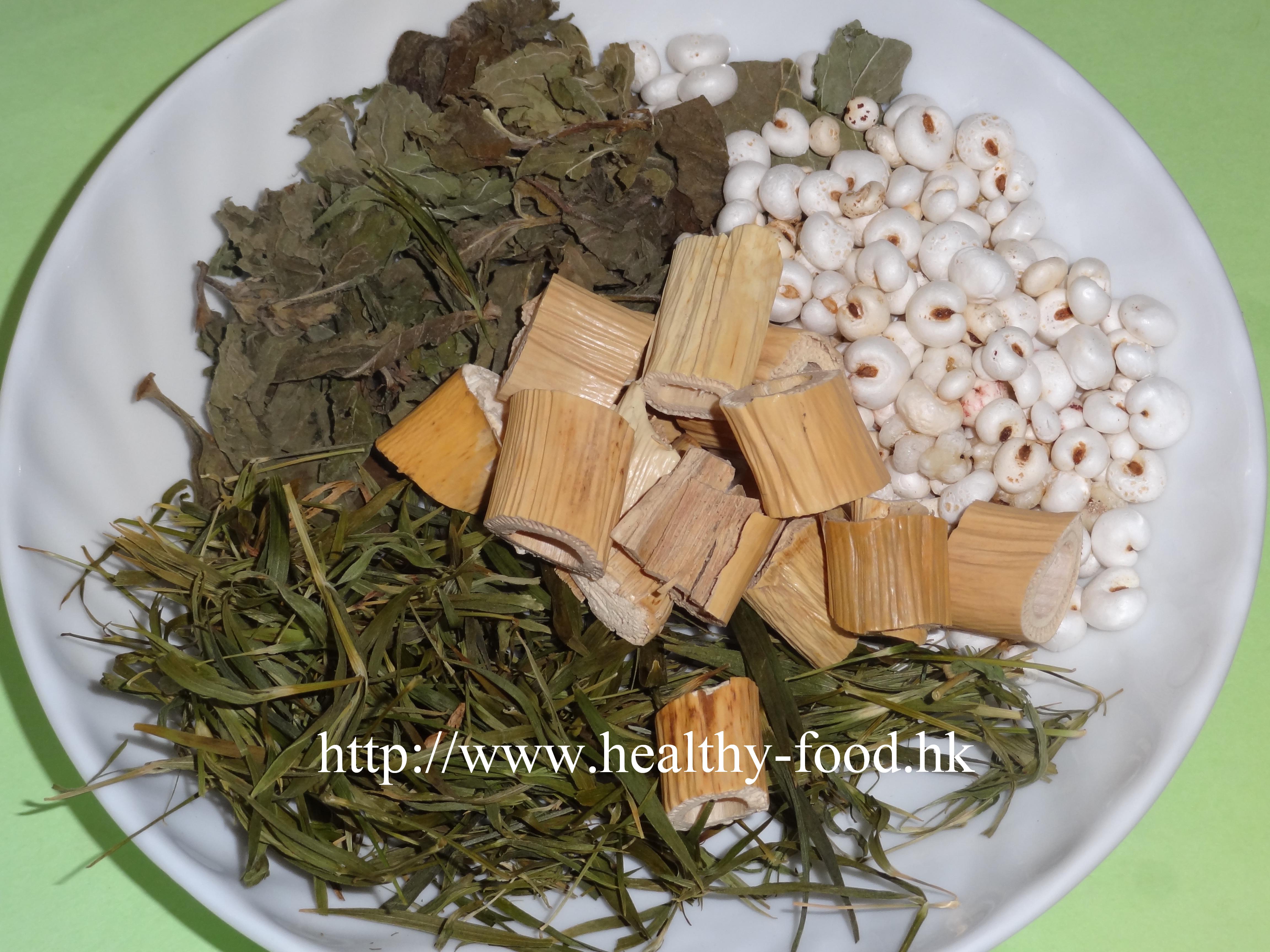
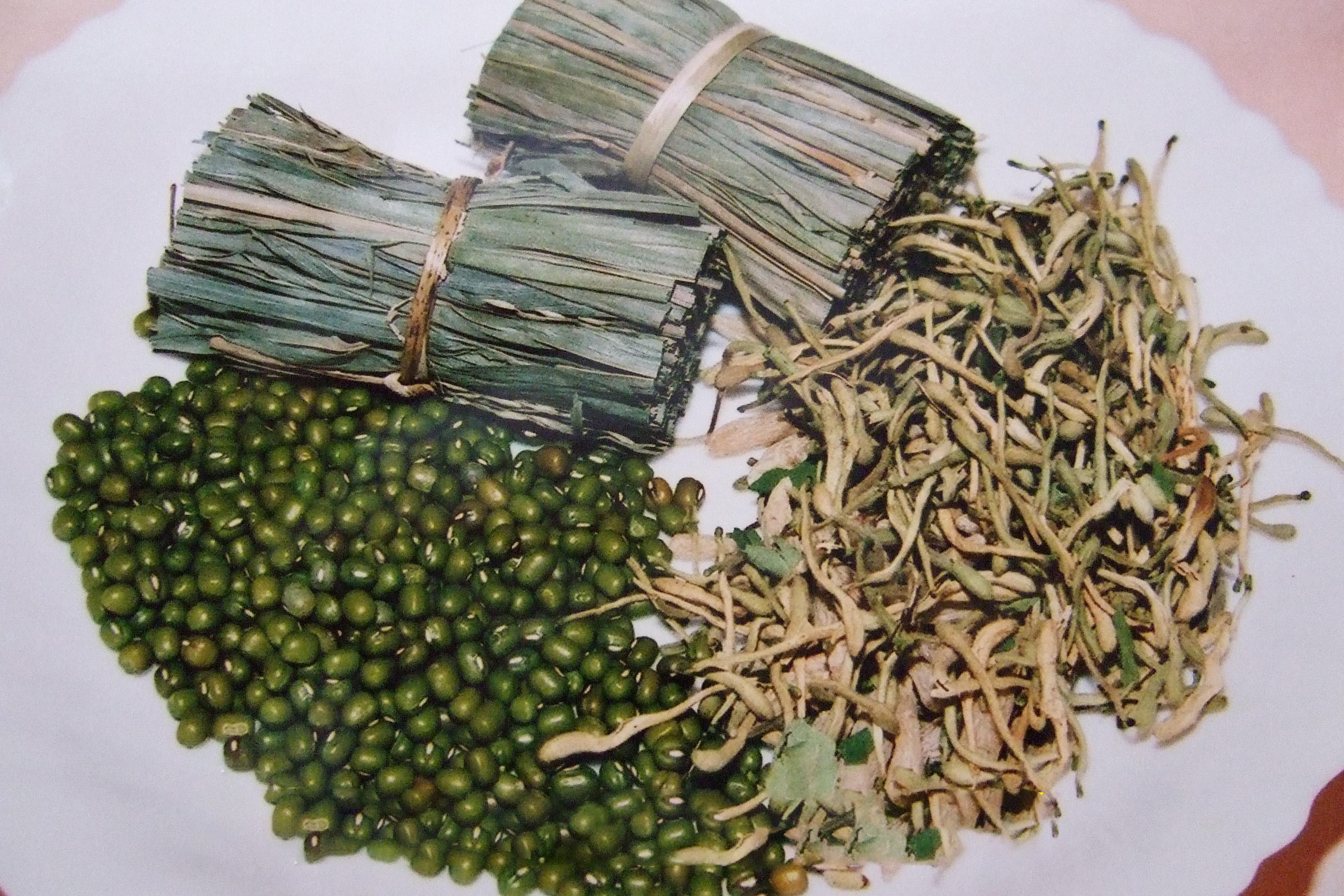
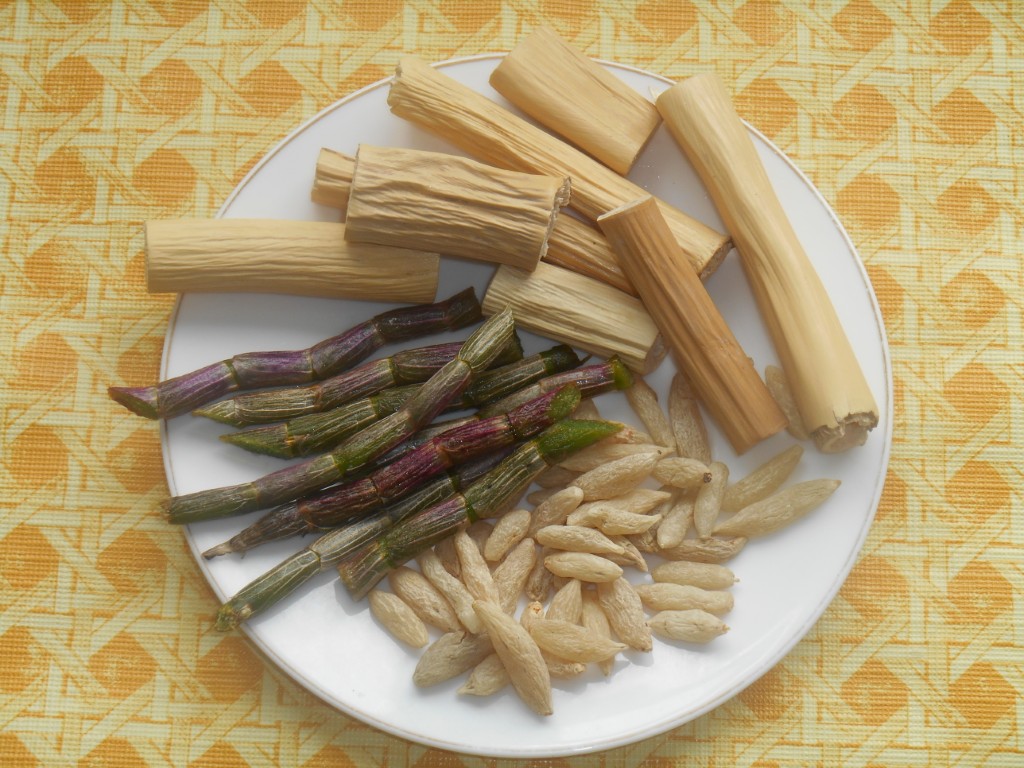
- Reed rhizome (lu gen): Traditionally considered one of the most effective heat-clearing herbs for children. Associated with generating fluids, relieving thirst and restlessness, and supporting the body’s natural detoxification — all relevant when a baby has a fever.
- Honeysuckle flowers (jin yin hua): A classic heat-clearing, detoxifying herb widely used in Chinese paediatric formulas. It is added towards the end of cooking to preserve its delicate compounds. Not for children with G6PD deficiency.
- Mung beans (lu dou): Familiar, nutritious, and traditionally associated with clearing heat and supporting skin health. Easy for young digestive systems to tolerate.
- Napa cabbage (bai cai): Helps clear heat, supports bowel regularity, and makes the broth mild and palatable for infants.
Ingredients (1–1.5 bowls for one infant)
| Ingredient | Amount | Notes |
|---|---|---|
| Reed rhizome (lu gen) | 20 g | Rinse and soak briefly |
| Honeysuckle flowers (jin yin hua) | 8 g | Add in the last 10–15 minutes; omit for G6PD children |
| Mung beans | 20 g | Rinse |
| Large napa cabbage leaves | 2 leaves | Wash and cut into pieces |
| Water | approx. 1.2 L (5 bowls) |
Method
- Rinse the reed rhizome and honeysuckle flowers. Rinse the mung beans.
- Place reed rhizome, mung beans, and napa cabbage in a pot with 5 bowls of water.
- Bring to a boil, then reduce to a gentle simmer. Cook for about 45–50 minutes.
- Add the honeysuckle flowers in the last 10–15 minutes of cooking.
- When the liquid has reduced to roughly 1 to 1.5 bowls, remove from heat and strain.
- Give the soup to the infant in small amounts throughout the day, as tolerated.
Bro Niu’s tips
Despite being mildly cooling in nature, this soup will not disturb a young child’s constitution when given in the quantities listed here. It is also suitable for children who develop heat rashes or skin irritation related to internal heat. If the large napa cabbage is hard to find, four or five smaller ones will do. For children in Canada or elsewhere where some ingredients may be difficult to source, coix seeds and mung beans are usually the most accessible substitutes — add a piece of dried tangerine peel (chen pi) and a few red dates to soften the cooling nature if needed.
Community questions answered (selected)
-
Q (yy, from Canada): My son is 4. He had a fever for 2 days that broke, and then on day 3 I noticed tiny red dots on his chest and abdomen — not itchy, a few on his back and behind his ear. We can’t easily get to a doctor here. We have lu gen, light bamboo leaf, mung beans, and shi hu. Bro Niu: I strongly recommend notifying a doctor — red spots appearing after a fever can sometimes be a drug reaction or another condition, not only roseola, and it is important to rule those out. For the constipation, try giving him 4 dried prunes and a warm cup of water — that usually works quickly. If you do proceed with food therapy, a simple mung bean and coix seed sweet soup with a piece of dried tangerine peel and a few red dates is gentle and appropriate for his age.
-
Q (Onon): My daughter is 3.8 years old. She had a high fever for 3 days that has now broken, and roseola has appeared. It does not itch or hurt. What simple soup can I make to help the rash clear? Bro Niu: Try: 3 qian honeysuckle flowers, 1 liang mung beans, 3–4 large napa cabbage leaves, simmered in 5 bowls of water down to 2 bowls, adding the honeysuckle near the end. Give it for 3 consecutive days. It helps clear heat and detoxify and should support the rash resolving.
-
Q (cherrylau): My daughter (2 years old) had confirmed roseola. The fever is gone now and the rash is appearing. Should she still drink this soup? Bro Niu: Once the fever has gone, you can switch to a slightly gentler post-recovery soup: 3 qian reed rhizome, 1 liang fresh coix seeds, and 1 cored snow pear — simmer together and give her the broth. This helps clear any lingering internal heat after illness.
Published August 28, 2020 · Adapted and translated for Nourilo from a traditional home-kitchen recipe. Approx. 5 min read.