Congee & Porridge
Pumpkin, Red Date and Millet Congee
traditionally used to support maternal wellbeing, aid nutrient absorption, and promote gentle recovery before and after birth
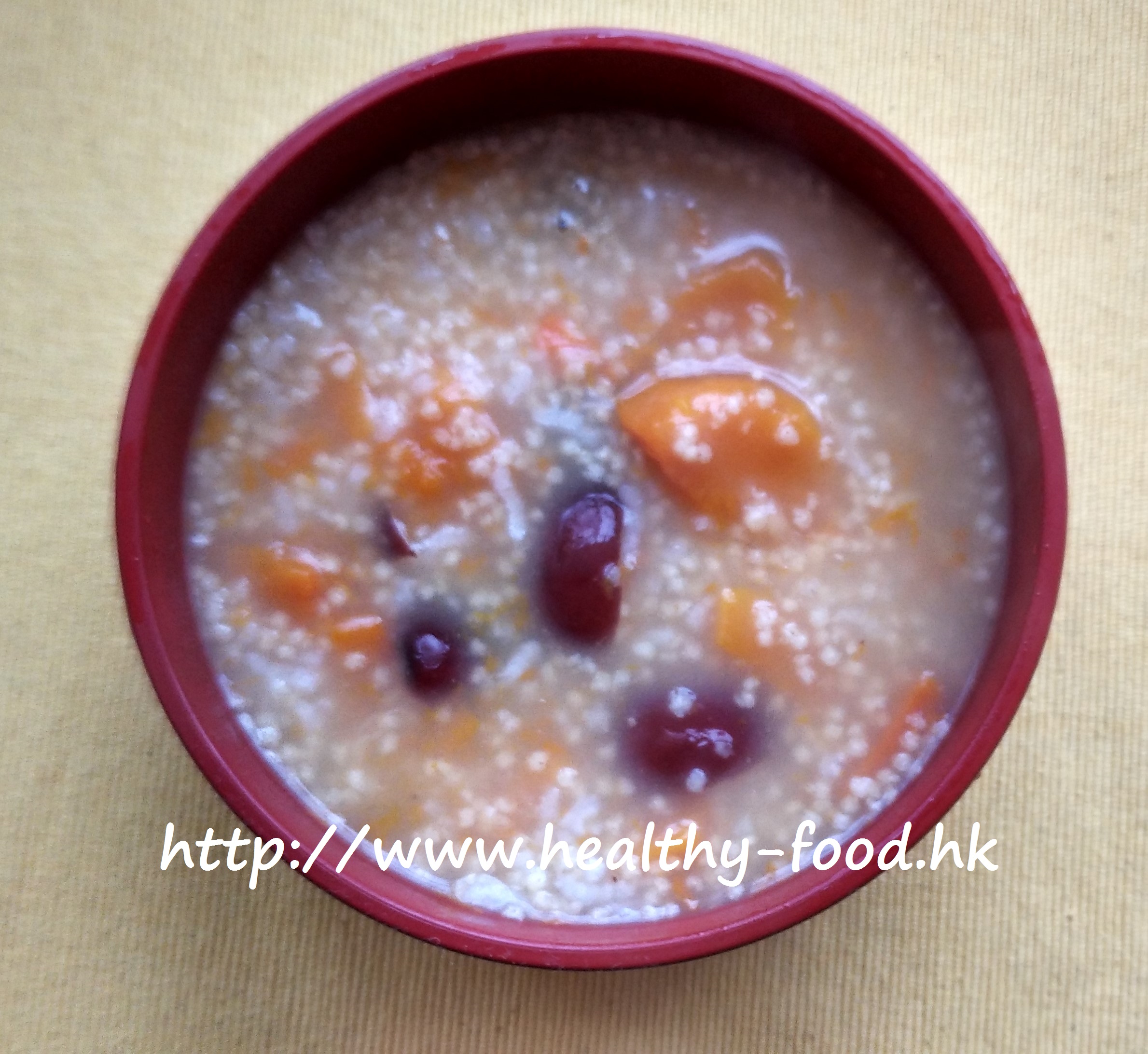
Why people make this congee
Pumpkin is a mild, nourishing ingredient that suits many people, but it is particularly well-regarded in Chinese food therapy for pregnant women and new mothers. According to traditional understanding, it warms and tonifies the middle burner (the digestive system), is rich in the plant compound pectin, and contains zinc — a mineral that participates in protein synthesis and is considered important for foetal brain development. Studies have also noted pumpkin’s potential in managing pregnancy-related swelling and blood pressure, though Bro Niu is careful to note that any actual medical concern during pregnancy must be addressed with a doctor. Combined with millet and red jujube dates — both traditionally regarded as blood-nourishing and spleen-supporting — this congee is a gentle, everyday food that suits the whole family, including young children from around eight months old.
Who it suits / who should be cautious
- Well suited to pregnant women (especially after the first trimester), postpartum recovery, the elderly, young children from about 8 months, and those recovering from illness or surgery
- Those with spleen deficiency and dampness, or who tend to feel bloated and full, should limit pumpkin as it may exacerbate these symptoms; substitute Chinese yam (huai shan) if needed
- Pregnant women with gestational diabetes: replace red jujube dates with 4 Medjool dates (jiao zao), which are less likely to raise blood sugar
Why these ingredients (the food-therapy logic)
- Pumpkin (nan gua, 南瓜): Considered warm and sweet in nature; traditionally associated with tonifying the middle burner, clearing toxic accumulation, and supporting the stomach. Rich in pectin, zinc, and beta-carotene; in traditional thinking, the high pectin content is associated with binding and helping the body expel harmful substances
- Millet (xiao mi, 小米): One of the most-used postnatal grains in traditional Chinese food culture; warming, easy to digest, and associated with nourishing the spleen, stomach, and blood
- Red jujube dates (hong zao, 红枣): Widely used to nourish blood, tonify the spleen and stomach, and calm the mind; the natural sweetness adds pleasant flavour without added sugar
Ingredients (3–4 bowls)
| Ingredient | Amount | Notes |
|---|---|---|
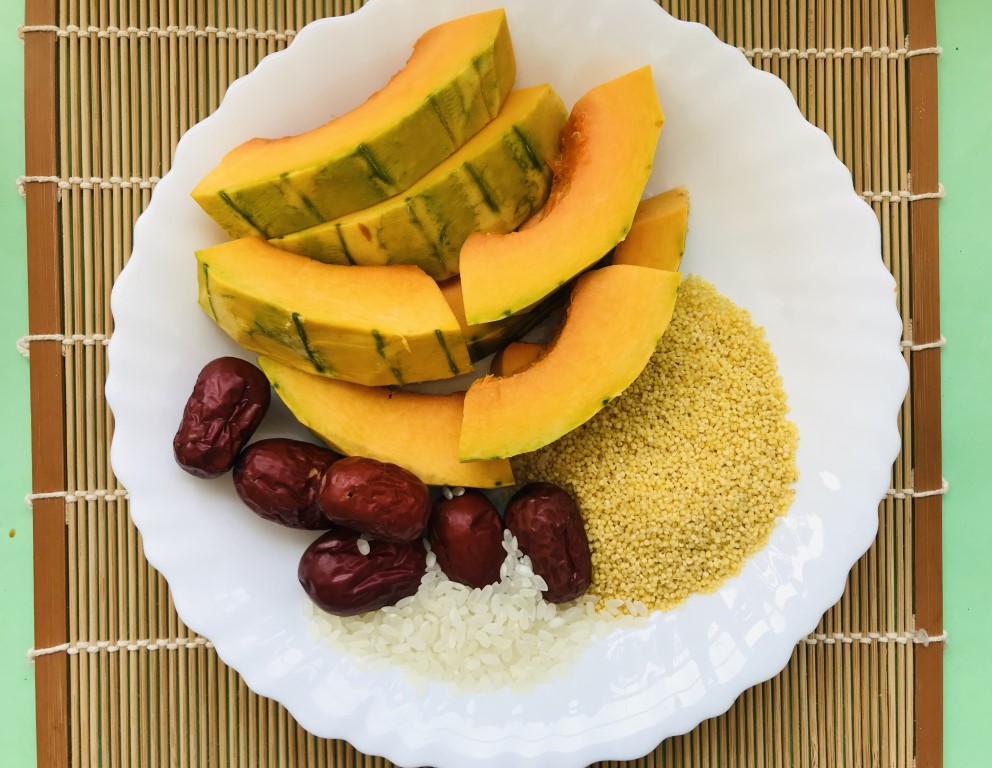
| Pumpkin | 150 g (4 liang) | Peel and cut into medium cubes |
| Millet | 75 g (2 liang) | Rinse and soak 30 minutes before cooking |
| Red jujube dates | 5 pieces | Remove pits and slice |
| White rice | 2 tablespoons | Soak 30 minutes; improves creaminess |
Method
- Rinse and soak the millet and white rice for about 30 minutes; drain.
- Peel the pumpkin and cut into medium cubes.
- Remove the pits from the red dates and slice them.
- Combine all ingredients in a pot with 6–7 bowls of water (approximately 1.2–1.4 litres).
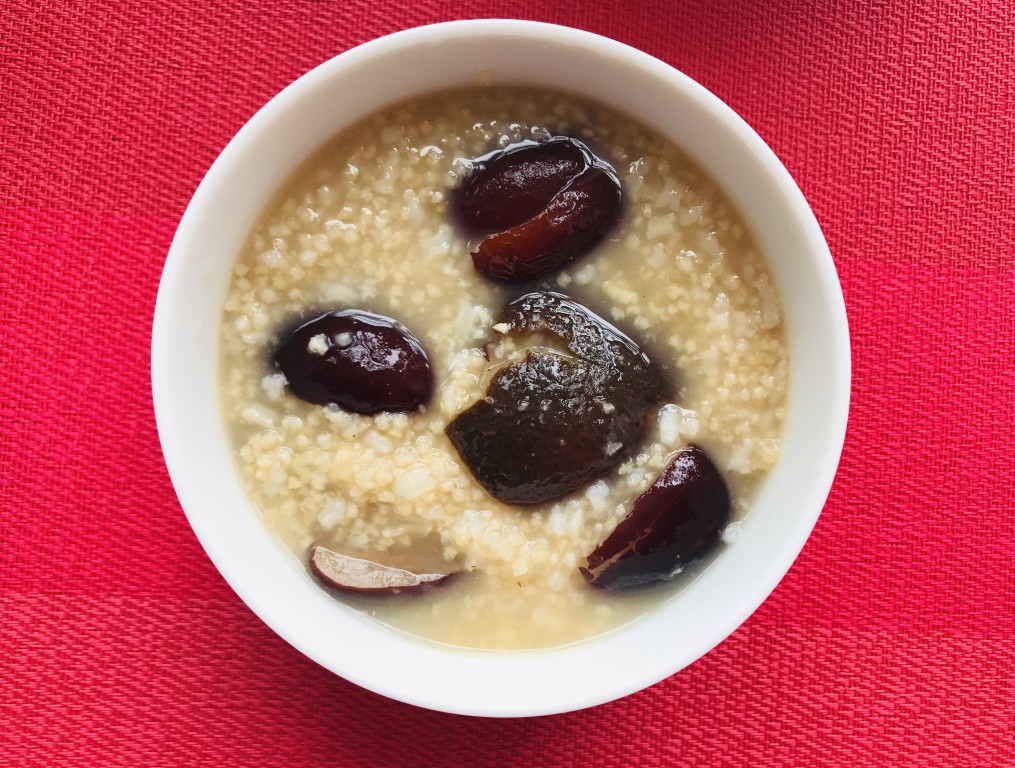
- Bring to a boil, then reduce to a low simmer for about 1 hour, stirring occasionally, until the congee is smooth and creamy.
- Serve warm. The congee is suitable for all family members.
Bro Niu’s tips
This congee is also well suited to those recovering from cancer treatment or surgery — it is gentle on the digestive system, provides easy-to-absorb nutrients, and nourishes the blood without being heavy. Those with spleen deficiency and bloating should swap the pumpkin for Chinese yam (huai shan), which strengthens the spleen without adding dampness. For postpartum mums recovering from a caesarean section, this congee is suitable, and chicken soup (with the skin removed) can be added from about one week after delivery.
Community questions answered (selected)
-
Q (Grace): I am 15 weeks pregnant and have constipation. I would like to make this as a breakfast congee. What can I add? Bro Niu: You can add 3–4 sliced fresh figs (wu hua guo) to this congee — they support bowel movement gently and are very high in calcium, which is good for both you and the baby.
-
Q (joanne): Can this congee be eaten after a caesarean section? And when can I have chicken soup after giving birth? Bro Niu: This congee is fine after a caesarean. You can have chicken soup about one week after giving birth — it is best to cook the chicken with the skin removed to reduce the fat content.
-
Q (JESSICA): Can an 8-month-old baby eat this? Bro Niu: Yes, an 8-month-old baby can eat this congee.
Published February 7, 2018 · Adapted and translated for Nourilo from a traditional home-kitchen recipe. Approx. 3 min read.