Herbal & Flower Teas
Prunella Honeysuckle Tea
traditionally associated with clearing liver heat and supporting healthy blood pressure
Why people make this tea
The modern Hong Kong lifestyle — late nights, high pressure, irregular sleep — can leave people irritable, easily angered, and feeling heat in the eyes or forehead. In Chinese medicine this cluster of symptoms is often described as “liver fire rising.” Prunella spike (xia ku cao) has been used for centuries precisely for this pattern: it is one of the most well-known herbs for clearing what practitioners call liver heat. Paired with honeysuckle flowers — prized for their broad cooling and anti-inflammatory qualities — the result is a tea that feels genuinely refreshing and calming after a stressful day. The rock sugar takes the edge off the slight bitterness.
Who it suits / who should be cautious
- Suitable for people who run warm, experience eye redness or excessive discharge from the eyes, feel irritable or easily angered, or have mildly elevated blood pressure associated with stress and heat.
- Children or adults with G6PD deficiency (favism) must avoid honeysuckle flowers, as it can trigger a haemolytic reaction.
- Those with a cold, weak constitution or weak digestion should avoid or limit this tea, as both herbs are cooling in nature.
- Men and women of all ages are otherwise welcome to drink this.
Why these ingredients (the food-therapy logic)
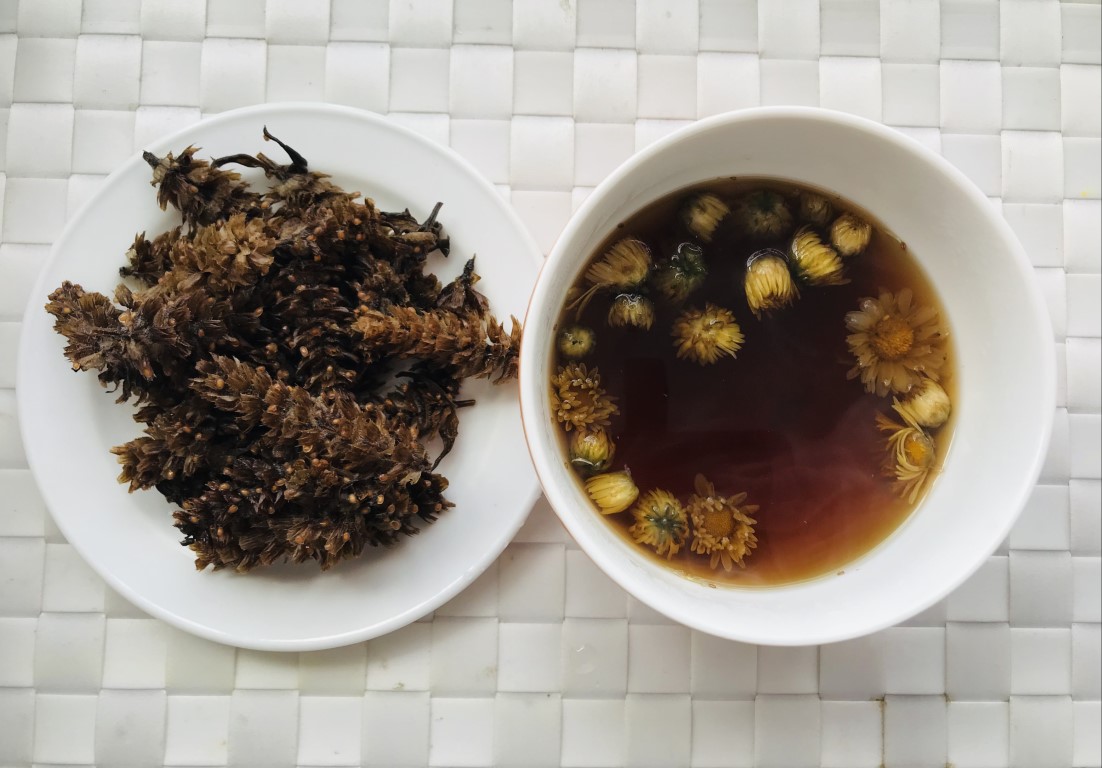
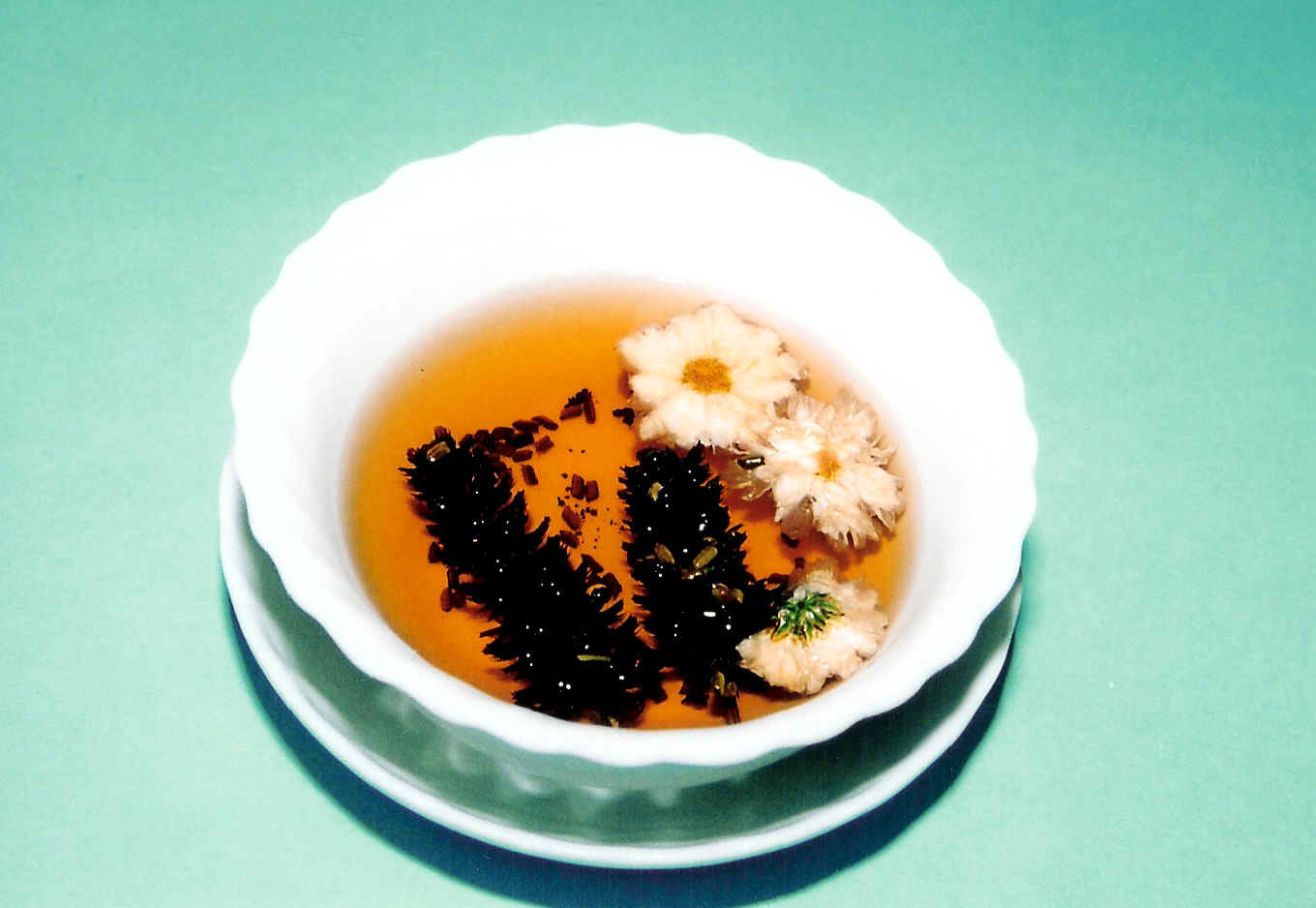
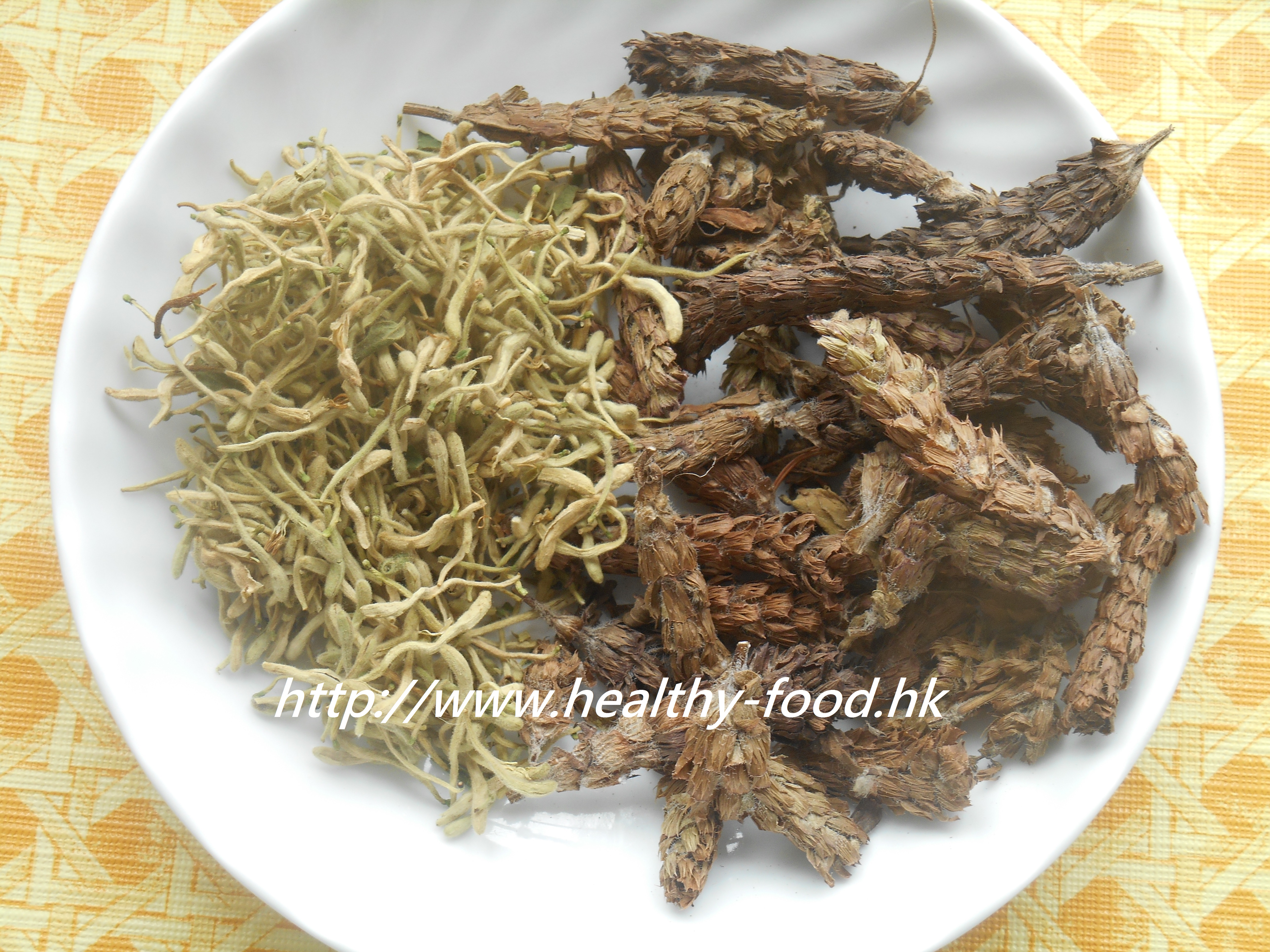
- Prunella spike (xia ku cao): A mild, cooling herb with a long history of use for conditions associated with liver heat — including eye discomfort, headaches, and elevated blood pressure linked to stress and inflammation. Simmered long to extract its deeper properties.
- Honeysuckle flowers (jin yin hua): One of the most celebrated cooling and clearing herbs in Chinese food therapy. Traditionally associated with reducing internal heat, soothing inflammation, and supporting healthy immune function. Added toward the end of cooking so volatile aromatic compounds are not lost.
- Rock sugar: Balances the slight bitterness of prunella and adds a pleasant sweetness.
Ingredients (2 bowls / about 2 servings)
| Ingredient | Amount | Notes |
|---|---|---|
| Prunella spike (xia ku cao) | 37 g (1 liang) | Available at Chinese herbal medicine shops |
| Honeysuckle flowers (jin yin hua) | 11 g (3 qian) | Add toward the end of cooking — do not boil long |
| Rock sugar | To taste | Add with the honeysuckle flowers |
| Water | 5 bowls (~1.2 L) | To yield about 2 bowls after cooking |
Method
- Rinse the prunella spike. Place in a pot with 5 bowls of water (about 1.2 litres).
- Bring to a boil, then reduce heat and simmer for 45 minutes.
- Add the honeysuckle flowers and rock sugar. Cook for a further 5 minutes until the sugar dissolves.
- Remove from heat, strain, and serve warm. Drink in two portions over the day.
Bro Niu’s tips
Honeysuckle flowers should always be added toward the end of cooking — floral herbs contain volatile aromatic oils that evaporate with prolonged heat, reducing their effectiveness. Five to ten minutes of simmering is plenty.
Community questions answered (selected)
-
Q (Yorkie): Why is this tea not suitable for G6PD patients? Bro Niu: G6PD patients cannot safely consume honeysuckle flowers — it can trigger haemolysis (breakdown of red blood cells). If you have G6PD deficiency, please look up the full list of herbs to avoid.
-
Q (foxkit): Why is the honeysuckle added only after 45 minutes — can I not put it in from the start with the prunella? Bro Niu: Flower-type herbs contain volatile oils that disappear with long cooking. Adding them later — just 5 to 10 minutes before serving — preserves the active compounds.
-
Q (MING): I have hepatitis and my TCM doctor occasionally recommends prunella. It is quite cooling — can anything be added to balance it? Bro Niu: You can add 30 g (1 liang) of soybeans, 6 red dates, and a piece of dried tangerine peel. These warm-natured additions help balance the cooling quality of prunella.
Published May 20, 2016 · Adapted and translated for Nourilo from a traditional home-kitchen recipe. Approx. 3 min read.