Herbal & Flower Teas
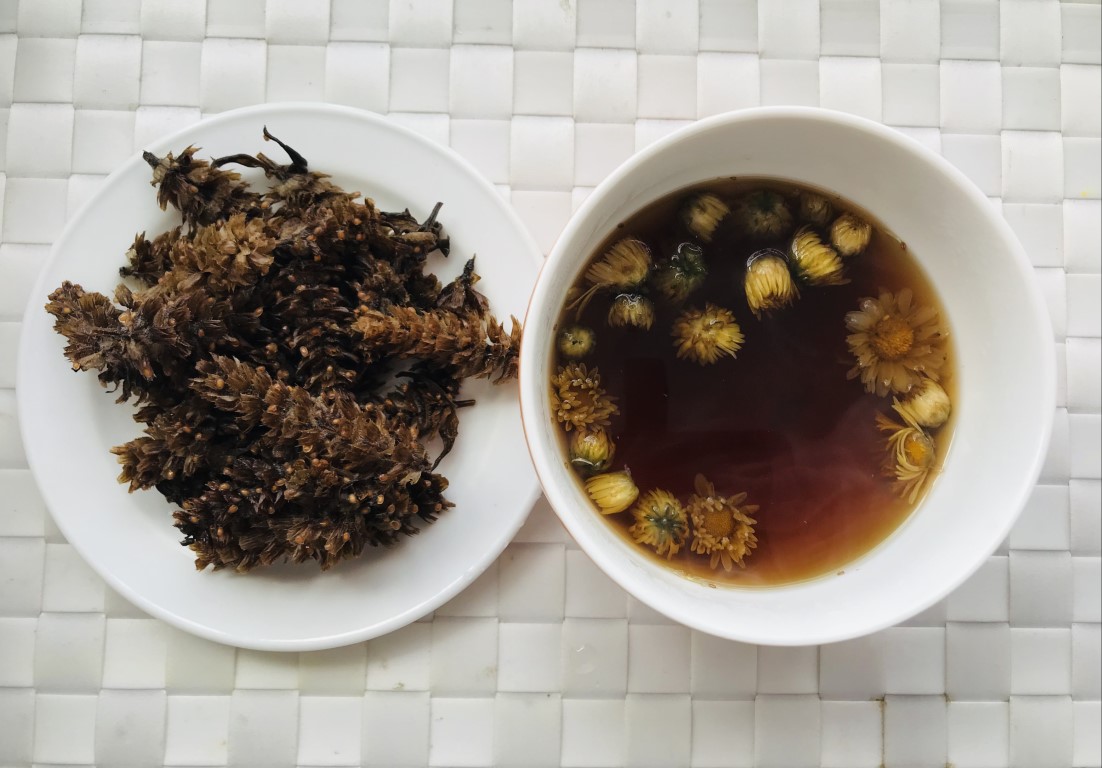
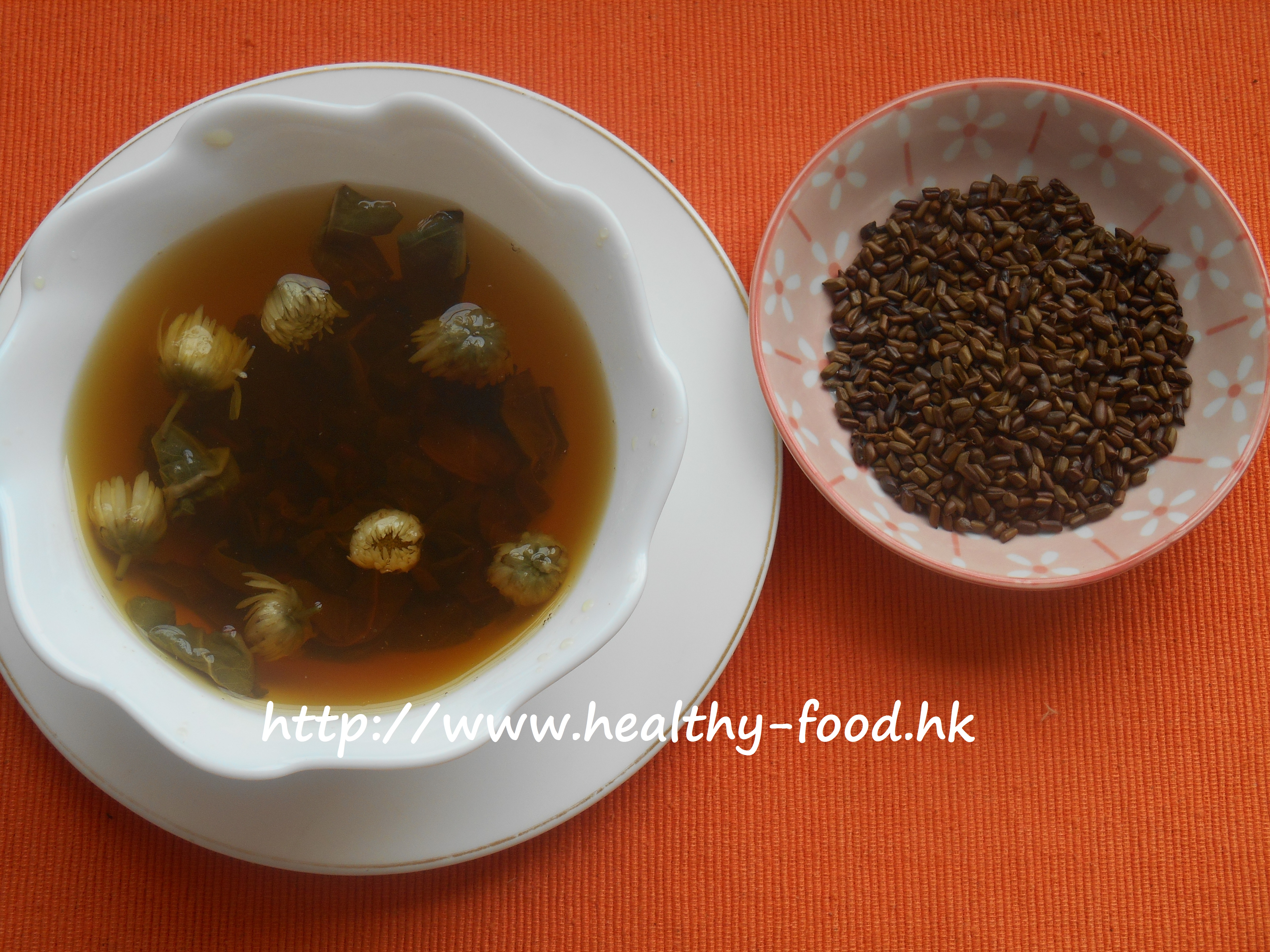
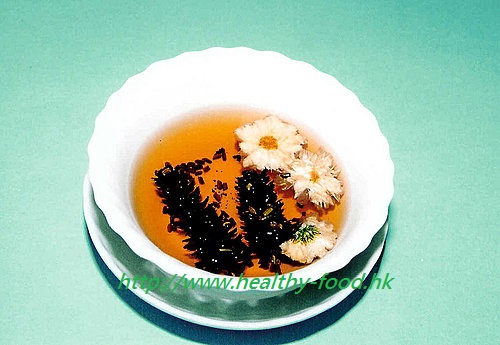
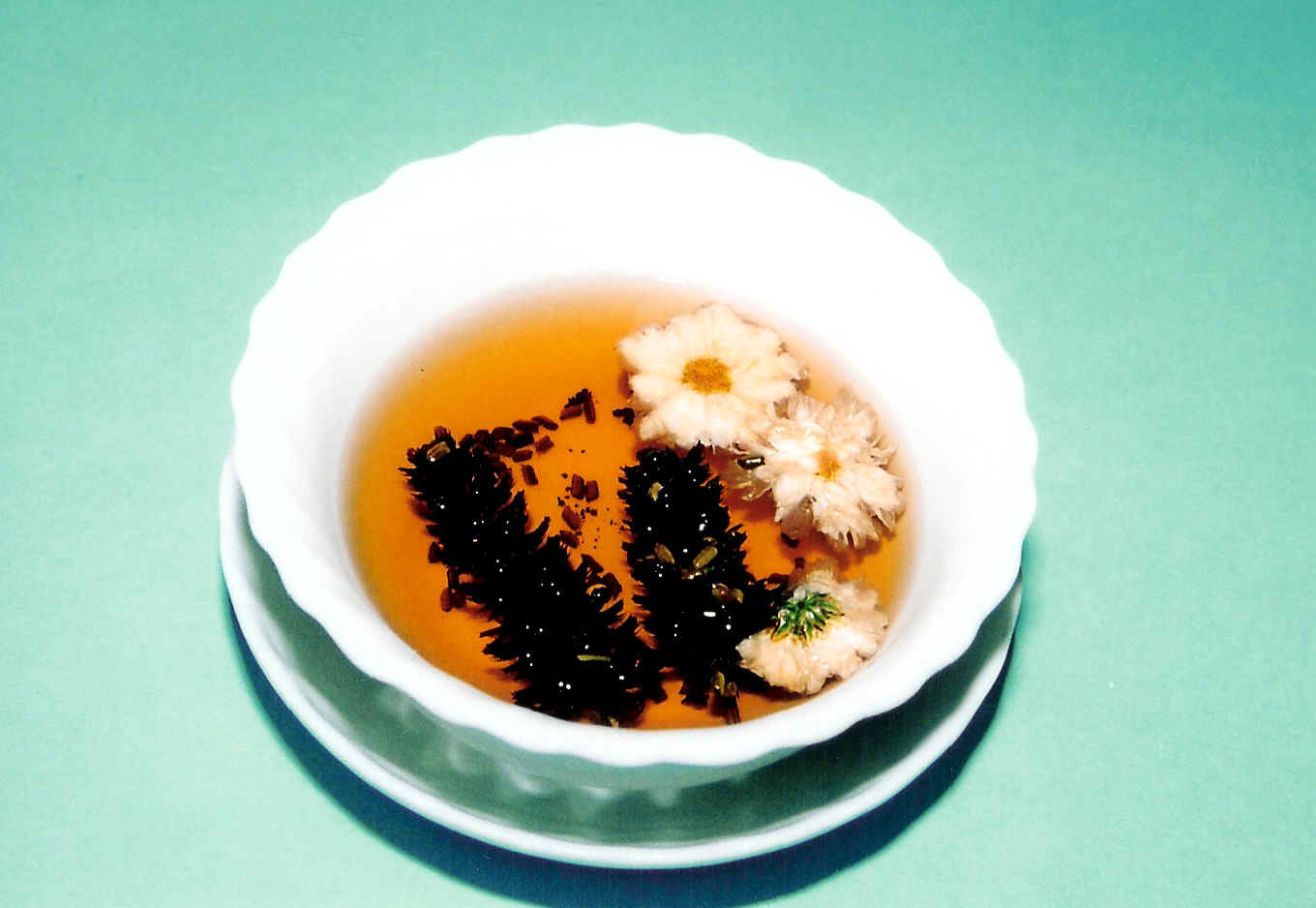
Selfheal, Chrysanthemum and Cassia Seed Tea (Xia Ku Cao Ju Hua Jue Ming Cha)
traditionally used to clear liver heat, support eye health, and help maintain healthy blood pressure
Why people make this tea
Selfheal (xia ku cao) is one of the workhorses of Cantonese home cooking for cooling teas. It is an ingredient most Hong Kong families know well — often sold pre-packaged for making liang cha (cooling herbal tea) at home. It has a broad traditional reputation: clearing liver fire, reducing swellings and lumps, clearing heat and toxins, stopping cough, and cooling the blood. In clinical traditional Chinese medicine settings, it also appears in formulas targeting thyroid nodules, lymph swellings, mastitis, and urinary stones.
Combined with chrysanthemum and cassia seed, this tea becomes a targeted blend for the liver-eye-blood-pressure axis — conditions that often cluster together in traditional thinking. Someone with eye redness, throbbing headaches, dizziness, or elevated blood pressure due to “liver yang rising” is the classic person for whom this tea is made.
Who it suits / who should be cautious
- Suitable for most adults; generally well-tolerated.
- Particularly helpful for those with eye redness or soreness, liver-type headaches, dizziness from elevated blood pressure, or fatty liver.
- Those with a cold constitution or weak digestion (someone who frequently feels cold, has loose stools, or tires easily) should drink this in smaller amounts or less frequently.
- This tea complements — but does not replace — blood pressure medication.
Why these ingredients (the food-therapy logic)
- Selfheal spike (xia ku cao, Prunella vulgaris): A primary herb for clearing liver fire; traditionally used for eye redness, scrofula, goitre, high blood pressure, and a wide range of heat-excess conditions.
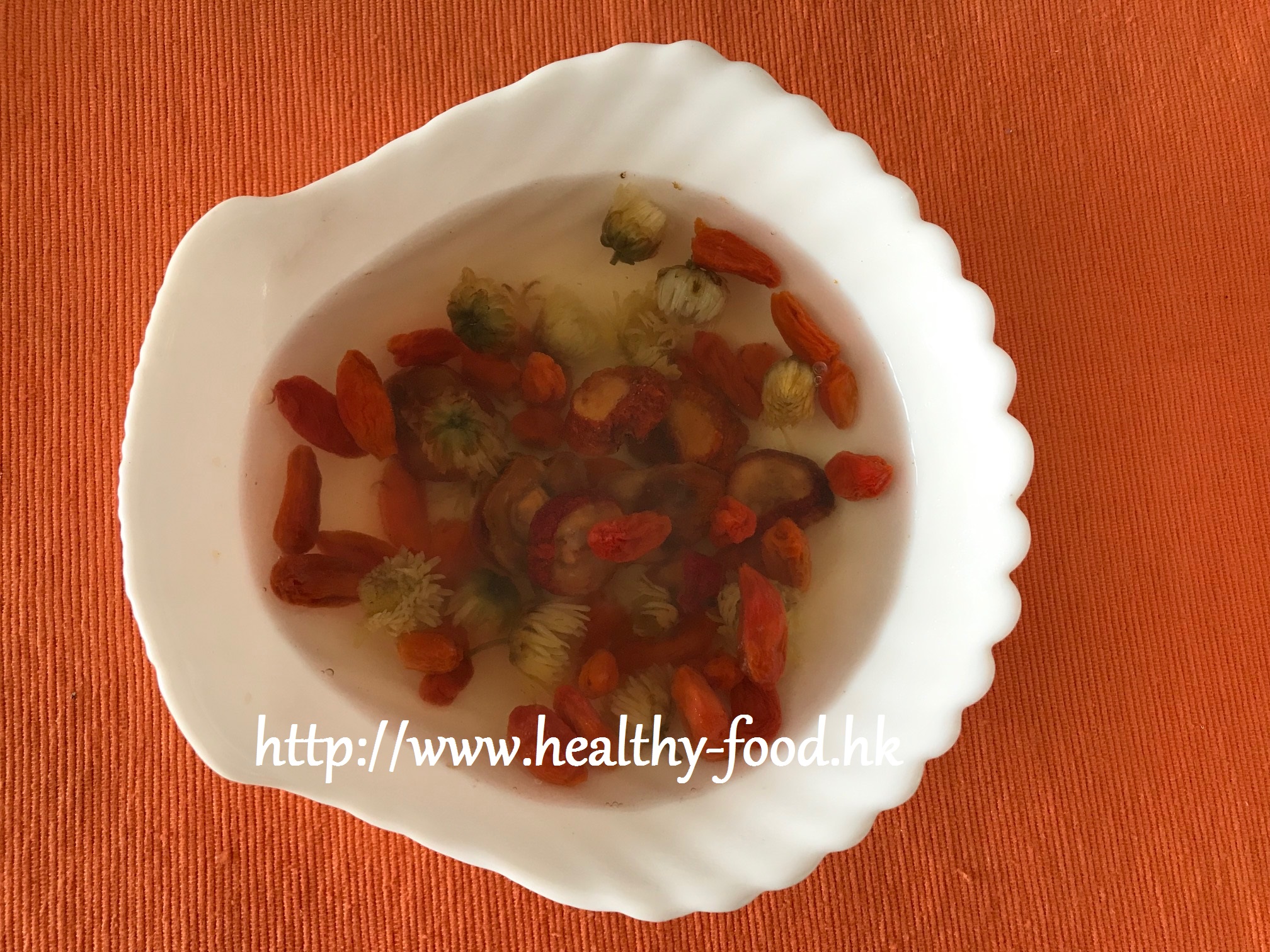
- Chrysanthemum flowers (ju hua): Classically paired with selfheal; associated with clearing liver heat, improving vision, and dispersing wind-heat. Yellow chrysanthemum has stronger heat-clearing action; white chrysanthemum is slightly gentler.
- Cassia seeds (jue ming zi, Semen cassiae): Traditionally used to clear liver fire, improve vision, and support healthy bowel movement. Also associated with lowering elevated blood fats.
Ingredients (~2–3 cups)
| Ingredient | Amount | Notes |
|---|---|---|
| Selfheal spike (xia ku cao) | 5 qian (~19 g) | Rinse before using |
| Chrysanthemum flowers (ju hua) | 3 qian (~11 g) | Rinse briefly; add late in cooking |
| Cassia seeds (jue ming zi) | 5 qian (~19 g) | Rinse before using |
| Water | 5–6 bowls (~1.2–1.5 litres) |
Method
- Rinse the selfheal spike and cassia seeds; rinse the chrysanthemum briefly.
- Place selfheal and cassia seeds in a pot with 5–6 bowls of water.
- Bring to a boil, then reduce to a gentle simmer for about 45 minutes.
- Add the chrysanthemum flowers; simmer for a further 5 minutes.
- Strain and drink while warm.
Bro Niu’s tips
This tea is clear and lightly fragrant. It is suitable as a general health-supporting drink for most people, and is also associated in traditional practice with benefits for fatty liver, hepatitis, and recovery from stroke-related facial or eye nerve issues. Those with a cold stomach or who feel cold easily should reduce frequency of this tea, as it leans toward the cooling side of the spectrum.
Community questions answered (selected)
-
Q (Wing): I have high blood pressure and take blood pressure medication. Can I use three qian of tian qi (san qi / notoginseng) to make a soup? Bro Niu: Yes, you can use 3 qian of tian qi in soup. Just make sure to wait at least 2 hours after taking your blood pressure medication before drinking any herbal soup — that gap helps avoid potential interactions.
-
Q (Joey): There are many varieties of chrysanthemum — do they all have the same benefits? Also, can I substitute soy milk for milk in a snow fungus dessert? Bro Niu: Most chrysanthemum varieties share the ability to clear the liver and support vision. Yellow chrysanthemum has a stronger heat-clearing and detoxifying effect and tends to be slightly more cooling. Soy milk works very well as a substitute for dairy milk in a snow fungus dessert — go ahead and try it.
-
Q (Luci): My husband has had a feeling of pulsing in his stomach, night fever, and weight loss for nearly a year, and he was diagnosed with hyperthyroidism. Western medication is not working well. Can you suggest some food therapy? Bro Niu: Hyperthyroidism presents in many different ways and is best managed by seeing a traditional Chinese medicine practitioner for a proper assessment. For the stomach discomfort in the meantime, you can try simmering Chinese yam (huai shan, 1 liang), dendrobium stem (shi hu, 3 qian fresh or 5 qian fresh), ophiopogon root (mai dong, 3 qian), fleeceflower vine (ye jiao teng, 5 qian), and southern dates (nan zao, 5 pieces) with lean pork — take 3 consecutive doses and see if it helps.
Published April 1, 2021 · Adapted and translated for Nourilo from a traditional home-kitchen recipe. Approx. 4 min read.