Congee & Porridge
Pine Nut and Fig Congee
traditionally associated with gently moistening the intestines, supporting bowel regularity, and nourishing the skin
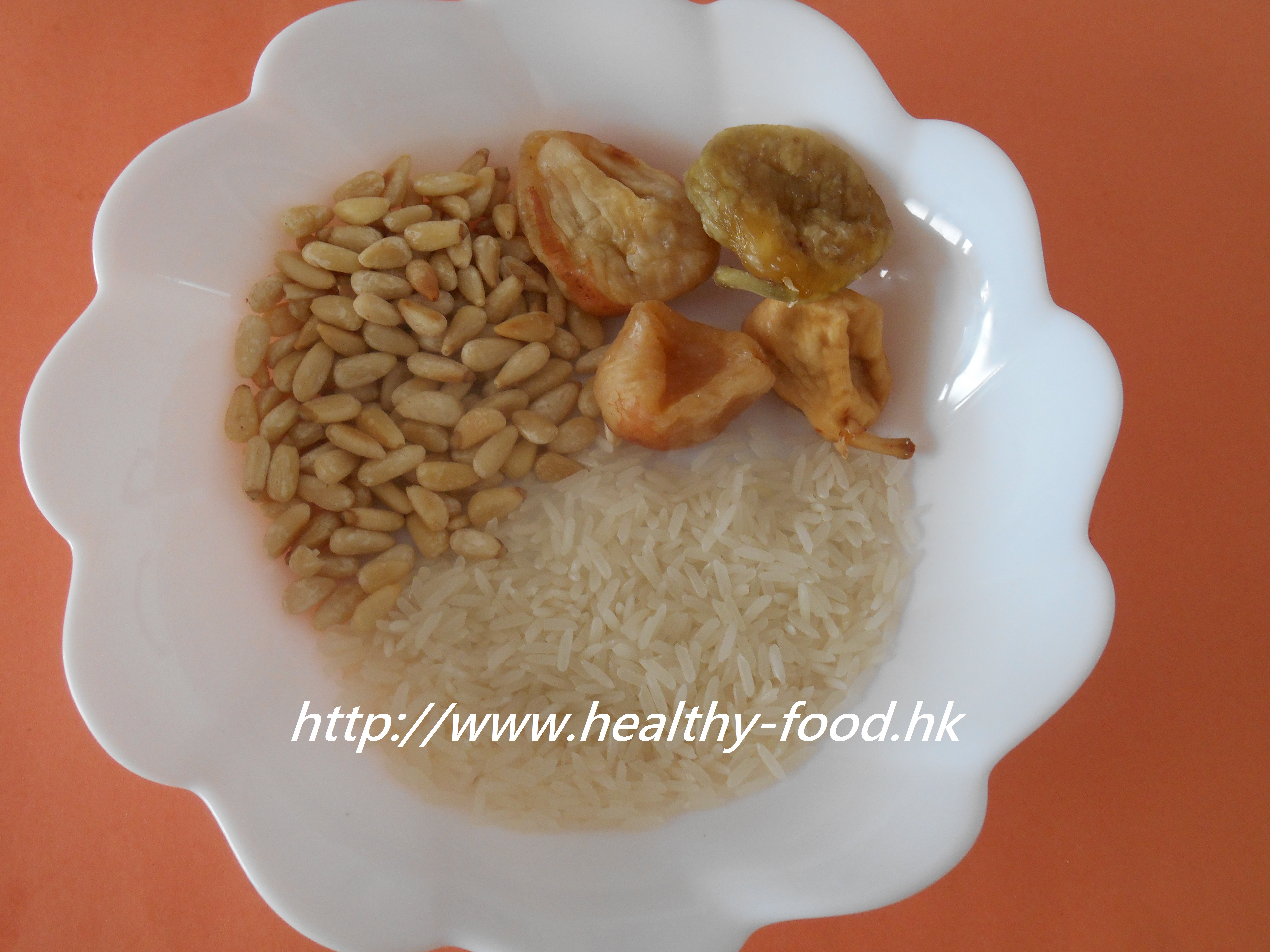
Why people make this congee
Constipation during pregnancy is extremely common, and the postpartum period is equally notorious for it. Straining is uncomfortable at the best of times, and when you are carrying a baby or recovering from delivery, finding a remedy that is genuinely safe and gentle matters enormously. This simple congee has been a trusted kitchen solution in Chinese households for generations precisely because it works through food rather than strong herbs or stimulant laxatives. Pine nuts are rich in natural fatty oils that lubricate the intestinal tract from within, and dried figs add gentle fibre along with natural sweetness. The result is a soft, comforting bowl of porridge that moves things along without any harshness.
Who it suits / who should be cautious
- Excellent for pregnant women experiencing mild to moderate constipation, especially when body weakness or fatigue is also present
- Suitable for new mothers after delivery, during the postnatal recovery period
- Perfectly appropriate for older adults, and for children — for whole-family use, simply double the pine nuts
- A mild, nourishing dish with no known contraindications at these amounts; simply a wholesome food preparation
- For severe constipation during pregnancy, Bro Niu also recommends trying a few dried prunes with a large glass of warm water — sometimes the simplest approach works well
Why these ingredients (the food-therapy logic)
- Pine nuts (song zi ren): Rich in natural fats, vitamins, and minerals including calcium, iron, and potassium. In Chinese dietary tradition, pine nuts are associated with moistening and lubricating the intestines in a way that is gentle on the body’s qi — they ease the bowels without depleting strength. They also contain high levels of vitamin E, associated in traditional terms with softening and nourishing blood vessels, and are considered a beautifying food for women’s skin.
- Dried figs (wu hua guo): A gentle digestive tonic in both Chinese and Western folk traditions. Figs are associated with warming and harmonising the stomach, clearing intestinal heat, and providing natural fibre. Used together with pine nuts, the effect on bowel regularity is considered enhanced.
- White rice (bai mi): The congee base — gentle on the stomach and easy to digest.
Ingredients (2–3 servings)
| Ingredient | Amount | Notes |
|---|---|---|
| Pine nuts (song zi ren) | 38 g (1 liang) | Double for larger families |
| Dried figs (wu hua guo) | 4 pieces | Cut into smaller pieces if preferred |
| White rice (bai mi) | 75 g (2 liang) | Washed |
| Water | Enough to cook to a thick congee | Approximately 6–8 bowls |
Method
- Wash the rice, pine nuts, and dried figs.
- Place all ingredients in a pot (a slow cooker works well) and add enough water to make a congee of your preferred consistency — generally 6 to 8 bowls of water.
- Bring to a boil, then reduce to a gentle simmer, stirring occasionally, until the porridge is soft and thick — approximately 40 minutes on the stovetop, or longer in a slow cooker.
- Serve warm. Eat the congee including all the solid pieces of fig and pine nut.
Bro Niu’s tips
This congee is not only useful for relieving constipation — it also has a gentle skin-nourishing quality that makes it suitable for regular, year-round eating. For whole-family use, increase the pine nuts to 2 liang (about 75 g). Bro Niu also notes that for pregnant women not keen on constipation remedies with a herbal taste, buying a bag of dried American prunes and eating 4 to 5 with a large glass of warm water can work quickly and simply — and prunes are also a good source of calcium and iron.
Community questions answered (selected)
-
Q (yy): I am newly pregnant and have constipation. My doctor has prescribed a fibre supplement containing psyllium husk. Your book mentions psyllium (che qian zi) may be cautious in pregnancy — are they the same? Bro Niu: Psyllium (che qian zi) and psyllium husk (ovata variety used in supplements) are related. Che qian zi is cautious in pregnancy because it is strongly diuretic rather than because it causes uterine contractions, so it is particularly not ideal for those with kidney yang deficiency. However, the safest options for pregnant constipation are actually dried figs, dried prunes, and foods like this congee. Buy dried American prunes, eat 4 to 5 at a time with a big glass of warm water — that works gently and also provides calcium and iron.
-
Q (Mchow): My daughter just had a baby and has had haemorrhoids and no bowel movement for three days. She is breastfeeding and the wound is still painful. What can help? Bro Niu: Go to the supermarket and buy pure prune juice — one glass per day will help move things quickly. She should also drink plenty of warm water and eat fibre-rich vegetables and fruit. With the afterbirth discharge still present, rich tonics are not yet appropriate, but炒米tea and fig or dried mulberry steeped in water are fine. The constipation and haemorrhoids will ease once bowel movements normalise.
-
Q (Cherie): I am pregnant and have haemorrhoids that keep bleeding — no constipation, just the haemorrhoids acting up. What helps? Bro Niu: Try eating more aubergine (eggplant) and blueberries, which are rich in a compound called vitamin P (bioflavonoids) that supports the repair of damaged capillaries — this is traditionally recommended for haemorrhoid bleeding.
Published October 2, 2014 · Adapted and translated for Nourilo from a traditional home-kitchen recipe. Approx. 4 min read.