Soups
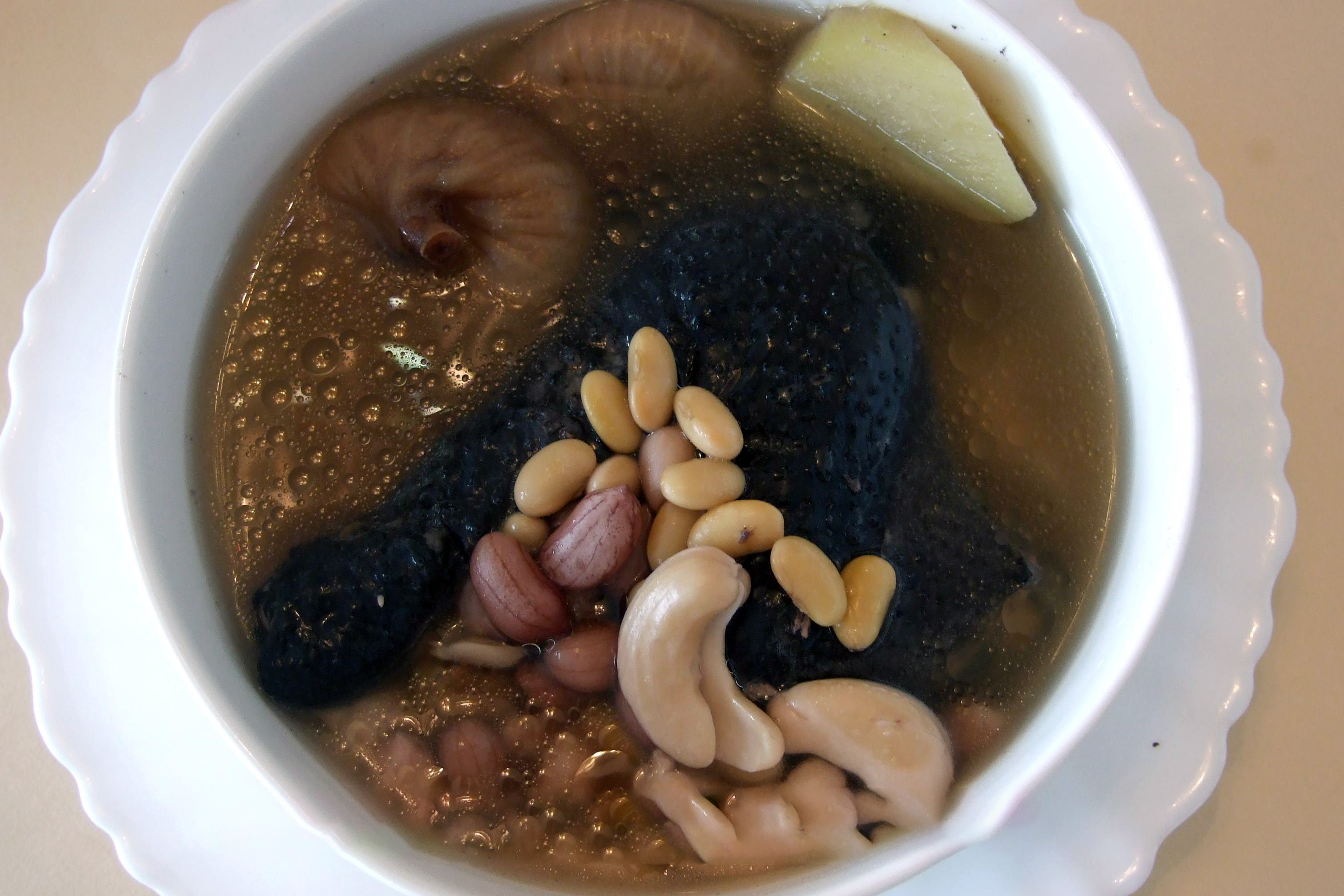
Peanut, Cashew and Black Chicken Soup
traditionally used to nourish liver and kidney, support blood, and encourage breast milk production after childbirth
Why people make this soup
Insufficient breast milk after childbirth is a common challenge, often related to blood and qi deficiency after the exertion of labour, or to emotional tension causing qi stagnation. Cantonese food therapy has a long tradition of supporting new mothers through carefully chosen ingredients rather than medications. Peanuts, soybeans, and sesame are all well-known traditional supports for breast milk production. Cashews and figs are less commonly discussed but equally valued: cashews are considered to support postpartum women’s skin and vitality, while figs (wu hua guo) have a traditional reputation for stimulating milk production. Black-boned chicken (silkie chicken) is prized above regular chicken in this context because its yin-nourishing, blood-supporting qualities are considered superior. The resulting soup is rich in protein, healthy fats, and gentle nourishment — and tasty enough for the whole family to enjoy.
Who it suits / who should be cautious
- Primarily recommended for postpartum women with insufficient milk supply or general blood and qi deficiency.
- Suitable for the whole family as a general nourishing soup; Bro Niu says regular consumption can support healthy complexion and overall vitality.
- Those with a peanut or tree-nut allergy should avoid or substitute accordingly.
- People with a yin-deficient constitution with pronounced heat should avoid overly warming tonic soups; in that case, use the gentler version (replace peanuts with more figs).
Why these ingredients (the food-therapy logic)
- Black-boned chicken (wu gu ji): Silkie chicken is considered to nourish liver and kidney yin more effectively than regular chicken. Its dark skin and bones contain higher levels of iron and carnosine. Often called the “top tonic chicken” in Cantonese food therapy.
- Cashews (yao guo): Traditionally considered to moisten the skin and support milk production. Rich in healthy fats, zinc, and magnesium — nutrients important in postpartum recovery.
- Peanuts (hua sheng): One of the classic Cantonese milk-promoting ingredients. The red skin is kept on, as it has additional blood-supporting properties in Chinese food therapy.
- Soybeans (huang dou): Rich in plant protein and isoflavones; traditionally associated with supporting breast milk and hormonal balance.
- Dried figs (wu hua guo): Sweet, neutral, and lung-nourishing. A gentle but effective traditional galactagogue (milk promoter).
Ingredients (about 4 bowls, 3–4 servings)
| Ingredient | Amount | Notes |
|---|---|---|
| Soybeans | 1 liang (~38 g) | Rinse and soak |
| Raw peanuts, skin-on | 1 liang (~38 g) | Rinse and soak |
| Cashew nuts | 2 liang (~75 g) | Rinse and soak briefly |
| Dried figs | 4 | |
| Black-boned chicken (silkie) | 1 whole bird | Cleaned; chop into pieces and blanch |
| Fresh ginger | 2 slices |
Method
- Rinse and soak the soybeans, peanuts, and cashews.
- Clean the black-boned chicken, chop into pieces, and blanch briefly in boiling water to remove impurities. Drain and set aside.
- Place all ingredients — chicken, soybeans, peanuts, cashews, dried figs, and ginger — in a large pot.
- Add 10 bowls of water (about 2.4 litres).
- Bring to a boil over high heat, then reduce to medium-low heat and simmer for about 3 hours, until the liquid reduces to approximately 4 bowls.
- Season lightly and serve. Eat the soup with the chicken and nut-soy ingredients for full benefit.
Bro Niu’s tips
This soup is delicious and naturally sweet. Regular consumption is said to brighten the complexion and support overall vitality — so the whole family can enjoy it, not just new mothers. If the mother has a peanut sensitivity, simply increase the quantity of dried figs instead. For those who cannot find or do not want to use black-boned chicken, lean pork (zhu zhan or shank) can substitute — it will be less potent as a liver-kidney tonic but still a nourishing soup.
Community questions answered (selected)
-
Q (何太太, reader): If a mother is sensitive to peanuts, what can she substitute? Also, for a yin-deficient constitution with heat, what should she be careful about when taking tonics? Bro Niu: If there is a peanut sensitivity, just use extra dried figs — they also support milk production. For a yin-deficient constitution, avoid over-warming tonic ingredients. Stick to yin-nourishing materials like glehnia root (sha shen), Solomon’s seal (yu zhu), ophiopogon (mai dong), polygonatum (huang jing), or goji berries. Stewed chicken soup is fine — just avoid using a heavily “male” energised cockerel (shao ye ji); use a smaller hen.
-
Q (wincy, reader): My baby is almost three months old and my milk supply has always been low. Is it too late to drink this soup now? Bro Niu: Not too late at all. You can also try green papaya with peanuts and dried figs in a fresh fish soup — this combination is particularly effective for stimulating milk. Eat the figs and peanuts as well as drinking the broth.
Published April 15, 2010 · Adapted and translated for Nourilo from a traditional home-kitchen recipe. Approx. 4 min read.