Soups
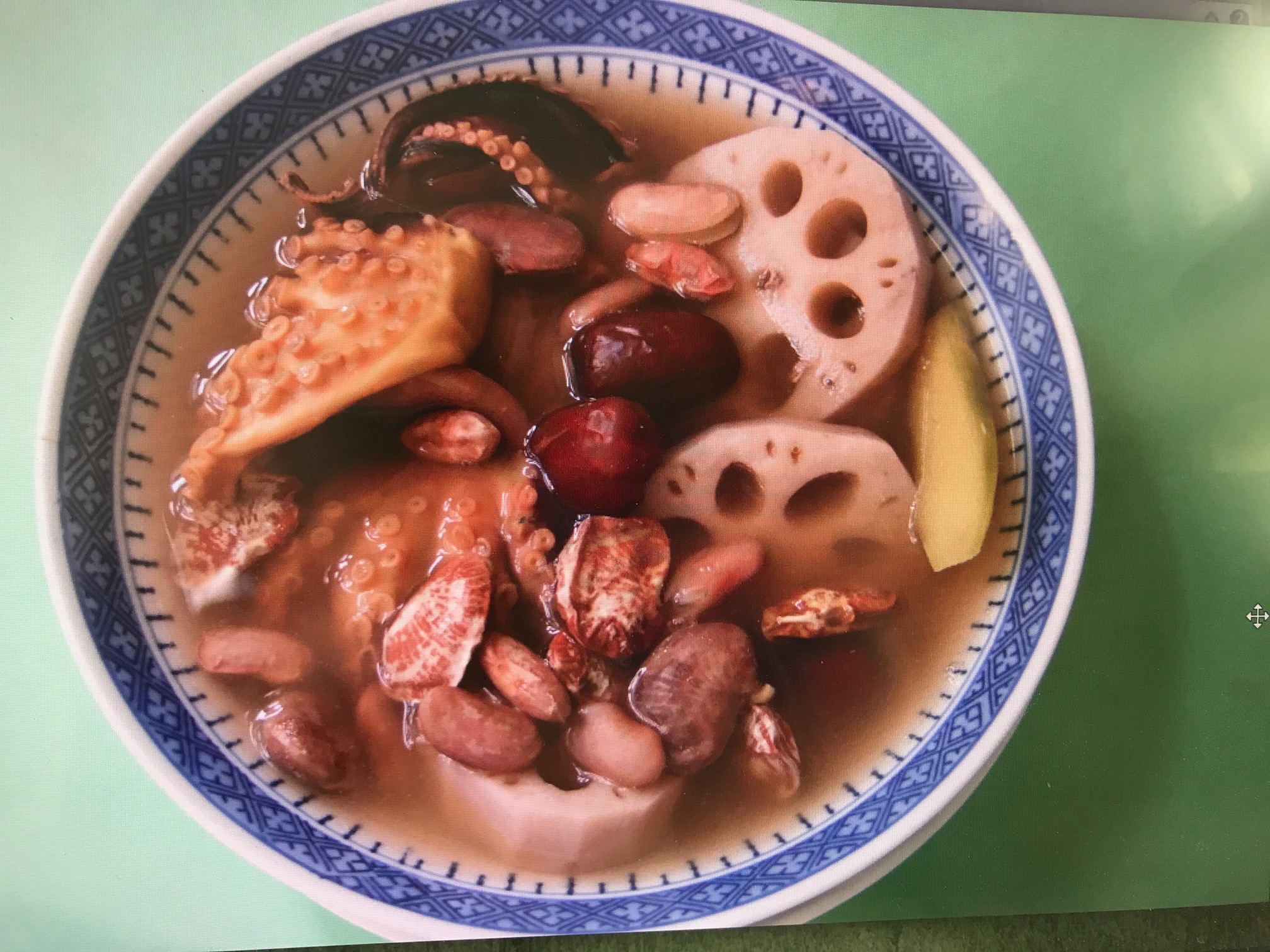
Lotus Root, Peanut, Flower Bean and Dried Octopus Soup
traditionally associated with nourishing the blood and supporting lactation after childbirth
Why people make this soup
The first week after giving birth is a critical time. Well-meaning family members often arrive with rich chicken broth, fish maw and sea cucumber — but Bro Niu advises caution: when milk flow has not yet established itself, eating very high-fat and high-protein foods can thicken the milk and block the ducts, actually making milk supply worse. The first week is better spent eating lightly, letting the body recover and the milk flow open naturally.
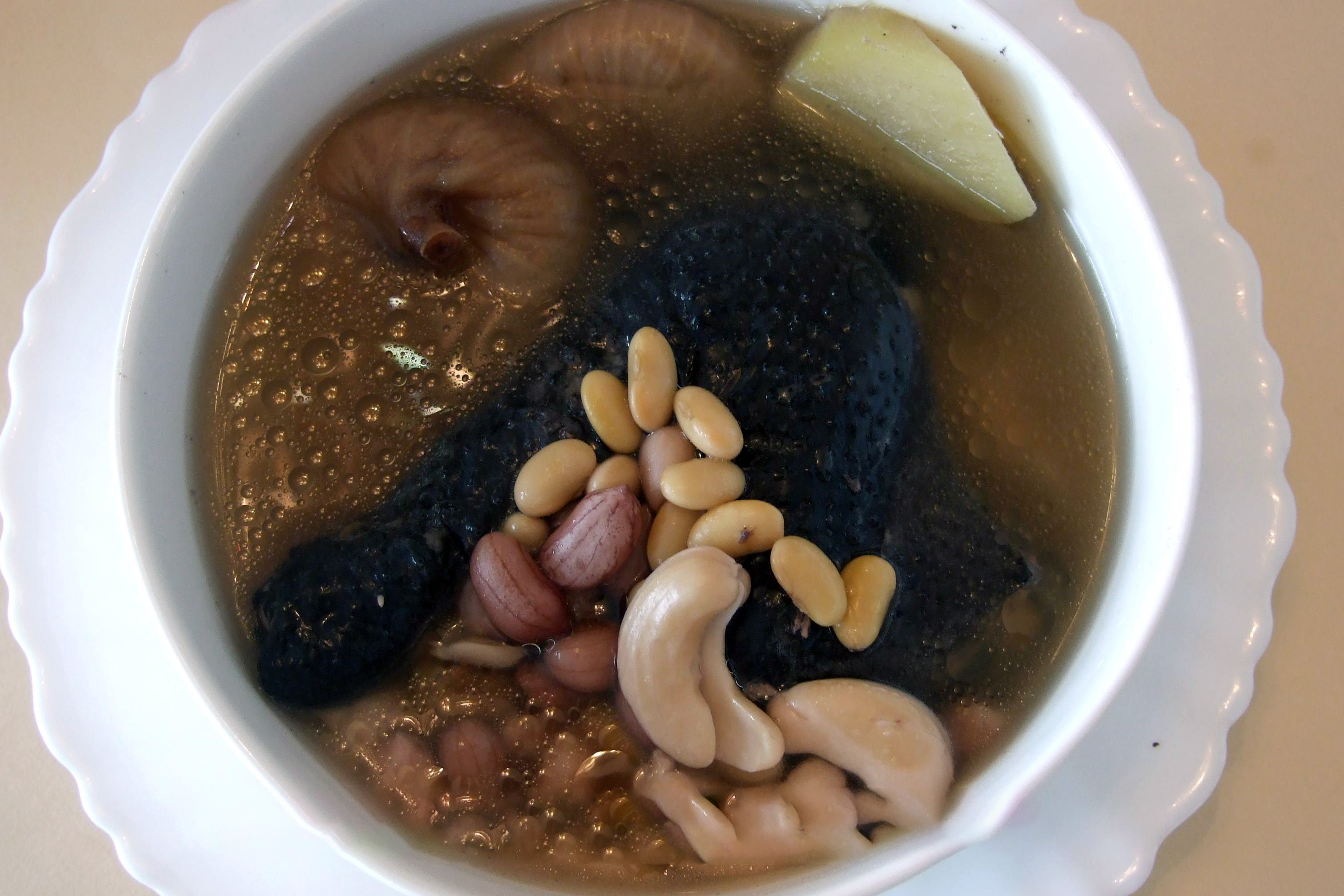
This soup is a wonderful choice from the second week onward, when the body is ready to receive more nourishment. In-season lotus root — especially older, fatter root — supports the spleen and replenishes blood. Peanuts are a classic lactation-support food in Chinese tradition, while flower beans and dried octopus add protein and depth. The result is a fragrant, richly flavoured soup that is both satisfying and genuinely supportive.
Who it suits / who should be cautious
- Suitable from the second week postpartum for mothers planning to breastfeed
- Also suitable as a general family soup
- Pregnant women can also drink this soup, but if there are pre-existing skin conditions, omit the dried octopus
- People with G6PD deficiency (favism) should substitute flower beans with black beans or red beans
- Do not cook lotus root in an iron or metal pot — use clay (earthenware) or glass to preserve the colour and avoid metallic compounds leaching into the soup
Why these ingredients (the food-therapy logic)
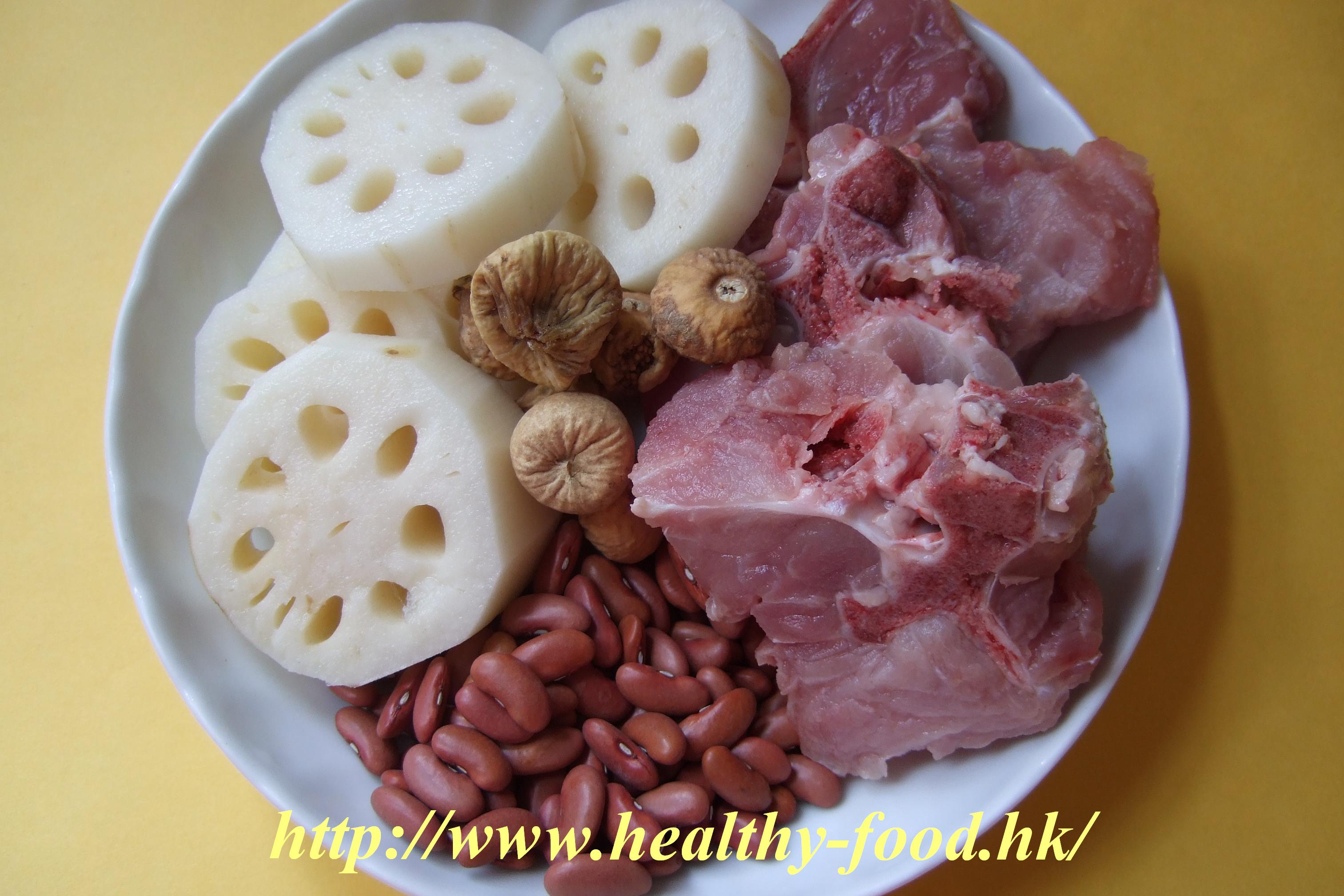
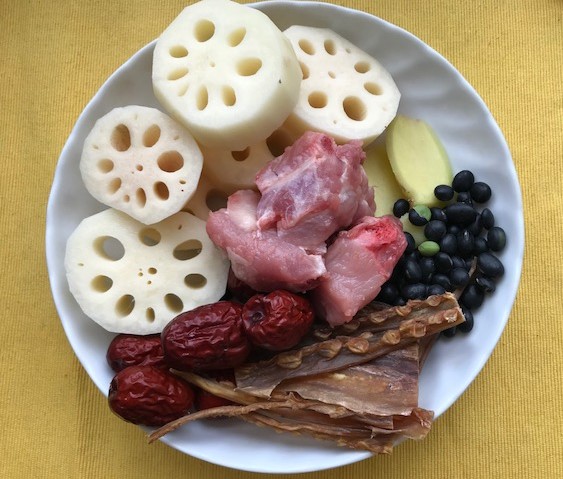
- Lotus root: In traditional food therapy, mature lotus root is associated with nourishing the spleen, stopping bleeding, and nourishing the blood. A particularly appropriate ingredient for mothers who have experienced significant blood loss during delivery.
- Peanuts (hua sheng): A classic Chinese lactation-support food — peanuts are associated with encouraging milk production and providing caloric and protein density for recovery.
- Flower beans (hua dou / borlotti beans): A type of runner bean with a beautiful marbled pattern, associated with providing plant protein and general nourishment. G6PD-deficient individuals should avoid these and use black or red beans instead.
- Dried octopus (zhang yu): Rich in protein and minerals; traditionally used to add depth of flavour and nourishing quality to postnatal soups. Considered a “stimulating” food — avoid if skin conditions exist.
- Dried figs: Throat-soothing and mildly nourishing, adding gentle sweetness to the broth.
Ingredients (4 bowls)
| Ingredient | Amount | Notes |
|---|---|---|
| Lotus root | half a jin (~300 g) | Peel and slice |
| Raw peanuts | 1 liang (~37 g) | Soak 1–2 hours, discard soaking water |
| Flower beans | 1 liang (~37 g) | Soak 1–2 hours, discard soaking water; substitute black or red beans for G6PD |
| Dried figs | 3 pieces | Rinse |
| Fresh ginger | 2 slices | |
| Dried octopus | 1 liang (~37 g) | Soak to rehydrate, then blanch briefly |
| Water | 8 bowls (~2 L) |
Method
- Soak peanuts and flower beans in water for 1–2 hours, then discard the soaking water.
- Peel the lotus root, wash, and slice into pieces.
- Soak the dried octopus until softened, then blanch briefly in boiling water.
- Place all ingredients into a clay or glass pot (do not use iron or metal pots).
- Add 8 bowls of water. Bring to a boil over high heat, then reduce to a low simmer for about 2 hours until the liquid reduces to about 4 bowls.
- Serve with both the soup and the solid ingredients — all are nutritious and delicious.
Bro Niu’s tips
Lotus root reacts with iron and metal surfaces and will turn grey — always cook it in an earthenware (clay) pot or a glass pot. Vacuum cookers also cause the soup to turn grey, so they are best avoided for this recipe. If you must use a vacuum cooker, boil the soup in an open pot for at least 15–20 minutes before sealing.
Community questions answered (selected)
-
Q (苏太): Is this soup suitable during pregnancy? Bro Niu: This soup is fine to drink during pregnancy. However, dried octopus is considered a “stimulating” food — if there are pre-existing skin conditions, omit it. You can browse the “Prenatal / Postnatal” category on the website for more suitable recipes.
-
Q (Jessica): Is it okay to use a vacuum cooker? Bro Niu: Using a vacuum cooker will cause the lotus root soup to turn grey. It is best to use a clay or glass pot.
-
Q (K): Why should lotus root not be cooked in iron pots? Bro Niu: Several food therapy references note that lotus root should avoid iron cookware — it is likely because lotus root is slightly astringent and can draw out metallic compounds from the pot, making the soup cloudy.
Published October 17, 2020 · Adapted and translated for Nourilo from a traditional home-kitchen recipe. Approx. 4 min read.