Herbal & Flower Teas
Hawthorn, Cassia Seed and Virgate Wormwood Tea
Traditionally used to aid digestion, clear fatty accumulation, and support liver function after holiday overindulgence
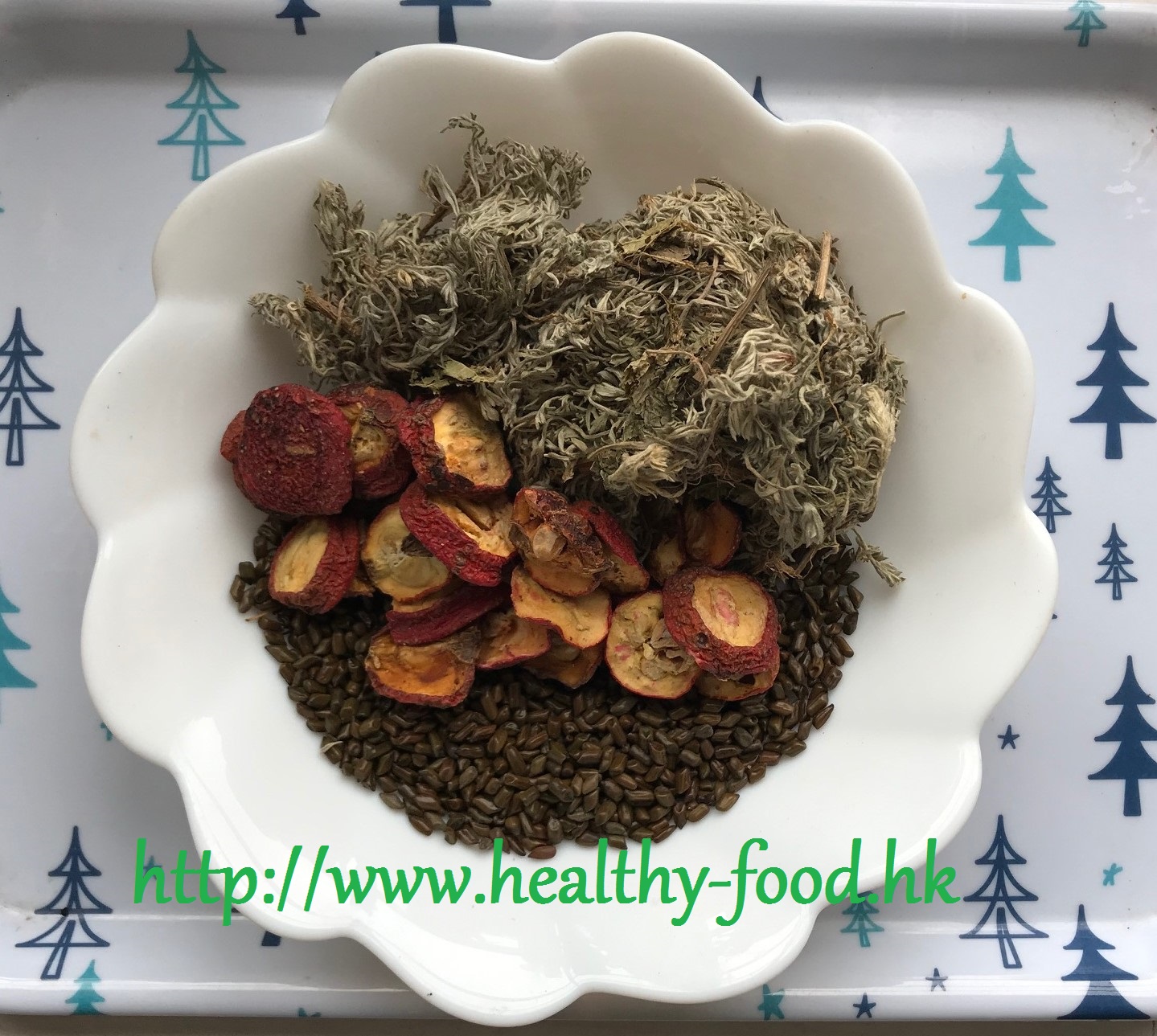
Why people make this tea
Winter holidays mean reunions, hotpot dinners, Christmas buffets, and New Year celebrations — and for many people, this stretch from late December through early January involves more rich food, alcohol, and late nights than the body is comfortable managing all at once. Self-service buffets and hotpot meals are particularly risky: raw shellfish, cold cuts, chilled prawns, and raw oysters are all high-risk foods for digestive upset; and the sheer volume of high-fat, high-calorie food consumed can lead to acid reflux, bloating, and a general feeling of heaviness.
This three-ingredient tea was designed as a practical reset. It supports the liver in processing the extra fats, helps the digestive system move food along, clears heat and dampness, and is gentle enough to take daily for a period after the holidays — or for anyone who eats out frequently and has a tendency toward fatty liver.
Who it suits / who should be cautious
- Suitable for adults who have been overeating rich or fatty foods
- Children can take this in appropriate smaller amounts (add 2 honey dates for palatability)
- Those prone to stomach acid reflux: reduce hawthorn or take the tea after eating
- Pregnant women should avoid this tea
- People with loose stools or cold-constitution stomachs should use hawthorn cautiously
- Suitable for regular use for those with fatty liver or obesity — see Bro Niu’s tip below for a more convenient daily version
Why these ingredients (the food-therapy logic)
- Hawthorn berries (shan zha): One of the best-known digestive aids in Chinese food therapy. Hawthorn is particularly associated with breaking down meat and fatty foods. Modern research has also explored its activity on blood lipids. It has a pleasantly sour flavour but can aggravate acid reflux — best taken after meals or reduced in quantity if sensitivity occurs.
- Cassia seeds (jue ming zi): Used in traditional medicine to support liver and eye health, and to gently move the bowels. Regular use is associated with reducing fatty accumulation. Dry-roasting the seeds before use reduces their cooling nature slightly and helps bring out their flavour.
- Virgate wormwood (mian yin chen): A herb traditionally associated with clearing damp-heat from the liver and gallbladder, and with reducing elevated bilirubin. It is used in traditional formulas for jaundice and liver congestion. In food therapy it appears in post-rich-meal teas as a liver-supportive ingredient.
Ingredients (2–3 cups / 1 day’s supply)
| Ingredient | Amount | Notes |
|---|---|---|
| Hawthorn berries (shan zha) | 5 qian (~15 g) | |
| Cassia seeds (jue ming zi) | 5 qian (~15 g) | |
| Virgate wormwood (mian yin chen) | 5 qian (~15 g) | |
| Water | 4 bowls |
Method
- Rinse all ingredients briefly.
- Combine in a pot with 4 bowls of water.
- Bring to a boil and cook for 20 minutes.
- Drink throughout the day as a substitute for plain water or tea.
Bro Niu’s tips
For those who find this useful and want to make it more convenient for daily use: dry-roast the cassia seeds in a dry wok for 7 minutes, then grind the hawthorn and virgate wormwood into coarse powder. Mix the three together and store in an airtight jar. Take 1 tablespoon of the blend, steep in hot water for 7 minutes, and drink. This method is particularly practical for people with fatty liver or those managing their weight — it can be taken regularly as a daily tea.
Community questions answered (selected)
-
Q (Janice): Drinking hawthorn causes acid reflux for me — can I use less? Bro Niu: Yes, reduce the hawthorn and drink the tea after eating rather than on an empty stomach.
-
Q (Cola): Can I leave out the hawthorn? It makes my teeth feel sensitive. Bro Niu: If you leave out the hawthorn, substitute 3 qian of radish seeds (lai fu zi / cassia seed of white radish). Radish seed helps move food, dissolve phlegm, and regulate qi downward.
-
Q (Mavis): My mother has late-stage liver cancer with high bilirubin levels — is there anything to help lower the jaundice? Bro Niu: Try 1 liang virgate wormwood (mian yin chen) with 2 honey dates in 5 bowls of water, cooked down to 2 bowls. Take for 4–5 consecutive days — virgate wormwood is traditionally used to support the reduction of bilirubin and jaundice. Please continue working with her medical team.
Published December 24, 2018 · Adapted and translated for Nourilo from a traditional home-kitchen recipe. Approx. 3 min read.