Tonic Drinks & Waters
Lime & Lemongrass Water
Traditionally associated with antibacterial support, reducing inflammation, aiding digestion, and supporting weight management
Why people make this drink
Lemongrass is a staple aromatic grass in Southeast Asian cooking — used in curries, soups, and herbal waters across Thailand, Vietnam, and southern China. Its therapeutic reputation in traditional practice spans pain relief for rheumatism, easing migraines, supporting digestion, and helping relieve muscle tension. A friend introduced Bro Niu to the combination of lemongrass with whole lime, which is said in folk tradition to support the body’s clearance of waste through the liver, kidneys, bladder, and pancreas, while also offering antibacterial support and helping guard against kidney stones. Whole lime adds a pleasant tartness and, importantly, a lot of the beneficial compounds are concentrated in its peel — modern research has identified flavonoids such as hesperidin and naringenin in lime skin, which are associated with anti-inflammatory effects, and vitamin P (bioflavonoids) that may help protect blood vessel walls. Do note: using the full lime makes the drink slightly bitter. If you prefer a milder flavour, substituting a yellow lemon for the lime is perfectly fine.
Who it suits / who should be cautious
- Well suited for healthy adults looking for a refreshing daily herbal drink supporting digestion, circulation, and general wellbeing.
- Associated with supporting weight management and helping keep blood pressure within a healthy range.
- People with weak digestion, stomach ulcers, acid reflux, or other digestive conditions should not drink this. The lime peel and lemongrass can irritate a sensitive digestive tract.
- Pregnant women: lemongrass in large amounts is best avoided during pregnancy. Use modest amounts and consult your midwife or doctor.
Why these ingredients (the food-therapy logic)
- Lemongrass (xiang mao): Contains citral and other volatile compounds traditionally associated with relieving muscle tension, easing wind in the joints, and supporting digestive comfort. Also used to support circulation.
- Lime (qing ning) — especially the peel: Rich in hesperidin and naringenin (flavonoids with anti-inflammatory associations) and vitamin P (bioflavonoids), traditionally credited with supporting blood vessel health and helping the body flush toxins.
- Rock sugar (bing tang): Moderates the bitterness; gentler on the stomach than refined white sugar.
Ingredients (about 4 cups)
| Ingredient | Amount | Notes |
|---|---|---|
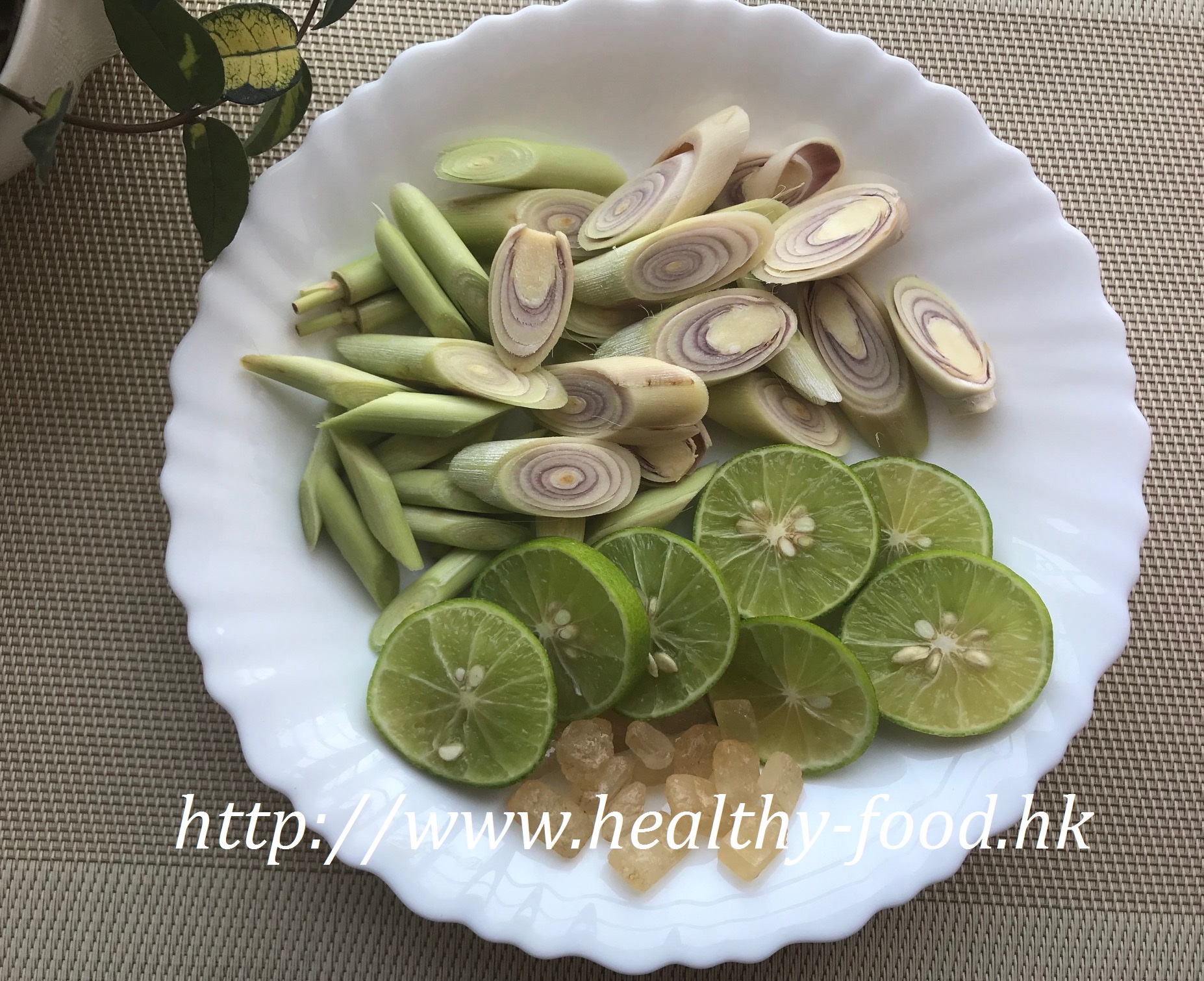
| Lemongrass | 4–5 stalks | Washed and sliced |
| Lime | 2 pieces | Washed and sliced with peel on |
| Rock sugar | To taste | Add near the end |
Method
- Wash the lemongrass and lime well. Slice both into pieces.
- Combine lemongrass and lime slices in a pot with 6 bowls of water.
- Bring to a boil and simmer for 20 minutes.
- Add rock sugar, stir to dissolve, and the drink is ready.
- Serve warm or at room temperature. The drink will have a pleasant herbal bitterness from the lime peel.
Bro Niu’s tips
The slightly bitter taste mainly comes from the lime peel — this is where many of the beneficial compounds are concentrated, so the peel is worth keeping. If the bitterness is a concern, a regular yellow lemon may produce a gentler flavour. This drink is also associated with quenching thirst, supporting weight management, and helping maintain healthy blood pressure. However, those with digestive conditions should give it a miss.
Published February 18, 2020 · Adapted and translated for Nourilo from a traditional home-kitchen recipe. Approx. 2 min read.