Congee & Porridge
Millet Red Jujube Congee
traditionally calms the spirit, supports sleep, strengthens the spleen and stomach
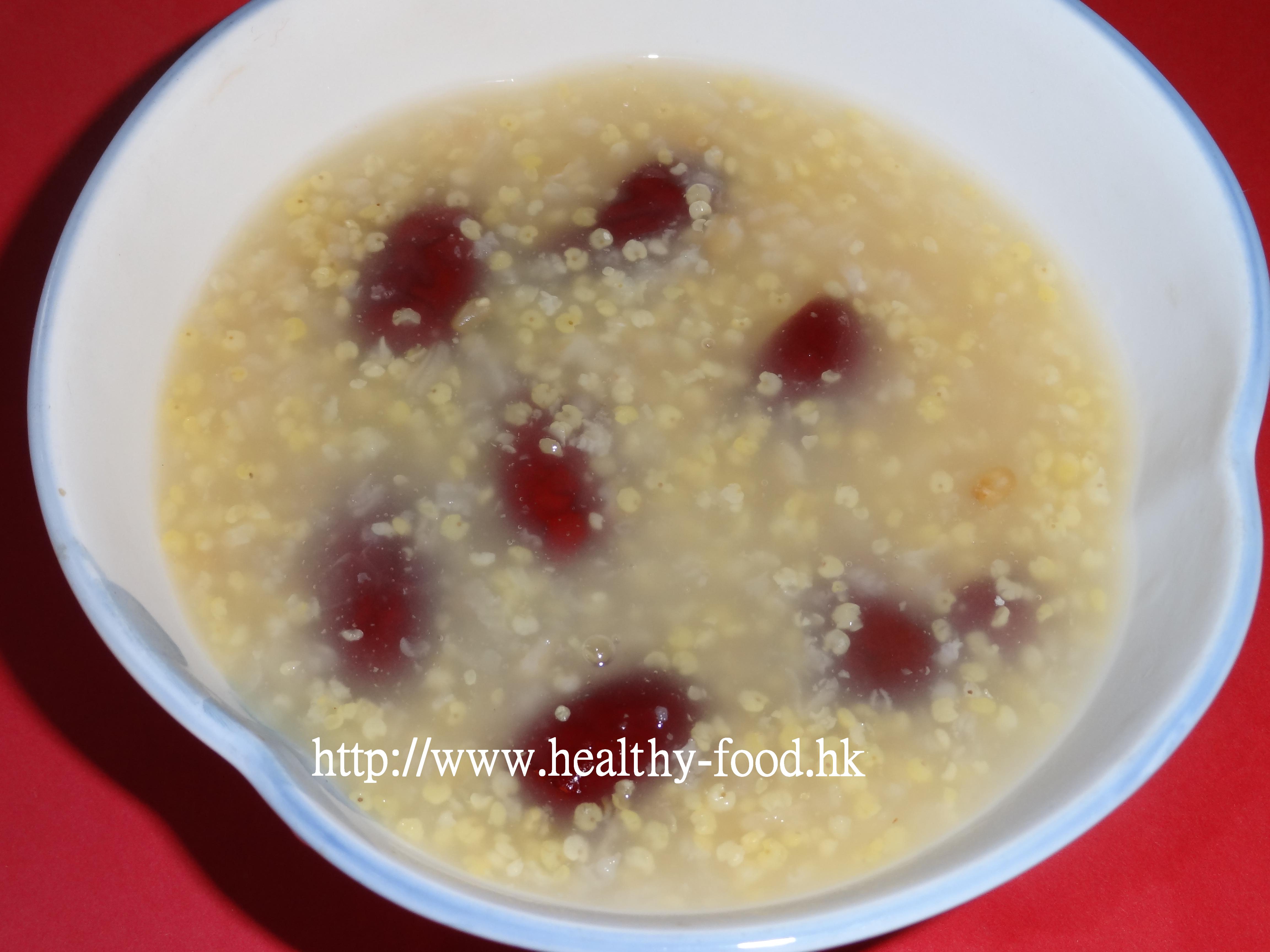
Why people make this congee
Bro Niu wanders past a shop selling coarse grains and spots a bag of bright yellow millet alongside his usual wheat berries. He remembers a saying he has heard from Chinese medicine practitioners: “A bowl of millet congee in the morning puts radiance on your face; a bowl of millet congee at night helps you sleep peacefully.” That dual reputation — daytime vitality and nighttime calm — is what makes millet such a beloved staple in Chinese home wellness cooking. For postpartum women, for the elderly, for children, for anyone recovering from illness, and for people who lie awake worrying — this gentle grain does quiet, steady work. Combined with wheat berries (which Chinese medicine associates with calming the heart and spirit), glutinous rice (warming and nourishing), and red jujube (blood-nourishing and spirit-calming), the congee covers a broad range of the classic “heart and spirit” deficiency patterns: restlessness, poor sleep, anxiety, patchy complexion.
Who it suits / who should be cautious
- Suits: people with insomnia, difficulty falling asleep, restlessness, anxiety, or facial discoloration; new mothers postpartum; elderly and children; people recovering from illness; general spleen and stomach support for all ages
- Cautions: those with qi stagnation (persistent bloating, a feeling of being “stuck”) should eat this in moderate amounts; those with a very cold, deficient constitution should eat sparingly. People with joint or muscle pain related to wind-damp conditions should limit glutinous rice. Do NOT combine millet with apricot kernels (bei xing / nan xing) in the same meal. Very heat-prone (excess heat) individuals can substitute a few nan jujubes for some of the red jujubes — nan jujubes are less warming. Red jujubes should be pitted, especially for people with dampness.
Why these ingredients (the food-therapy logic)
- Millet (xiao mi, Setaria italica): Sweet and slightly cool; traditionally considered outstanding for strengthening the spleen and stomach, nourishing kidney qi, calming the heart spirit, and beautifying the complexion. Gentle on the digestive tract and easily absorbed.
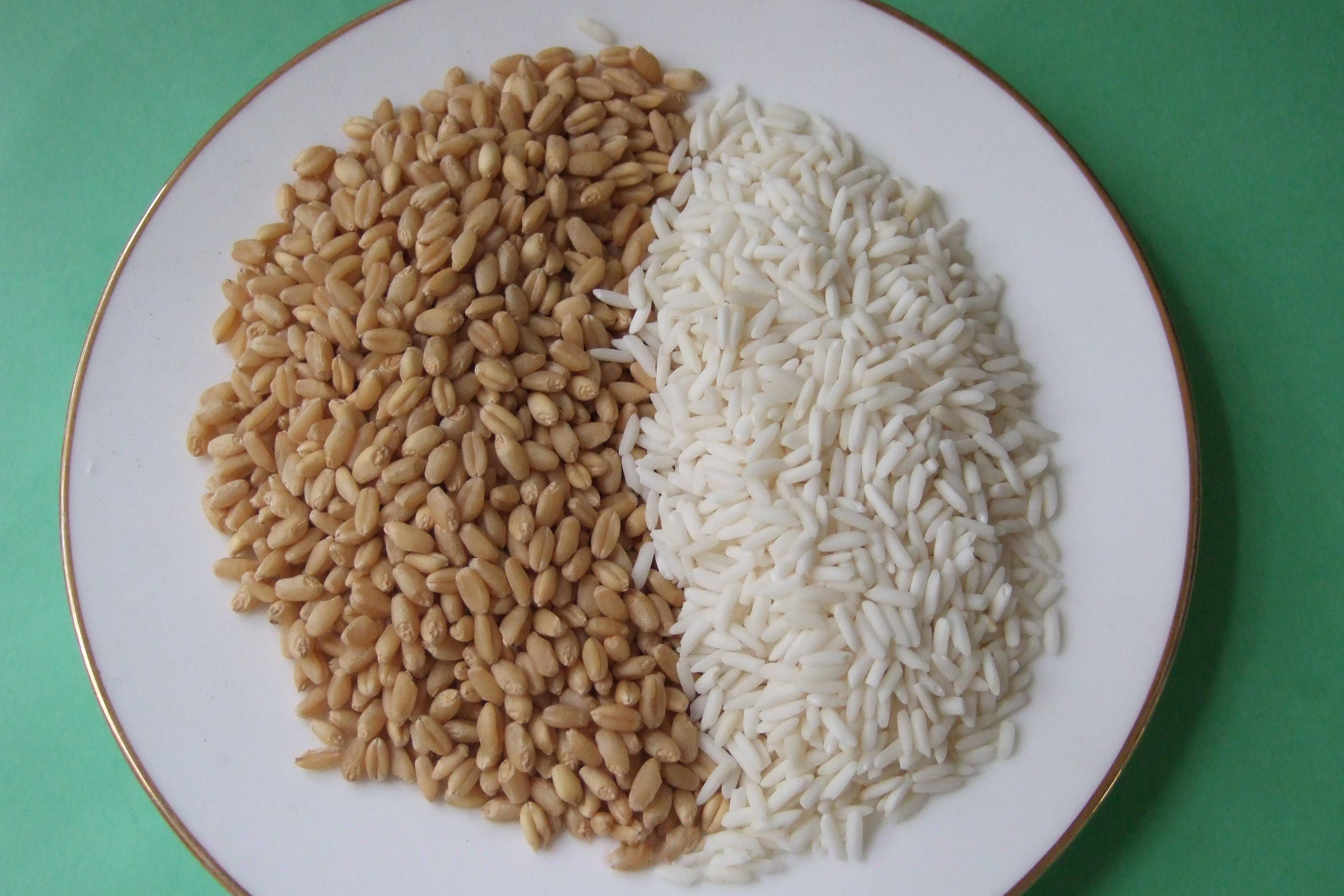
- Wheat berries (mai mi): Sweet and slightly cool; classically associated with calming the spirit and easing restlessness — wheat grain is a core ingredient in the famous traditional formula Gan Mai Da Zao Tang (Licorice Wheat Jujube Decoction) used for anxiety and mood disturbance.
- Glutinous rice (nuo mi): Sweet and warm; warms and nourishes the stomach, supports qi, and adds a comforting, sticky texture to the congee.
- Red jujube (hong zao): Sweet and warm; nourishes blood, calms the spirit, supports the spleen. Pit before cooking, especially for those with dampness.
Ingredients (4–5 bowls / serves 3–4)
| Ingredient | Amount | Notes |
|---|---|---|
| Millet (xiao mi) | 75 g | Rinse gently |
| Wheat berries (mai mi) | ~38 g | Rinse |
| Glutinous rice (nuo mi) | ~38 g | Rinse |
| Red jujube | 8 pieces | Pit before cooking |
| Water | 8 bowls (~1.4 L) |
Method
- Rinse all grains gently. Pit the red jujubes.
- Place all ingredients in a pot with 8 bowls of water.
- Bring to a boil, then reduce heat to a gentle simmer. Cook for approximately 1.5 hours, stirring occasionally, until the grains are fully soft and the congee has thickened to a comforting consistency. It will yield 4–5 bowls.
- Serve warm. Can be eaten for breakfast or as an evening meal.
Bro Niu’s tips
This is a gentle, all-ages congee — excellent for the elderly, children, and those recovering from illness. It can help prevent indigestion and mouth sores. However, those with joint or muscle pain from wind-damp patterns should avoid eating too much glutinous rice as it may worsen symptoms. And remember the pairing caution: do not add apricot kernels to this congee — millet and apricot kernels are traditionally considered incompatible. If you are very heat-prone or find red jujubes too warming, replace some with nan jujubes (southern jujube) and fewer red ones — a combination of 4 red jujubes and 4 nan jujubes will be milder.
Community questions answered (selected)
-
Q (smiles): I want to make this for better sleep and digestion, but I am very heat-prone. Can I still use red jujubes? Is it okay to reduce the amount? Bro Niu: For a very heat-prone constitution, use 4 red jujubes and 4 nan jujubes together — the nan jujubes have a spleen-kidney nourishing effect and are not as warming. Pit the red jujubes when using them to reduce their heating nature.
-
Q (yvonne): For someone with an extremely heat-prone constitution, is it true they should not eat red jujubes at all? Bro Niu: Very heat-prone people should avoid large amounts of red jujubes. Substitute dried figs (wu hua guo) instead. For daily use, nan jujubes (nan zao) are a gentler option — not as warming.
-
Q (Eva): I have poor spleen and stomach absorption, frequent belching, and a thin build. What congee would be better for me to support the digestive system and gain some healthy weight? Bro Niu: You can add dried lotus root powder (ou fen), dried citrus peel (chen pi), and red jujubes to your congee — these help strengthen the spleen and regulate qi. For a cold-deficient constitution, add a little cinnamon powder (rou gui fen) to warm the stomach.
Published May 8, 2013 · Adapted and translated for Nourilo from a traditional home-kitchen recipe. Approx. 4 min read.