Congee & Porridge
Glutinous Rice and Wheat Porridge
Traditionally warms and soothes the digestive tract during and after gastroenteritis
Why people make this porridge
When someone in the house goes down with gastroenteritis — the constant runs to the bathroom, the nausea, the total loss of appetite — heavy foods are the last thing they need. This plain, warming porridge is exactly what Cantonese food therapy prescribes: something light enough for a churned-up stomach to handle, and gentle enough to coax back a little appetite. The combination of glutinous rice and whole wheat is associated in traditional practice with warming and steadying the digestive system, relieving the kind of urgent loose stools where food passes through barely digested, and easing the accompanying fatigue and thirst.
Who it suits / who should be cautious
- Suitable for adults and children recovering from gastroenteritis, or for anyone with a weak, cold-type digestive constitution who tolerates warming foods well
- Also traditionally suitable as a regular porridge for people with spleen-stomach deficiency who experience loose stools or easy bloating
- Not suitable for those with constipation or internal heat conditions, as glutinous rice and wheat together have a warming, binding quality
Why these ingredients (the food-therapy logic)
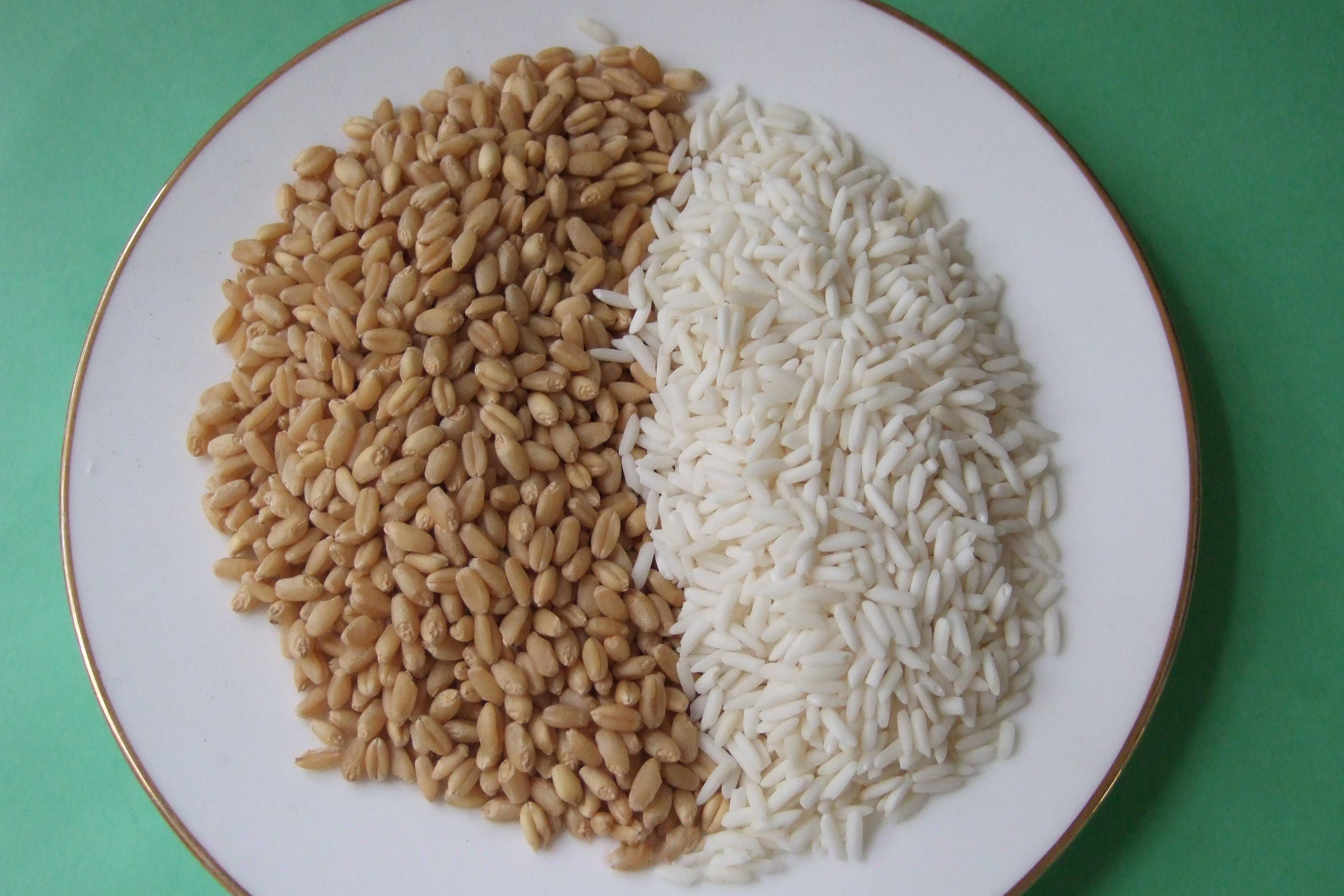
- Glutinous rice (nuo mi): Warm and sweet in nature; traditionally associated with tonifying the spleen, stomach, and lung qi, and particularly valued for its ability to slow and settle loose, undigested stools
- Whole wheat grain (xiao mai mi): Distinct from refined flour or the floating wheat (fu xiao mai) used to stop sweating; this is the whole grain, available at grocery stores, associated with nourishing the heart, calming restlessness, relieving thirst, and providing sustained energy
- Brown sugar (hong tang): Mildly warming; rounds out the flavour and is a gentler sweetener than white sugar for a recovering stomach
Ingredients (multiple small servings throughout the day)
| Ingredient | Amount | Notes |
|---|---|---|
| Glutinous rice (nuo mi) | ~75 g | Rinsed and soaked |
| Whole wheat grain (xiao mai mi) | ~75 g | Rinsed and soaked; from grocery stores |
| Brown sugar | To taste | Add after cooking |
Method
- Rinse both grains and soak in cold water for 30 minutes (optional, but shortens cooking time).
- Place both grains in a pot and add enough water to make a loose, thin congee-style porridge.
- Bring to a boil, then reduce heat and simmer, stirring occasionally, until the grains are fully soft and the porridge is smooth.
- Stir in brown sugar and allow it to dissolve before serving.
- Serve in small bowls throughout the day rather than in one large portion — small, frequent servings are easier on a sensitive stomach.
Bro Niu’s tips
This porridge naturally warms the spleen and stomach and is a good option for the type of diarrhoea linked to cold or deficiency — where the digestive system simply cannot process food properly. People with a chronically cold or weak spleen-stomach constitution can eat this regularly as a mild tonic porridge, not just when unwell. If the illness also causes excessive sweating and weakness, add 6 red dates and a small piece of liquorice root (gan cao, about 3 g) to the pot for extra support.
Community questions answered (selected)
- Q (Joanne): My six-year-old just recovered from gastroenteritis but still has mild stomach pain and goes to the toilet twice a day. Which soups are suitable? Bro Niu: You could try tai zi shen (prince’s ginseng) about 11 g, yam (huai shan) about 37 g, lotus seeds about 37 g, fox nut (qian shi) about 37 g, and 8 red dates, simmered into a pork broth with 8 bowls of water down to 4. The whole family can drink it. Encourage the child to eat some of the yam, lotus seeds, and fox nut. Alternatively, stir-fried hyacinth bean and fox nut cooked with red dates into a porridge also helps the spleen and stops diarrhoea.
Published May 29, 2010 · Adapted and translated for Nourilo from a traditional home-kitchen recipe. Approx. 3 min read.