Soups
Lotus Root, Black Bean and Octopus Soup
Traditionally supports blood nourishment and hair health after childbirth
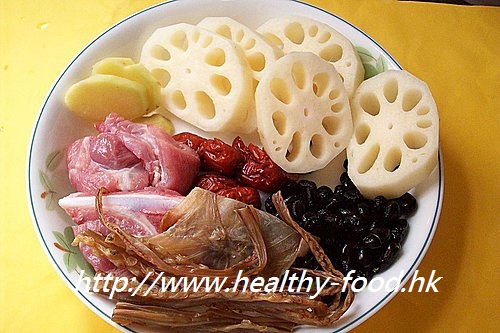
Why people make this soup
Postpartum hair loss is remarkably common — most new mothers notice significant shedding in the weeks after delivery, as the body recalibrates its hormones. In Chinese food therapy, this is understood as a depletion of liver blood during pregnancy and birth, and the traditional approach is to replenish that blood through nourishing foods. This soup does that work through the combination of iron-rich dried octopus, blood-building black beans (which are dry-toasted to enhance their warming quality), and lotus root, which adds a gentle astringent quality. The result is a deeply savory, satisfying soup that Cantonese families have made for new mothers for generations.
Who it suits / who should be cautious
- Well-suited to new mothers from around day 3 after delivery (both natural and caesarean birth)
- Also beneficial for lactation support and general postpartum recovery
- Those with a hot or easily-heated constitution, or those currently experiencing skin conditions, should avoid this soup — it tends toward the warming, nourishing end of the spectrum
- Suitable for women who had a miscarriage 2–3 months prior
Why these ingredients (the food-therapy logic)
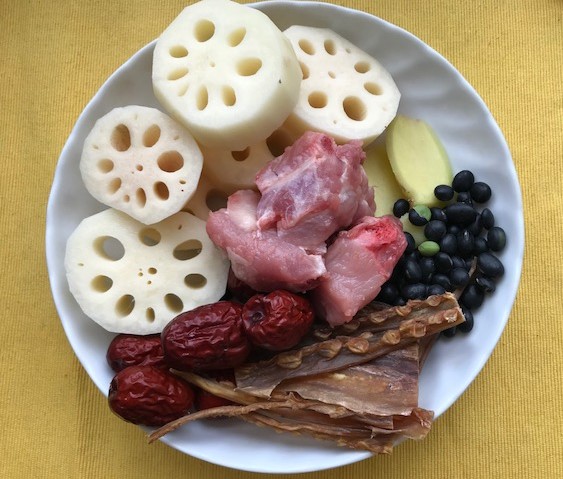
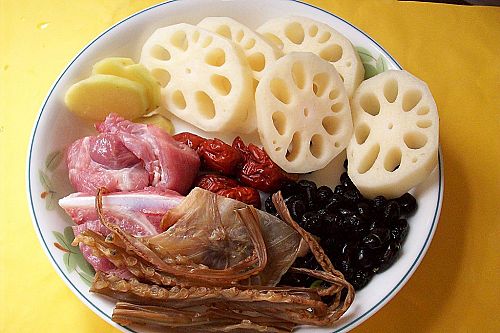
- Black soybeans (hei dou): Dry-toasting them in a clean pan before cooking enhances their warming and nourishing properties; they are traditionally associated with nourishing the liver and kidneys, promoting hair health, and boosting lactation
- Dried octopus (zhang yu gan): In traditional food therapy, dried octopus is associated with nourishing blood, supporting tissue repair, and stimulating milk production — preferred over squid (you yu) for this purpose, though squid can substitute
- Lotus root (lian ou): Provides a mild astringent quality that helps support blood-building; has a pleasant, slightly sweet taste that balances the soup
- Red dates (hong zao): A foundational blood-nourishing ingredient in Chinese food therapy, supporting qi and blood recovery
- Ginger: Warms the middle burner and helps the body absorb the nourishing ingredients
Ingredients (4–5 bowls)
| Ingredient | Amount | Notes |
|---|---|---|
| Lotus root | 1 jin (~600 g) | Peel and cut into chunks |
| Black soybeans (hei dou) | 2 liang (~75 g) | Dry-toast in a clean pan first until fragrant; then rinse |
| Dried octopus | 3 liang (~112 g) | Soak and rinse; available at Chinese seafood stores |
| Lean pork | 6 liang (~225 g) | Slice and blanch briefly in boiling water |
| Red dates, pitted | 8 pieces | Remove pits to reduce heatiness |
| Fresh ginger | 3 slices | |
| Water | 8 bowls (~1.9 L) |
Method
- Dry-toast the black beans in a clean, oil-free pan over medium heat until fragrant and slightly cracked. Rinse and set aside.
- Peel the lotus root and cut into thick chunks.
- Slice the lean pork and blanch briefly in boiling water; drain.
- Soak the dried octopus in water until softened; rinse.
- Pit the red dates and rinse.
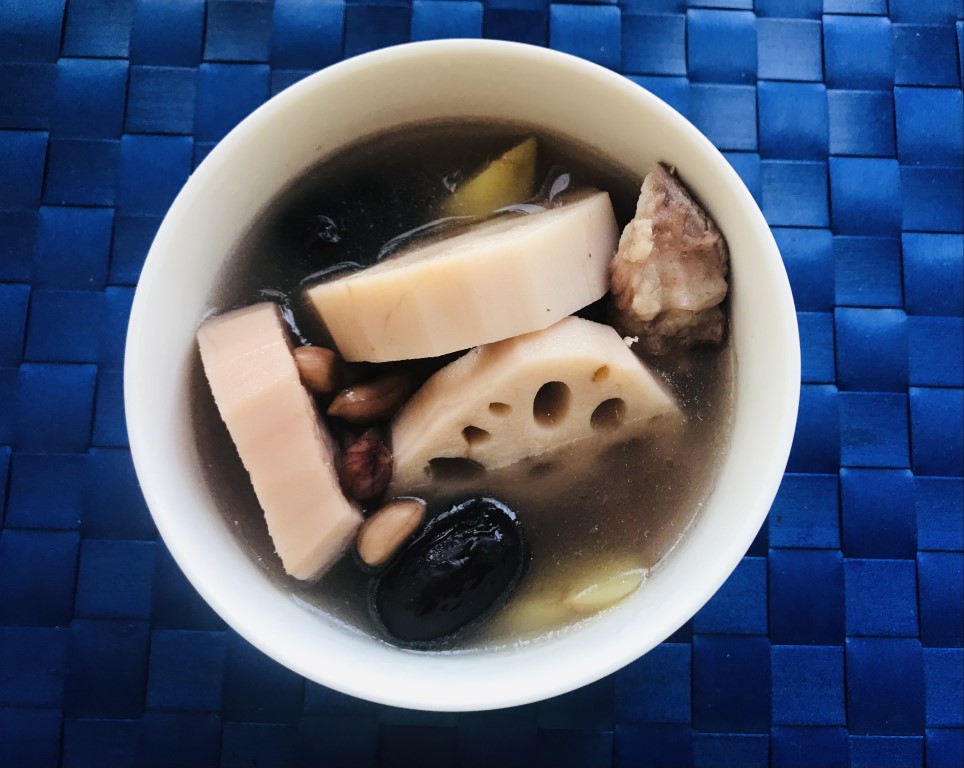
- Add all ingredients to a clay pot or heavy-bottomed pot with 8 bowls of water.
- Bring to a boil, then reduce to a gentle simmer for about 2 hours.
- Serve hot, eating the soup and the solid ingredients together.
Bro Niu’s tips
This soup has a rich umami flavor and is excellent for postpartum nourishment — not just for hair, but also for overall blood recovery and milk production. However, those with an easily-heated constitution should not drink it; for that group, Bro Niu suggests a lighter alternative using mulberry fruit (sang shen zi) and black beans steeped as tea (with a little of the toasted black beans soaked in hot water) to support hair health without excess heat. Dried squid (you yu gan) can substitute for octopus and has similar blood-nourishing properties, though the effects differ slightly.
Community questions answered (selected)
-
Q (Eva): I am 70 days postpartum and already losing a lot of hair. But I have a hot constitution — is this soup suitable for me? Will plain toasted black bean tea help? Bro Niu: If you have a hot constitution, this soup may not be ideal. Instead, try soaking toasted black beans in hot water as tea, and add 1 tablespoon of black mulberry (hei sang shen) to the brew — it supports hair regrowth while reducing the warming effect.
-
Q (Yanka): In the recipe using mulberry, black beans, and walnut — do the black beans need to be dry-toasted? How much water? Bro Niu: Toasting the black beans adds a warming, tonic quality. But if you prefer to skip that step, the untoasted version is fine too. Use about 5 bowls of water and cook for 1 hour.
-
Q (JC): My wife is about to give birth by caesarean section. When can she start drinking this soup? Bro Niu: She can begin from about day 5 or 6 after a caesarean delivery.
Published February 28, 2014 · Adapted and translated for Nourilo from a traditional home-kitchen recipe. Approx. 4 min read.