Soups
Yacon, Taro Stalk, Carrot and Pork Bone Soup (Xue Lian Guo Zhu Yu Xi Shi Gu Tang)
traditionally used to clear heat, support bowel regularity, soften blood vessels, and suit diabetes and high blood pressure
Why people make this soup
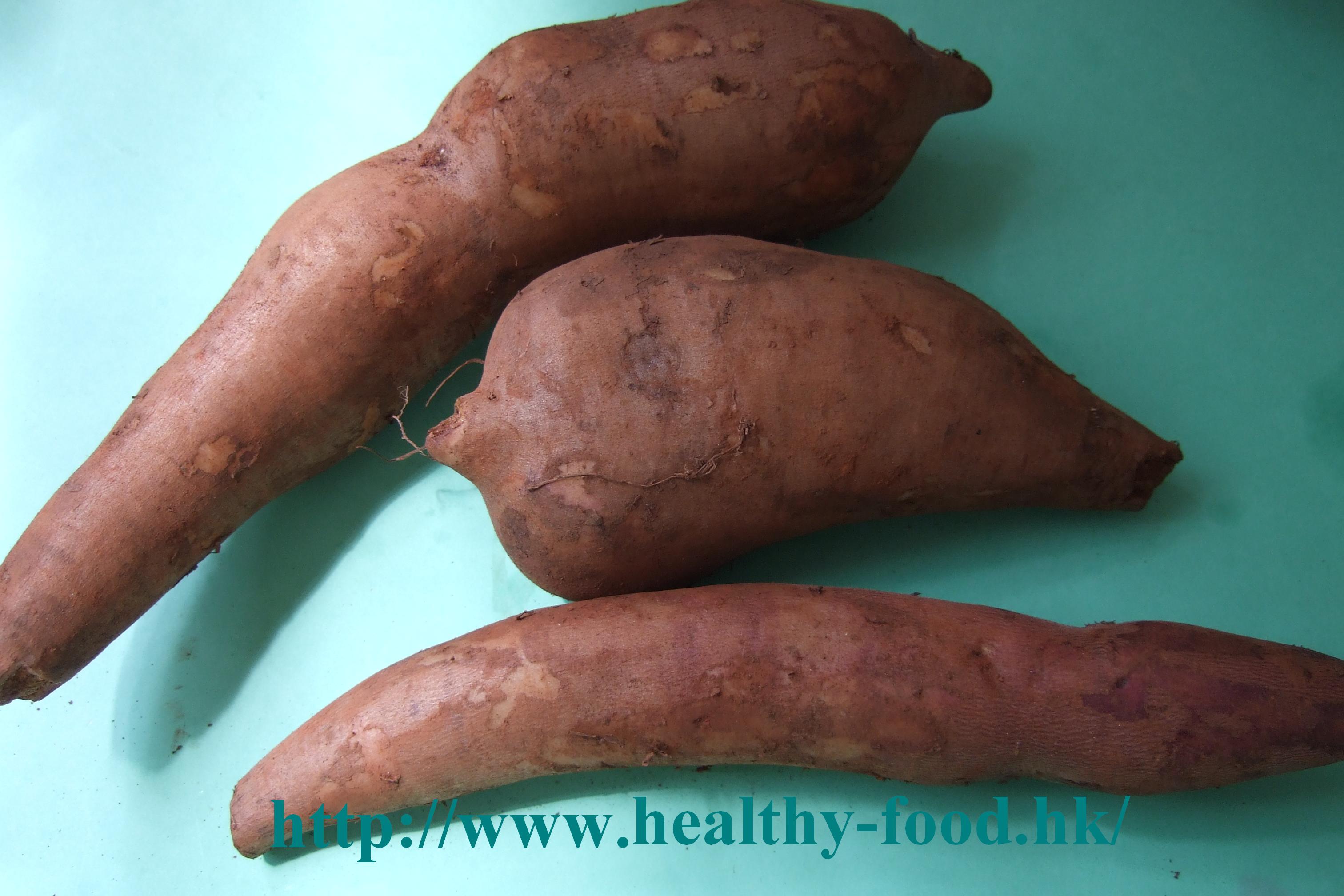
Yacon — sold in markets under the Cantonese name “Tianshan xue lian guo” (Tianshan snow lotus fruit) — looks like a sweet potato but tastes refreshingly sweet and juicy, almost like a cross between a pear and a water chestnut. What makes it particularly useful as a food-therapy ingredient is its high content of fructooligosaccharides (FOS), a type of dietary fibre that feeds beneficial gut bacteria and has a low glycaemic impact. In Cantonese food-therapy tradition, it is associated with clearing heat, supporting the digestive system, and softening blood vessels — making it well suited to the dry autumn season when both heat accumulation and constipation tend to arise. Paired with cooling taro stalk and carrot in a long-simmered pork bone soup, the result is a naturally sweet, clean-tasting broth that the whole family can enjoy.
Who it suits / who should be cautious
- People with raised blood pressure, blood sugar, or cholesterol as part of a lifestyle-support approach
- People experiencing internal heat, constipation, or digestive sluggishness, particularly in dry autumn weather
- Children with urinary heat or irritable urination can also benefit
- Suitable for the whole family; lightly sweet and pleasant
- People with a cold, deficient-cold constitution (always cold, weak digestion) should not overconsume; moderate amounts are fine
Why these ingredients (the food-therapy logic)
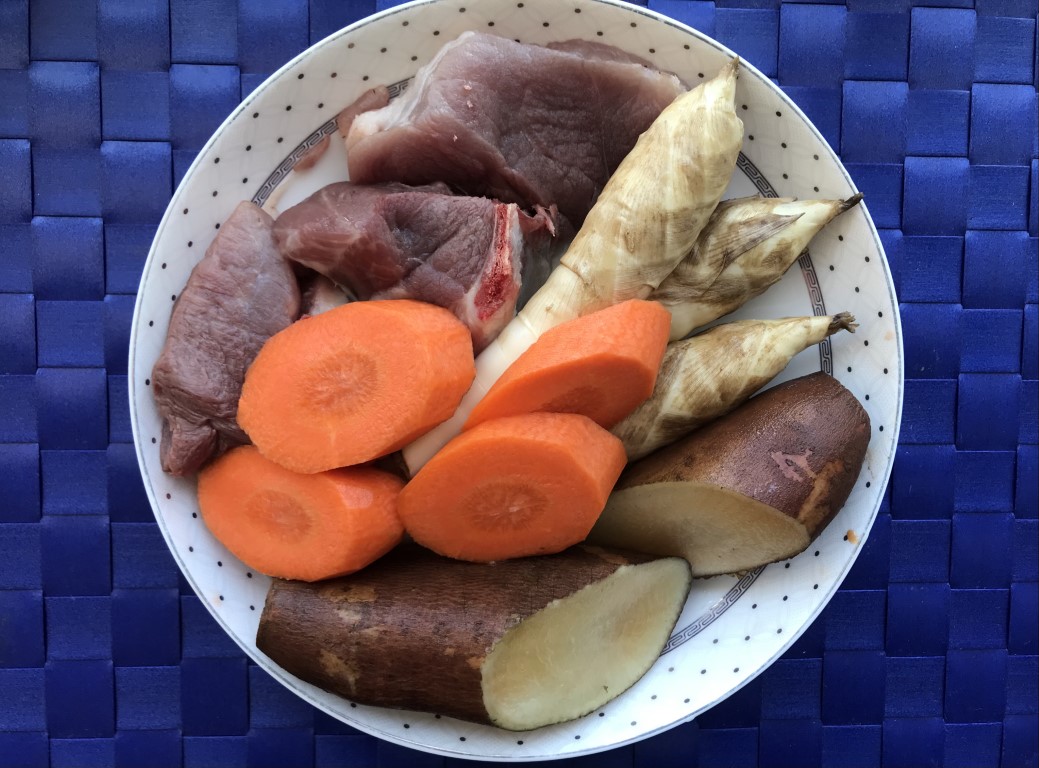
- Yacon (xue lian guo): A sweet South American tuber now popular in Cantonese markets. Rich in fructooligosaccharides (FOS), which act as prebiotics and have a low impact on blood glucose. Traditionally associated with clearing heat, improving gut motility, and softening blood vessel walls.
- Taro stalk (zhu yu): The stalk of the taro plant, not the root. Traditionally considered to have a clearing, cooling, and mild diuretic effect. Associated with supporting lung health and bowel function.
- Carrot (hong luo bo): Rich in beta-carotene; traditionally associated with supporting the liver and eyes, clearing digestive heat, and benefiting lung function.
- Pork neck bones (xi shi gu): A lean, flavoursome bone cut that produces a light but rich broth without excess fat.
Ingredients (4 bowls)
| Ingredient | Amount | Notes |
|---|---|---|
| Yacon | 1 medium | Peel and cut into chunks |
| Taro stalk (zhu yu) | 3–4 pieces | Peel and cut into chunks |
| Carrot | 1 medium | Peel and cut into chunks |
| Pork neck bones (xi shi gu) | ~600 g | Blanched and rinsed |
| Water | 9 bowls (about 1.8 L) |
Method
- Peel the yacon, cut into large chunks. Note: the flesh may discolour slightly — this is normal.
- Peel the taro stalk and cut into chunks. Peel and chunk the carrot.
- Blanch pork bones in boiling water for 3 minutes; drain and rinse.
- Combine all ingredients in a pot with 9 bowls of water. Bring to a boil.
- Reduce heat to a gentle simmer and cook for 2 hours, until reduced to about 4 bowls.
- Serve warm. The yacon and carrot are pleasant to eat with the soup.
Bro Niu’s tips
This soup suits the whole family from young children to the elderly. People with diabetes or liver heat patterns are particularly well served by this soup. Bro Niu notes that children with urinary heat (discomfort when urinating) can also benefit from drinking it. One mild caution: people with a cold or deficient constitution should not overconsume — moderate amounts are fine, but this soup leans toward the cooling side.
Published October 14, 2022 · Adapted and translated for Nourilo from a traditional home-kitchen recipe. Approx. 3 min read.