Soups
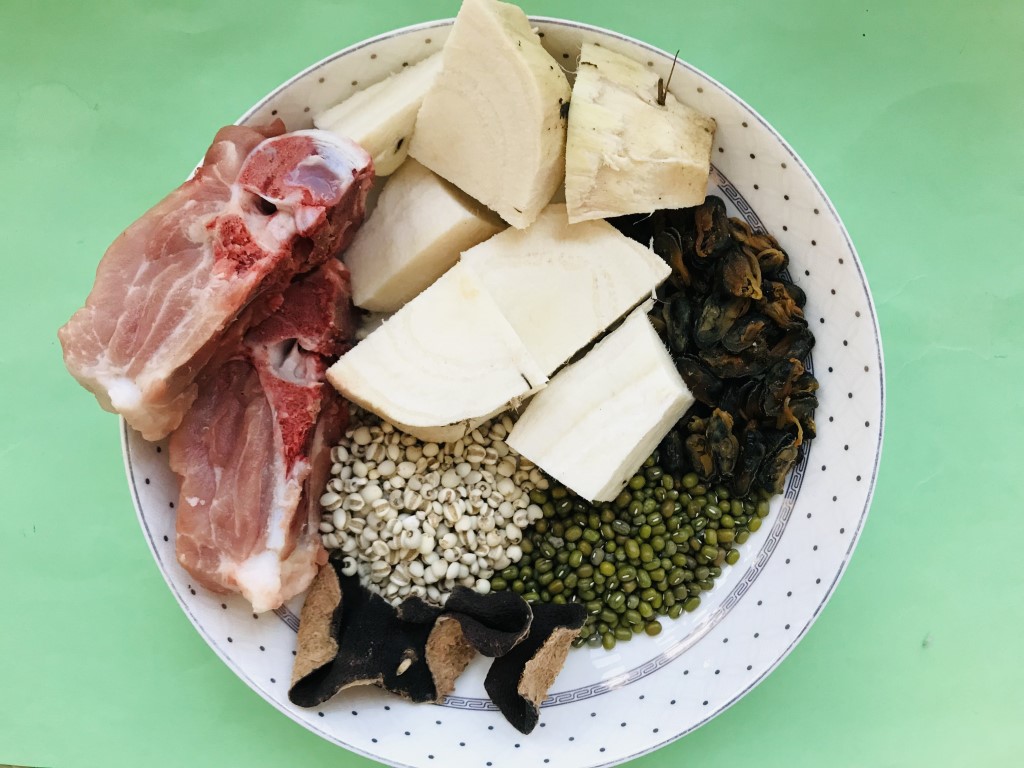
Dried Mussel, Kudzu Root, Mung Bean, Barley and Pork Rib Soup
traditionally used to clear heat, ease muscle tension, and support blood pressure and blood sugar balance
Why people make this soup
Dry autumn and winter weather can tighten muscles, shorten tempers, and build up internal tension. Bro Niu recommends this rich, naturally sweet soup as a regular cooling and relaxing tonic during those months. Dried mussels bring deep umami and are considered a tonic for the liver and kidneys, while kudzu root — one of the most popular Cantonese soup ingredients — is prized for its ability to relax neck and shoulder muscles and its cooling, fluid-generating effect. Mung beans and barley add a gentle heat-clearing and dampness-draining dimension. Together the soup addresses the kind of low-grade inner heat that many people accumulate through stress, dry weather, and sedentary work.
Who it suits / who should be cautious
- People experiencing restlessness, neck-shoulder tension, or mild heat-related symptoms during dry seasons
- Suitable for people managing high blood pressure, diabetes, or raised triglycerides as part of a broader lifestyle approach
- Appropriate for menopausal women experiencing hot flushes and night sweats
- Suitable for the whole family; tastes delicious — savoury and lightly sweet
- Pregnant women: replace barley (yi mi) with red adzuki beans (chi xiao dou) as barley is traditionally considered unsuitable in pregnancy
Why these ingredients (the food-therapy logic)
- Dried mussels (dan cai): Rich in protein, iron and trace minerals. Traditionally nourishing for the liver, kidneys, and essence (jing). Associated with supporting metabolism and easing dizziness and night sweats.
- Kudzu root (fen ge): A large, starchy root. Puerarin, the main isoflavone in kudzu, has been researched for cardiovascular and metabolic effects. Traditionally, kudzu is used to “relax the muscles,” release neck tension, generate fluids, and clear heat — making it one of the most versatile Cantonese soup roots.
- Mung beans (lu dou): Mildly cooling, diuretic, and heat-clearing. A classic summer and autumn cooling ingredient.
- Pearl barley (yi mi): Supports drainage of dampness, moderates inflammation, and is gentle on the digestive system.
- Dried tangerine peel (chen pi): A small piece adds fragrance, supports digestion, and moderates the flat taste of the beans.
Ingredients (4 bowls)
| Ingredient | Amount | Notes |
|---|---|---|
| Dried mussels (dan cai) | ~80 g | Soak briefly, then blanch along with ribs |
| Kudzu root (fen ge) | ~600 g | Peel and cut into large chunks |
| Mung beans (lu dou) | ~40 g | Soak and rinse |
| Pearl barley (yi mi) | ~40 g | Soak and rinse (swap for red adzuki beans if pregnant) |
| Dried tangerine peel (chen pi) | 1 piece | Rinse |
| Pork ribs | ~300 g | Blanched and rinsed |
| Water | 9 bowls (about 1.8 L) |
Method
- Soak mung beans and barley separately for 30 minutes; rinse.
- Pull the outer fibrous skin off the kudzu root and cut into large chunks. Rinse.
- Blanch pork ribs and dried mussels together in boiling water for 3 minutes; drain and rinse.
- Place all ingredients in a large pot with 9 bowls of water. Bring to a boil, then reduce to a steady simmer.
- Cook for 2 hours until reduced to about 4 bowls.
- Serve with the soup and all the solid ingredients for full benefit.
Bro Niu’s tips
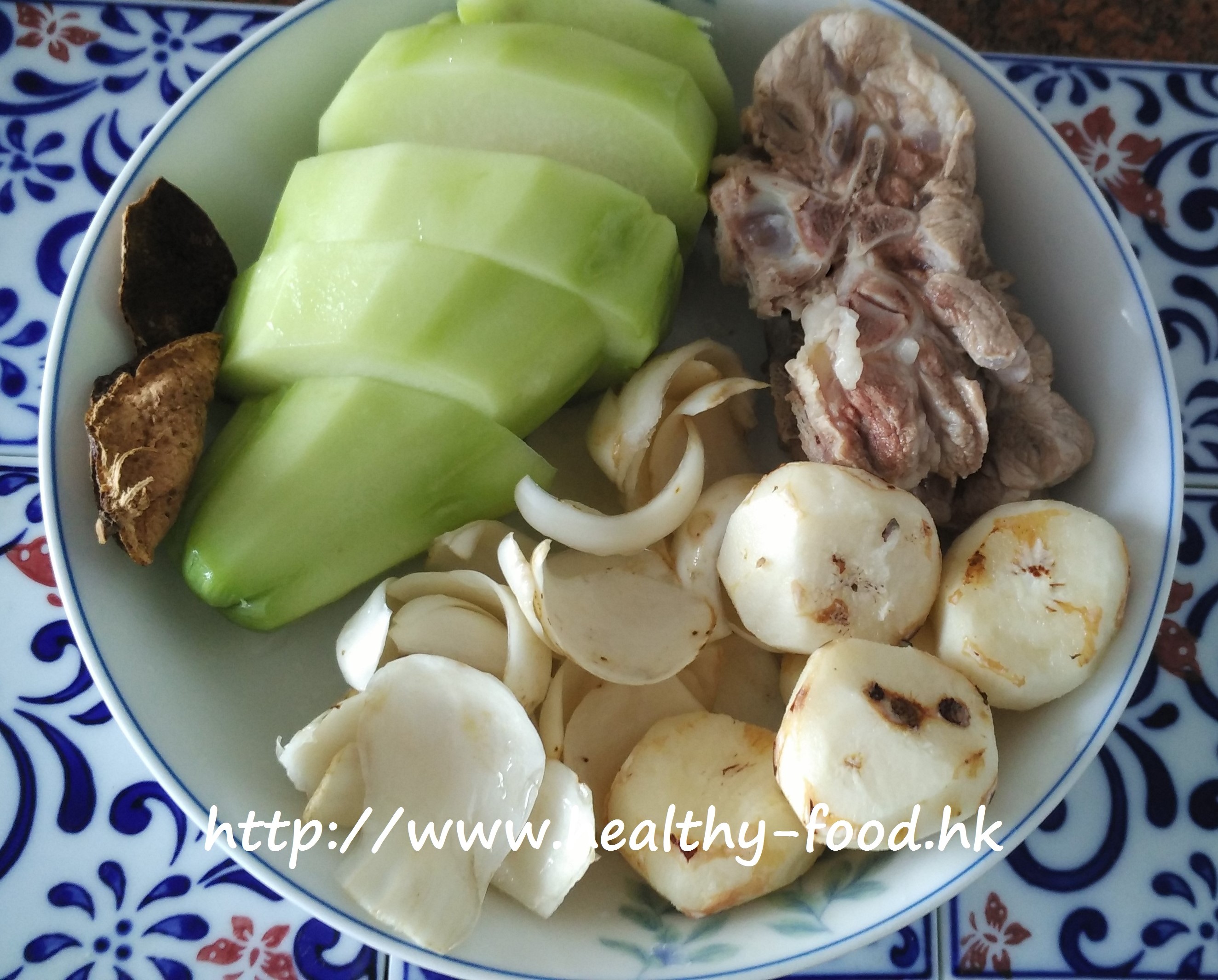
This soup is naturally savoury-sweet and suitable for everyone from children to the elderly. For those without kudzu root, winter melon or chayote (he zhang gua) can be used instead and both have a cooling effect. Remember: pregnant women should swap pearl barley for red adzuki beans.
Community questions answered (selected)
- Q (reader): What can I substitute if I cannot get kudzu root? Bro Niu: You can use winter melon or chayote instead — both have a clearing, cooling effect.
Published October 3, 2022 · Adapted and translated for Nourilo from a traditional home-kitchen recipe. Approx. 3 min read.