Herbal & Flower Teas
He Shou Wu, Hawthorn Berry & Mulberry Tea
traditionally supports healthy blood pressure and liver-kidney balance; nourishes blood
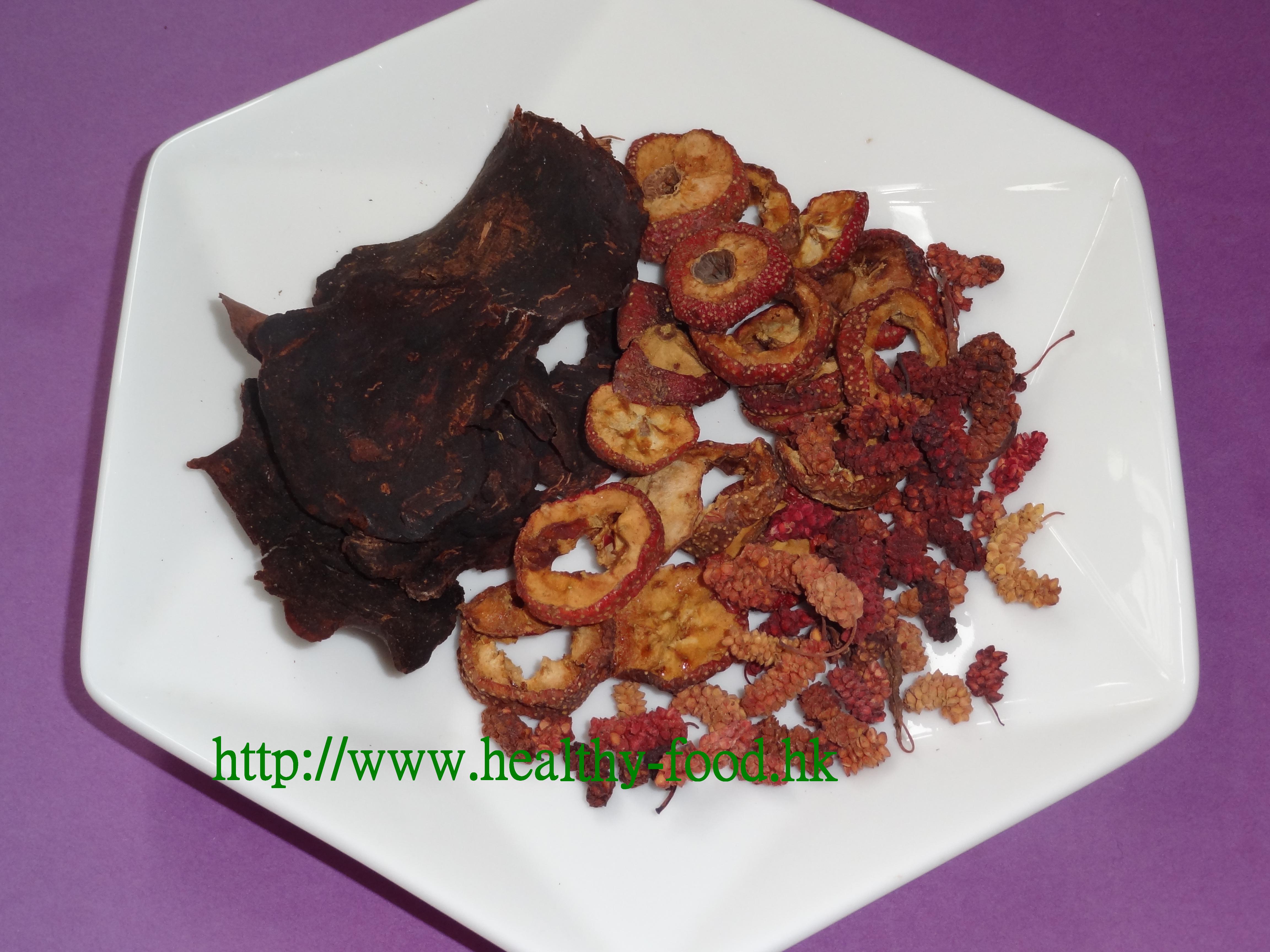
Why people make this tea
Urban stress, a meat-heavy diet, and little exercise form a familiar recipe for elevated blood pressure, high cholesterol, and stiff arteries. Bro Niu is clear: if you have been diagnosed with hypertension, medication comes first — no food-therapy tea can replace that. But as a supportive daily habit alongside treatment, this tea has been used in Chinese households for generations. Hawthorn berries in particular have attracted real scientific interest for their effects on lipid levels and circulation. The combination with he shou wu and mulberries adds a liver-kidney nourishing dimension that traditional Chinese medicine associates with calming “liver yang rising” — a pattern often described in TCM as an underlying contributor to high blood pressure.
Who it suits / who should be cautious
- Adults managing elevated blood pressure or high cholesterol, as a complementary support — always alongside, not instead of, medical treatment
- Also traditionally helpful for premature greying, early vision decline, and constipation (the tip mentions this)
- Pregnant women must avoid this tea — hawthorn is a blood-moving herb and is not considered safe during pregnancy
- Those with acid reflux or stomach sensitivity should drink this tea after meals, and may add a little honey to reduce acidity
- People on blood-thinning medication (warfarin etc.) should consult their doctor before using hawthorn regularly
Why these ingredients (the food-therapy logic)
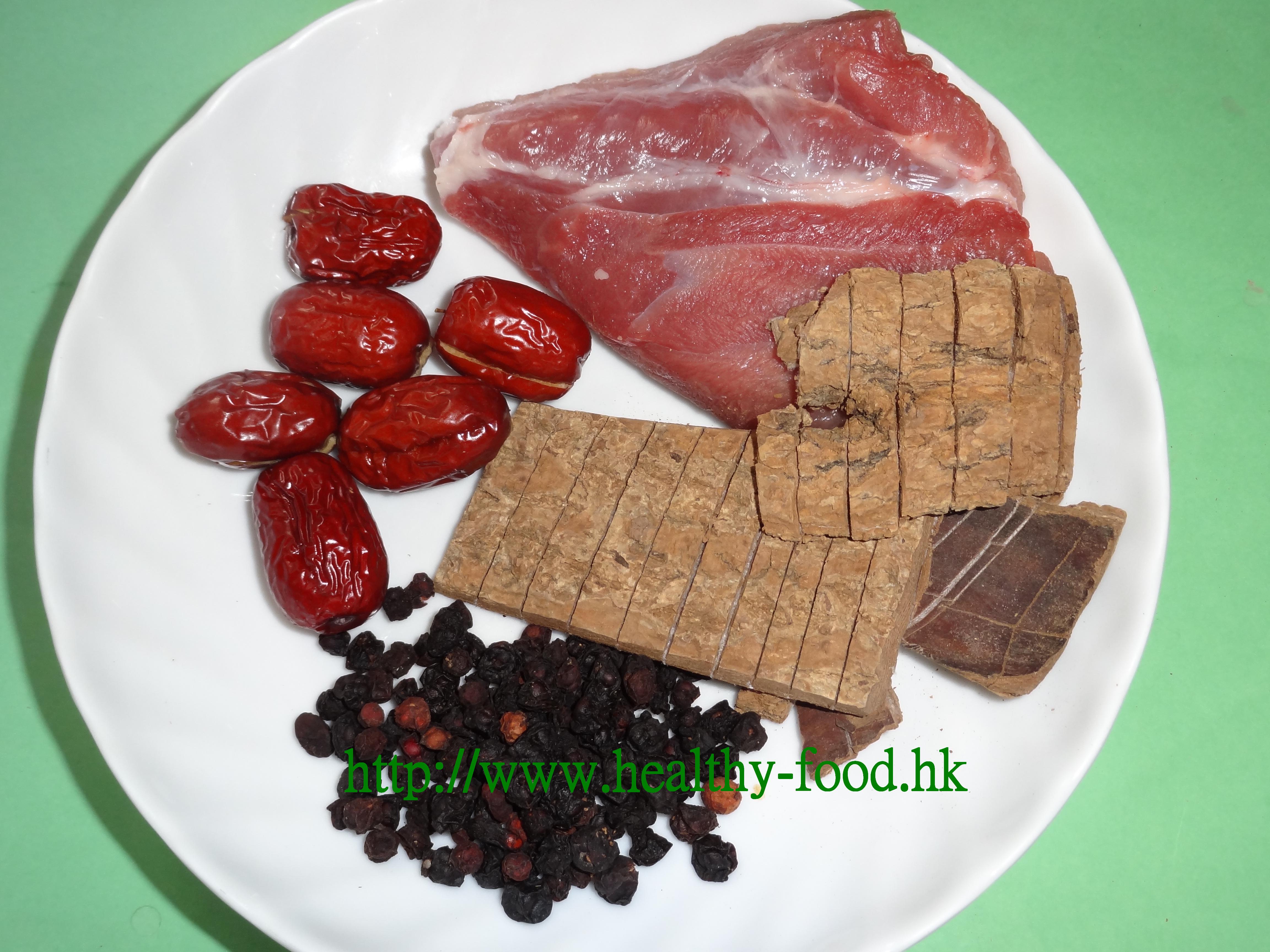
- He shou wu (shou wu, Polygonum multiflorum): One of the most respected liver- and kidney-nourishing herbs in Chinese medicine. Traditionally associated with darkening greying hair, supporting vision, and easing constipation. Use the processed (zhi) form, which is considered safer for regular use.
- Hawthorn berry (shan zha): Widely used in both Chinese and European herbal traditions for supporting circulation and lipid balance. Has a pleasantly tart flavour. Modern research has explored its effects on cholesterol and cardiovascular function.
- Mulberry (sang shen zi): Rich in antioxidants and iron; in Chinese food therapy, mulberries are associated with nourishing the blood, calming the liver, and supporting healthy vision.
Ingredients (2 cups)
| Ingredient | Amount | Notes |
|---|---|---|
| He shou wu (processed / zhi shou wu) | ~19 g (5 qian) | Use processed form; rinse first |
| Dried hawthorn berries | ~9 g (3 qian) | Rinse well |
| Dried mulberries (sang shen zi) | ~9 g (3 qian) | Rinse well |
| Water | 5 bowls |
Method
- Rinse all the herbs briefly under cold water.
- Place the he shou wu, hawthorn, and mulberries in a pot with 5 bowls of water.
- Bring to a boil over high heat, then reduce to a gentle simmer.
- Simmer for about 1 hour until the liquid reduces to approximately 2 bowls.
- Pour, allow to cool slightly, and drink. You can drink this warm or at room temperature.
Bro Niu’s tips
Use the processed form of he shou wu (制首乌, zhi shou wu) — it has been prepared to make it gentler and more suitable for regular use. This tea has a pleasantly tart, slightly sweet flavour. If you have acid reflux, drink it after meals and add a little honey to soften the acidity. It is fine to drink before bed (about 2 hours before sleep). One reader confirmed that this tea is also fine for those with gout.
Community questions answered (selected)
-
Q (May): I am taking blood pressure medication — can I also drink hawthorn tea? Does the dry hawthorn from a Chinese medicine shop work? Bro Niu: Yes, you can drink hawthorn tea while on blood pressure medication — take it about 2 hours after your medication. Dried hawthorn slices from a Chinese medicine shop work well. Regular use is associated with supporting healthy circulation and blood pressure.
-
Q (reader, 牛哥~): Can pregnant women drink this tea? Bro Niu: Hawthorn has a blood-moving and anti-stagnation effect, so pregnant women should not use it.
-
Q (Fanny): This tea is quite sour — I have acid reflux. Can I still drink it? Bro Niu: This tea is indeed on the tart side. If you have acid reflux, it’s best to drink it after meals and add a little honey to soften the acidity.
Published September 5, 2013 · Adapted and translated for Nourilo from a traditional home-kitchen recipe. Approx. 3 min read.