Herbal & Flower Teas
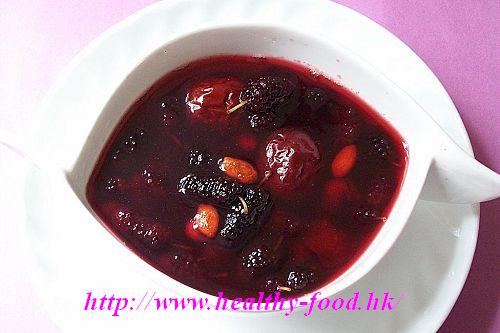
Mulberry, Longan and Goji Berry Tea
traditionally used to nourish liver and kidney, support blood quality, and promote restful sleep
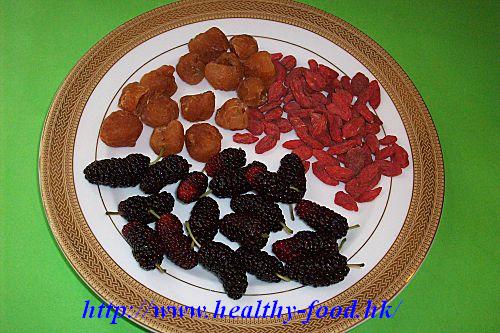
Why people make this tea
Mulberries are among the most celebrated fruits in Chinese food therapy — ripe, darkly coloured, and naturally sweet-tart, they are associated with supporting the liver and kidneys, nourishing blood, and even with maintaining healthy hair colour in middle and older age. Paired with the gentle sweetness of longan flesh and the mild, nourishing quality of goji berries, this simple tea is something Bro Niu keeps coming back to, not just as a wellness drink, but because it genuinely tastes good. Fresh mulberries are seasonal in spring; dried ones work perfectly the rest of the year.
Who it suits / who should be cautious
- Particularly helpful for those experiencing fatigue, a dull or pale complexion, early greying of hair, insomnia, mild tinnitus, or nervous exhaustion
- Can be taken during menstruation
- Longan is warming in nature — if you already feel flushed, have a sore throat, or experience mouth ulcers, reduce the longan or omit it temporarily
- Not recommended as a daily drink for infants under 1 year; children under 1 should avoid; children 1 year and older may have a small amount occasionally, not daily
Why these ingredients (the food-therapy logic)
- Mulberry (sang shen, Morus alba): In Chinese food therapy, mulberry is considered one of the finest fruits for the liver and kidney systems. It is associated with nourishing blood, calming the nervous system, supporting vision, and promoting restful sleep. Fresh mulberries can also be eaten raw, steeped in spirits, or used in soups.
- Longan flesh (long yan rou / gui yuan rou): A warming tonic traditionally valued for supporting blood and calming the spirit. Provides natural sweetness to the brew.
- Goji berries (gou qi zi, Lycium barbarum): Widely used to support liver and kidney function, nourish blood, and benefit the eyes. Mild in flavour and easy to combine with other ingredients.
Ingredients (2 servings)
| Ingredient | Amount | Notes |
|---|---|---|
| Fresh mulberries (sang shen) | 2 liang (~75 g) | Or dried: ~1.5 liang (~56 g) |
| Dried longan flesh (gui yuan rou) | 10 pieces | |
| Goji berries (gou qi zi) | 2 tablespoons | |
| Water | To cover generously | About 3–4 bowls |
Method
- Rinse the fresh or dried mulberries, longan flesh, and goji berries in clean water.
- Place all ingredients in a clay pot or ceramic pot. Cover generously with water.
- Bring to a gentle boil, then reduce heat and simmer for about 30 minutes.
- Drink the broth warm, and eat the mulberries, longan, and goji berries — consuming the ingredients as well as the liquid gives you the full benefit.
Bro Niu’s tips
Fresh mulberries come into season in spring — when they are available they are usually affordable and sold in small boxes at Chinese produce markets. Out of season, dried mulberries are a fine substitute; use about 5 qian (19 g) of dried berries.
One small note on brewing: if you want to preserve the anthocyanins (the purple-blue pigments with antioxidant properties), steep the ingredients in hot water around 85°C rather than boiling them. The flavour is slightly better when properly simmered, but if you want maximum antioxidant benefit from the mulberries, a shorter, lower-temperature steep is the way to go. You can always eat the softened fruit afterward for additional nutrition.
Adding 1 liang (38 g) of dried lily bulb (bai he) to this tea is a lovely variation that adds a calming quality and may help with vivid dreams.
Community questions answered (selected)
-
Q (rardark): Will the anthocyanins in mulberries be lost during cooking? Bro Niu: Anthocyanins can be reduced by boiling. To preserve them, steep the mulberries in water at around 85°C — this keeps the antioxidant activity intact. If you cook them fully, the flavour is better and eating the fruit gives additional benefit, but for maximum anthocyanin preservation, a gentle steep is preferable.
-
Q (reader, 珊珊): My 7-year-old has G6PD deficiency and poor blood quality. Can she drink this mulberry longan goji tea? Bro Niu: Children with G6PD can try a version using dried mulberries, goji berries, and longan, taken twice a week for about a month. Also consider a congee of red beans, red-skin peanuts, goji berries, red dates, and a little rock sugar — this supports blood in a gentle, well-rounded way.
-
Q (reader): Can this tea be drunk during menstruation? Bro Niu: Yes, this tea is fine to drink during your period.
Published March 7, 2010 · Adapted and translated for Nourilo from a traditional home-kitchen recipe. Approx. 3 min read.