Soups
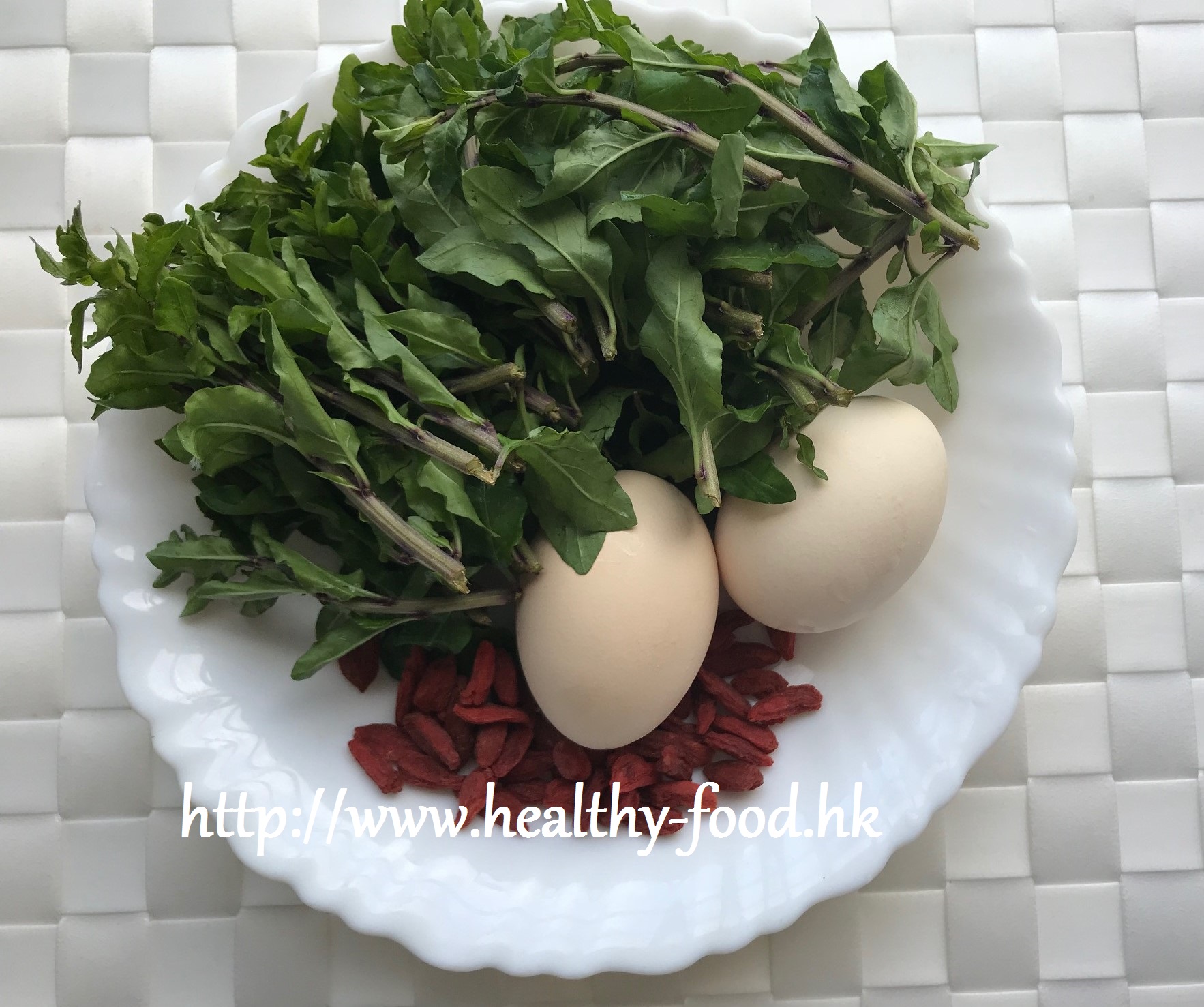
Wolfberry Greens, Goji Berry and Egg White Soup
traditionally used to nourish the liver and kidneys, soften blood vessels, and support healthy blood pressure and blood sugar
Why people make this soup
Most people are familiar with goji berries (the small, dried red berries found in health food shops), but fewer know that the young tender leaves of the same plant — goji shoots, or wolfberry greens — are a prized seasonal vegetable in Cantonese cooking. When goji shoots come into season in autumn, they are worth seeking out: every leaf is the real thing, and the goji plant’s leaves are, by some measures, even more nutritionally dense than the berries. They are rich in betaine, rutin, multiple amino acids, and vitamins A, C, B1, and B2. In traditional food therapy the leaves are described as clearing liver heat, brightening the eyes, softening blood vessels, and nourishing a depleted constitution. This simple soup — shoots, goji berries, and a wisp of egg white — is light enough to serve on a weeknight and beneficial enough to make regularly during the cooler months when goji shoots are in season.
Who it suits / who should be cautious
- Suits people managing high blood pressure, blood sugar, or elevated liver fire; those who experience dizziness, blurred vision, or heat rising to the head; those who tend toward internal heat (yin deficiency pattern).
- The soup is mild and suitable for all ages.
- Do not eat wolfberry leaves (gou qi miao) at the same meal as milk or other dairy products — this combination may cause digestive discomfort.
- If wolfberry shoots are not available, wolfberry vegetable (gou qi cai, slightly more mature leaves) can be used as a substitute.
Why these ingredients (the food-therapy logic)
- Wolfberry shoots / goji leaves (gou qi miao): Contain betaine (associated with blood pressure support and liver protection), rutin (associated with capillary strength and cardiovascular health), and a broad spectrum of vitamins and amino acids. In traditional food therapy the leaves are considered to clear liver heat, supplement depleted essence, and brighten the eyes — effects that complement and extend those of the berries.
- Goji berries (gou qi zi): The classic tonic for the liver and kidneys; rich in zeaxanthin for eye health and betaine for blood sugar support. Used alongside the shoots, they deepen the recipe’s nourishing effect.
- Egg whites (dan qing): A light source of protein; in traditional food therapy egg whites are considered cooling and nourishing for yin. They add body to the soup and a silky texture without the richness of the yolk.
Ingredients (3–4 bowls)
| Ingredient | Amount | Notes |
|---|---|---|
| Wolfberry shoots / goji leaves | 150 g (4 liang) | Rinse well; if unavailable, use mature goji vegetable leaves |
| Goji berries | ~11 g (3 qian) | Rinse briefly |
| Egg whites, lightly beaten | 2 large | Only the whites; beat until just blended, not frothy |
Method
- Rinse wolfberry shoots and goji berries separately. Beat egg whites lightly until just combined.
- Bring 4 bowls (about 800 ml) of water to a rolling boil.
- Add wolfberry shoots and goji berries to the boiling water. Simmer for 5 minutes.
- While stirring the soup gently, pour the beaten egg whites in slowly in a thin stream. The egg white will set into fine ribbons as it hits the hot soup.
- As soon as the egg white ribbons rise to the surface and set, turn off the heat immediately.
- Serve and eat while warm. Can add lean pork if desired.
Bro Niu’s tips
The egg whites should be poured in at the very end and the heat turned off as soon as they set — overcooking makes them tough and the soup cloudy. This soup is clean, fragrant, and slightly sweet. It is ideal in the cooler months when fresh goji shoots are in season. Do not pair this dish with milk or dairy products at the same meal. If you want a more substantial soup, a small amount of lean pork can be added when the greens go in.
Community questions answered (selected)
-
Q (reader): Can lean pork be added to this soup? Bro Niu: Adding lean pork is perfectly fine.
-
Q (匿名访客): If the body tends toward internal heat, can this soup be drunk regularly? Bro Niu: This soup is beneficial for yin-deficient internal heat and can be drunk regularly.
-
Q (少诗): My elderly relative’s blood pressure shot up to 190 before a scheduled operation — the surgery was cancelled. He is taking blood pressure medication now. What food therapy can help? Bro Niu: Older people often have blood pressure spikes when anxious about surgery — emotional support is just as important as food therapy. A practical daily option: juice fresh celery and apple together, drink the juice within 5 minutes of making it, about 2 hours after taking blood pressure medication. This is an effective and safe way to support blood pressure management alongside medication.
Published October 22, 2018 · Adapted and translated for Nourilo from a traditional home-kitchen recipe. Approx. 4 min read.