Soups
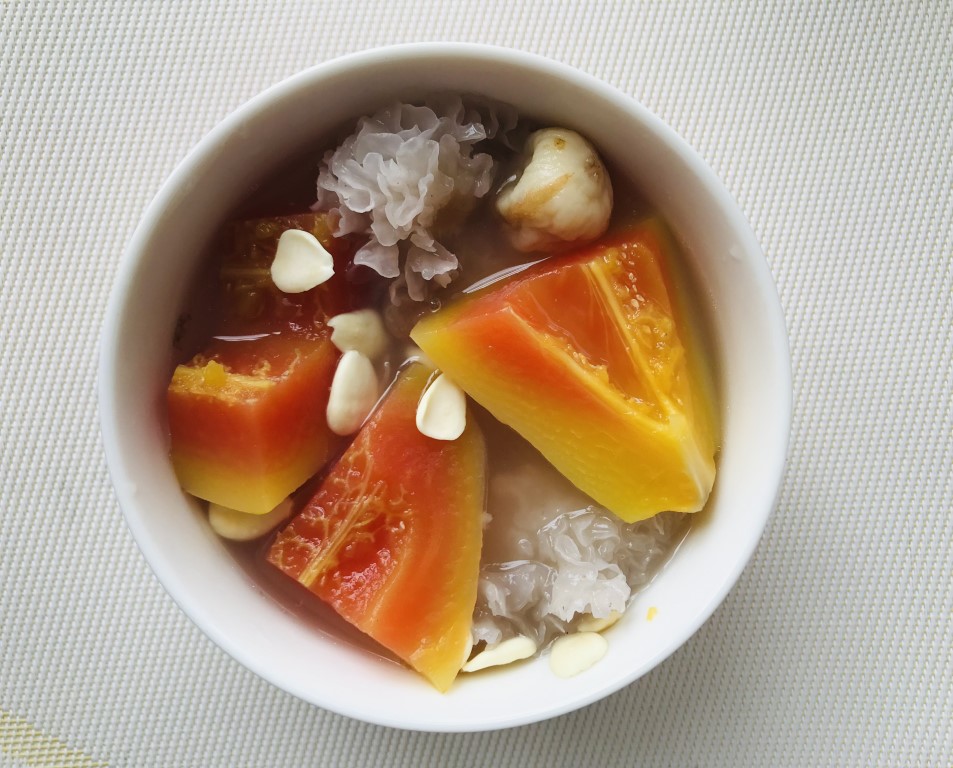
Green Papaya, Snow Fungus, Almond and Fig Soup
Traditionally supports smooth digestion and clear skin
Why people make this soup
Green papaya — firm-fleshed and not yet at the soft sweetness of ripe fruit — is a different ingredient altogether in the pot. Traditionally valued for looking after the gut and the complexion, it pairs naturally with snow fungus, almond and dried figs, all classic “smooth the bowels” ingredients. Together they make a gentle, everyday soup that is light, lightly sweet and easy on the digestion.
Who it suits / who should be cautious
- Adults and children who want a light soup to keep things regular and the skin nourished
- Nursing mothers, in particular, are traditionally said to benefit (papaya is associated with supporting milk supply)
- Pregnant women should avoid papaya, which is traditionally thought to stimulate the uterus
Why these ingredients (the food-therapy logic)
- Green papaya (qing mu gua): traditionally associated with supporting the stomach and bowels and with a soothing, “anti-puffiness” quality often linked in folk use to gout and rheumatic aches
- Snow fungus (xue er): prized as a moistening ingredient for the skin and bowels
- Southern almond (nan xing): traditionally used to moisten and support smooth elimination
- Dried figs (wu hua guo): naturally sweet, traditionally associated with easing the bowels
Ingredients (4 bowls)
| Ingredient | Amount | Notes |
|---|---|---|
| Green papaya | 1 small | Peeled, seeded, cut into chunks |
| Snow fungus | ~11 g | Soaked soft, hard stem removed |
| Southern almond | ~38 g | Rinsed |
| Dried figs | 4 | Rinsed |
| Rock sugar | to taste | Added near the end |
Method
- Peel and seed the green papaya and cut into chunks. Soak the snow fungus until soft and trim off the tough base.
- Rinse the almonds and figs.
- Add all ingredients to 7 bowls of water and simmer for 1 hour.
- Stir in rock sugar to taste and reduce to about 4 bowls. Serve.
Bro Niu’s tips
The soup is clean and lightly sweet — fine for the whole family. A word on sourcing figs: opt for a trusted, good-quality dried fig from a reputable supplier. It is worth checking for any chemical smell before cooking, as some lower-grade imports may carry preservatives that soaking cannot fully remove. And remember: pregnant women should skip the papaya.
Community questions answered (selected)
- Q (Nicole): My father has severe constipation. Vegetables, fruit and water don’t help, and sometimes he needs laxatives. What might help an elderly person? Bro Niu: In older people, constipation is often tied to weak qi and blood. You can simmer cistanche (rou cong rong, ~19 g) and cassia seed (jue ming zi, ~19 g) in 5 bowls of water down to 2 bowls, add a little honey when drinking. This is traditionally used to ease the bowels and is well suited to habitual constipation in the elderly — take three days, rest two, then repeat.
- Q (Joey): Besides Turkish and American figs, there’s a small, hard, pellet-like dried fig — what’s it for? Is it good? Bro Niu: Those small, very dry hard figs are usually eaten as a preserved snack, generally without chemical additives, and they can be used in soup too.
- Q (reader): Apart from fu ling, bai zhu, hyacinth-bean coat and the “four spirits” soup, what else helps strengthen the spleen and clear dampness? I’ve taken those for about three months but still have a swollen, scalloped tongue. Bro Niu: You can regularly cook a millet congee with Chinese yam (huai shan) and red dates — it supports the spleen and stomach, but be patient over time. The fu ling / bai zhu / hyacinth-bean-coat tea and four-spirits soup are gentle, balanced food therapy and fine to eat often.
Published June 19, 2024 · Adapted and translated for Nourilo from a traditional home-kitchen recipe. Approx. 3 min read.