Herbal & Flower Teas
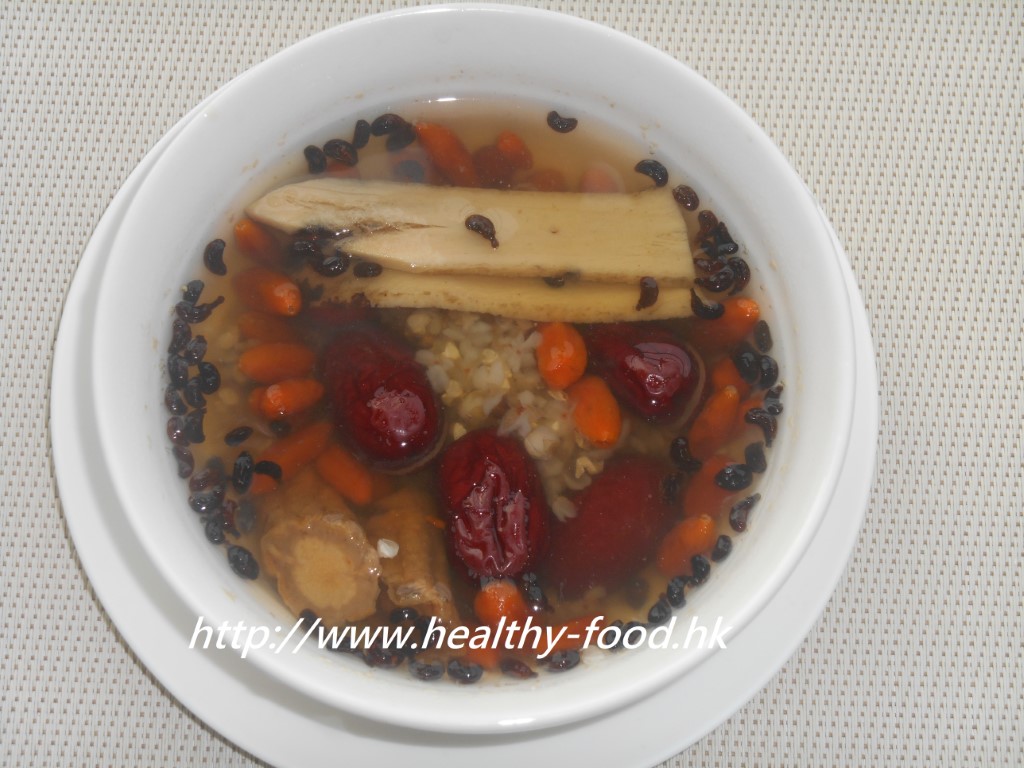
Ginseng, Astragalus, Ligustrum, Goji, and Buckwheat Tea
traditionally used to strengthen the body during and after cancer treatment, and to support immune function
Why people make this tea
Cancer and its treatments — surgery, chemotherapy, radiation, targeted therapies — take an enormous toll on the body. In Cantonese food-therapy tradition, maintaining strength and nourishing the body’s core systems is seen as essential support alongside conventional treatment. This simple tea is one approach: a blend of two classical tonic herbs (ginseng and astragalus) that are associated with strengthening the spleen and building vital energy, combined with two liver-and-kidney nourishing herbs (ligustrum berry and goji), and tied together with buckwheat, which is both a food and a traditional moderating ingredient said to temper the warming nature of ginseng.
Buckwheat is the ingredient that makes this recipe practical for long-term use. It balances out the more stimulating herbs, making the tea gentler overall — and it is readily available in supermarkets and health food stores worldwide.
Who it suits / who should be cautious
- Suitable for people recovering from cancer treatment, those who have had major surgery, or anyone with weakened immunity after serious illness.
- Frequency: 2–3 times per week, not daily indefinitely. These are genuine medicinal herbs, not everyday foods.
- Important: if liver enzyme levels are elevated — which often occurs during chemotherapy — do not take this tea or any tonic herbs. Wait until levels normalise. The liver is under stress and cannot safely process additional tonic herbs.
- Do not use this tea as a replacement for prescribed cancer treatment. It is a supportive complement, not a cure.
- Please discuss with your oncologist before adding this or any herbal formula to your routine during active treatment.
Why these ingredients (the food-therapy logic)
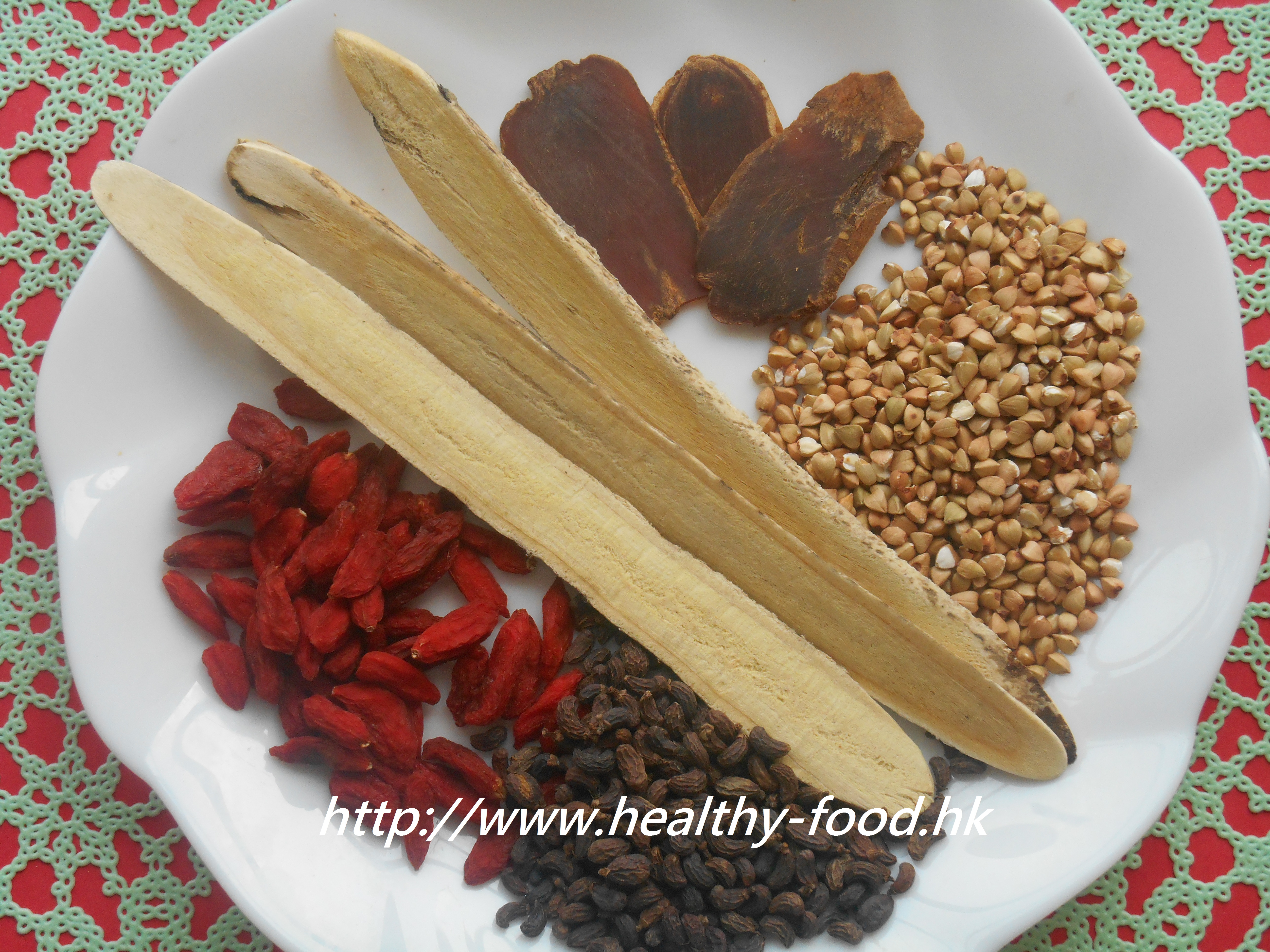
- Ginseng (ren shen): One of the most studied tonic herbs in traditional Chinese medicine; traditionally associated with replenishing vital energy, strengthening the spleen and stomach, and supporting post-illness recovery.
- Astragalus (bei qi / huang qi): A cornerstone herb in Chinese immune support; traditionally associated with strengthening the defensive qi (wei qi) and building the body’s resistance.
- Ligustrum berry (nu zhen zi): Traditionally used to nourish the liver and kidney — the “congenital foundation” in classical theory. Associated with supporting bone marrow and blood cell production.
- Goji berries (gou qi zi): Rich in antioxidants; traditionally associated with nourishing the liver and kidneys, and brightening the eyes.
- Buckwheat (qiao mai): Moderates the warming and stimulating qualities of the ginseng; traditionally considered helpful for neutralising internal toxins and reducing excess heat.
Ingredients (2 bowls — 1 day’s serving)
| Ingredient | Amount | Notes |
|---|---|---|
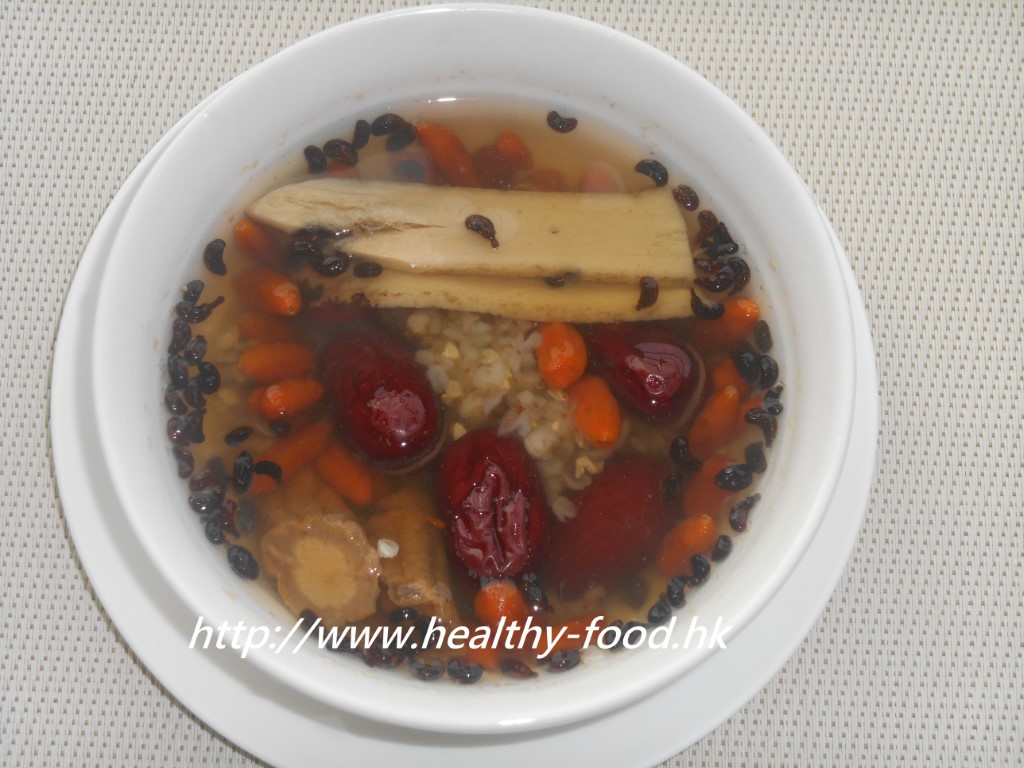
| Ginseng (Korean red, Jilin, or dang shen) | ~11 g (3 qian) | Soak and rinse |
| Astragalus root (bei qi) | ~11 g (3 qian) | Soak and rinse |
| Ligustrum berry (nu zhen zi) | ~11 g (3 qian) | Soak and rinse |
| Goji berries (gou qi zi) | ~11 g (3 qian) | Soak and rinse |
| Buckwheat (qiao mai) | ~19 g (5 qian) | Available in supermarkets |
| Water | 5 bowls (~1.25 L) | — |
Method
- Soak and rinse all dried herbs briefly.
- Add all ingredients to a pot with 5 bowls of water.
- Bring to a boil, then reduce heat and simmer for 1 hour until the liquid reduces to about 2 bowls.
- Divide into 2 portions and drink throughout the day.
Bro Niu’s tips
This tea has a mild herbal flavour — noticeable but not strong. It is suitable not just for people with cancer, but for anyone recovering from a serious illness, major surgery, or who simply has low immunity. Aim for 2–3 times per week rather than daily. For ginseng, Korean red ginseng slices, Jilin ginseng slices, or the milder dang shen (Codonopsis) are all acceptable — dang shen is the gentlest option. Buckwheat is available in larger supermarkets or grocery stores; it does not need to come from a herb shop.
Community questions answered (selected)
-
Q (Jessica): What kind of ginseng is meant here? Bro Niu: You can use Korean red ginseng slices (Goryeo/Gaoli shen) or Jilin ginseng slices. Both are fine.
-
Q (阿丁): I have stage 2 breast cancer and am about to begin 18 weeks of chemotherapy. What should I eat and drink during this time? Bro Niu: During chemotherapy, you can fresh-juice apples, carrots, and potato daily or every other day and drink within 5 minutes of juicing — this is associated with supporting the body during cancer treatment. For blood support, cook a “four reds” soup daily or every other day: red beans, red-skin peanuts, goji berries, and red dates, simmered together without added sugar. Foods to avoid during treatment: goose meat, bamboo shoots, prawns, crab, scaleless fish, pig neck meat, mango, and pineapple. Minimise high-fat foods, sugar, and cow’s milk.
-
Q (匿名访客): I’ve just had my first chemotherapy session. What foods help raise white blood cell count? Bro Niu: Cook a vegetarian borscht regularly — red beetroot, tomato, onion, green cabbage, carrot, a little celery, with some peanuts or red kidney beans. This is associated with supporting white blood cell recovery. Also useful: dang shen, red-skin peanuts, and red dates simmered as a tea. Shiitake mushrooms, beef bone marrow, and red dates all support blood cell production as well.
Published December 29, 2022 · Adapted and translated for Nourilo from a traditional home-kitchen recipe. Approx. 4 min read.