Herbal & Flower Teas
Ginger-Jujube-Coix Seed Tea
traditionally associated with warming digestion, easing fatigue and relieving dampness
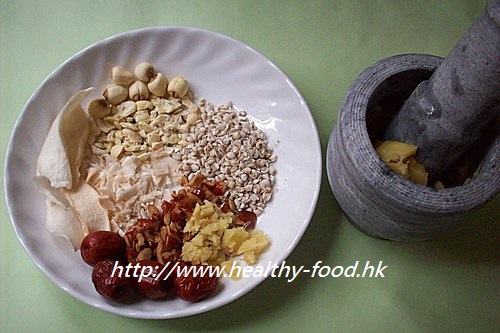
Why people make this tea
If you find yourself feeling persistently tired, with a poor appetite and a thick coating on your tongue, traditional Chinese medicine often interprets these signs as a sluggish digestive system burdened with excess dampness. In Hong Kong’s humid climate, this pattern is extremely common — and especially pronounced in spring and summer when the air is thick with moisture.
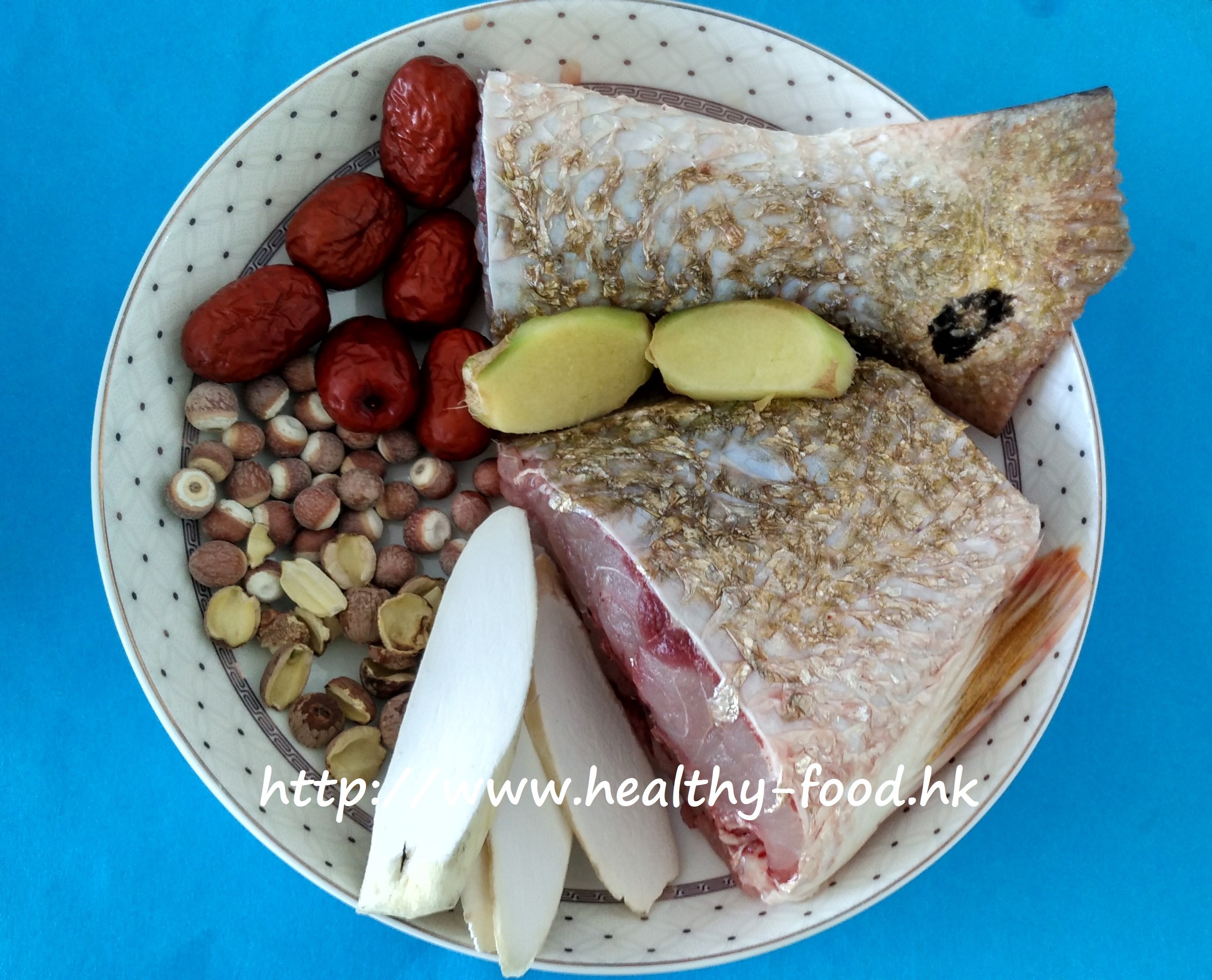
Most people reach for cooling or draining herbs in this situation. But if cold hands and feet accompany the fatigue, Bro Niu points out that a different approach is needed: one that warms the middle while also clearing dampness. That’s exactly what this tea does. Ginger and red dates provide gentle warmth; Chinese yam, coix seeds and lotus seeds work together to strengthen and settle the digestion.
The clever twist is the preparation: instead of boiling a pot each time, you grind or crush the ingredients, divide them into 10 individual tea bags, and steep one bag in boiling water whenever you need it. It’s a practical, make-ahead approach that fits into a busy life.
Who it suits / who should be cautious
- Well suited to people with a tendency toward fatigue, poor appetite, cold extremities, or a thick tongue coating — especially those who regularly eat cold, raw or iced foods
- Appropriate for use across all four seasons; particularly valuable in the damp spring and summer months
- Generally safe during mild colds without fever; those with a stronger, robust constitution may prefer to wait until they recover fully
- Store prepared tea bags in the refrigerator to prevent spoilage in Hong Kong’s humidity
Why these ingredients (the food-therapy logic)
- Fresh ginger (sheng jiang): Considered the cornerstone of warming the stomach and dispelling cold in Chinese dietary tradition. Ginger’s pungent quality is said to activate circulation and remove internal chill — the reason it appears in so many Cantonese food-therapy recipes.
- Red dates (hong zao): Nourishing to the spleen and stomach, and traditionally linked to supporting blood quality and calming the mind. They also temper the sharpness of ginger, creating a rounder, more balanced flavour.
- Chinese yam (huai shan): One of the most widely used food-medicine herbs in Cantonese cooking. Associated with tonifying the spleen and stomach, improving digestion and providing sustained energy without heating the body.
- Coix seeds / Job’s tears (yi ren): Valued for their ability to drain excess dampness from the body. They are a staple of warm-weather food therapy in southern China.
- Lotus seeds (lian zi): Help calm the digestive system, support kidney function and settle the mind. Their mild, starchy nature contributes a gentle sustaining quality to the tea.
Ingredients (makes 10 tea bags, 1 serving each)
| Ingredient | Amount | Notes |
|---|---|---|
| Fresh ginger | ~19 g (5 qian) | Slice then crush |
| Red dates, pitted | 20 pieces | Finely chop into a rough paste |
| Chinese yam | ~19 g (5 qian) | Crush or grind |
| Coix seeds | ~19 g (5 qian) | Crush or grind |
| Lotus seeds | ~19 g (5 qian) | Crush or grind |
Method
- Pit the red dates and chop them finely into a rough paste.
- Slice the fresh ginger, then pound or crush the slices.
- Crush or coarsely grind the Chinese yam, coix seeds and lotus seeds separately.
- Combine all the prepared ingredients and mix well.
- Divide the mixture evenly into 10 portions and place each portion into an individual drawstring tea bag.
- Store the bags in an airtight container in the refrigerator.
- To use: place one bag into a mug and pour over freshly boiled water. Steep for 15 minutes. Refill with boiling water once or twice, drinking until the flavour fades.
Bro Niu’s tips
This tea can be drunk throughout the year, but it is most beneficial during the damp spring and summer seasons, or for anyone who habitually eats cold or raw foods and finds their digestion suffers for it. Make sure to store the finished tea bags in the fridge — Hong Kong’s humidity can cause them to go off quickly if left at room temperature.
If you use shop-bought coix seed powder, Bro Niu recommends dry-toasting it in a clean wok first to improve shelf life, then letting it cool completely before storing in a glass jar.
Community questions answered (selected)
-
Q (bowie): Is “yi ren” the same as yi mi (coix seed / Job’s tears)? Bro Niu: Yes, yi ren and yi mi are the same ingredient.
-
Q (FANFANNY): Can this tea be drunk while having a cold? Bro Niu: If you’re the type who tends to be physically weak and you have a cold without a fever, it’s fine to drink. If your constitution is normally robust, it’s better to wait until the cold has passed.
-
Q (reader): Can this tea be drunk every day? How long should one course last? Bro Niu: No matter how beneficial a wellness tea is, 3–4 times a week is enough. Give your body a chance to do its own work on the other days. Drink until your symptoms improve.
Published June 14, 2014 · Adapted and translated for Nourilo from a traditional home-kitchen recipe. Approx. 4 min read.