Soups
Chinese Yam Dampness-Clearing Soup (Huai Shan Qu Shi Tang)
Traditionally used to support the spleen, clear internal dampness, and ease spring fatigue
Why people make this soup
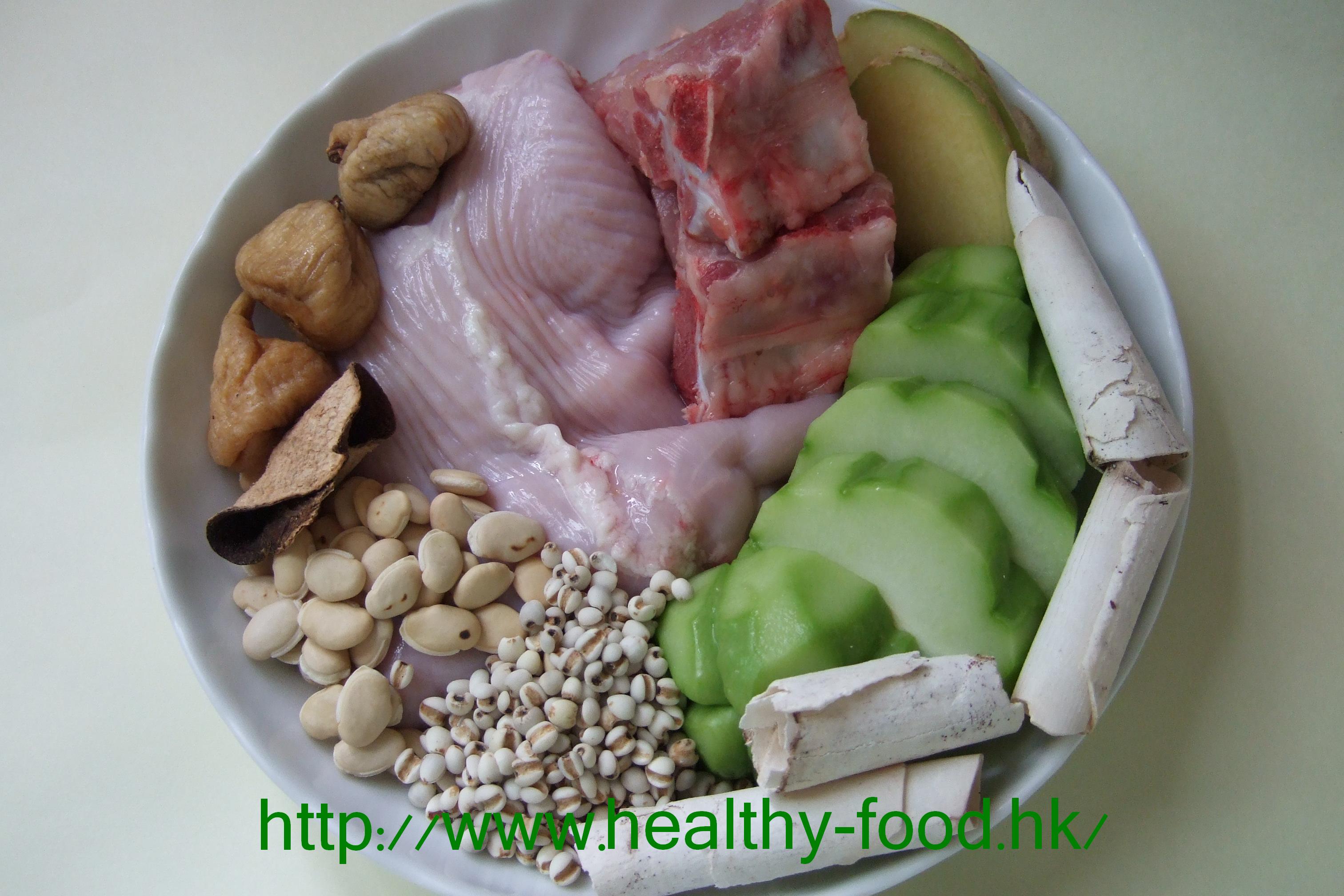
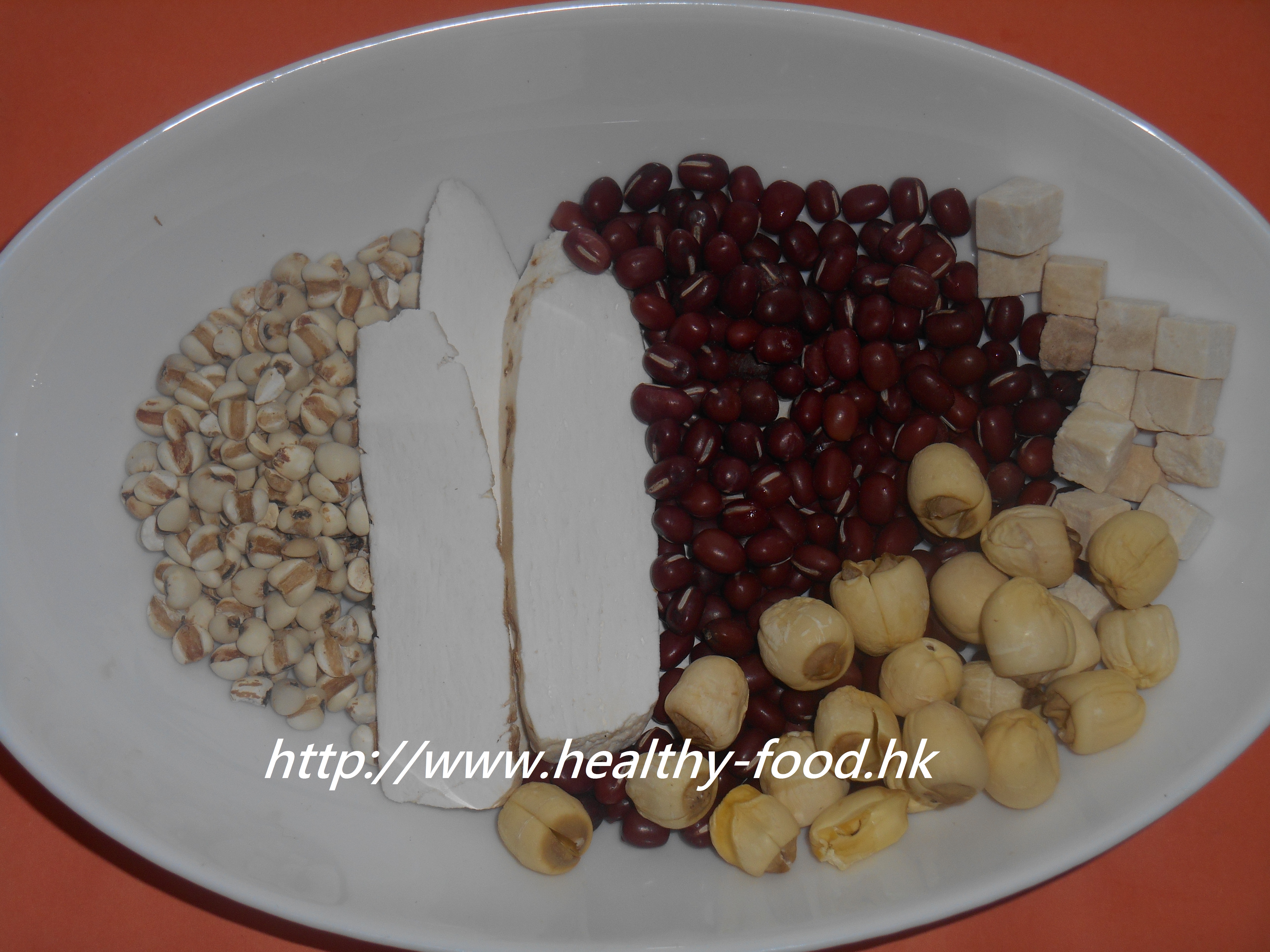
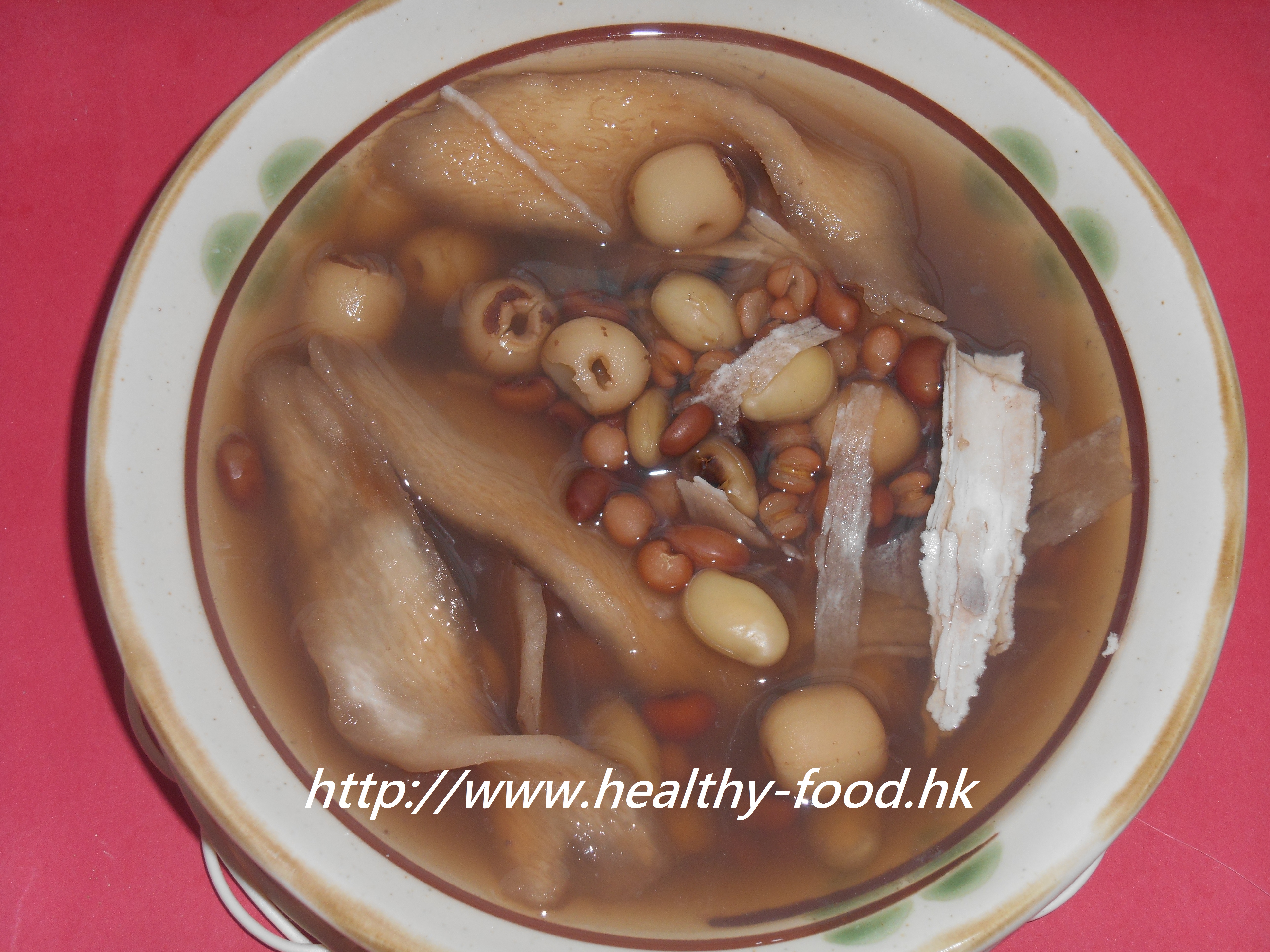
Early spring in southern China is characterized by heavy mist, unpredictable temperature swings, and a pervasive sense of damp heaviness in the air. In Chinese food therapy, this corresponds to an excess of “dampness” in the body — a concept that loosely maps onto digestive sluggishness, fluid retention, and the distinctive fatigue and heavy-limbed feeling many people experience at this time of year. This soup has been a staple spring remedy in Cantonese households for generations. The combination of six ingredients — Chinese yam, poria, lotus seeds, adzuki beans, flat beans, and pearl barley — each brings a different contribution to strengthening the spleen and clearing accumulated dampness. Lean pork or other meat can be added to make it a complete family meal.
Who it suits / who should be cautious
- Suitable for virtually all constitutions, adults and children alike — the ingredients are gentle and balanced
- Can be made sweet (with rock sugar) or savory (with meat) according to preference
- Pregnant women: omit the pearl barley and substitute 1 liang of broad white beans (mei dou / white hyacinth beans or eye beans) instead
Why these ingredients (the food-therapy logic)
- Chinese yam (huai shan): Gently nourishes the spleen and stomach; supports digestive energy; also benefits the lungs and kidneys
- Poria (fu ling): A mild, neutral herb widely used in Chinese food therapy to leach out dampness, calm the mind, and strengthen the spleen
- Lotus seeds (lian zi): Strengthen the spleen and stop diarrhea; calm the heart; gentle enough for children
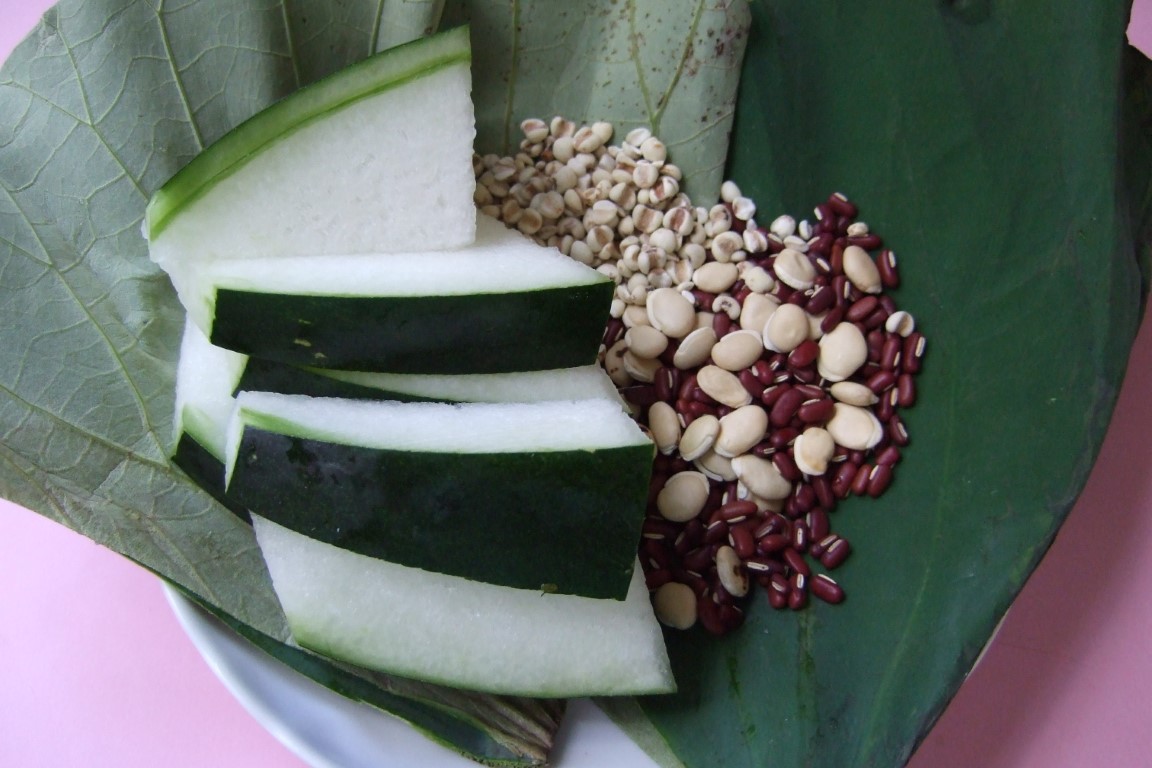
- Adzuki beans (chi xiao dou): Traditionally used to drain dampness and support the kidneys; also associated with mild diuretic effects
- Flat beans / hyacinth beans (bian dou): Strengthen the spleen and stomach; help relieve summer-damp and nausea
- Pearl barley / Job’s tears (yi mi): Well-studied for anti-inflammatory and diuretic properties; drains dampness, supports the spleen, and is traditionally considered to have mild anti-tumor activity; avoid in pregnancy
- Dried tangerine peel (chen pi): Regulates the qi of the middle burner, aids digestion, reduces bloating
Ingredients (4 bowls)
| Ingredient | Amount | Notes |
|---|---|---|
| Chinese yam (huai shan) | 1 liang (~38 g) | Dried form, available at Chinese herb shops |
| Poria mushroom (fu ling) | 5 qian (~19 g) | Slices or chunks — same efficacy |
| Lotus seeds (lian zi) | 1 liang (~38 g) | Soak and rinse before use |
| Adzuki beans (chi xiao dou) | 1 liang (~38 g) | Rinse well |
| Flat beans (bian dou) | 1 liang (~38 g) | Rinse well |
| Pearl barley (yi mi) | 1 liang (~38 g) | Skip if pregnant; use white beans instead |
| Dried tangerine peel (chen pi) | 1 piece | |
| Lean pork (optional) | To taste | Can also use quail or other light meat |
Method
- Rinse and soak all dried ingredients in water for 20–30 minutes, then drain.
- Place all ingredients in a pot with 8 bowls of water (about 2 liters).
- Bring to a boil, then reduce heat and simmer for 2 hours until reduced to about 4 bowls.
- Season to taste: add rock sugar for a sweet version, or salt if cooked with meat.
- Drink the soup and eat the cooked ingredients for full benefit.
Bro Niu’s tips
This soup works beautifully with or without meat. It can be served sweet or savory. If poria (fu ling) is genuinely hard to find, it can be replaced with extra pearl barley or fresh yi mi. For those whose stomachs feel uncomfortable with the beans, try using only the outer skin of flat beans (bian dou yi) rather than the whole bean, and add two pieces of tangerine peel — this is gentler on the digestion. Quail can be used instead of lean pork for extra nourishment.
Community questions answered (selected)
-
Q (Sandra): Is dried poria sold in chunks or pieces? I’m overseas and I see both “poria” and “smilax root” on packaging that looks similar — can poria be substituted? Bro Niu: Poria comes in both roll-sliced and chunk forms — the efficacy is the same. If you genuinely cannot find it, you can use fresh and dried pearl barley (sheng shu yi mi) as a substitute.
-
Q (Ty): I have a thin, cold, very chilly constitution. After drinking this soup — even with ginger added — I feel nauseous and have a mild stomachache. What is happening? Bro Niu: Try removing the pearl barley and using only poria (3 qian), the skin of flat beans — not the whole bean — (bian dou yi, 3 qian), tangerine peel (1 piece), fresh ginger (3 slices), and red dates (6 pieces), simmered in 4 bowls of water down to 2. This gentler version is better suited for a cold-type constitution. Children with bad breath can also drink it.
-
Q (fanny): What are the quantities for 6 servings? Bro Niu: For 6 servings, increase the ingredients by about half — huai shan 1.5 liang, fu ling 7 qian, the other main ingredients 1.5–2 liang each, 2 pieces of tangerine peel, and 11 bowls of water simmered down to 6 bowls.
Published February 12, 2016 · Adapted and translated for Nourilo from a traditional home-kitchen recipe. Approx. 4 min read.