Soups
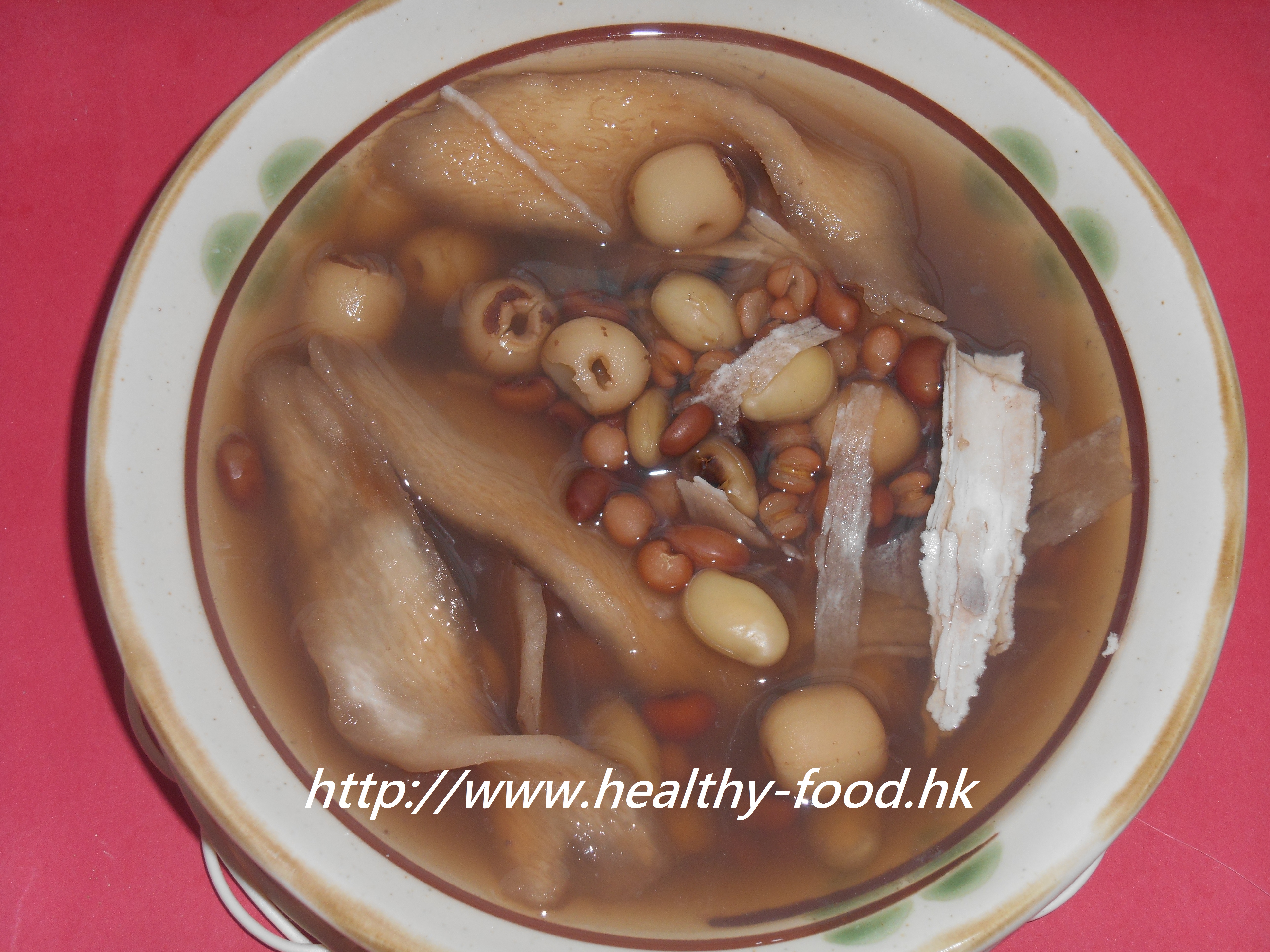
Spleen-Strengthening Dampness-Draining Soup (Jian Pi Qu Shi Tang)
Traditionally used to strengthen spleen function, promote fluid metabolism, and relieve fatigue, bloating, and heaviness associated with internal dampness
Why people make this soup
In traditional Chinese medicine, “internal dampness” is one of the most common patterns seen in modern, sedentary urban life — especially in humid climates. It is not a Western medical diagnosis, but the symptoms it describes are very recognisable: persistent tiredness that does not improve with rest, a heavy or foggy-headed feeling, bloating and a sense that the stomach never fully empties, puffiness, loose or unsatisfying stools, and in women, excessive vaginal discharge. These patterns are worsened by excessive consumption of cold drinks, raw foods, and an overreliance on cooling herbal teas. The solution in Chinese food therapy is not a dramatic intervention but a gentle, regular practice: a nourishing soup that supports the spleen’s role in transforming and transporting fluids through the body. Bro Niu’s six-ingredient formula is one of the most well-rounded dampness-draining recipes — balanced, not overly cooling, and safe for the whole family year-round.
Who it suits / who should be cautious
- Suitable for men, women, children, and elderly — Bro Niu describes this as “not too cooling, not too warming, suitable for everyone”
- Particularly useful for children who have a consistently poor appetite or are failing to gain appropriate weight
- Infants from weaning age can also have this soup (with optional added sweet vegetables like carrot, corn, or dried figs to improve palatability)
- Not known to cause any significant adverse effects in the standard doses listed
Why these ingredients (the food-therapy logic)
- Chinese yam (huai shan): Neutral and tonifying for the spleen, stomach, and kidneys; a dietary staple in Cantonese tonic soups
- Poria mushroom (fu ling / Poria cocos): One of the classic spleen-draining herbs; traditionally used to calm the mind while promoting fluid drainage; not fungus in the sense of high-purine mushrooms — it is a wood-growth sclerotium with a very mild flavour
- Lotus seeds (lian zi): Strengthen the spleen and calm the heart; gently astringent
- White hyacinth bean (bai bian dou / Lablab purpureus): A classic dampness-dispelling food in Cantonese cooking; used specifically for the spleen-stomach pattern of dampness
- Red azuki beans (chi xiao dou): Traditionally used to clear heat and promote urination — helping the body shed excess fluid; slightly more diuretic in function than ordinary red kidney beans
- Coix seeds / Job’s tears (yi mi): One of the most widely used dampness-draining grains in Chinese cooking; supports the spleen and lungs; raw (not dry-fried) coix is used here for a stronger draining effect
- Tangerine peel (chen pi): Aids digestion, prevents the soup from becoming overly heavy, and adds flavour depth
Ingredients (4 bowls)
| Ingredient | Amount | Notes |
|---|---|---|
| Chinese yam (huai shan) | ~38 g (1 liang) | Rinse and soak |
| Poria mushroom (fu ling) | ~38 g (1 liang) | Rinse and soak |
| Lotus seeds (lian zi) | ~38 g (1 liang) | Rinse and soak |
| White hyacinth bean (bai bian dou) | ~38 g (1 liang) | Rinse and soak |
| Red azuki beans (chi xiao dou or hong dou) | ~38 g (1 liang) | Rinse and soak |
| Coix seeds / Job’s tears (yi mi) | ~38 g (1 liang) | Rinse and soak |
| Dried tangerine peel (chen pi) | 2 pieces | Rinse |
| Water | 8 bowls (~2 L) | Yields about 4 bowls after cooking |
| Lean pork (optional) | ~150–200 g | Blanched; makes a heartier soup |
Method
- Rinse and soak all dry ingredients for at least 30 minutes.
- Place all ingredients in a pot with 8 bowls of water.
- Bring to a boil, then reduce to a low simmer and cook for 2 hours, yielding about 4 bowls.
- Serve warm. The soup and solid ingredients can both be eaten.
- Alternatively: cook the strained liquid with red rice or millet to make a savoury congee.
Bro Niu’s tips
This soup can also be turned into a nourishing congee by adding a small amount of red rice or millet and cooking until soft — it is especially good for children in this form, as the texture is more appealing. Regular consumption helps brighten the complexion and build overall body strength. For children who need a sweeter taste, add carrot, corn, or a few dried figs. Lean pork can be added without changing the character of the soup. For those who have just had an episode of diarrhoea or loose stools, Bro Niu suggests simplifying to just dry-fried hyacinth beans and lotus seeds cooked as a simple congee first, before returning to the full six-ingredient version.
Community questions answered (selected)
-
Q (Rosanna): Can a 2-year-old toddler drink this soup? Can I add carrot, dried figs, or corn to make it sweeter? Bro Niu: Even very young babies can drink this soup. Adding carrot, dried figs, and corn is perfectly fine.
-
Q (Yan): I had loose, watery stools and now have no appetite, feel bloated, and my constitution is cold. What soup should I make? Bro Niu: You can cook this soup. Red date and millet congee with a little lotus root starch added is also a good choice.
-
Q (Candy): Can lean pork be added? Can it be made in a double-boiler? Bro Niu: Lean pork can be added. This recipe is designed for regular pot cooking. Double-boiler (steaming) is usually reserved for richer ingredients like fish maw, sea cucumber, or precious tonics like cordyceps or ginseng.
Published September 26, 2015 · Adapted and translated for Nourilo from a traditional home-kitchen recipe. Approx. 4 min read.