Soups
Lion's Mane Mushroom and Free-Range Chicken Soup
Traditionally used to support digestive health, strengthen the stomach lining, and nourish overall vitality
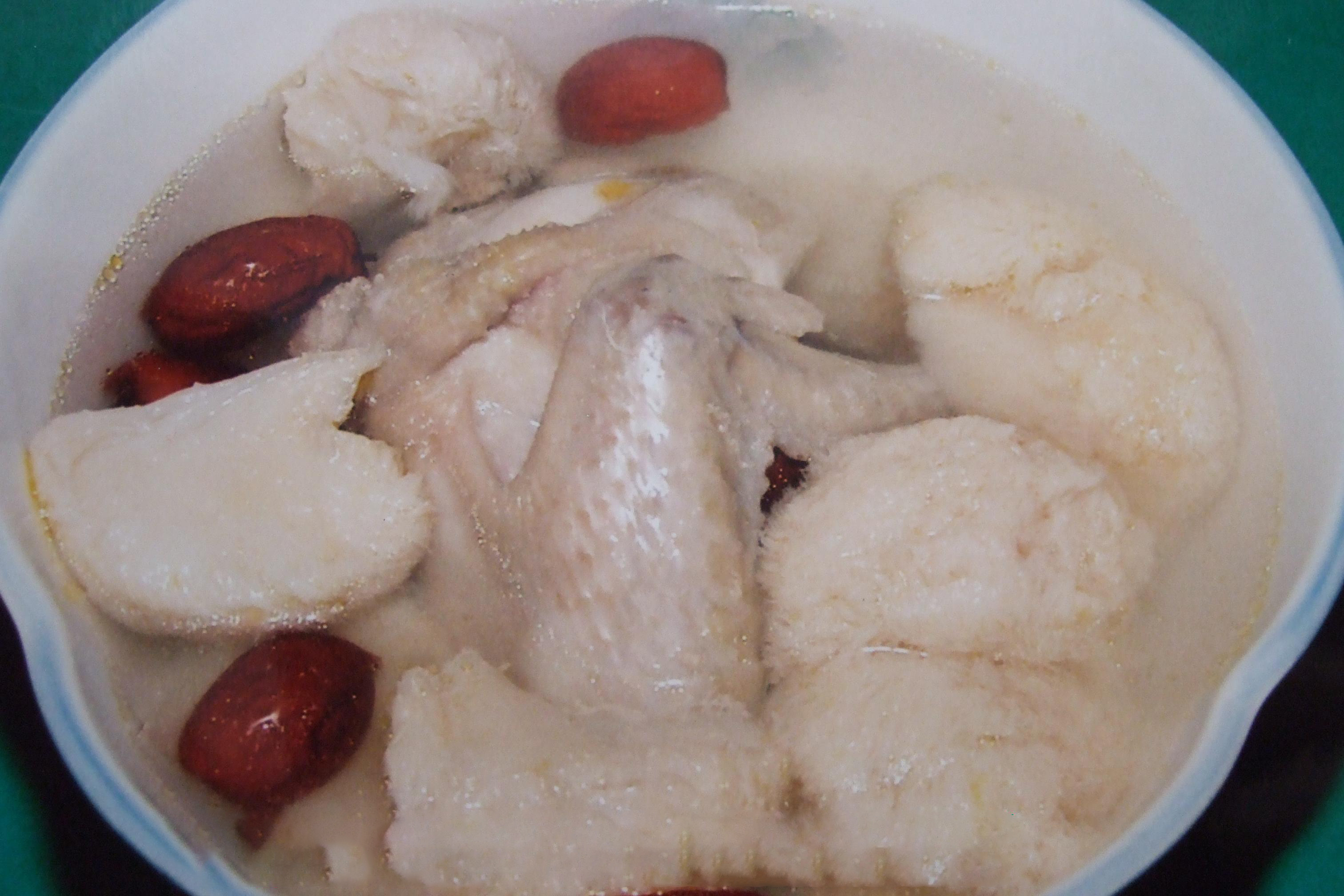
Why people make this soup
A friend of Bro Niu’s was dealing with gastric ulcer — the kind that leaves you with chronic fatigue, poor appetite, loose stools, and that general sense of being physically depleted. Bro Niu’s recommendation was simple: more lion’s mane mushroom (hou tou gu) in the pot.
Lion’s mane is not just a trendy functional mushroom — it has a centuries-long history in Chinese food medicine as a stomach tonic. Modern research has examined its polysaccharide content and its potential effects on gastric mucosa, and it has become well-regarded even in contemporary integrative medicine circles for digestive support. In this soup, it is paired with a whole free-range chicken — which in Chinese food therapy is considered a gentle, deeply nourishing protein that restores qi and blood without being heavy or greasy. Ginger and red dates round out the pot with warmth and sweetness.
Who it suits / who should be cautious
- Well suited for those with chronic gastritis, gastric or duodenal ulcers, ulcerative colitis, poor digestion, or chronic loose stools
- Gentle enough for the elderly, children, and those who are generally weak or convalescing
- Suitable for the whole family as a regular nourishing soup
- Those with active fever should wait until the fever resolves before taking this soup
Why these ingredients (the food-therapy logic)
- Lion’s mane mushroom (hou tou gu): Rich in protein, amino acids, and polysaccharides; has a long TCM history as a stomach and spleen tonic; associated with supporting the stomach lining and aiding digestion; particularly associated with gastric ulcers, chronic gastritis, and colitis
- Free-range chicken (zou di ji): Considered in Chinese food therapy to be a superior, balanced tonic — supports qi, nourishes blood and liver, and builds strength without the cloying heaviness of grain-fed birds; a free-range or organic bird is preferred
- Fresh ginger (sheng jiang): Warms the stomach and aids digestion; helps balance any slight coolness in the mushrooms
- Red dates (hong zao): Adds natural sweetness; traditionally nourishes the spleen and stomach
Ingredients (4 bowls)
| Ingredient | Amount | Notes |
|---|---|---|
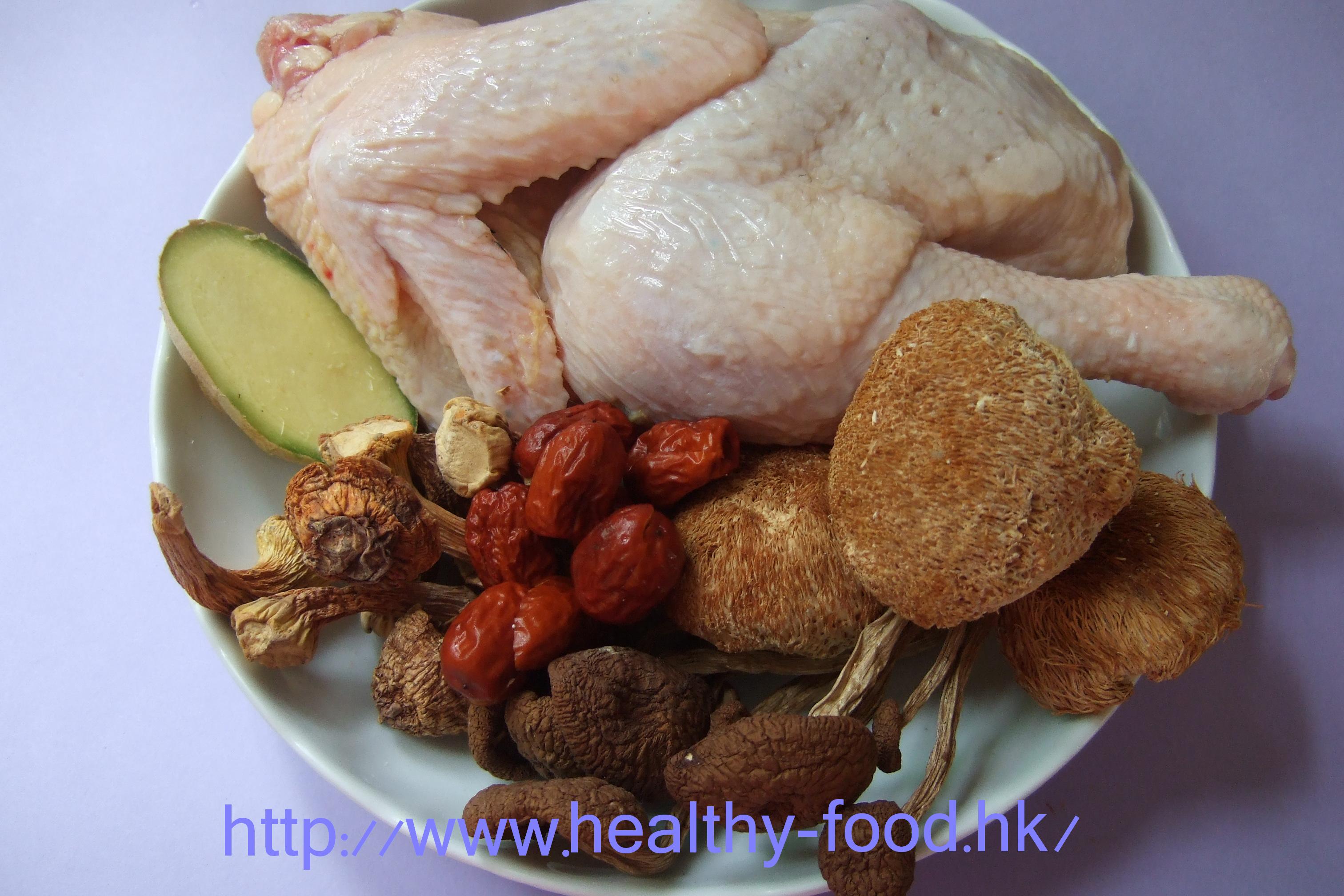
| Organic free-range chicken | Half a bird (~600–700 g) | Cleaned, blanched first |
| Dried lion’s mane mushroom | 76 g (2 liang) | Soak in cold water until softened; tear into pieces; blanch to remove bitterness |
| Fresh ginger | 2 slices | |
| Red dates | 6 pieces |
Method
- Clean the chicken; blanch briefly in boiling water, drain and rinse to remove impurities.
- Soak the dried lion’s mane mushroom in cold water until fully softened (about 30–60 minutes). Tear into pieces. Blanch in boiling water briefly, then drain — this removes any slight bitterness.
- Combine all ingredients in a large pot with 8 bowls of water.
- Bring to a boil, then reduce to a gentle simmer.
- Cook for about 2 hours until the liquid reduces to approximately 4 bowls.
- Serve the broth with the lion’s mane pieces — both the mushroom and the chicken are worth eating.
Bro Niu’s tips
This soup is nourishing without being heavy — the free-range chicken gives it depth of flavour while remaining easy on a sensitive stomach. It is suitable for the whole family including the elderly and children. If you are using it specifically to support gastric ulcer recovery, Bro Niu suggests making it a regular fixture — two servings per week as a long-term habit. For those who prefer not to use chicken, the lion’s mane can also be combined with lean pork.
Community questions answered (selected)
-
Q (陈太): My husband has duodenal ulcer and H. pylori infection. Is there a food-therapy approach? Bro Niu: You can try adding black currant powder (yi li zi fen / hei jia lun zi fen) — one teaspoon stirred into a hot drink each morning — as research suggests black currant may help inhibit H. pylori. Dandelion tea (pu gong ying) also has anti-H. pylori associations. For soups, lion’s mane with green papaya and figs is particularly protective of the gut lining.
-
Q (Wendy): My 88-year-old mother has a 3 cm gastrointestinal stromal tumour. She also has diabetes and high blood pressure. Can she eat lotus root powder to nourish the stomach? Bro Niu: Lotus root powder is excellent for the stomach. Small millet (xiao mi) is also good for the spleen and stomach — you can make a lotus root powder and small millet porridge for her regularly. Since she has diabetes, limit red dates; coconut dates (ye zao / ji no zao) are a better alternative as they have a gentler effect on blood sugar — use about 4.
-
Q (bee): My son is about 10 years old and has had two hospital admissions for stomach bleeding. He is on medication. Can he drink any soup to support recovery? Bro Niu: His condition is specific — please continue the medication as prescribed. Lion’s mane soup is beneficial for digestive issues and can be taken two servings a week alongside his treatment.
Published April 19, 2010 · Adapted and translated for Nourilo from a traditional home-kitchen recipe. Approx. 4 min read.