Soups
Silkie Chicken, Dried Conch, Chinese Yam, and Wolfberry Soup
traditionally associated with nourishing yin, supporting the spleen and kidneys, and easing fatigue, dry mouth, and poor sleep during pregnancy
Why people make this soup
During pregnancy, the body’s demand for nourishment rises substantially — and in traditional Chinese food therapy, the guidance is to avoid hot, warming tonics and instead focus on foods that are cool-moistening and yin-nourishing. Rich warming herbs like ginseng and velvet antler are left for the postnatal period; pregnancy calls for gentler nourishment. Bro Niu’s Silkie Chicken and Dried Conch Soup is built on exactly that principle. Silkie chicken (also called black-bone chicken) is a lean, deeply nourishing bird prized for centuries in Chinese food culture for its ability to supplement qi and blood without excessive heating. Dried conch adds mineral richness and a traditional association with yin nourishment. Together with fresh Chinese yam and wolfberries, this soup supports the energy, eye health, and restful sleep that can become strained during pregnancy.
It is a beautiful soup — golden-coloured, fragrant, and genuinely delicious — that the whole family can enjoy, not just the expectant mother.
Who it suits / who should be cautious
- Pregnant women experiencing fatigue, poor sleep, dry mouth, or eye strain; especially in the second and third trimesters.
- People with diabetes — this soup is particularly suitable as the ingredients do not raise blood sugar.
- The whole family including young children (toddlers from around 20 months may have the broth; remove chicken skin for young children as it contains too much fat).
- Can be made with regular chicken instead of silkie chicken; dried Chinese yam may substitute for fresh (use about 38 g dry weight).
- Not suitable during acute illness with fever (外感发烧).
Why these ingredients (the food-therapy logic)
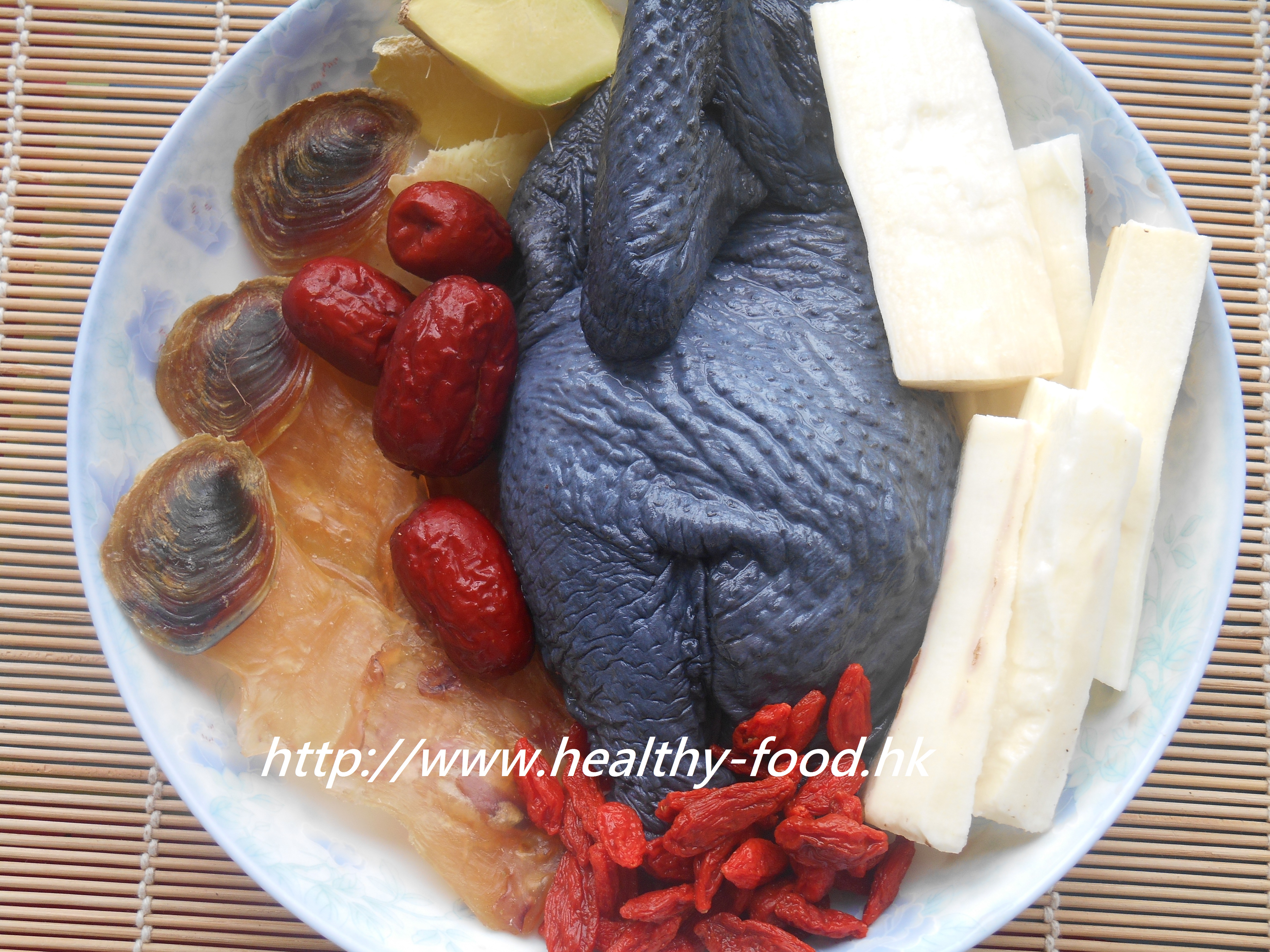
- Silkie chicken (zhu si ji / wu ji): Black-bone chicken has long been considered the finest poultry for female tonic cooking in China. Its dark flesh and bones are associated with supplementing liver and kidney, nourishing blood, and supporting hormonal balance — without the heating quality of regular chicken.
- Dried conch (xiang luo gan): An intensely flavourful dried shellfish with a traditional association with nourishing yin, clearing internal heat from the liver, and supporting vision. It gives the broth both umami depth and medicinal warmth. Good quality dried conch should be dry, fragrant, and yellowish in colour (red-tinged flesh is also acceptable); avoid any that smell stale.
- Fresh Chinese yam (xian huai shan, Dioscorea polystachya): Nourishes the spleen, lung, and kidney simultaneously — one of the most gentle and versatile tonic foods in Chinese food therapy. During pregnancy it helps with digestive support and blood sugar stability.
- Wolfberries / goji (gou qi zi): Associated with nourishing liver and kidney yin, brightening vision, and supporting eye health. Commonly used in traditional Chinese cooking as an everyday tonic.
- Red dates (hong zao): Supplement qi and blood; add gentle sweetness and a calming quality to the broth.
Ingredients (4 bowls)
| Ingredient | Amount | Notes |
|---|---|---|
| Fresh Chinese yam | 150 g | Peel and slice |
| Wolfberries (goji berries) | 11 g | Rinse and soak briefly |
| Dried conch | 2–3 pieces | See tips for selection |
| Silkie chicken | Half a bird | Chop into pieces; blanch together with the dried conch |
| Fresh ginger | 3 slices | |
| Red dates | 6 pieces | Remove pits |
| Water | 8 bowls (~1.4 L) |
Method
- Rinse the dried conch briefly. Chop the silkie chicken into pieces. Blanch both the chicken and conch together in boiling water for 2–3 minutes to remove impurities; rinse and set aside.
- Peel the fresh Chinese yam and slice into rounds or chunks. Rinse the wolfberries and soak briefly. Pit the red dates.
- Combine all ingredients in a large pot with 8 bowls of water.
- Bring to a boil over high heat, then reduce to a gentle simmer. Cook for 2 hours until the broth is rich, golden, and fragrant, and has reduced to approximately 4 bowls.
- Season lightly with salt if desired. Serve warm.
Bro Niu’s tips
The soup is beautiful as-is and suitable for all the family. For those who prefer to use regular chicken instead of silkie chicken, it works well — use the same quantity. If using dried Chinese yam instead of fresh, use about 38 g (1 liang) of the dried slices. Young children’s servings should have the chicken skin removed, as chicken skin contains hormones and is too fatty for small children.
When selecting dried conch, look for pieces that are dry, firm, and carry a pleasant savoury aroma. American dried conch is generally yellow-fleshed; yellow-red flesh is also good. Avoid any that rattle loosely or smell off. Black beans can be added to this soup without issue for those who want extra kidney-nourishing support.
For pregnant women who want a gentle detoxifying preparation for the final months: try white lotus stamen (bai lian xu) simmered with egg and rock sugar — a traditional pre-birth tonic in Chinese food culture. Five qian of lotus stamen, steeped in 4 bowls of water for 20 minutes, then sweetened and combined with one beaten egg, makes a gentle weekly treat from months 6–8.
Community questions answered (selected)
-
Q (Celine): Can I use regular chicken instead of silkie chicken, and dried yam instead of fresh? Can a 20-month-old baby drink this? Bro Niu: You can use regular chicken instead of silkie — no problem. For dried yam, use 1 liang (38 g). A 20-month-old can drink this soup; remove the chicken skin for young children, as it contains hormones and is too fatty for babies.
-
Q (Daisy): When should a pregnant woman start drinking white lotus stamen egg soup to clear fetal toxins, and how often? Bro Niu: The white lotus stamen egg sweet soup is best taken during months 6–8 of pregnancy. Drink twice a week.
-
Q (新手亚妈): Can black beans be added to this soup? Bro Niu: Yes, black beans can be added — no problem at all.
Published October 26, 2015 · Adapted and translated for Nourilo from a traditional home-kitchen recipe. Approx. 5 min read.