Soups
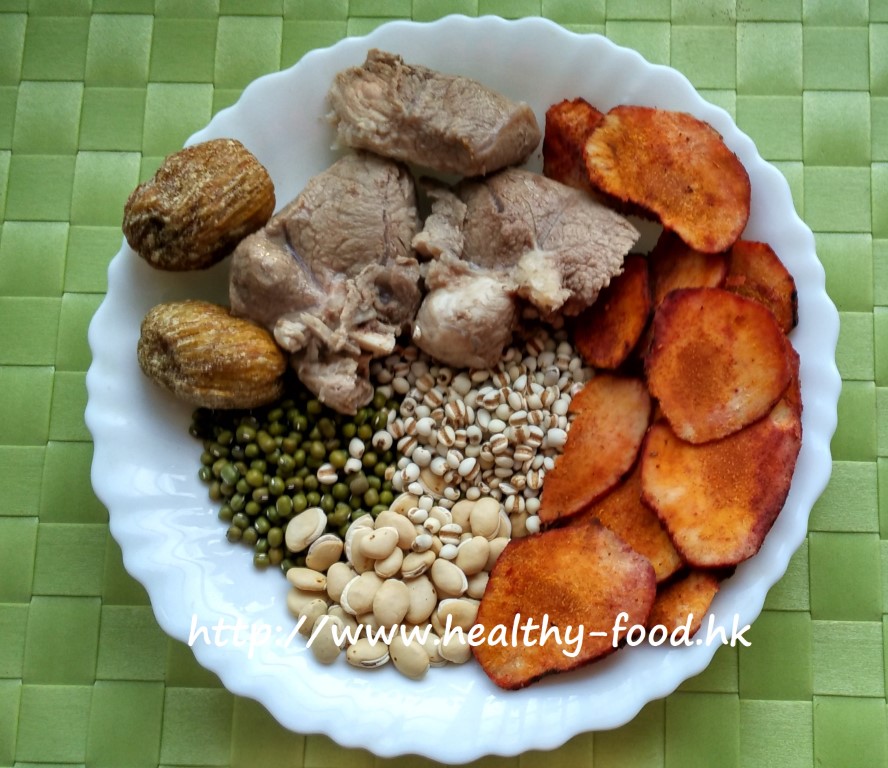
Fresh Smilax Root, Adzuki Bean, Hyacinth Bean, Mung Bean, Barley and Pork Rib Soup
Traditionally used to clear heat, resolve dampness and help soothe skin rashes and itching
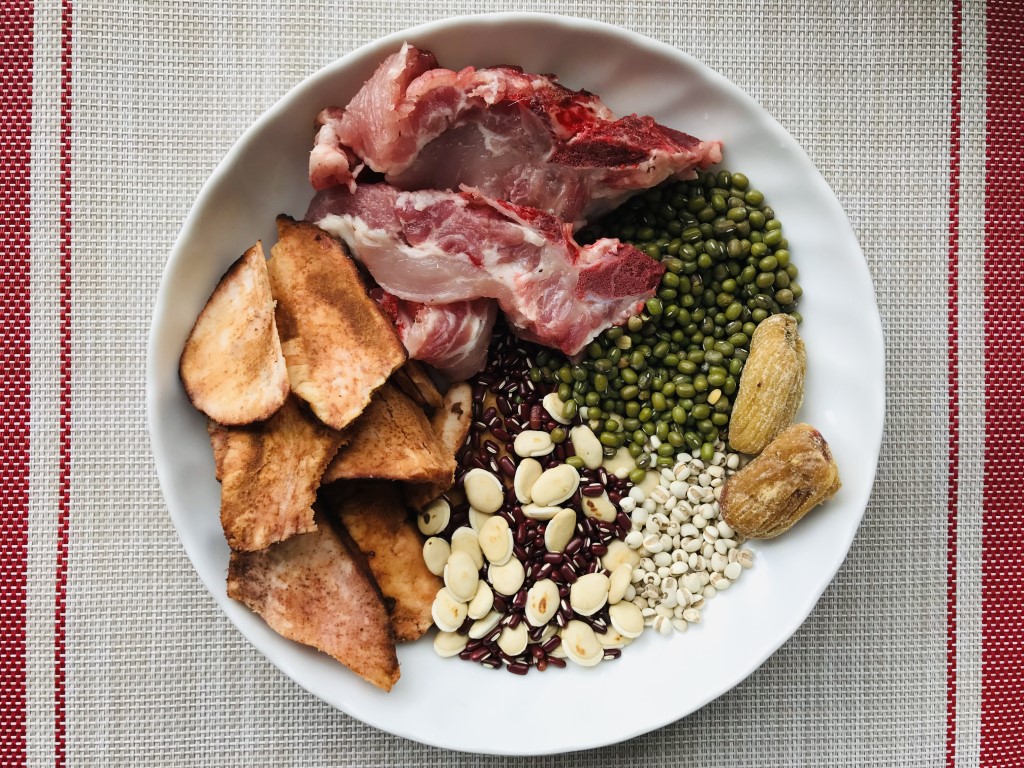
Why people make this soup
Hot, humid weather drives up what Chinese medicine calls “damp-heat” in the body, and the skin is often the first place this shows up — prickly heat, rashes, eczema flares, or general itching that worsens in summer. People with an already damp constitution are especially susceptible.
Smilax rhizome (tu fu ling) is a tuberous root of a climbing plant that grows in subtropical forests. Sweet and bland in flavour, it is traditionally prized for clearing heat and toxins, protecting the liver, soothing joint inflammation and — crucially — fighting bacteria, fungi and certain viruses. It is used in Cantonese food therapy for viral skin ulcers, allergic rashes and itching conditions alike. The fresh form is considered more effective than dried.
Combined with a classic “three-bean” combination (adzuki, hyacinth and mung) plus raw Job’s tears, this soup creates a potent but gentle dampness-clearing and heat-resolving broth that is pleasant enough for children to enjoy.
Who it suits / who should be cautious
- Suitable for the whole family including children; particularly helpful for children with eczema who can drink it regularly
- Especially valuable during hot, humid weather for anyone prone to skin rashes, damp-heat accumulation or itching
- Generally safe; honey dates are added to balance the cooling nature and make it more digestible
Why these ingredients (the food-therapy logic)
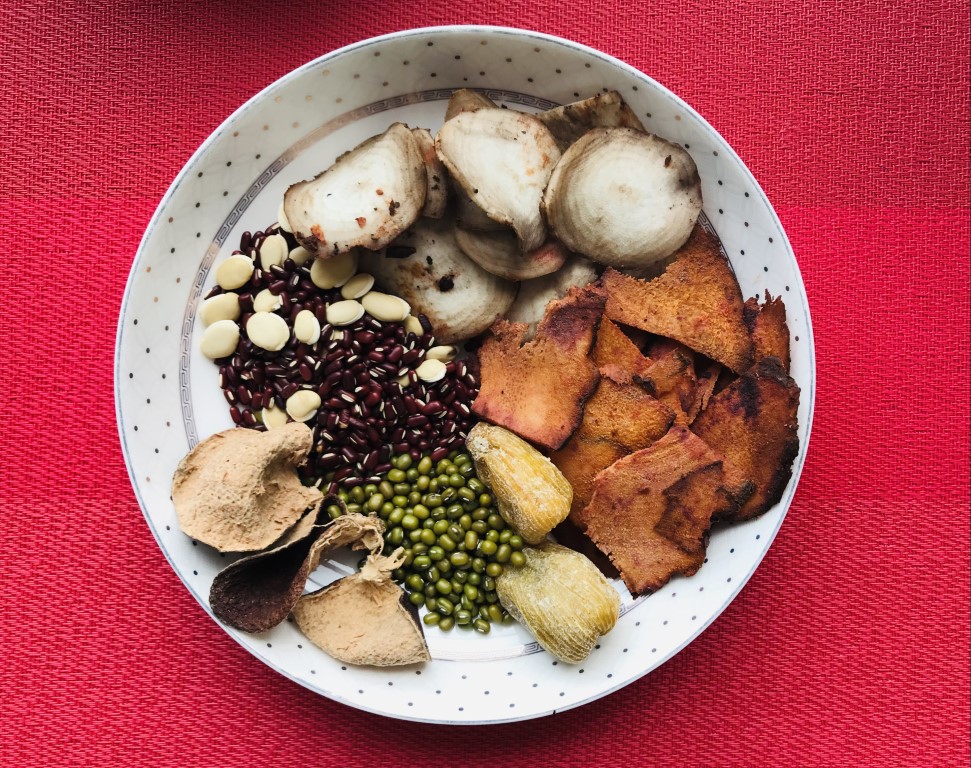
- Fresh smilax rhizome (xian tu fu ling): Clears heat and toxins, protects the liver, anti-inflammatory, antibacterial and antifungal; used for viral skin conditions, allergic rashes and skin ulcers
- Adzuki beans (chi xiao dou): Drains dampness, supports heart and kidney; classic damp-heat clearing bean
- Hyacinth beans (bai bian dou): Strengthens the spleen, resolves dampness; moderating influence that protects the digestive system
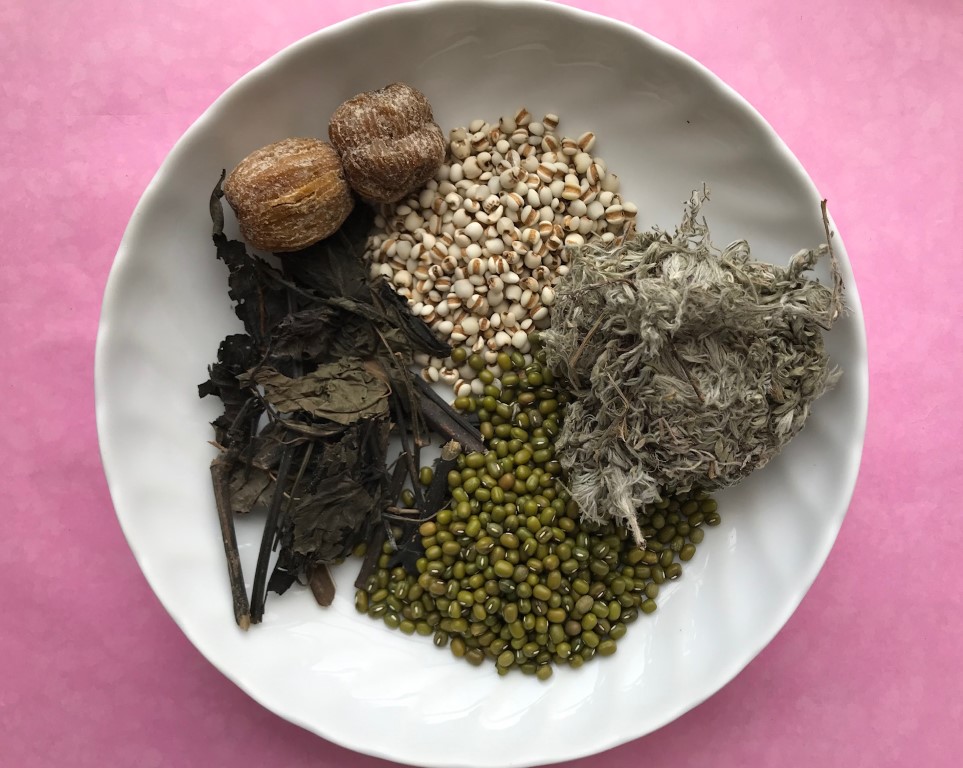
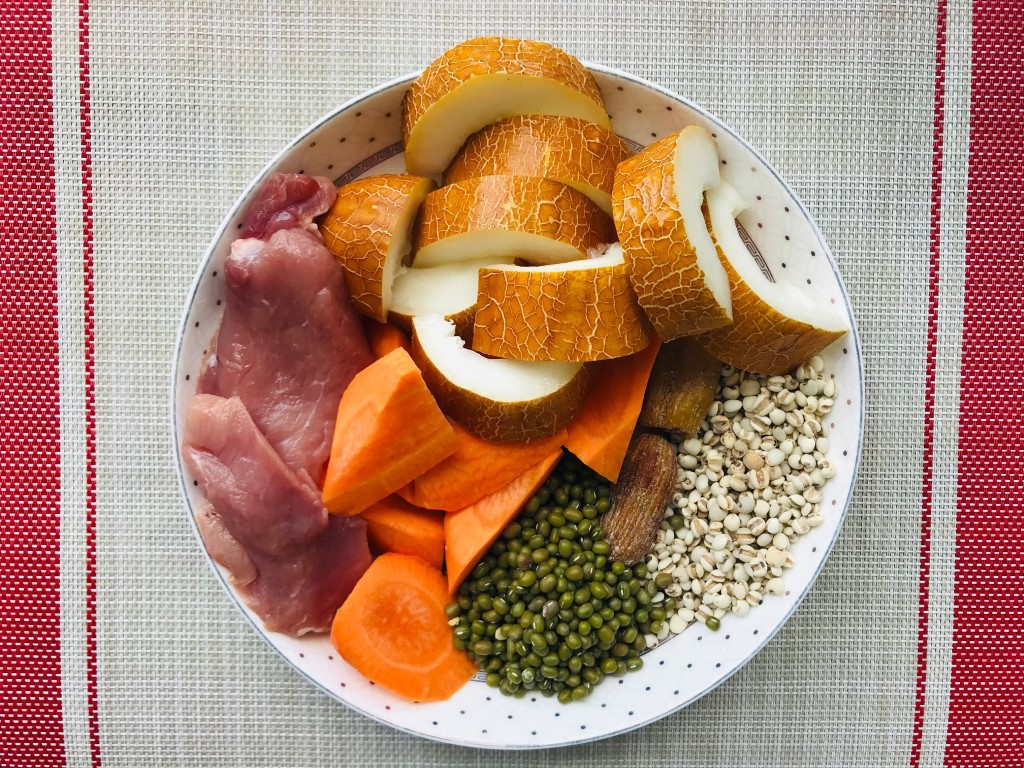
- Mung beans (lv dou): Strongly clears heat and toxins; cooling in nature — one of the most widely used summer heat-clearing ingredients in Chinese food therapy
- Raw Job’s tears (sheng yi mi): Drains dampness, clears heat, supports the spleen; associated with reducing inflammation and skin eruptions
- Honey dates (mi zao): Natural sweetness; harmonises the formula and protects the stomach from the cooling ingredients
- Pork ribs (pai gu): Provides body and nourishment; makes the soup a satisfying, complete meal
Ingredients (4–5 bowls)
| Ingredient | Amount | Notes |
|---|---|---|
| Fresh smilax rhizome | 75 g | Ask the herb vendor to peel and slice thinly |
| Adzuki beans | 38 g | Soak and rinse |
| Flat hyacinth beans | 38 g | Soak and rinse |
| Mung beans | 38 g | Soak and rinse |
| Raw Job’s tears (barley) | 38 g | Soak and rinse |
| Honey dates | 2–3 pieces | |
| Pork ribs | 300 g | Blanch briefly to remove impurities |
Method
- Blanch the pork ribs in boiling water for 2–3 minutes; rinse and drain.
- Soak and rinse all the beans and Job’s tears.
- Place all ingredients into a pot with 10 bowls (approximately 2.4 litres) of water.
- Bring to a boil, then reduce to a simmer for about 2 hours until reduced to 4–5 bowls.
- Drink the soup; the beans can also be eaten.
Bro Niu’s tips
Fresh smilax rhizome is available at stalls that sell fresh medicinal herbs. Ask the vendor to peel and slice it thinly for you — this saves effort at home. The fresh form is considerably more effective than the dried version. The soup has a mild, pleasant taste with no strong herbal bitterness, which means children generally accept it without complaint — a real bonus for parents managing childhood eczema. Regular consumption (two to three times a week) is more useful than occasional large doses.
Community questions answered (selected)
-
Q (Amy): How much dried smilax should I use if I cannot find fresh? Bro Niu: Dried smilax — use about 1 liang (38 g).
-
Q (mandy): I have facial and neck itching with 2–3 red spots; I just finished my period. Can I add kudzu root (fen ge)? Bro Niu: Yes, you can add kudzu root for one batch. If you also have loose stools and feel cold in the abdomen, add some ginger and tangerine peel when cooking.
-
Q (fanny50631): When recipes say “one bowl” of water, how many millilitres is that? Bro Niu: One bowl of water is approximately 240 ml.
Published June 4, 2022 · Adapted and translated for Nourilo from a traditional home-kitchen recipe. Approx. 3 min read.