Soups
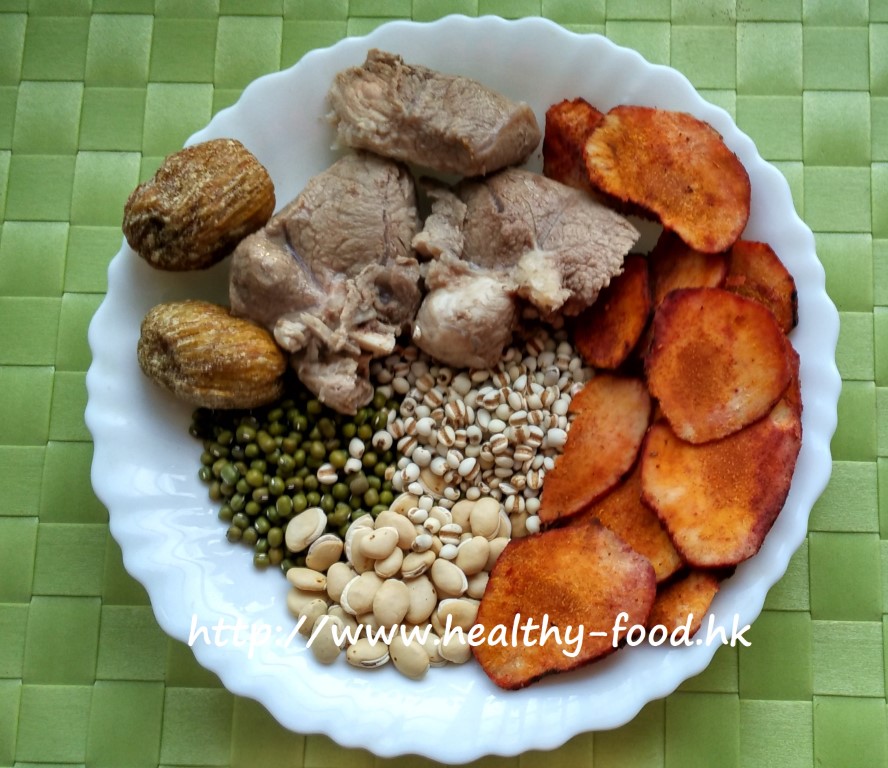
Fresh Smilax Root, Mung Bean, Hyacinth Bean & Job's Tears Pork Rib Soup
traditionally used to clear heat, resolve toxins, drain dampness, and ease skin itching and eczema
Why people make this soup
Hot, humid weather brings out the worst in skin conditions. Whether it is heat rash appearing in skin folds, or eczema flaring up in the sticky summer air, many people in Cantonese households have grown up with this soup as a seasonal companion. Fresh smilax root (tu fu ling) is the hero ingredient — a rough brown rhizome available at Chinese or Asian grocers and herbal supply shops, who will often peel and slice it upon request. Modern research confirms what Cantonese kitchen wisdom has long claimed: it has measurable anti-inflammatory, antibacterial, and antifungal properties. Paired with mung beans (cooling, blood-clearing), flat beans (spleen-supporting), and Job’s tears (dampness-draining), the result is a soup that gently but consistently addresses the “damp heat” internal environment that Chinese medicine associates with skin flare-ups. The pork ribs provide flavour and a gentle savoury background; the honey dates add a touch of sweetness.
Who it suits / who should be cautious
- Suitable for adults and children with eczema, heat rash, skin sensitivity, or general itching.
- Can be used for children with redness on cheeks, small scattered rashes on limbs or torso.
- CAUTION: Pregnant women should not drink this soup.
- Those with liver-kidney yin deficiency should also avoid.
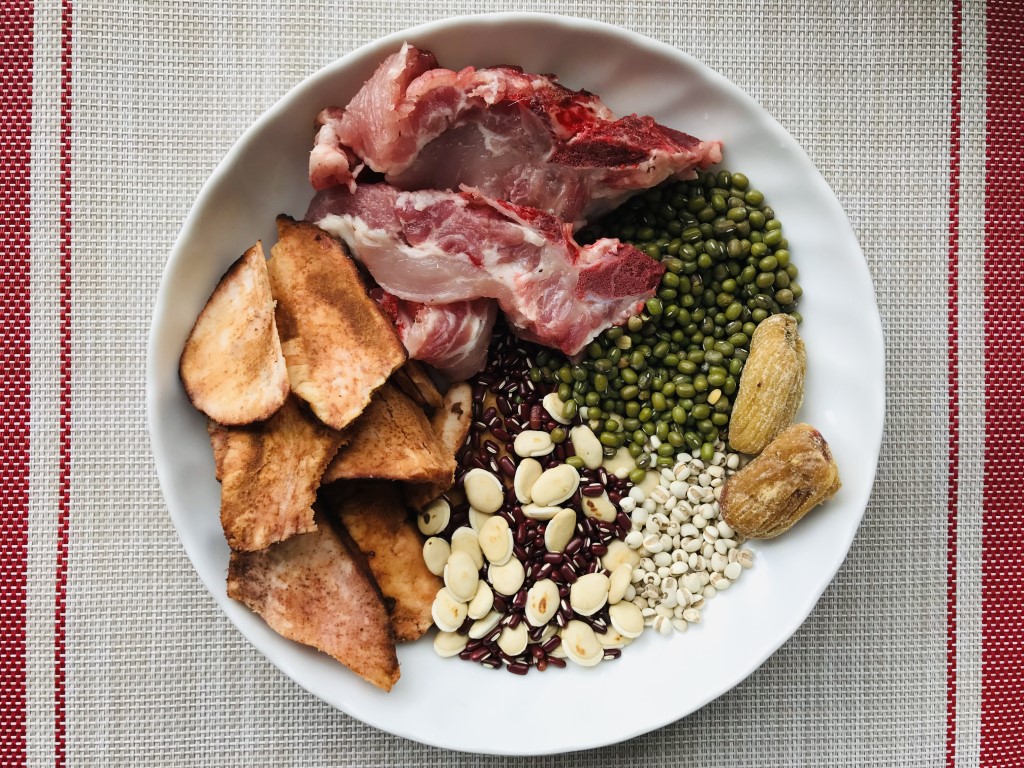
- Those with a cold constitution can modify: replace mung beans with adzuki beans (chi xiao dou), use a mix of raw and dry-roasted Job’s tears (sheng shu yi mi), and add one piece of dried tangerine peel (chen pi) to moderate the cooling effects.
- Can be stored for up to 3 days; always reheat thoroughly before drinking, especially in warm weather.
Why these ingredients (the food-therapy logic)
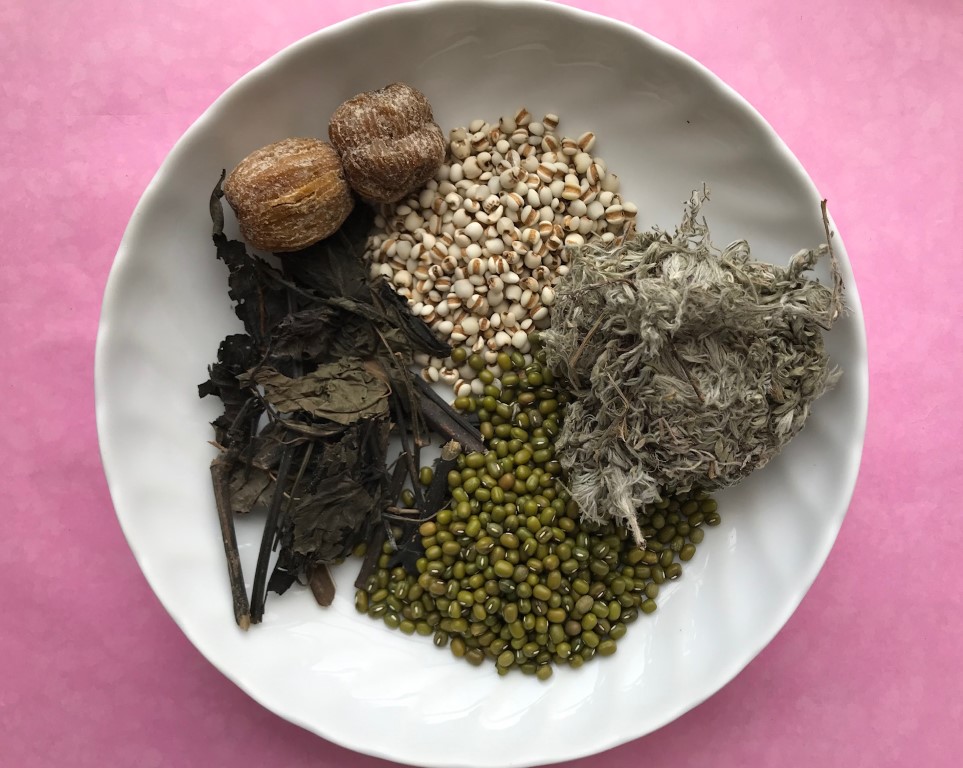
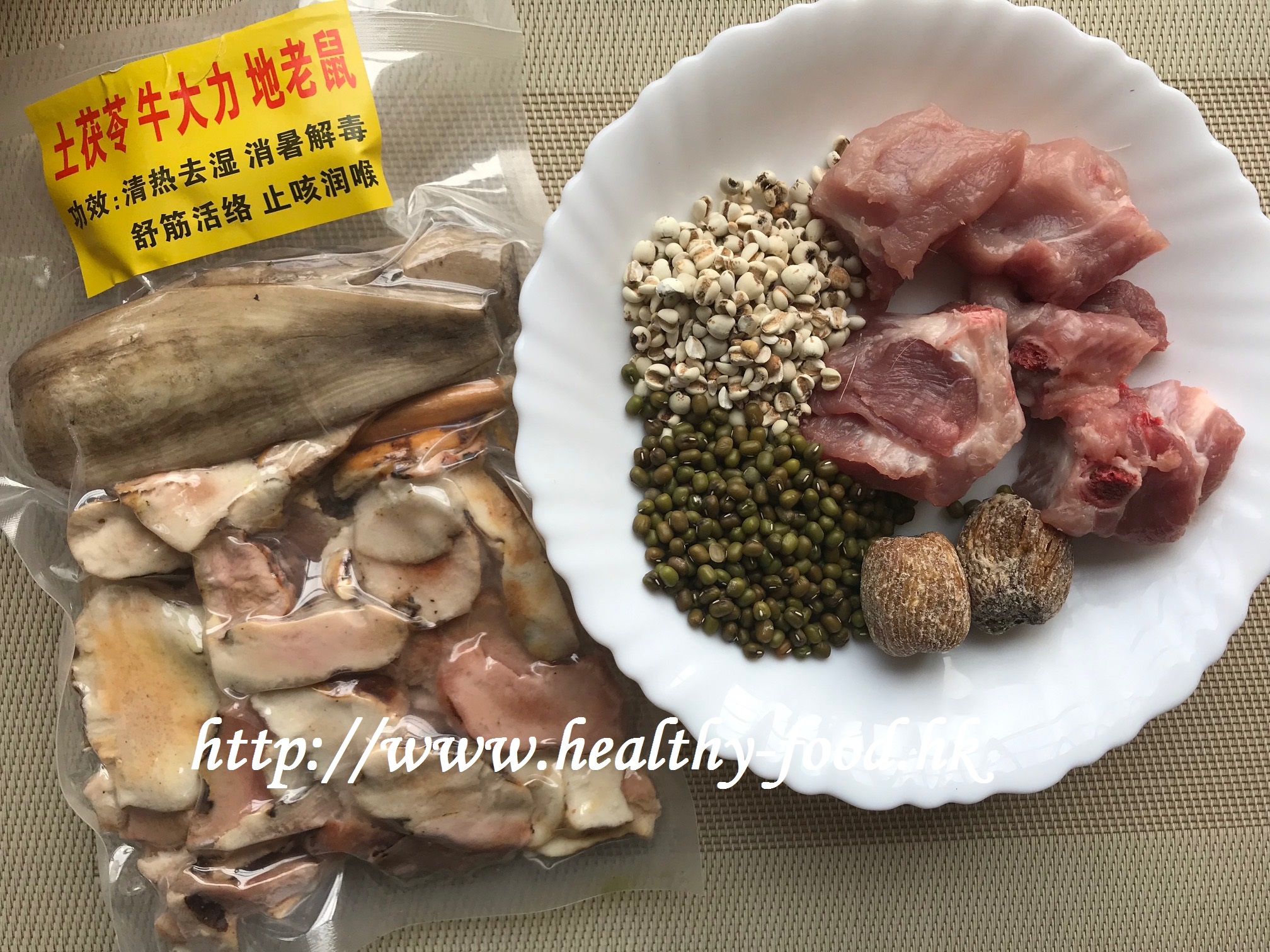
- Fresh smilax root (xian tu fu ling, Smilax glabra): Clears heat, resolves toxins, drains dampness, and supports joint mobility. Modern research has found anti-inflammatory, antibacterial, and antifungal activity. Fresh root is considered more potent than dried. After slicing, the flesh will rapidly oxidise from milky white to rust-brown — this is harmless and does not reduce efficacy.
- Mung beans (lv dou): Cooling and detoxifying; clears heat from the blood; drains dampness. A classic Cantonese summer ingredient.
- Hyacinth / flat beans (bian dou): Strengthens the spleen and resolves dampness; more warming than mung beans, which helps balance the formula.
- Job’s tears (sheng yi mi, Coix lacryma-jobi): Drains dampness; supports the spleen, lungs, and kidneys; mild diuretic. Also associated with supporting skin clarity.
- Honey dates (mi zao): Naturally sweet; adds palatability and moderates the bitter-cooling nature of the other herbs.
- Pork ribs (pai gu): Provides flavour and protein; a standard Cantonese soup base.
Ingredients (4 bowls)
| Ingredient | Amount | Notes |
|---|---|---|
| Fresh smilax root (xian tu fu ling) | ~75 g (2 liang) | Peel and slice thin; available at Chinese or Asian grocers and herbal supply shops |
| Mung beans (lv dou) | ~37 g (1 liang) | Soaked and rinsed |
| Hyacinth / flat beans (bian dou) | ~37 g (1 liang) | Soaked and rinsed |
| Raw Job’s tears (sheng yi mi) | ~37 g (1 liang) | Soaked and rinsed |
| Honey dates (mi zao) | 2–3 pieces | |
| Pork ribs (pai gu) | ~300 g (half jin) | Blanched to remove impurities |
| Water | 8–9 bowls | ~1.6–1.8 litres |
Method
- Soak and rinse the mung beans, flat beans, and Job’s tears.
- Peel and thinly slice the fresh smilax root (Chinese or Asian grocers and herbal supply shops will often do this upon request). Note: the flesh will turn rust-coloured quickly after slicing — this is normal.
- Blanch the pork ribs in boiling water briefly to remove impurities; drain.
- Place all ingredients in a pot with 8–9 bowls of water.
- Bring to the boil, then simmer for 2 hours until the liquid reduces to about 4 bowls.
- Serve the soup and solids together.
Bro Niu’s tips
Fresh smilax root gives better results than the dried version and is worth seeking out at Chinese or Asian grocers and herbal supply shops. Don’t be alarmed if the cut surface turns rust-brown after slicing — it is a natural oxidation reaction from the mineral content and does not affect the medicinal properties. This soup has very little herbal flavour and is easy to drink for both adults and children. For people with a cold constitution, swap mung beans for adzuki beans and add dried tangerine peel.
Community questions answered (selected)
-
Q (L L): My 15-year-old daughter has cold hands and feet and eczema that has been getting worse, possibly from stress. She tends to be cold-constitutioned — is this soup suitable? Can I modify it? Bro Niu: For a cold-constitutioned person, replace the mung beans with adzuki beans, use a mix of raw and dry-roasted Job’s tears (sheng shu yi mi combined), and add one piece of dried tangerine peel. Take twice a week.
-
Q (Yuko): My 7-year-old son has serious eczema, scratching until it bleeds, and it keeps spreading to his face and limbs. What can I add to help wounds heal faster and reduce the eczema? Bro Niu: When eczema is this severe, the child really needs to see a doctor — Chinese medicine takes longer to act but treats the whole body with fewer side effects. I recommend seeking out an experienced TCM practitioner at a university-affiliated clinic. In the meantime, avoid: shrimp, crab, bamboo shoots, goose meat, scaleless fish, pork jowl (including neck meat), mango, and pineapple — these are the common “trigger foods” (fa wu) that promote inflammation. This soup can be continued. You can also make a topical wash with wild honeysuckle flower (tu yin hua) 37 g simmered in water — dab it on the affected areas with a wet cloth to help relieve itching.
-
Q (jj): My 10-year-old and I both had Covid last month and now have itchy rashes all over our skin at night. We are both cold-constitutioned and I just started my period. Can I still drink this soup? Bro Niu: The soup as written is somewhat cooling. Replace mung beans with adzuki beans and add dried tangerine peel — this makes it more suitable for cold constitutions. Take 3 batches on consecutive days. For external relief, you can use the wash of baihua she she cao, di fu zi, and side cypress leaf.
Published July 29, 2022 · Adapted and translated for Nourilo from a traditional home-kitchen recipe. Approx. 5 min read.