Home-Style Dishes
Crispy Stir-Fried Eel Strips
Traditionally valued for blood sugar support; high protein, low fat
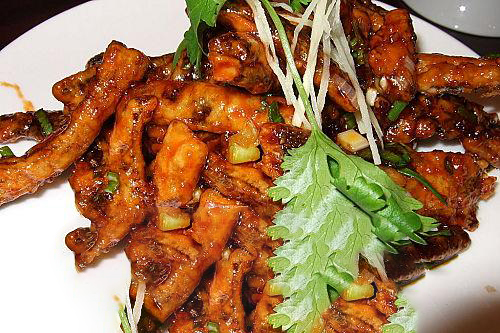
Why people make this dish
Eel is not the most popular ingredient in Cantonese kitchens, partly because it is scaleless (which marks it as a “reactive” food to be avoided by those with skin sensitivities) and partly because people are not always sure how to cook it. But Bro Niu thinks that is a shame, because the nutritional value of rice-paddy eel is genuinely impressive — high protein, low fat, tenderly textured, with very few bones. Traditional Chinese food therapy values it for tonifying deficiency, strengthening the tendons and bones, and expelling wind and dampness. Modern research has also identified a compound called “eel peptide” (shan yu su) that has been studied for its potential blood-sugar-lowering activity, making eel of particular interest in traditional dietary support for people managing diabetes.
Who it suits / who should be cautious
- Suitable for people with qi and blood deficiency who also want to manage blood sugar through diet; also good for those with weak tendons, muscles, or rheumatic conditions
- Not suitable for people with skin conditions, eczema, chronic itching, or other reactive-food sensitivities — eel is classified as a fa wu (reactive food) and may aggravate these conditions
- Use in moderation as part of a balanced diet if you have diabetes; continue any prescribed medication and consult your doctor
Why these ingredients (the food-therapy logic)
- Rice-paddy eel (huang shan): Sweet and warm in nature; traditionally associated with tonifying qi and blood, strengthening tendons and bones, and dispelling wind-dampness. Its “eel peptide” compound has been the subject of modern research on blood-glucose regulation.
- Ginger, garlic, spring onion: Classic aromatic trio that enhances digestibility, warms the middle, and balances the flavour of the eel
- Oyster sauce, rice wine, pepper: Standard Cantonese stir-fry seasonings that complement the eel’s natural sweetness
Ingredients (2–3 servings)
| Ingredient | Amount | Notes |
|---|---|---|
| Rice-paddy eel (huang shan) | 2–3 eels, ~450 g | Ask the fishmonger to fillet; bones reserved for soup |
| Minced ginger | 1 teaspoon | |
| Minced garlic | 1 teaspoon | |
| Chopped spring onion | 1 teaspoon | |
| Ground white pepper | To taste | |
| Oyster sauce | To taste | |
| Sugar | Small pinch | |
| Shaoxing rice wine | To taste | |
| Potato or cornstarch | For dusting | |
| Ginger juice + rice wine | For marinade | Combined |
Method
- Ask your fishmonger to fillet the eel and remove the spine. (Keep the bones — they make a wonderful soup with codonopsis, angelica, and red dates.)
- Blanch the eel fillets briefly in boiling water; remove the slippery coating, then rinse clean.
- Cut into thick strips. Marinate in a little ginger juice and rice wine for 10 minutes.
- Heat a generous amount of oil in a wok over medium-high heat.
- Dust the marinated eel strips in potato starch, shaking off the excess.
- Deep-fry the strips until golden and crisp; remove and drain on paper towels.
- Discard most of the oil, keeping just a thin film in the wok.
- Stir-fry the minced ginger and garlic until fragrant.
- Add the seasonings (oyster sauce, sugar, rice wine) and a splash of water — about 4 tablespoons — and bring to a boil.
- Return the crispy eel strips to the wok and toss to coat with the sauce.
- Scatter spring onion over the top and serve immediately.
Bro Niu’s tips
Most fishmongers are happy to fillet the eel for you — just ask. The bones are too good to waste: simmer them into a soup with codonopsis root (dang shen), angelica root (dang gui), red dates, and pork shank. This bone broth is particularly supportive for people with qi and blood deficiency, weak muscles, or kidney-deficiency back pain.
Published May 30, 2010 · Adapted and translated for Nourilo from a traditional home-kitchen recipe. Approx. 3 min read.