Soups
Fresh Yam, Dendrobium and Goji Pigeon Soup
Traditionally used to support liver and eyes and is associated with steadier blood sugar
Why people make this soup
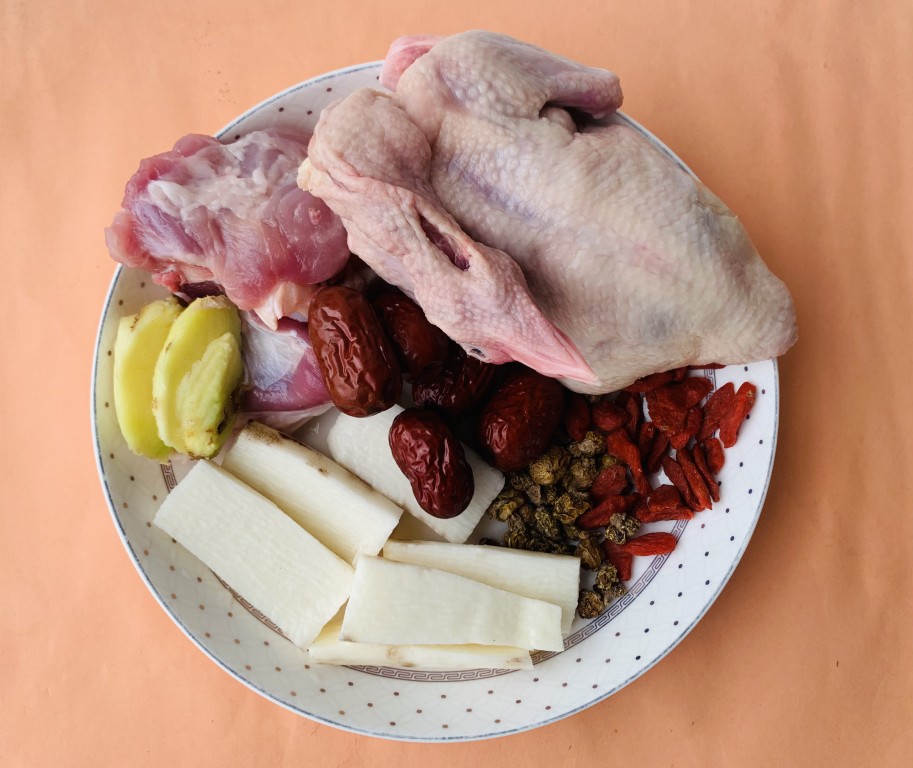
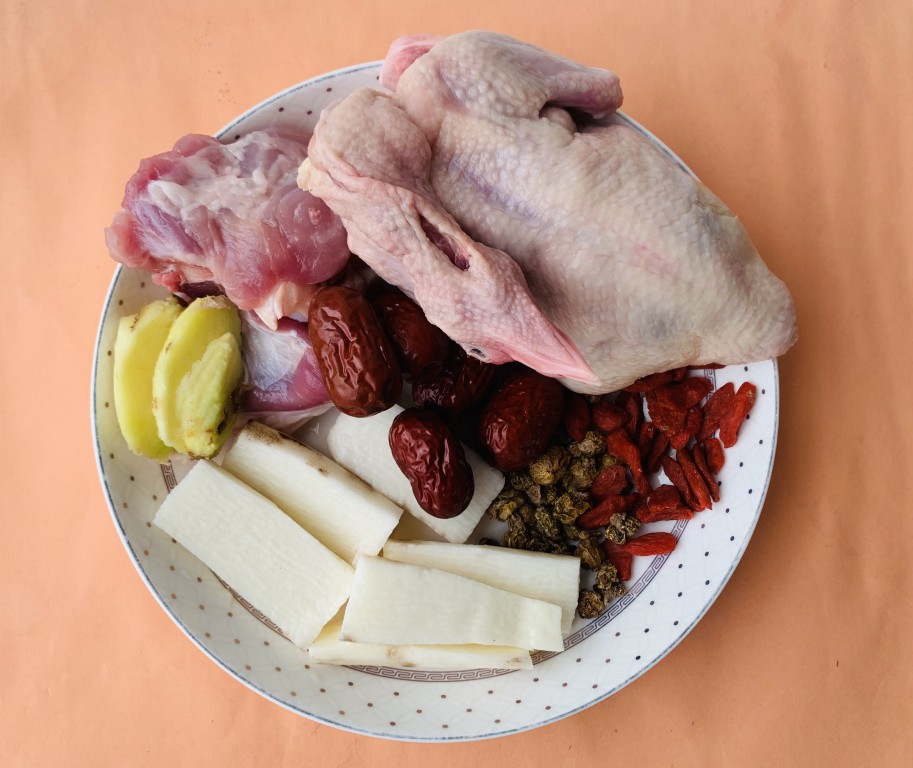
Huoshan dendrobium, squab, lean pork and fresh yam, rounded out with a handful of goji berries and red dates — this combination of everyday and herbal ingredients makes a soup that, in the traditional view, both brightens the eyes and is associated with steadier blood sugar. It is an easy, comforting everyday pot. Dendrobium is available at Chinese herb shops and online; Huoshan dendrobium is a well-regarded variety worth seeking out.
Who it suits / who should be cautious
- Anyone who wants a clear, gently nourishing soup for tired eyes; the source notes it is mild and clear-sweet, so young and old can enjoy it.
- If you are managing blood sugar, treat it as a supportive food alongside your doctor’s plan, not a replacement.
Why these ingredients (the food-therapy logic)
- Fresh Chinese yam (huai shan): Traditionally tonifies qi and yin and nourishes lung, kidney and the digestive tract; its mucilage is associated with supporting healthy arteries and steadier blood sugar.
- Dendrobium (shi hu): Traditionally supports the liver and eyes and is associated with steadier blood sugar.
- Goji berries (gou qi zi): A classic liver-and-eye tonic.
- Pigeon, lean pork, red dates: Add richness, savour and nourishment to the pot.
Ingredients (4–5 bowls)
| Ingredient | Amount | Notes |
|---|---|---|
| Fresh Chinese yam | ~150 g | Peeled, cut into sections |
| Dendrobium (shi hu) | ~19 g | Rinse and soak |
| Goji berries | ~11 g | Rinse and soak |
| Fresh ginger | 3 slices | |
| Red dates | 4 | Pitted |
| Squab / young pigeon | 1 | Cleaned |
| Lean pork | ~225 g |
Method
- Peel the fresh yam and cut into sections; rinse and soak the dendrobium and goji; pit the red dates.
- Clean the squab, then blanch it with the lean pork.
- Put everything in 8 bowls of water, simmer about 1.5 hours down to 4–5 bowls, and serve.
Bro Niu’s tips
This soup is clear, sweet and tasty — suitable for young and old. When peeling fresh yam, wear gloves; the mucilage can make hands itch or sting. Alternatively, dip the unpeeled yam in boiling water for a moment first, then peel — far less likely to irritate the skin.
Community questions answered (selected)
-
Q (Pui Pui): Is there a difference in benefit between dried yam and fresh yam? And for ji song rong (almond mushroom), some are more orange, some darker — which should I buy? Bro Niu: Genuine Henan dried yam works very well and keeps easily; fresh yam is good both in soup and as a dish, and its mucilage is associated with supporting healthy arteries. Both fresh and dried are very good for the spleen and stomach. For ji song rong, colour matters less — what counts is that it is dry and very fragrant; medium-sized caps that haven’t opened fully are the most aromatic and beneficial.
-
Q (Ann): I have a relative who is a pilot, working long hours in a cramped, dry cabin. What moistening soups or teas would suit him? Bro Niu: Simmer some sea-grown Solomon’s seal (hai yu zhu), apple, snow pear and figs as a tea — it is moistening, supports yin and is mild in nature. If you can find dried apple and dried pear, those make an easy tea you can sip at work too.
Published September 4, 2025 · Adapted and translated for Nourilo from a traditional home-kitchen recipe. Approx. 3 min read.