Home-Style Dishes
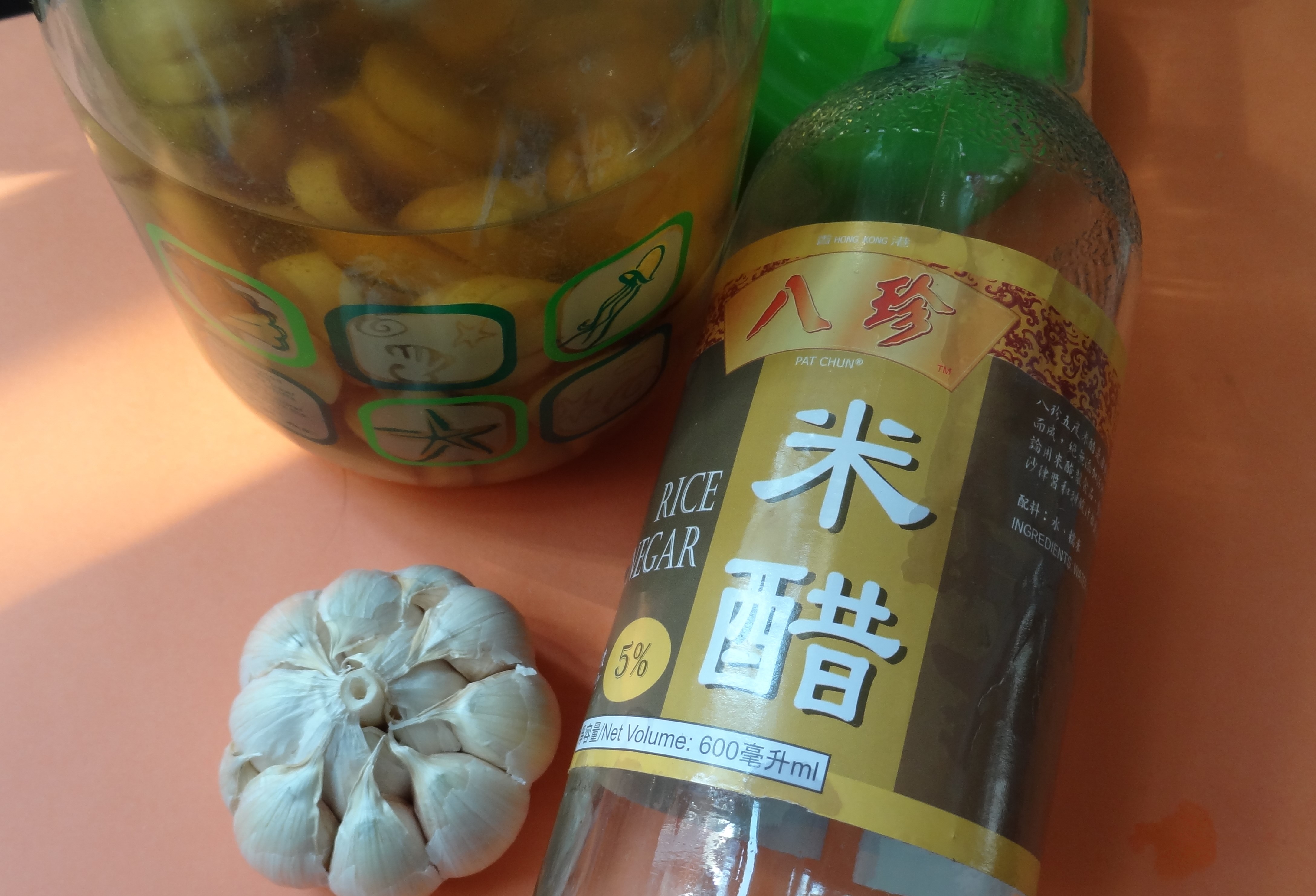
Garlic Vinegar
traditionally associated with reducing blood fat, lowering cholesterol, and supporting cardiovascular health
Why people make this
Garlic vinegar is one of those simple preparations that Bro Niu has recommended for a long time, and for good reason. One of the less obvious signs that blood fat may be elevated is leg cramps at night — cholesterol deposits in the muscles can interfere with circulation, causing those sudden, painful spasms. Beyond cramps, traditional food therapy credits garlic with a wide range of protective effects: antimicrobial, anti-inflammatory, antiviral, and associated with keeping blood vessels clear and cholesterol in check. Steeping garlic in rice vinegar is thought to help the active compounds — principally allicin — become more accessible, while the vinegar itself is associated in traditional practice with activating blood circulation and dissolving fatty deposits. The result is a mild, pleasantly tangy condiment that is easy to take every morning.
Who it suits / who should be cautious
- People who want to support healthy blood fat and cholesterol levels through food therapy alongside proper medical care.
- Those with a history of leg cramps that may be related to poor circulation.
- Apple cider vinegar can be substituted for rice vinegar and is considered equally or slightly more effective, though the taste will be sharper.
- People with gastric ulcers or a sensitive stomach should be cautious about taking vinegar preparations on an empty stomach.
Why these ingredients (the food-therapy logic)
- Garlic (suan tou): One of the most studied foods for cardiovascular support; its sulfur compounds (allicin and related molecules) are associated with antimicrobial, anti-inflammatory, lipid-lowering, and antiviral activity.
- Rice vinegar (mi cu): In traditional food therapy, vinegar is considered to enter the liver channel, promote blood circulation, and help dissolve fatty deposits. It also acts as a preservative for the garlic.
- Rock sugar (bing tang): Balances the sharp acidity of the vinegar and makes the daily dose more palatable; the small amount used does not significantly raise blood sugar.
Ingredients (1 jar, approx. 30 servings)
| Ingredient | Amount | Notes |
|---|---|---|
| Garlic cloves | ~250 g | Skins removed; do not wash |
| Pure rice vinegar | ~500 g | Can substitute apple cider vinegar |
| Crushed rock sugar | ~250 g |
Method
- Remove the skins from the garlic cloves. Do not wash them — moisture can lead to spoilage.
- Place the dry garlic directly into a clean, dry glass jar.
- Pour the rice vinegar over the garlic, then add the crushed rock sugar.
- Seal the jar and store in a cool, dark place.
- For the first week or two, gently turn the jar each day to help the sugar dissolve.
- After one month, the preparation is ready to use. Take 1 teaspoon each morning, dissolved in warm water.
Bro Niu’s tips
- After a few weeks, the garlic may turn blue-green. This is a completely normal chemical reaction between the garlic’s sulfur compounds and the acid — it is not spoilage. The colour will fade back to normal after 1–2 months.
- Always use clean, dry chopsticks or a spoon to remove garlic from the jar; no oil or raw water should enter.
- The longer the preparation ages, the more mellow the flavour becomes.
- Apple cider vinegar works very well as a substitute; some people actually prefer it for the richer flavour.
Community questions answered (selected)
-
Q (Chris, reader): Can I use Bragg Apple Cider Vinegar instead of rice vinegar? Will the effect be the same? Bro Niu: Apple cider vinegar absolutely works — the effect is actually considered slightly better, though the sourness is more pronounced.
-
Q (reader, anonymous): Is drinking apple cider vinegar alone the same as this recipe? Bro Niu: Apple cider vinegar on its own is fine and has a similar effect, but the combination with garlic gives you the additional antimicrobial and lipid-lowering properties of the allicin — the two work well together.
-
Q (hrzly, reader): I am 36 and was recently told I have bone spurs in my knees. My legs feel very tired after walking even a short distance and feel cold at night. Is there a soup for this? Bro Niu: Bone spurs are very difficult to dissolve without surgery, but nourishing the liver and kidneys can slow further growth and help the body adapt. Try a soup of roasted black beans 37 g, ba ji tian 18 g, du zhong 18 g, Chinese yam 37 g, wolfberries 9 g, and southern dates 8 pieces, simmered for 1 hour — 2 portions per week for a month.
Published May 22, 2020 · Adapted and translated for Nourilo from a traditional home-kitchen recipe. Approx. 4 min read.