Soups
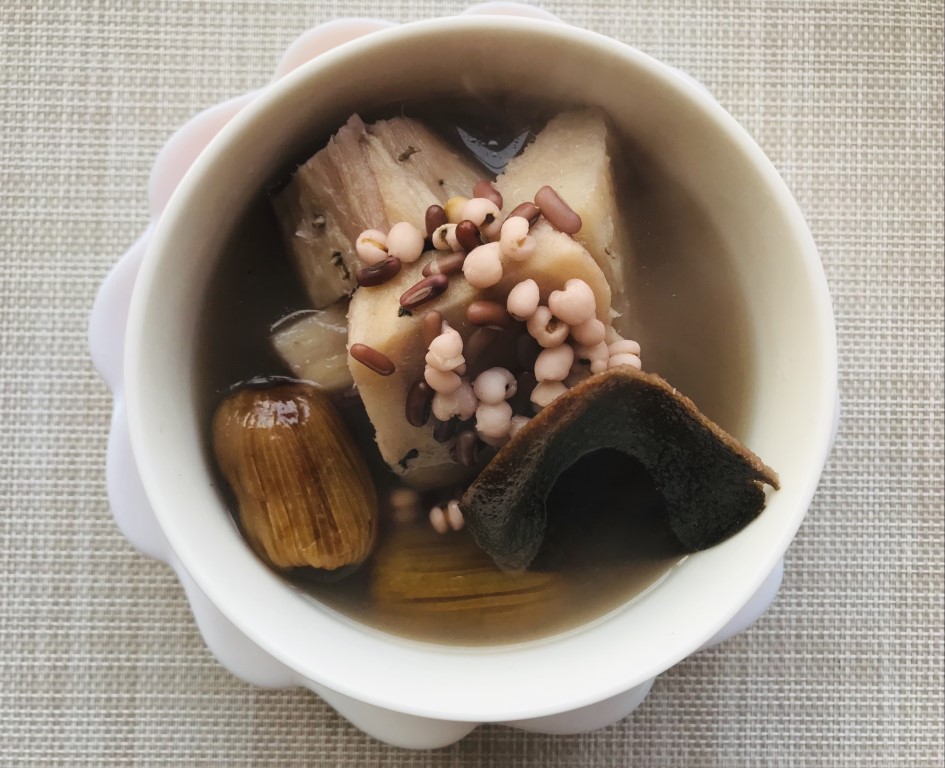
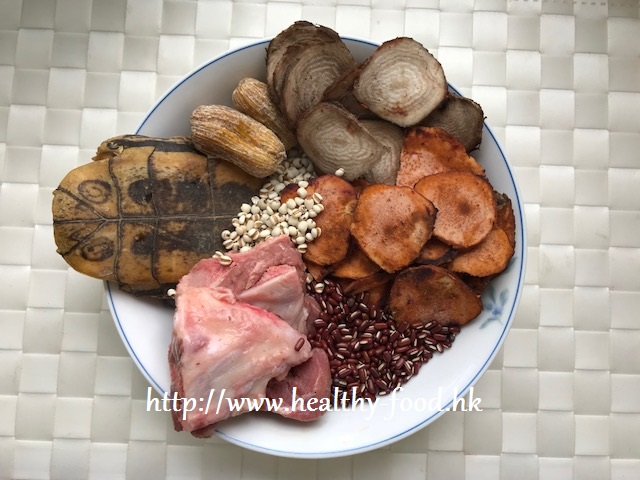
Mirabilis Root (Di Lao Shu), Fresh Smilax, Turtle Plastron and Pork Bone Soup
traditionally associated with clearing heat, relieving dampness, and supporting skin health
Why people make this soup
The mirabilis plant (紫茉莉, four-o’clock flower) is a familiar sight in traditional gardens, and its fat, dark root — which does look a bit like a small black mouse, hence the name — has a mildly sweet, neutral flavour and has been used in traditional Cantonese cooking to help clear accumulated heat and dampness from the body. Paired with fresh smilax rhizome — another well-known herb for damp-heat conditions — this soup has a long history as a household remedy for skin irritation, joint soreness, and that heavy, foggy feeling that can set in during hot, humid weather. Adzuki beans and coix seed support the diuretic, damp-clearing action, while turtle plastron adds a cooling, nourishing quality according to TCM theory.
Who it suits / who should be cautious
- Suited to those experiencing heat-related skin conditions such as eczema, general skin itchiness, or sores
- Helpful for those with muscle aches, joint pain, or fatigue linked to humid-heat conditions
- Suitable as an occasional, cooling soup for the whole family in warm, damp seasons
- This soup is on the cooling side — those with a habitually cold constitution, poor digestion, or low energy without signs of heat should approach cautiously or reduce the quantity
- If you or your family are known to be sensitive to mirabilis root or smilax, do not use this recipe — some individuals have reported sensitivity reactions
Why these ingredients (the food-therapy logic)
- Mirabilis root (ru di lao shu): Traditionally classified as sweet and mild; associated with clearing heat, cooling the blood, and relieving toxicity; said to unblock the meridians and ease muscle and joint soreness
- Fresh smilax (xian tu fu ling): One of the most widely used Cantonese herbs for damp-heat; traditionally supports skin clarity and joint comfort
- Adzuki beans (chi xiao dou): Mildly diuretic; traditionally used to support water metabolism and reduce swelling
- Coix seed (sheng yi mi): Supports the draining of dampness; associated with soothing joints and improving skin
- Turtle plastron (gui ban): Considered cooling and nourishing in TCM; associated with reducing deficiency heat and supporting yin; adds depth to the soup
- Honey dates (mi zao): Naturally sweet, they balance the cooling herbs and make the broth more palatable
Ingredients (4–5 bowls)
| Ingredient | Amount | Notes |
|---|---|---|
| Mirabilis root (di lao shu) | 1 piece | Choose medium-small; large ones are coarser. Ask your supplier to slice it, or slice it yourself at home |
| Fresh smilax rhizome (xian tu fu ling) | ~75 g (2 liang) | Sliced and rinsed |
| Adzuki beans (chi xiao dou) | ~38 g (1 liang) | Soaked and rinsed |
| Raw coix seed (sheng yi mi) | ~38 g (1 liang) | Soaked and rinsed |
| Honey dates (mi zao) | 2 pieces | |
| Turtle plastron (gui ban) | 1 piece | Blanch first to remove odour; can be omitted |
| Pork bones | ~450 g (12 liang) | Blanched |
| Water | 10 bowls (~2.5 litres) |
Method
- Blanch the pork bones and turtle plastron separately in boiling water for 2 minutes to remove impurities. Rinse and set aside.
- Slice the mirabilis root and smilax rhizome and rinse thoroughly under cold water.
- Soak the adzuki beans and coix seed in cold water for 20–30 minutes; drain and rinse.
- Combine all ingredients in a large pot with 10 bowls of water.
- Bring to a boil over high heat, then reduce to a gentle simmer.
- Cook for 2 hours until the soup reduces to about 4–5 bowls.
- Serve and drink warm.
Bro Niu’s tips
When sourcing the mirabilis root, choose medium or smaller pieces — oversized roots can have a coarser, less pleasant texture. Most Chinese herbal suppliers will slice it for you on request, or you can slice it yourself at home. Mirabilis root is available at Chinese or Asian grocers, or online. If handling turtle plastron feels daunting, you can leave it out; the soup is still effective. This soup can also be made vegetarian by omitting the pork bones — it is naturally sweet and flavourful without meat. If you have already been diagnosed with a skin condition, this soup can be a helpful dietary addition while also seeing a doctor for treatment.
Community questions answered (selected)
-
Q (Nat): My 8-year-old son has had eczema lately — worse at night with itching at the joints. Is there a soup or herbal tea that could help? Bro Niu: You can brew this tu fuling di lao shu soup for him. Alternatively, a simple coix seed and mung bean soup is also helpful. Keep the skin clean but well moisturised — use a fragrance-free cream.
-
Q (reader): Can this soup be made without the pork bones, as a vegetarian version? Bro Niu: Yes, you can leave out the meat entirely. It is still naturally sweet and works well as a plant-based soup.
-
Q (Suenapple): How do you use golden chrysanthemum water as a topical wash alongside the soup? Bro Niu: Use 1 liang of honeysuckle flower (jin yin hua), boiled in about 1 litre of water for 10 minutes. Let it cool to comfortably warm, then apply with a cotton pad to the affected skin. You can repeat this two to three times a day using one batch. Do not apply it too hot.
Published July 13, 2018 · Adapted and translated for Nourilo from a traditional home-kitchen recipe. Approx. 4 min read.