Herbal & Flower Teas
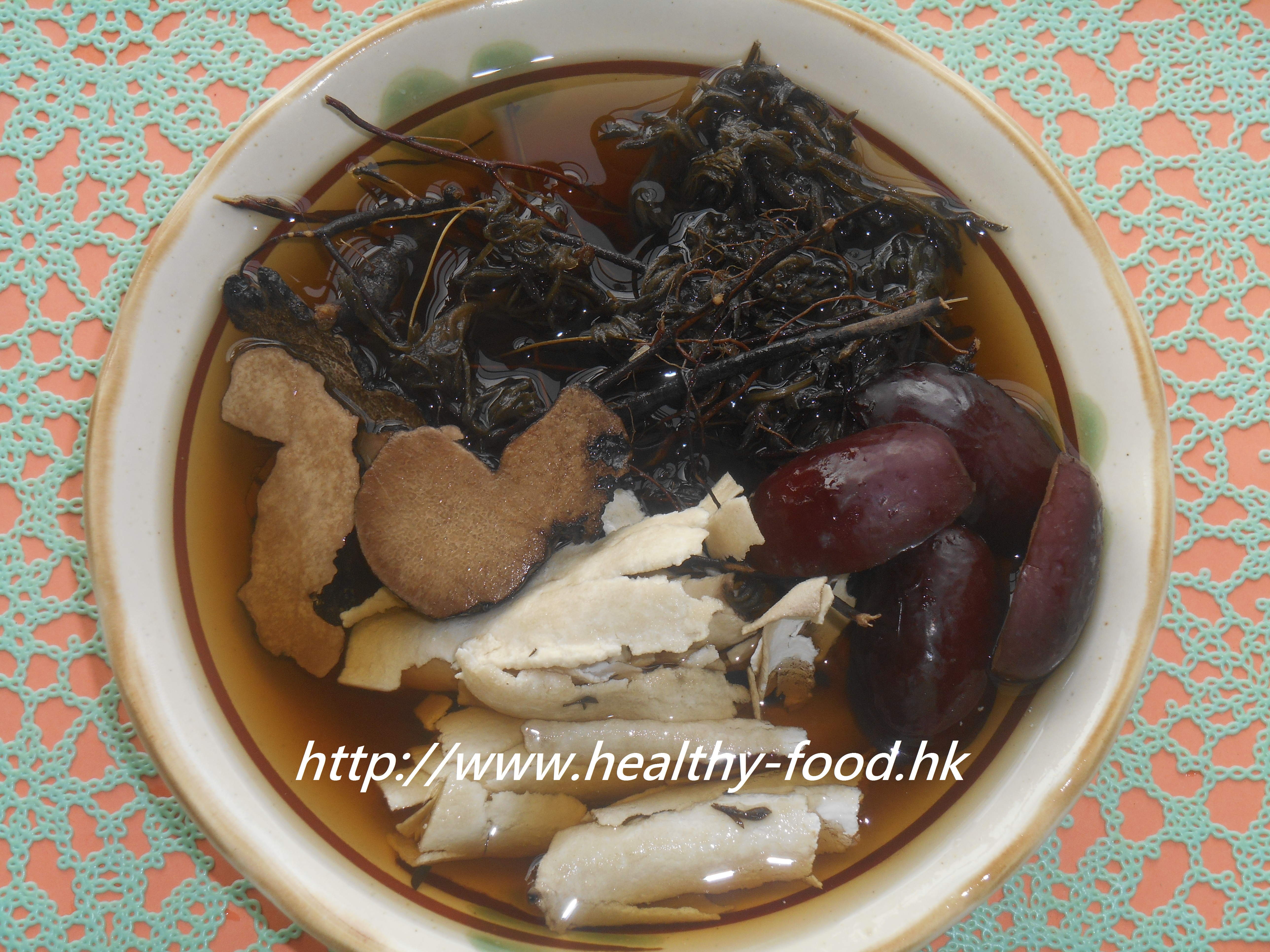
Chicken Bone Grass, Capillary Wormwood, Poria and Red Date Tea (Ji Gu Cao Yin Chen Qu Shi Cha)
traditionally used to support liver and gallbladder health, clear heat and dampness, and promote healthy urinary flow
Why people make this tea
In Cantonese households, making a pot of chicken bone grass (ji gu cao) tea during the spring and summer months is as routine as making stock. It is considered a gentle, ongoing protective habit for the liver and gallbladder — clearing heat, supporting bile flow, and helping the body cope with the heat and humidity that characterise the subtropical climate.
There is a beautifully practical saying in Chinese herbalism: “Yin chen in March, wormwood in April, and by May it is only good for firewood.” This refers to the fact that capillary wormwood (yin chen) and mugwort/qing hao are the same plant at different stages of growth — when young and tender it is yin chen, prized for liver and jaundice support; as it matures it becomes qing hao, traditionally used for fever and malaria; and by the time it is fully grown, it is only useful as kindling. This kind of pragmatic, seasonal knowledge is at the heart of traditional Chinese herbal cooking.
Combining ji gu cao and yin chen with poria and polyporus mushrooms creates a tea that is more effective at clearing dampness and supporting urinary flow than either herb alone. The red dates are added partly for sweetness — making the tea pleasant to drink — and partly to moderate the cooling nature of the herbs so the formula is not too harsh on the stomach.
Who it suits / who should be cautious
- Suited for most adults, including the whole family and children aged 3 and above, during hot or humid seasons.
- Particularly relevant for those who regularly drink alcohol, work night shifts, live with hepatitis B, or simply want to support their liver’s daily processing function.
- Those with a cold, deficient spleen and stomach constitution who do not have actual dampness or heat signs should be cautious — this is a cooling, dampness-clearing formula, not a tonic.
- Women who are pregnant can drink this tea in moderate amounts.
- Those with diabetes should use fewer red dates (about half the quantity), or substitute with dried figs.
Why these ingredients (the food-therapy logic)
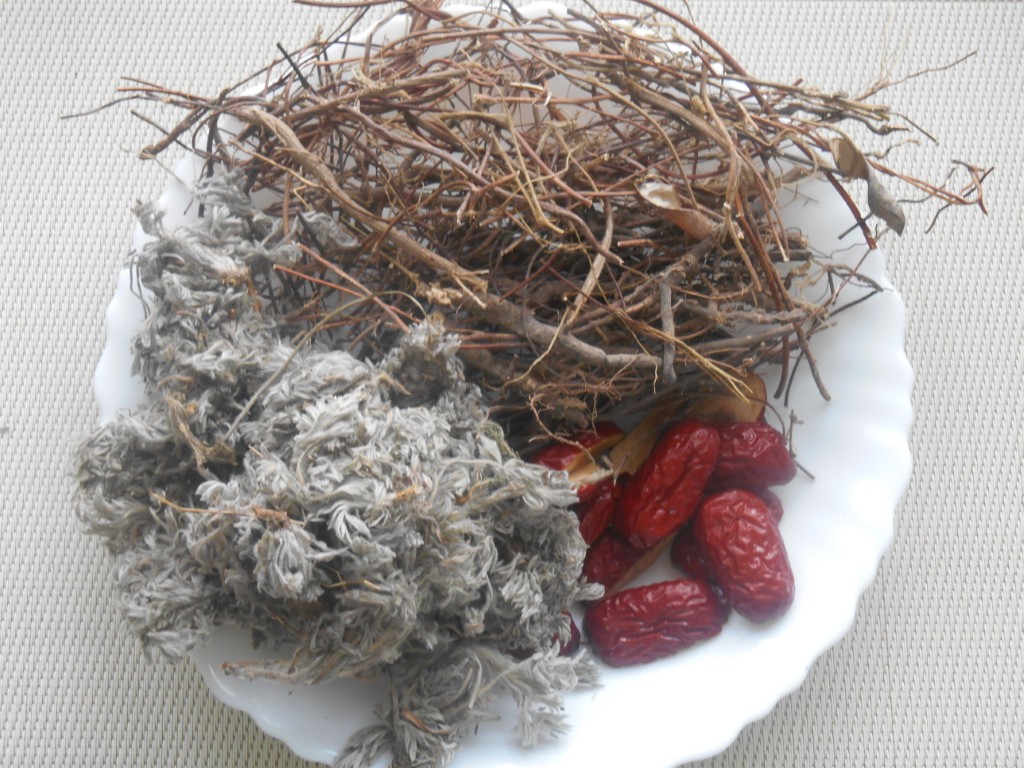
- Chicken bone grass (ji gu cao / Abrus cantoniensis): A classic Cantonese medicinal herb with a long history of use for clearing liver heat and protecting the liver. It is associated with supporting healthy bile flow, clearing jaundice-related dampness, and reducing liver inflammation.
- Capillary wormwood (mian yin chen / Artemisia capillaris): The pre-eminent classical herb for liver-related jaundice in traditional Chinese medicine. It is used to clear damp-heat from the liver and gallbladder, ease summer-heat conditions, and support the skin when there is heat-related itching.
- Polyporus mushroom (zhu ling): A medicinal fungus that significantly enhances the fluid-moving, diuretic aspect of the formula. Polyporus polysaccharides are also traditionally noted for immune and anti-tumour supportive properties.
- Poria mushroom (fu ling): A mild, tonifying mushroom that strengthens spleen function and moves dampness without being harsh. It balances the more aggressively damp-clearing herbs.
- Red dates (hong zao): Moderate the cold nature of the formula and add natural sweetness. They also protect the stomach from the more cooling herbs.
Ingredients (4 bowls)
| Ingredient | Amount | Notes |
|---|---|---|
| Chicken bone grass (ji gu cao) | ~75 g (2 liang) | Soak and rinse 15 min before using |
| Capillary wormwood (mian yin chen) | ~19 g (5 qian) | Rinse gently |
| Polyporus mushroom (zhu ling) | ~11 g (3 qian) | Rinse |
| Poria mushroom (fu ling) | ~15 g (4 qian) | Rinse |
| Red dates | 8 pieces | Pit removed |
| Water | 8 bowls (~1.6 L) |
Method
- Soak all the herbal ingredients in water for 15 minutes, then rinse. Pit the red dates.
- Place all ingredients in a pot with 8 bowls of water.
- Bring to a boil, then reduce to a gentle simmer. Cook on low-medium heat for 2 hours, until the liquid reduces to about 4 bowls.
- Strain and serve warm. The tea has a slightly bitter, earthy flavour balanced by the sweetness of the dates.
Bro Niu’s tips
Adding polyporus and poria mushrooms strengthens the diuretic and dampness-clearing action considerably — and polyporus polysaccharides have been noted in traditional practice for additional immune and anti-hepatitis support. The red dates also serve the practical purpose of reducing the cold nature of the formula so it is gentler on the stomach. This is a tea the whole family can enjoy in summer — but those with a genuinely cold, deficient constitution (no signs of dampness or heat) should drink it cautiously or skip it. If polyporus mushroom is unavailable, simply double the quantity of poria (use 8 qian of fu ling instead).
During menstruation, it is better to wait until your period is over before drinking cooling herbal teas like this one.
Community questions answered (selected)
-
Q (KK): I have a volatile temper and my eyes look yellow sometimes. Can I drink a simple chicken bone grass and red date tea? Can I drink this in autumn and winter too? Do I necessarily need the yin chen, polyporus, and poria? Bro Niu: Yellow eyes must be checked by a doctor with a blood test — do not ignore this. You can drink the chicken bone grass and yin chen tea with red dates. Polyporus and poria are only needed if you have significant signs of dampness.
-
Q (Amy, about hepatitis B): I have hepatitis B and am 33 years old. How often can I drink this tea? Bro Niu: If your constitution is not too cold or deficient, you can drink it twice a week. You might also try a tofu and mudfish (ni qiu) soup alongside — it is very supportive for liver health.
-
Q (anonymous, about liver ultrasound finding): An ultrasound showed a small growth (0.5 cm) in my liver. Can I drink your tea? Bro Niu: Yes, you can drink this tea — it is beneficial for the liver.
Published June 27, 2015 · Adapted and translated for Nourilo from a traditional home-kitchen recipe. Approx. 5 min read.