Congee & Porridge
Carrot, Water Chestnut and Tangerine Peel Congee
Traditionally used to strengthen the spleen, reduce inflammation and support gastric lining recovery
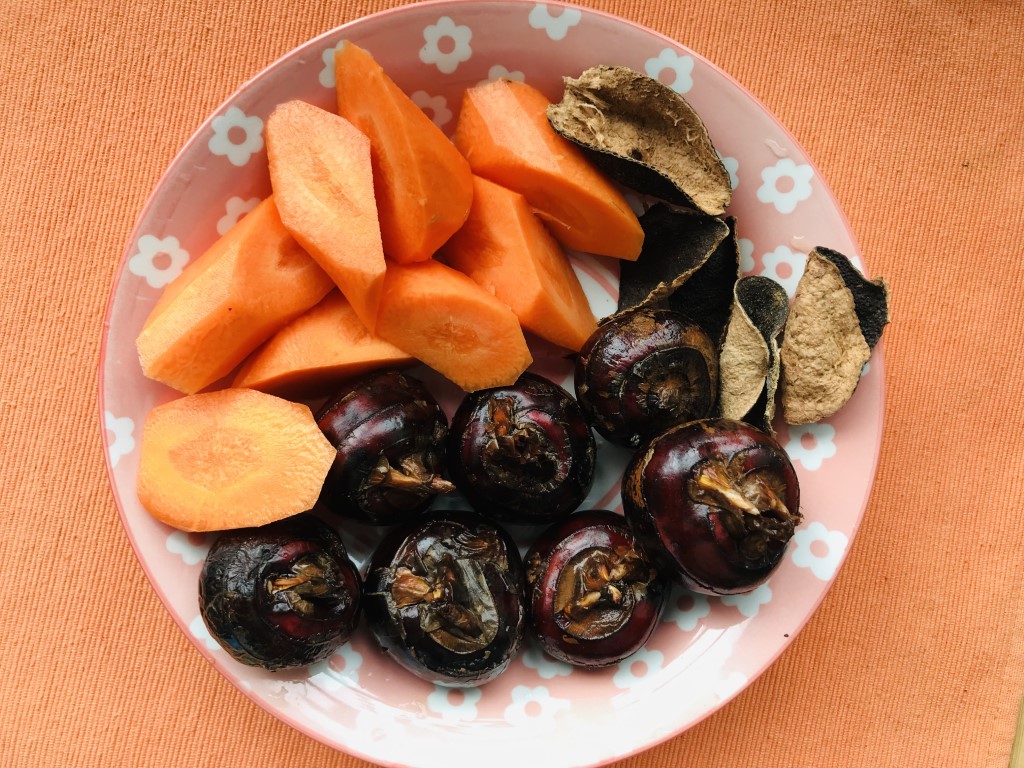
Why people make this congee
Stomach ulcers are common, and in their early stages they may produce only mild bloating after meals or occasional nausea. As the condition progresses, upper abdominal pain after eating — sometimes severe — becomes the defining feature. Notably, dairy products can sometimes worsen symptoms rather than soothe them.
People with gastric ulcers are advised to eat more foods rich in vitamins A and C, which support the repair of injured gastrointestinal tissue. Carrots are a rich source of beta-carotene (provitamin A), which the body readily converts to vitamin A. In traditional Chinese food therapy, this congee — with carrot, water chestnut and tangerine peel — is associated with strengthening the spleen, opening the appetite, regulating qi and reducing gut inflammation. It is one of Bro Niu’s recommendations for people managing gastric and duodenal ulcers.
Who it suits / who should be cautious
- Suitable for all ages; the mild flavour makes it appropriate even during periods of digestive discomfort
- Especially helpful for people managing gastric or duodenal ulcers; also for people with compromised vision or heart conditions
- Dairy products can sometimes aggravate ulcer symptoms — this congee contains no dairy and is unlikely to irritate
Why these ingredients (the food-therapy logic)
- Carrot (hong luo bo): Rich in beta-carotene (vitamin A precursor); in traditional food therapy, carrot is associated with improving vision, strengthening the spleen and nourishing the heart
- Water chestnut (ma ti): Cooling and nourishing; traditionally used to clear heat, resolve phlegm, strengthen the stomach and promote the healing of gastric tissue; the crisp texture adds a pleasant contrast to the soft congee
- Tangerine peel (chen pi): Regulates qi, warms the stomach and improves digestion; one of the most commonly used digestive-harmonising herbs in Cantonese cooking; helps prevent the cooling ingredients from over-chilling the digestive system
- White rice (bai mi): Forms the base of the congee; easy to digest and nourishing to the stomach lining
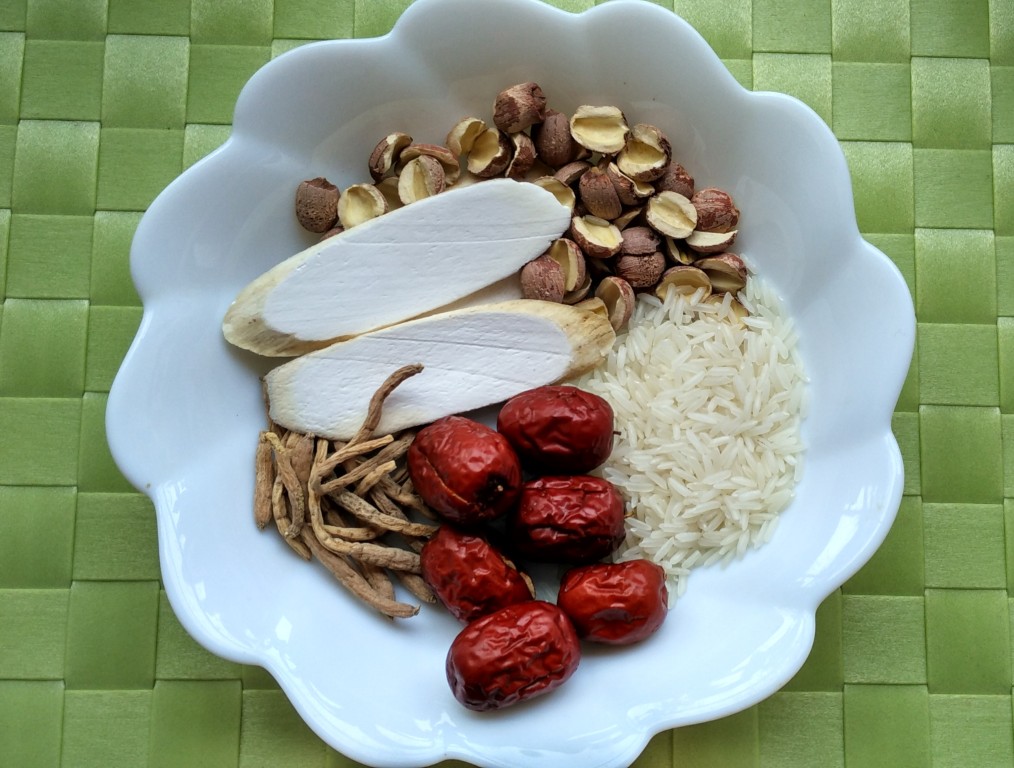
Ingredients (3–4 bowls)
| Ingredient | Amount | Notes |
|---|---|---|
| Carrot | 1–2 medium | Peel and cut into chunks |
| Water chestnuts | 8 pieces | Peel and cut in half |
| Tangerine peel | 2 pieces | Soak to soften; cut into thin strips |
| White rice | 75 g | Rinse; marinate briefly with a little oil and salt |
Method
- Peel the carrots and cut into chunks.
- Peel the water chestnuts and cut each in half.
- Soak the tangerine peel until softened; cut into thin strips.
- Rinse the white rice and marinate with a small pinch of salt and a few drops of cooking oil — this gives the congee a smoother, silkier texture.
- Place all ingredients into a pot and add enough water to cover generously.
- Bring to a boil, then reduce to a low simmer, stirring occasionally, until the congee reaches a thick, smooth consistency.
- Taste and adjust seasoning. Serve warm.
Bro Niu’s tips
This congee is naturally sweet and pleasant — the whole family will enjoy it. Eaten regularly, it is associated with strengthening the gastric lining and reducing the risk of future damage to the gut mucosa. It also has additional benefits for eye health and for people with heart conditions. If you prefer to use millet (xiao mi) instead of white rice, note that millet is excellent for the spleen but is less sticky, so the congee will be thinner; you can add a small amount of lotus root powder or more rice to achieve a satisfactory thickness.
Community questions answered (selected)
-
Q (维琪): Can I use millet instead of white rice? Bro Niu: Millet is excellent for the spleen, but it does not have enough starch to create a thick, sticky congee. You can add a little lotus root powder, or use a small amount of congee rice alongside the millet to get a better consistency.
-
Q (Gi Gi): I am a middle-aged woman, slim build. After regular and evening meals my abdomen bloats dramatically — the skin feels tight like it might burst. Sitting helps a little; standing makes it worse. There is also excess gas, and my stools tend to be loose and sticky. What should I do? Bro Niu: Try purchasing Xiang Sha Yang Wei Wan (香砂养胃丸) from a Chinese pharmacy such as Hua Run Tang or Yu Hua — take one bottle as directed. This is a classic Chinese patent formula traditionally used to nourish the stomach, resolve dampness and improve bloating and sticky stools.
-
Q (匿名): My 5-year-old recovered from COVID and now coughs whenever she eats sweet or cold food, and also coughs early in the morning around 5–8 a.m. What should I make for her? Bro Niu: Try simmering perilla leaf (zi su ye, 3 qian), north almonds (bei xing, 3 qian) and fresh ginger (3 slices) in 4 bowls of water for 15 minutes — give her 2 doses. This is traditionally used to disperse cold and stop coughing. Alternatively, a soup of fresh dragon tongue leaf (long li ye, 2 liang), south and north almonds (1 liang combined), carrot and figs simmered with lean pork makes a gentle lung-soothing soup the whole family can share.
Published June 12, 2022 · Adapted and translated for Nourilo from a traditional home-kitchen recipe. Approx. 4 min read.