Soups
Mulberry, Walnut, Longan and Black Bean Soup
traditionally associated with nourishing brain function, building blood, supporting vision, and promoting healthy hair
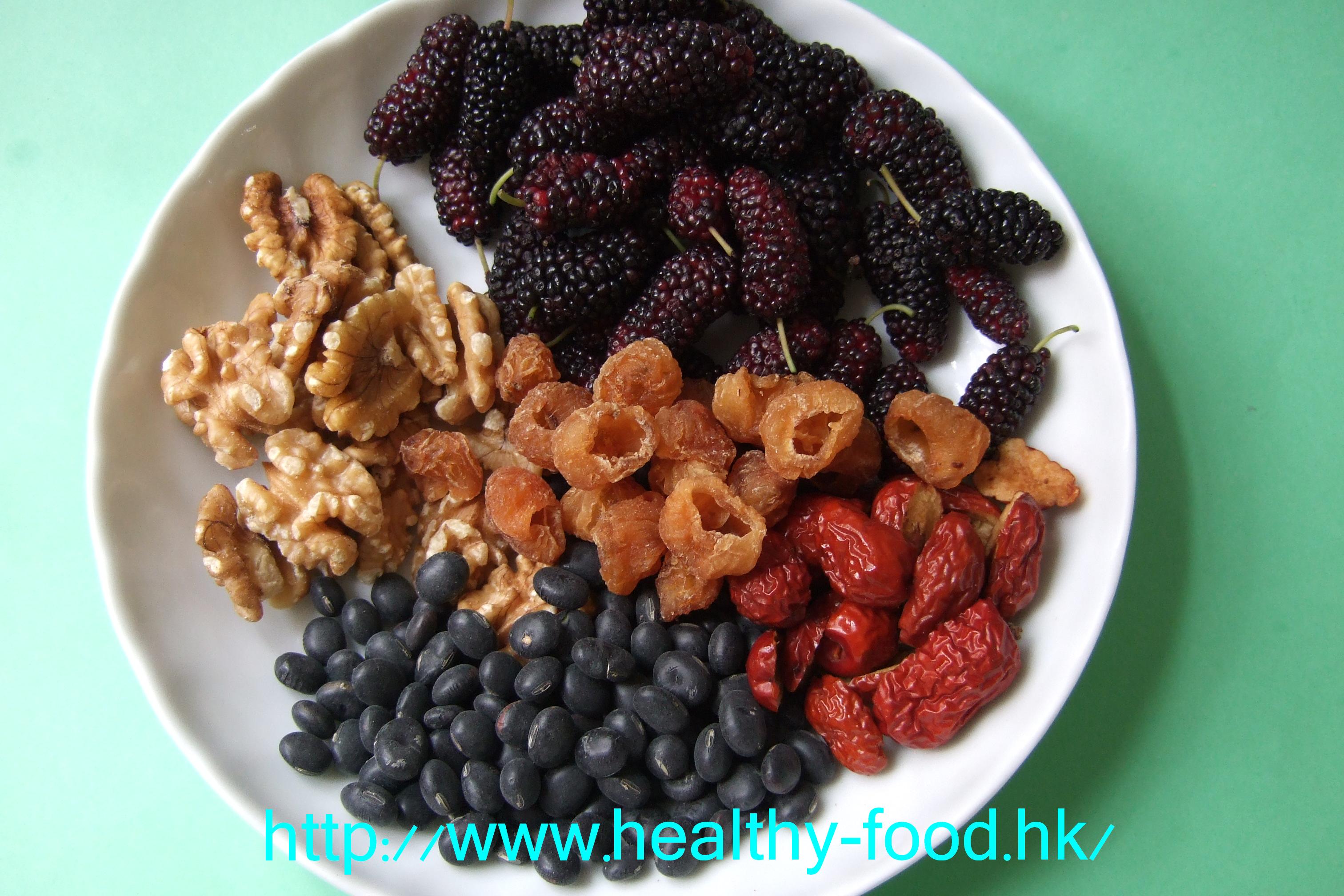
Why people make this soup
Mulberries are one of those seasonal treats that double as a genuine food-therapy ingredient. When they appear in the market each spring, Bro Niu makes a point of using them — they are rich in vitamins, minerals, and anthocyanins, and in Chinese tradition are considered one of the finest foods for nourishing blood, brightening the eyes, and supporting the health of the hair. Combined with walnuts (one of the most valued brain-nourishing nuts in Chinese food-therapy), longan flesh for heart and spirit, and black soybeans for kidney support, this soup is a well-rounded tonic that suits the whole family. Students revising for exams, women recovering from childbirth, anyone dealing with nervous exhaustion or hair loss, and those with vision fatigue will all find something to value here.
Who it suits / who should be cautious
- Whole family soup; suitable as a savoury (add lean pork) or sweet (add rock sugar) preparation
- Post-partum women experiencing blood deficiency symptoms: paleness, fatigue, poor vision, nervous exhaustion
- Students or those with heavy mental workloads who want to support concentration and memory
- Pregnant women: omit longan flesh (yuan rou) and substitute goji berries (gou qi zi, 3 qian); the rest of the soup is fine
- Do not take when recovering from a cold, flu, or any external infection; external pathogen must be fully resolved first
Why these ingredients (the food-therapy logic)
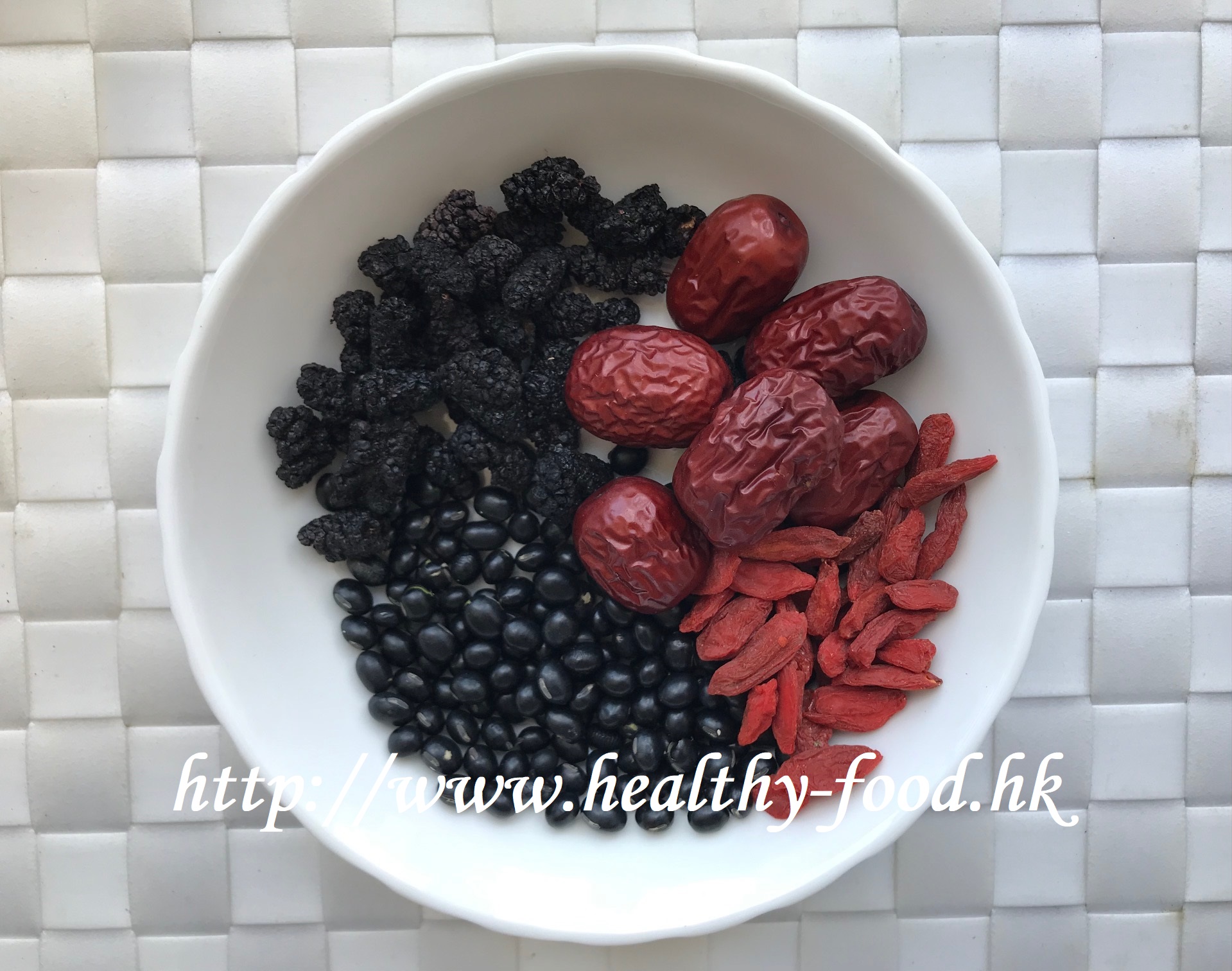
- Mulberry (sang shen): Rich in vitamins and minerals; in food-therapy tradition associated with nourishing liver and kidney, building blood, brightening the eyes, and darkening hair; fresh black-purple mulberries are most potent, but dried dark-coloured mulberries (“sang zao”) are available year-round and work well
- Walnut kernels (he tao rou): One of the most prized brain-nourishing foods in Chinese tradition; associated with tonifying kidney yang and supporting lung and brain function
- Longan flesh (yuan rou / long yan rou): Warming and sweet; traditionally associated with nourishing heart blood and calming the spirit; good for insomnia and poor memory related to heart and spleen deficiency
- Black soybeans, green-fleshed (qing ren hei dou): As with all black foods in Chinese tradition, associated with kidney nourishment; also supports hair health and eye function
- Red dates (hong zao): A gentle qi and blood tonic that complements all other ingredients
Ingredients (3–4 bowls)
| Ingredient | Amount | Notes |
|---|---|---|
| Fresh mulberries | ~75 g (2 liang) | Or dried dark mulberries ~18 g (5 qian) |
| Walnut kernels | ~38 g (1 liang) | Rinse |
| Longan flesh, dried (yuan rou) | ~15 g (4 qian) | Omit and replace with goji berries if pregnant |
| Black soybeans, green-fleshed | ~38 g (1 liang) | Rinse; optionally soak 1 hour for faster cooking |
| Red dates, pitted | 8 pieces | |
| Water | 8 bowls (~1.9 L) | Reduce to 3–4 bowls |
Method
- Rinse all ingredients. Soak the black soybeans in cold water for 1 hour if time allows.
- Pit the red dates.
- Combine all ingredients in a pot with 8 bowls of water.
- Bring to a boil, then reduce to a low simmer and cook for 2 hours until the liquid reduces to 3–4 bowls.
- Serve as a sweet soup with rock sugar, or add lean pork (or pork shank) for a savoury meal soup.
- Eat the cooked solids along with the broth — the walnuts, dates, and black beans are all part of the food-therapy.
Bro Niu’s tips
Fresh mulberries are only in season for a few weeks around the Qingming festival (early April), so Bro Niu tends to use dried black mulberries (sang zao) year-round. The dried black-coloured variety is more potent than the brownish-yellow dried mulberries commonly seen — it is worth seeking out at a well-stocked Chinese herb shop or online. If you cannot find mulberries at all, dried cranberries (hong mei) make a reasonable substitute: use 5 qian, or 2 liang fresh; they support urinary health and have antioxidant properties. On damp or humid days, adding poria (fu ling, 4 qian) to the soup helps with dampness and also has a calming effect. This soup can also be double-steamed (炖) for 2 hours as an alternative cooking method; soak the black soybeans for an hour first if using this method.
Community questions answered (selected)
-
Q (Cheer): Is spring the main season for fresh mulberries? Does the dried version have similar blood-building effects? Bro Niu: Mulberries are generally in season around the Qingming festival. For dried mulberries, the black-coloured variety (sang zao) has the best blood-building effect. The brownish-yellow type is also usable, just less potent.
-
Q (Carman): I am 7 months pregnant. Can I drink this soup? Bro Niu: At 7 months pregnant, leave out the longan flesh (yuan rou) and the rest of the soup is fine to drink. You can substitute goji berries (3 qian) for the longan.
-
Q (reader, after miscarriage): Can this soup help with shortening menstrual cycles after a miscarriage? Bro Niu: For cycle irregularity after miscarriage, you can try the eight-treasure chicken soup (ba zhen tang with silkie chicken or pork), or a soup with sea cucumber, Chinese yam, goji berries, and red dates — 1 to 2 servings a week. You can also make an yi mu cao (motherwort) porridge: simmer motherwort (5 qian) in water for 20 minutes, use the strained liquid to cook a red date and millet congee. This supports menstrual regularity.
Published March 15, 2012 · Adapted and translated for Nourilo from a traditional home-kitchen recipe. Approx. 4 min read.