Soups
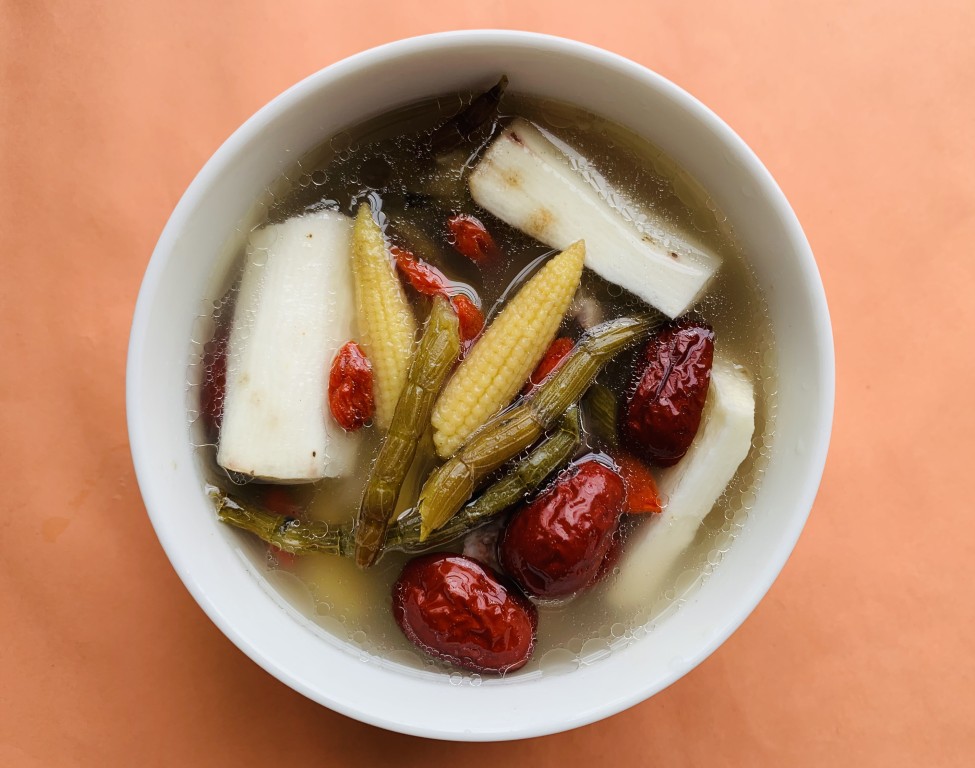
Fresh Yam, Goji Berry, Pork Rib and Conch Soup
traditionally supports yin nourishment, kidney function, and eye comfort

Why people make this soup
People who stay up late or stare at screens all day often find themselves running on fumes — dry eyes, mental fog, a general sense of depletion that sleep alone doesn’t fix. In traditional food-therapy thinking, this pattern points to a weakened yin, and seafood like conch is prized for gently replenishing it. Combined with fresh yam and goji berries, this soup becomes a steady, nourishing companion for anyone whose lifestyle quietly drains their reserves.
Who it suits / who should be cautious
- Well suited to adults and children who work long hours at computers, feel chronically tired, or have signs of yin deficiency (dry eyes, mild insomnia, fatigue)
- Those with gout should avoid conch and other shellfish; substitute dried lily bulb (bai he) instead
- People with an active cold or flu should wait until they recover before drinking nourishing soups like this one
Why these ingredients (the food-therapy logic)
- Conch (xiang luo): Traditionally regarded as rich, moistening seafood that nourishes yin and kidney function, supports the eyes and sinews, and adds a naturally sweet depth to soups. The small operculum (lid piece) is kept in — it is traditionally considered mineral-rich and is simmered along with the body.
- Fresh yam (xian huai shan): Strengthens the spleen and stomach while gently nourishing kidney yin. Fresh yam yields a silkier texture and milder flavour than dried.
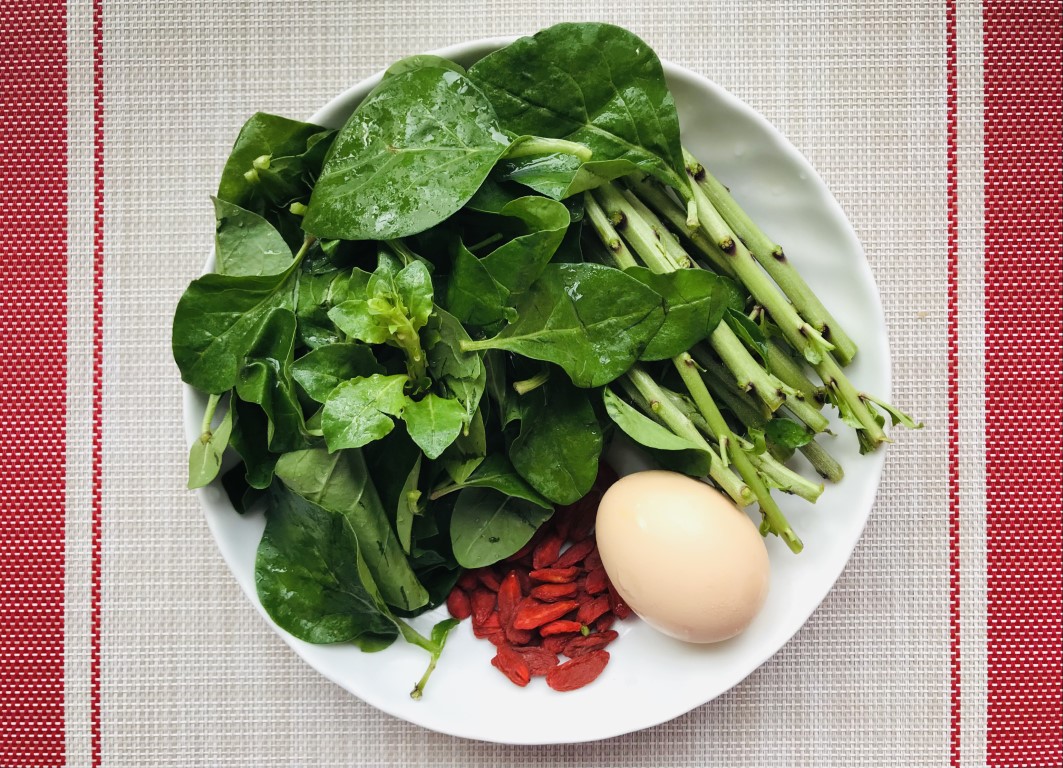
- Goji berries (gou qi zi): Rich in carotenoids; traditionally associated with liver and kidney support and protecting vision.
- Red dates (hong zao): Warm and sweet; traditionally used to build qi and moderate the other flavours in the pot.
- Ginger (sheng jiang): Balances the coolness of the seafood and aids digestion.
Ingredients (4–5 bowls)
| Ingredient | Amount | Notes |
|---|---|---|
| Fresh Chinese yam | ~115 g | Peel, rinse, cut into chunks |
| Goji berries | ~11 g | Rinse and soak briefly in water |
| Fresh ginger | 3 slices | — |
| Red dates | 6 | Pitted |
| Pork ribs | ~300 g | Blanch in boiling water to remove impurities |
| Frozen American conch | 2–3 pieces | Thaw fully, blanch briefly before use |
| Water | 8 bowls (~1.6 L) | — |
Method
- Peel the fresh yam, rinse under cold water and cut into bite-sized pieces.
- Rinse goji berries and soak in a small bowl of water; pit the red dates.
- Blanch the pork ribs in boiling water for 3–4 minutes; drain and rinse.
- Thaw the conch fully, then blanch briefly in boiling water; drain.
- Place ribs, conch, ginger, red dates, and 8 bowls of water in a pot. Bring to the boil.
- Add the fresh yam and soaked goji berries.
- Reduce to a low simmer and cook for 2 hours.
- Season lightly with salt if desired. Serve the soup and eat the solid ingredients.
Bro Niu’s tips
This is a naturally sweet, clear soup that is gentle enough for all ages. If you cannot find frozen conch, you may substitute 2–3 liang (about 75–115 g) of dried conch — soak it for 30 minutes and blanch before using. The small operculum found on dried conch contains good minerals, so keep it in the pot. Gout sufferers should replace conch with 1 liang (about 37 g) dried lily bulb, which also soothes restless sleep.
Community questions answered (selected)
-
Q (Bobo): I see a small lid-shaped piece on the conch in the photo. Does it need to be removed, or should it be simmered too? And do dried conch have internal organs that need cleaning? Bro Niu: Keep the operculum (that little lid) in the pot — it contains good minerals and adds nutrition. Dried conch generally have their innards removed already; just rinse and soak before using.
-
Q (Joyce): I have to go to work and cannot watch the fire. Can this soup be made in a steam oven? How long should I steam it, and can I replace fresh yam with dried yam? Bro Niu: Yes, you can steam it — about 2 hours in a steam oven should be enough. You can replace fresh yam with about 1 liang (37 g) of dried yam, no problem.
-
Q (scy): Which is better for this soup — conch slices or conch heads? Do they have the same effect, and should the conch head also be blanched before simmering? Bro Niu: The conch head, including its operculum, is actually more nutritious than the flesh alone — and more flavourful. Just blanch it briefly, then it’s ready for the pot.
Published September 17, 2016 · Adapted and translated for Nourilo from a traditional home-kitchen recipe. Approx. 4 min read.