Soups
Cicada Flower, Pork Liver and Lean Pork Soup
traditionally associated with nourishing the liver and kidneys, supporting vision and helping manage visual floaters

Why people make this soup
Bro Niu knows this condition from personal experience. After having children and returning to work, she found her body gradually depleted — and one of the early signs was visual floaters: dark threads, circles and transparent shapes drifting across her field of vision when she looked at the sky or a bright background. It was unsettling. Through food therapy and rest, the floaters eventually resolved without medication. Most floaters are indeed benign — a natural consequence of the vitreous gel in the eye becoming slightly less firm with age or fatigue — but Bro Niu is always careful to emphasise: get your eyes checked first. If a doctor confirms there is no serious pathology, this soup is a gentle and genuinely nourishing way to support the eyes from within.
Who it suits / who should be cautious
- Suitable for people with benign visual floaters, declining vision, or eye fatigue; also good for anyone who works long hours on screens
- For chronic floaters, one to two servings per week as a long-term health-maintenance routine is suggested; patience is needed
- Vegetarians can replace pork liver and lean pork with carrot and corn
- Those with diabetes or high blood pressure can also consume this soup in appropriate amounts
Why these ingredients (the food-therapy logic)
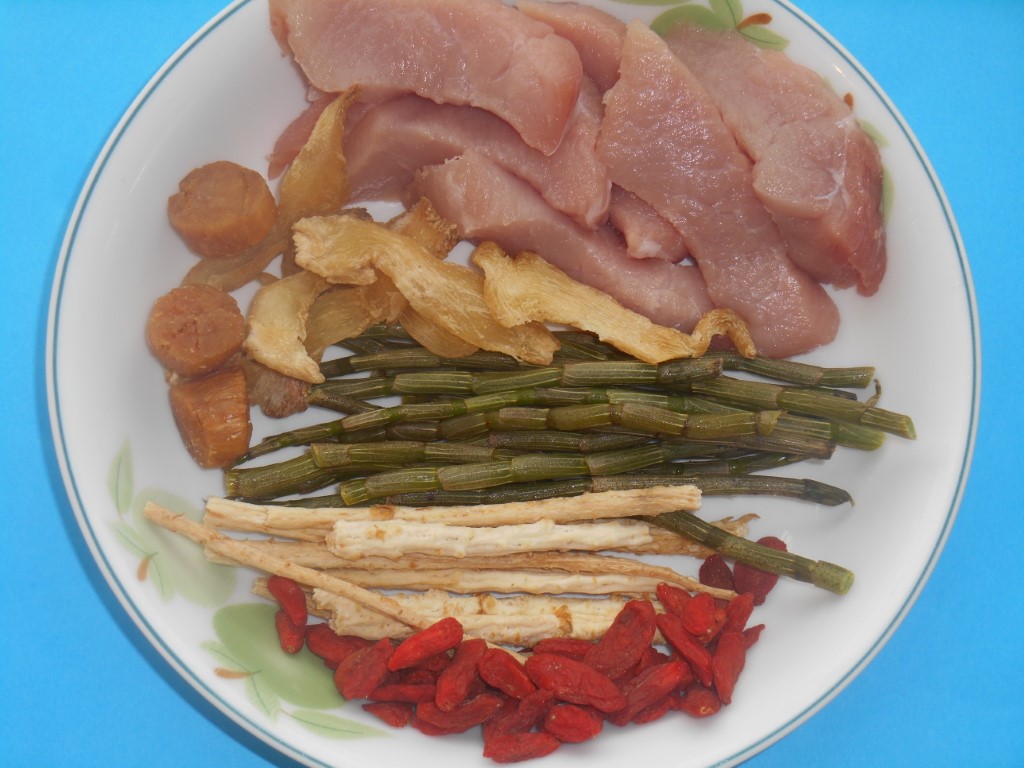
- Cicada flower (jin chan hua): A Chinese herbal fungus that grows on the cicada larva, similar in mechanism to cordyceps; genetic studies have found its profile approximately 80 percent similar to genuine cordyceps; associated in food therapy with strengthening immunity, reducing fatigue, supporting kidney health, improving sleep and protecting the liver; the soaking water can be added to the soup for extra benefit
- Roseleaf raspberry kernel (rui ren rou): A traditional herb used specifically for eye conditions; associated with dispersing wind-heat from the eyes and supporting vision; available from Chinese herb shops
- Goji berries (gou qi zi): One of the most widely recognised eye-supporting foods in Chinese food therapy; associated with nourishing the liver and kidneys and supporting healthy vision
- Pork liver: In Chinese food therapy, the liver of an animal is traditionally considered to nourish the corresponding organ in the human body; a practical source of iron and B vitamins
Ingredients (1–2 servings)
| Ingredient | Amount | Notes |
|---|---|---|
| Cicada flower (jin chan hua) | 14 g (~4 qian) | Rinse and soak; keep soaking water |
| Roseleaf raspberry kernel (rui ren rou) | 11 g (~3 qian) | Soak and rinse |
| Goji berries (gou qi zi) | 11 g (~3 qian) | Rinse |
| Pork liver | 150 g | Sliced; blanched in boiling water |
| Lean pork | 225 g | Sliced; blanched in boiling water |
| Water | 6–7 bowls (~1.2–1.4 litres) | Reduces to about 2 bowls |
Method
- Rinse the cicada flower and soak in clean water until rehydrated. Reserve the soaking water.
- Rinse and soak the roseleaf raspberry kernel and goji berries.
- Slice pork liver and lean pork, then blanch briefly in boiling water and rinse.
- Place all ingredients — including the cicada flower soaking water — in a pot with 6 to 7 bowls of water.
- Bring to a boil, then simmer gently for 1 hour.
- Serve and eat the solid ingredients along with the broth.
Bro Niu’s tips
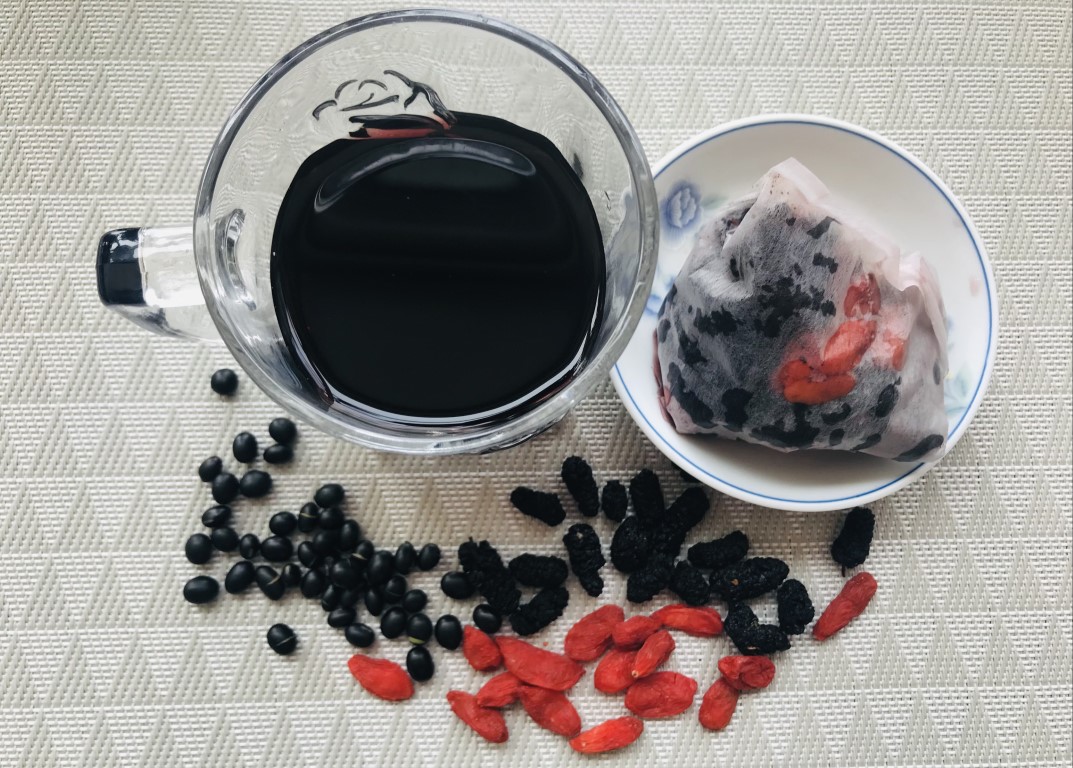
Roseleaf raspberry kernel (rui ren rou) is a lesser-known herb specifically indicated for eye conditions in classical Chinese herbalism — it is worth seeking out at a Chinese herb shop rather than omitting. This soup is suitable for anyone with declining vision, not only those with floaters. For those who cannot find cicada flower, an alternative is to simmer prepared fleeceflower root (zhi shou wu) with goji berries, chrysanthemum and black beans — a formula that also traditionally supports eye health. If you have floaters and are concerned, please have an eye examination first to rule out retinal issues.
Community questions answered (selected)
-
Q (Ck): I have floaters. How often should I drink this soup? Bro Niu: Two servings a week for maintenance is a good rhythm. You need patience — this kind of food therapy works gradually over time.
-
Q (仪): I have diabetes and high blood pressure and need to take medication. Is this soup suitable? Bro Niu: People with diabetes and high blood pressure can drink this soup in appropriate amounts. Those who take insulin and have urinary protein can also have it moderately.
-
Q (凌婆婆): I cannot find cicada flower. Is there an alternative? Bro Niu: You can use prepared fleeceflower root (zhi shou wu, about 18 g), goji berries (11 g), chrysanthemum (11 g) and black beans (38 g) — simmer with 5 bowls of water down to 2 bowls, adding the chrysanthemum at the end. Take two to three times a week; this combination also supports eye health and helps with floaters.
Published June 17, 2020 · Adapted and translated for Nourilo from a traditional home-kitchen recipe. Approx. 4 min read.