Herbal & Flower Teas
Magnolia Bud and Cocklebur Tea
traditionally used to open the nasal passages and support sinus comfort
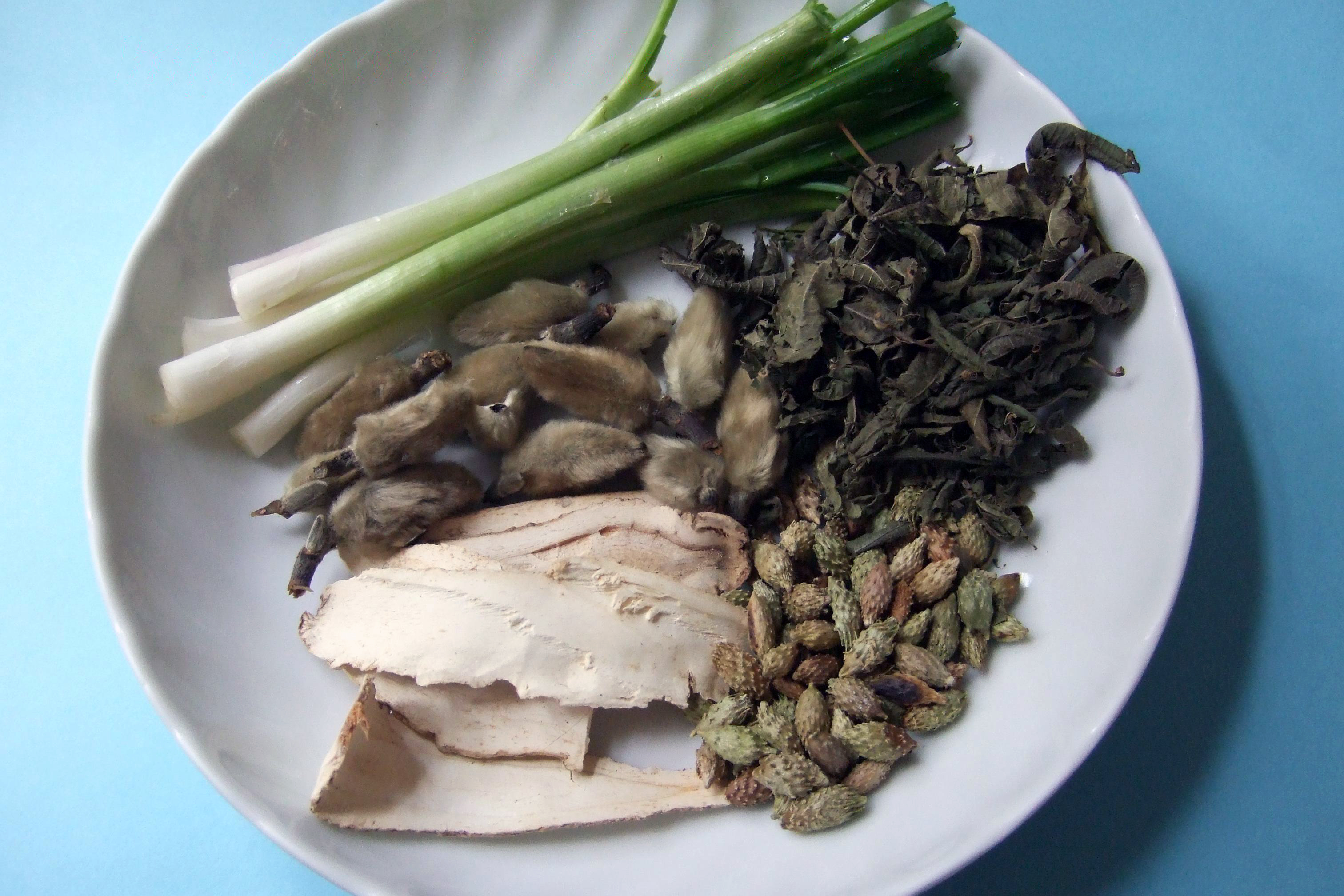
Why people make this tea
Sinusitis often begins as a common cold that keeps coming back without fully resolving, until the inflammation gradually becomes chronic. In traditional Chinese food therapy, magnolia bud (xin yi hua) and cocklebur fruit (cang er zi) are regarded as the primary herbs for nasal complaints. Together with angelica root, peppermint, and spring onion, this tea is traditionally associated with opening the nasal passages, easing mild congestion, and supporting the lungs — particularly for the person who experiences nasal stuffiness that comes and goes, thin runny discharge, a slight foggy head, and fatigue.
Who it suits / who should be cautious
- Suits adults and older children with mild to moderate nasal congestion, post-cold sinus discomfort, or recurring rhinitis.
- Not recommended during pregnancy or if you have a fever or acute infection — please see a doctor first.
- Small children under 5 years: use only under guidance of a healthcare provider.
- If symptoms do not improve after a week, seek medical advice.
Why these ingredients (the food-therapy logic)
- Magnolia bud (xin yi hua): Traditionally said to open the nasal orifices and disperse wind-cold; it is the classical herb for nasal blockage in Chinese medicine.
- Cocklebur fruit (cang er zi): Considered to reinforce the nasal-opening action of magnolia bud and help reduce mucus.
- Fragrant angelica root (bai zhi): Classically used as a “guiding herb” that directs the formula’s action upward to the head and face; also associated with mild pain relief for sinus headaches.
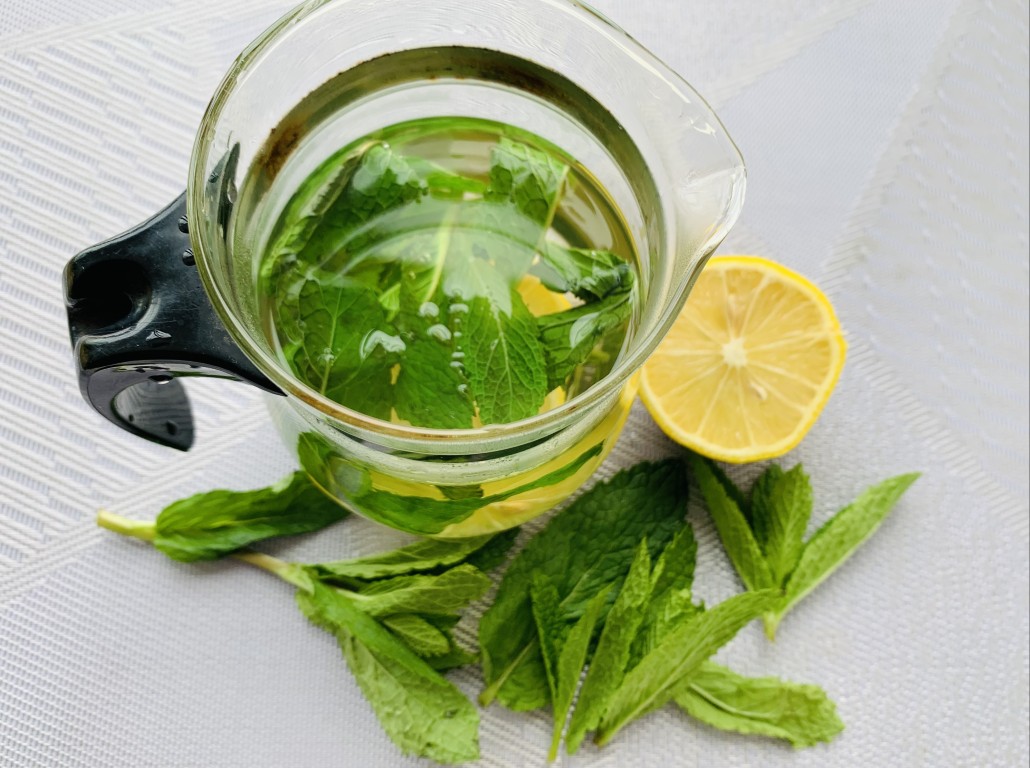
- Peppermint (bo he): Adds a cooling, aromatic quality that helps the formula feel refreshing and supports the upper airways.
- Spring onion white (cong bai): Warm and pungent, traditionally used to release the surface and open the nose.
Ingredients (2 bowls)
| Ingredient | Amount | Notes |
|---|---|---|
| Magnolia bud (xin yi hua) | 3 qian (~11 g) | Crack open with the flat of a knife before cooking |
| Cocklebur fruit (cang er zi) | 3 qian (~11 g) | Rinse well |
| Fragrant angelica root (bai zhi) | 3 qian (~11 g) | Rinse well |
| Peppermint leaf (bo he) | 1 qian (~4 g) | Add near end of cooking |
| Spring onion white (cong bai) | 3–4 stalks | White part only |
| Water | 4 bowls (~800 ml) |
Method
- Crack open the magnolia buds by pressing them with the flat side of a knife — this helps release the aromatic compounds.
- Rinse the cocklebur fruit, angelica root, and magnolia bud.
- Combine the magnolia bud, cocklebur fruit, and angelica root with 4 bowls of water in a pot. Bring to a boil, then simmer until liquid reduces to about 2 bowls, roughly 20 minutes.
- Add the spring onion whites and peppermint. Boil for a further 5 minutes.
- Strain and drink while warm. Take one batch per day, sipping throughout the day like tea. Continue until symptoms ease.
Bro Niu’s tips
- Angelica root (bai zhi) acts as a guiding herb to direct the formula’s action up to the head and face — it is an important part of the formula, not optional.
- A simpler version: grind all the ingredients into a coarse powder. Add 3 bowls of water, bring to a rolling boil and cook for 5 minutes, then strain and drink.
- Drink one batch per day, sipping it like tea throughout the day. Stop when symptoms improve.
Community questions answered (selected)
-
Q (Monnie, reader in Canada): My 17-year-old son has had recurring sinusitis all year — post-nasal drip, yellowish discharge, sinus pain around the nose and forehead. He has taken antibiotics three times without fully recovering. Is this tea suitable for him? Bro Niu: If you can find these herbs, try giving him one batch every other day for a month. The formula is associated with helping to reduce nasal membrane swelling and has an anti-inflammatory action in traditional use. It should be worth trying.
-
Q (Yy, reader): Is this tea suitable for a 5-year-old with mild ear discomfort? Bro Niu: Children can drink this tea. For ear pain, it is best to see a doctor first to rule out infection — that kind of condition usually needs medical treatment.
-
Q (Una, reader): I have had a cold for three weeks. My phlegm is white but my nasal discharge is yellow-green. What should I do? Bro Niu: Yellow-green nasal discharge indicates the inflammation has not fully resolved. Try steeping honeysuckle (jin yin hua), chrysanthemum (ju hua), peppermint (bo he), and magnolia bud (xin yi hua) — about 1 tablespoon each — in hot water and drink as a tea.
Published March 11, 2010 · Adapted and translated for Nourilo from a traditional home-kitchen recipe. Approx. 4 min read.