Herbal & Flower Teas
Fresh Mint & Lemon Tea
traditionally used to freshen the breath and refresh the mind
Why people make this tea
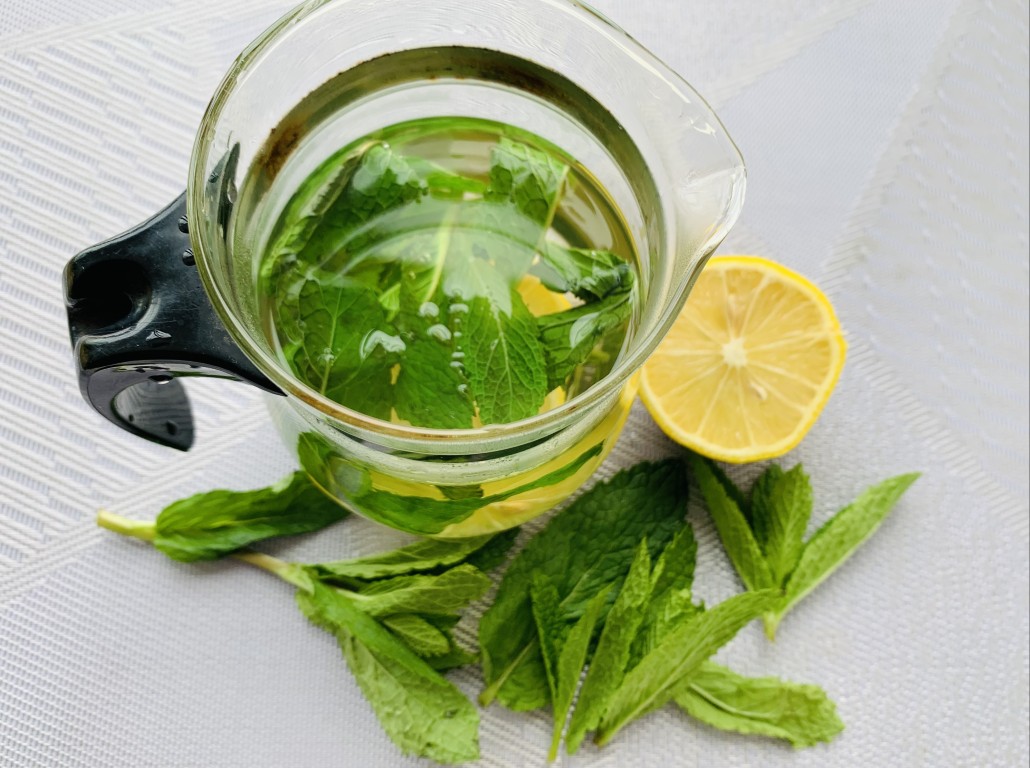
Mint has a real place in tradition: it’s associated with dispersing wind-heat, clearing the head and eyes, soothing the liver, moving qi, lifting the appetite and easing itch. Simmered with a little ginger and scallion it’s used at the first sign of a cold to release the exterior and ease dizziness or headache. This simple brew pairs fresh mint with lemon — a bright, refreshing cup that helps digestion, clears the head, and freshens the breath. Fresh mint is available at Chinese or Asian grocers, or online.
Who it suits / who should be cautious
- Suits most people who want a refreshing, caffeine-free cup; it won’t disturb sleep.
- If bad breath is persistent, look into a dental or digestive cause and see a professional.
Why these ingredients (the food-therapy logic)
- Mint (bo he): traditionally associated with dispersing wind-heat, clearing the head, and refreshing the breath.
- Lemon (ning meng): bright and aromatic, supporting digestion and adding a clean freshness.
Ingredients (1 pot / 2 cups)
| Ingredient | Amount | Notes |
|---|---|---|
| Fresh mint leaves (bo he) | 1 small handful | rinsed |
| Lemon slices (ning meng) | 2–3 slices | fresh |
Method
- Rinse the mint leaves and put them in a pot.
- Rinse once with boiling water and pour it off.
- Add fresh boiling water, drop in the lemon slices, cover and steep for 5 minutes. Sip.
Bro Niu’s tips
This tea is fragrant and refreshing for the mind, yet caffeine-free, so it won’t affect your sleep. Taken regularly it helps guard against colds, and a little honey makes it even nicer.
Published March 29, 2026 · Adapted and translated for Nourilo from a traditional home-kitchen recipe. Approx. 1 min read.